Scar Removal in Korea, Planned Around Your Trip
Scar correction runs in collagen cycles over months, so RE:BERRY plans a Seoul trip around it: what one stay can finish, what waits for a return, and how the physician reads your healing from photos in between, steps from Gangnam Station.
Scar Removal and Scar Treatment in Korea
Scar Course
Scar Removal on a Korea Trip
Scar correction runs in collagen cycles over months, so RE:BERRY plans a Seoul trip around it: what one stay can finish, what waits for a return, and how the physician reads your healing from photos in between, steps from Gangnam Station.
Across RE:BERRY Clinics
1,000,000+ Treatments
Direct Consult & Treatment
Medical Director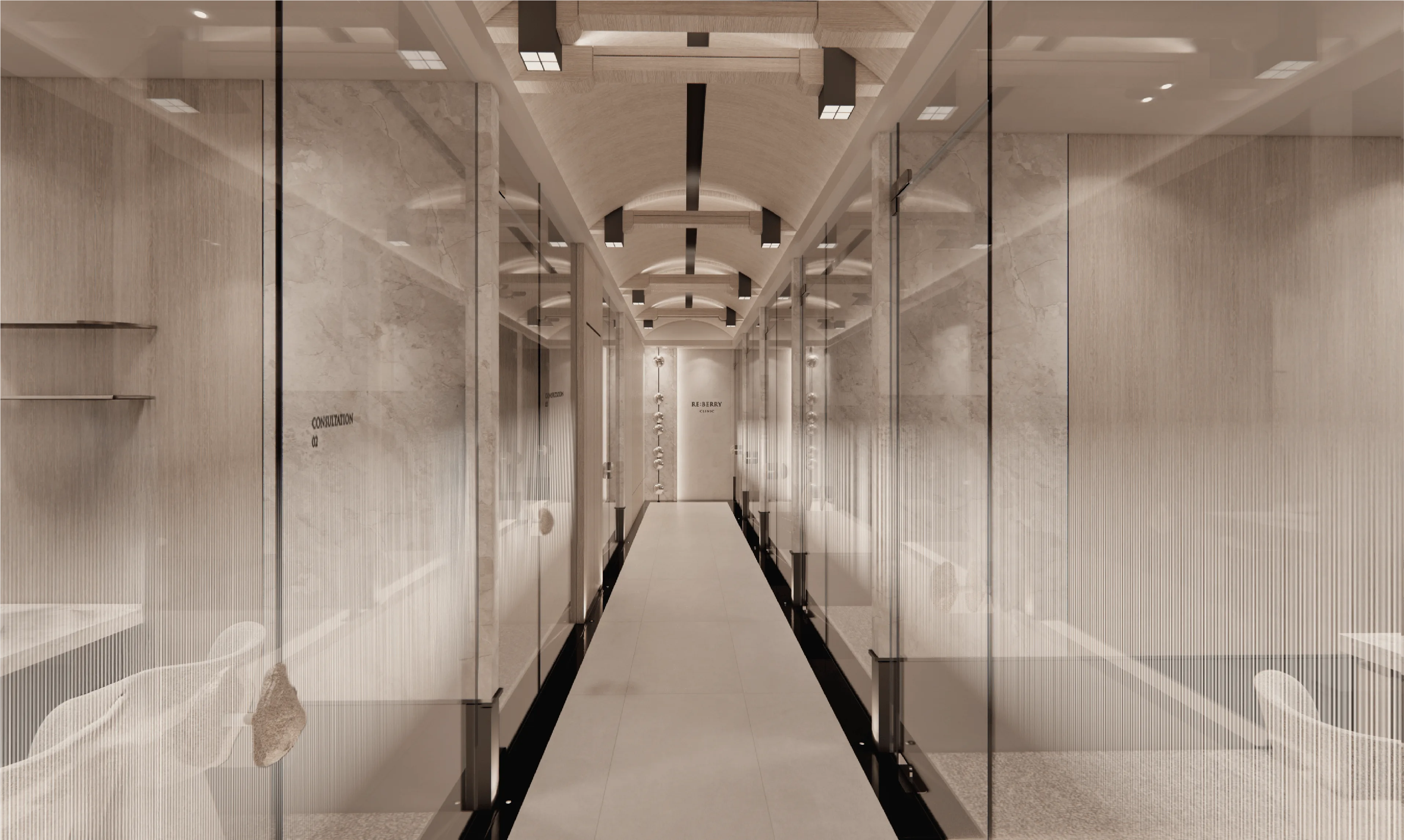
From Gangnam Station Exit 10
2-Min WalkCan a scar course be finished in one trip to Korea, or does it take several?
Rarely one trip alone. Atrophic acne scars are worked in a 3-5 session course spaced four to six weeks apart, because each subcision release or resurfacing pass starts a collagen cycle that has to settle before the next pass is useful, and no scheduling trick shortens that biology. So the real question at RE:BERRY Gangnam is how to shape a Seoul visit around it. A concentrated stay of four to five days can safely finish one full cycle, often a mapping visit, a subcision release, and a same-visit review before you fly, while the remaining passes are either carried on later trips or continued remotely, with the physician reading overlay photos on WhatsApp and dating each next session off what the healing actually shows. Some visitors bank two staged steps into one longer stay when the scar mix allows it; the physician says at the mapping visit which of yours can be paired and which must not share bruised skin.
Effects & Progress
Effects & Progress
Each scar is routed to the tool its mechanics answer to and slotted into the time you have: tethered rolling scars take the needle, textured floors take resurfacing energy, and the calendar is drawn backwards from your flight so the plan fits both the scar and the trip.
Some lift is often visible on the table where a tether gives way, and the in-trip review confirms it settled. Subcision bruising and resurfacing redness fade over the first days, before you fly; the early change is real but partial.
Texture starts to read smoother as the first collagen cycle takes hold at home. Checkpoint photos go to the physician, who confirms the pass took and dates the next Seoul slot four to six weeks out.
The main change lands, often across a return pass by now: collagen fills the freed pockets and resurfaced floors even out, with much of the improvement visible in the overlays by month three. Response varies with scar age and skin.
The correction matures across the treated scars and is judged against baseline overlays, in person or remotely. Deep, long-standing scars are blended and softened here, honestly not erased.
Treatment Process
Scar Course in Korea — 4 Steps from Trip Map to Remote Review
※ Illustrative images are AI-generated to help explain the treatment process.Effects & Progress
Effects & Progress
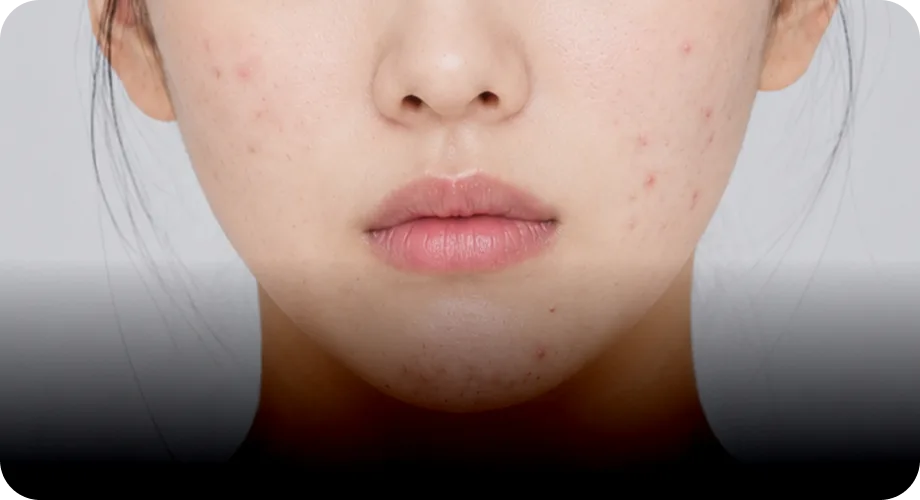
Scar work goes wrong when a cheek is treated as one problem, and a visitor's plan goes wrong when the biology is forced to fit a holiday. So two matchings happen at once. First the mechanics: rolling depressions held down by fibrous cords are marked for a Nokor-needle release, textured boxcar floors are sent to RF microneedling or fractional laser, and cord-free ice-pick pits are flagged to blend, since they have nothing to release. Then the calendar: each matched step is placed against your departure date, so the physician can tell you which cycle finishes in this stay and which waits. Getting both right before anything begins is what lets a course start in Seoul and still add up months later at home.
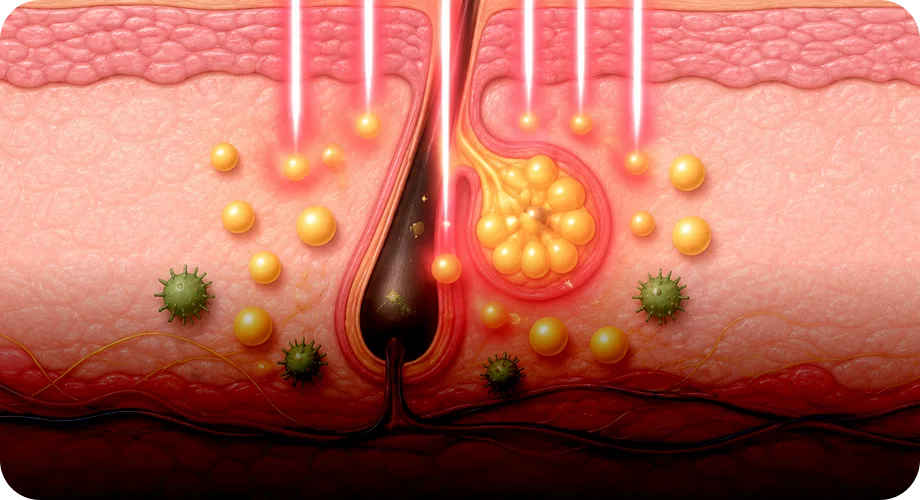
Sequence is half the result in scar work, and it is also what decides how a course spreads across trips. A tethered scar is released first so the plane is free; the textured floor is resurfaced only once that release has settled, never on skin still bruised; a bed thin on collagen can be reinforced with a PDLLA microsphere base so it holds its lift rather than re-tethering while it fills. Because each of those cycles needs weeks to organize, the physician cannot stack them onto consecutive days of one stay — a second pass shares a trip only where the scar mix leaves separate, unbruised skin. Everything else is spaced across return visits, with the four-to-six-week gap either bridged by another trip or bridged remotely off the overlay read.
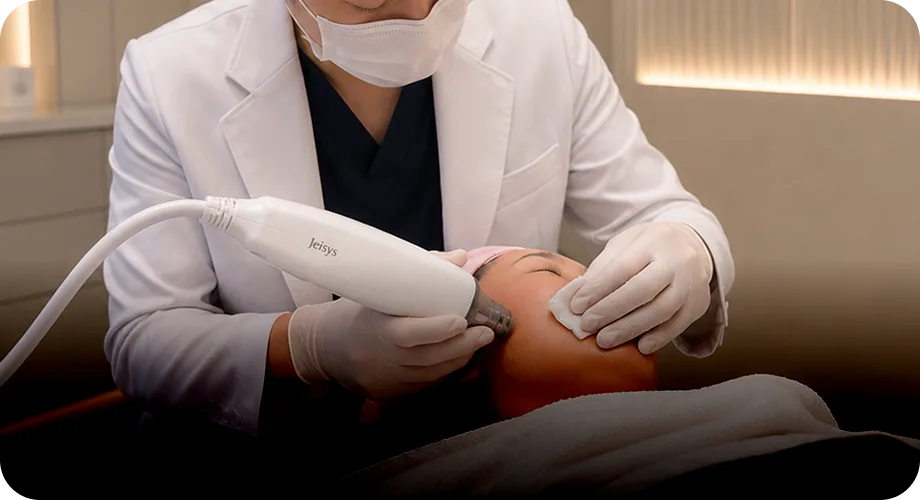
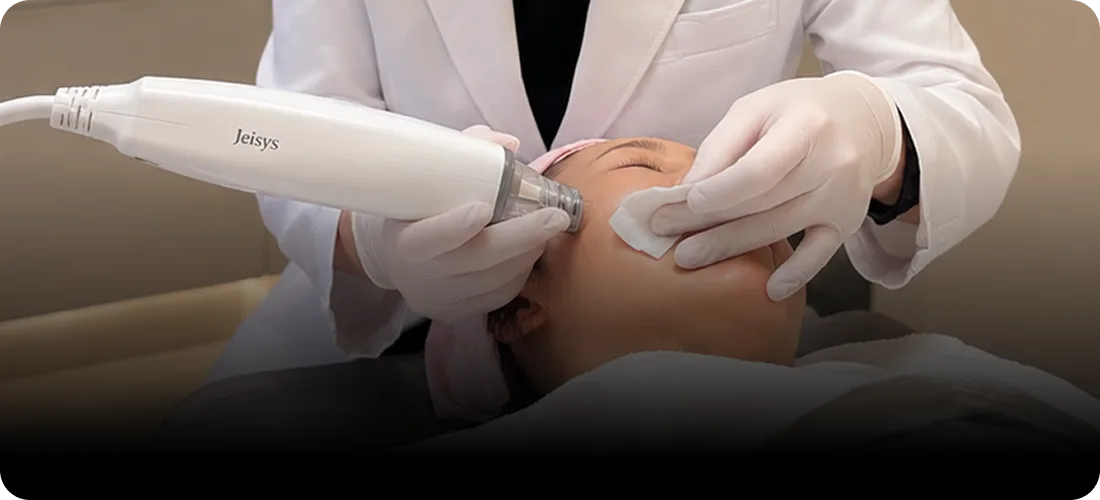
A scarred cheek is rarely just dents — enlarged pores, uneven texture, and lingering post-acne redness usually sit alongside the depressions, and for a visitor all of it has to be read as one plan that survives leaving Seoul. So subcision lifts the rolling scars, RF microneedling or laser resurfaces the texture and tightens the pores once a release has settled, and vascular-calming aftercare quiets the redness scar-prone skin flares during healing, each step spaced so a resurfacing pass never lands on skin still bruised. Then the plan is carried on the overlay track: between trips the physician compares your checkpoint photos against baseline, so a course split across visits stays consistent and is adjusted to what the images actually show rather than drifting once the patient is out of the room.

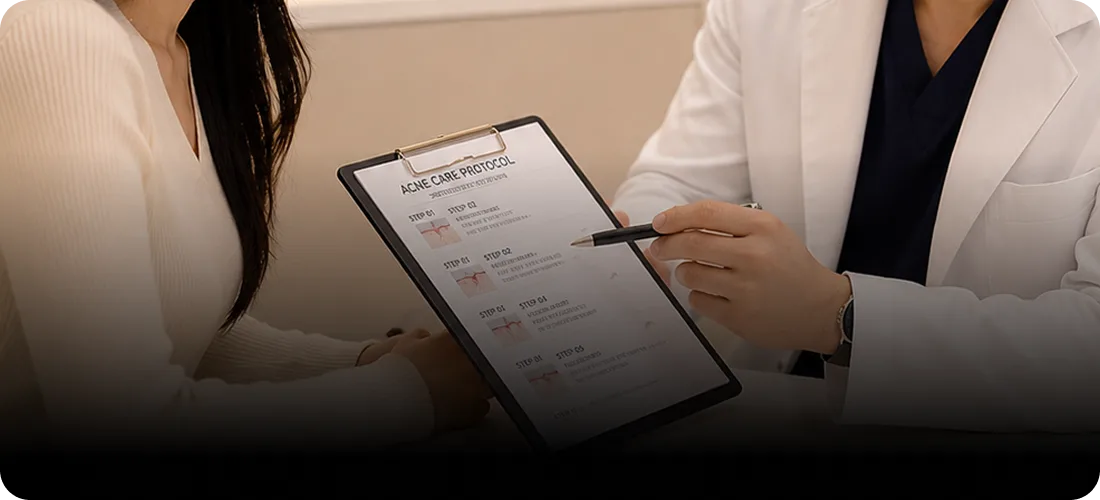
Healing is uneven and memory flatters, so a visitor's scar plan at RE:BERRY is documented on camera and never left to recall. The physician counts and photographs every scar under standardized clinic lighting at the outset, and the plan — which tool serves which scar, how many cycles, how they spread across the time you have, the four-to-six-week spacing, and a candid line on what lifts versus what only blends — is confirmed in writing before anything begins, with the figure quoted per cycle after the stretch test. An in-person review before you fly confirms the in-trip pass took cleanly, and at each remote checkpoint the same overlay photos are compared side by side, so a depression that feels unchanged in a bathroom mirror can be shown clearly rising, and the doctor who felt the cords release reads whether the correction is on track wherever you happen to be.
Treatment Process
Scar Course in Korea — 4 Steps from Trip Map to Remote Review
※ Illustrative images are AI-generated to help explain the treatment process.
Two Ways to Fit a Scar Course Into Korea: Concentrated Stay vs Split Trips
| Consideration | Concentrated stay (one longer trip) | Split visits (several short trips) | Remote-continued (one trip, rest by photo) |
|---|---|---|---|
| Best suited to | A visitor with 5-10 days who wants the most correction done under the physician's eye | A frequent flyer to Seoul or the region who can return every one to two months | A visitor with only a few days who cannot easily come back |
| What finishes in Seoul | One full cycle, and a second staged step only if the scar mix allows unbruised skin | One cycle per visit, cleanly separated so no two passes share bruised skin | The mapping visit and the first pass, then home |
| Cycle spacing respected | Yes — passes never stacked onto still-healing skin, even in one stay | Yes — the trip gap naturally matches the four-to-six-week cycle | Yes — later passes wait for the overlay read to date them |
| Follow-up between passes | In-person review before departure, then overlay photos to month six | Overlay photos on WhatsApp between each trip | Overlay photos drive the whole remaining course |
| Where the ceiling sits | Same as any route — set by scar type, not by trip length | Same — split trips do not weaken the result, only the schedule | Same, provided the remote checkpoints are kept |
Why This Matters
The trip plan cannot outrun the healing. A subcision release or a resurfacing pass triggers a collagen cycle that runs for weeks under the skin, and a second pass laid onto skin still filling from the first works against it. So a concentrated stay does not mean stacking sessions day after day; it means finishing one clean cycle and reviewing it in person. RE:BERRY Gangnam quotes the written a consultation-based quote figure after the mapping visit, once the physician has seen how many cycles your scars actually need and how they can be spread across the time you have.
Seoul pricing is a large part of why scar patients build a trip around it, and a multi-session course is where the difference compounds. RE:BERRY Gangnam publishes its entry figure at a consultation-based quote and confirms each session in writing, while the same combination of subcision plus energy resurfacing commonly runs materially higher per session in the US, Japan, and Australia. Spread across a 3-5 session course, the saving is per cycle, not per trip, and that is part of what makes flying back, or continuing remotely, worth planning.
KHIDI's 2025 international patient survey found 41.4% of respondents rank keeping the same doctor throughout as their leading criterion, and a course split across trips leans on it hardest. The physician who felt which cords released in Seoul is the one reading your day-90 overlay from home, deciding whether a slow-filling pocket is ordinary for its scar age or a reason to bring the next trip forward — a call no fresh chart supports.
What a Trip-Planned Scar Course Delivers, and How the Change Builds Across Visits
- The Seoul calendar is built backwards from your departure date, so you know before you fly exactly which cycle finishes in-trip and which waits for a return
- One physician owns the whole arc, the stretch-test map, every in-person pass, and the overlay reads between trips, so a course split across visits is still read as one continuous plan
- A concentrated stay is used to finish a clean cycle and review it in person, never to stack passes onto skin still bruised from the last one
- The remote overlay track keeps a scar course accountable from home: checkpoint photos let the same doctor date each return pass off real healing instead of guesswork
- Safe across Fitzpatrick I-VI skin types, with a restrained, moderate-energy setting for darker and easily-pigmenting phototypes to hold post-inflammatory marks low between trips
- The written plan names how many cycles your scars need and how they spread across the time you have, with a candid line on where the correction ceiling sits
| Timeline | What to Expect |
|---|---|
| The mapped cycle for this stay is done and reviewed before departure; a subcision bruise or resurfacing flush is fading by the time you fly, makeup covering the last of it | |
| The first collagen cycle takes hold and texture starts to read smoother; checkpoint photos go to the physician, who confirms the pass settled cleanly and dates the next | |
| The main change lands as collagen fills the freed pockets, often across a return pass by now, with a large share of the improvement visible in the overlays by this point | |
| The correction matures across the treated scars and is judged against baseline overlays; deep, long-standing scars are blended and softened here, honestly not erased |
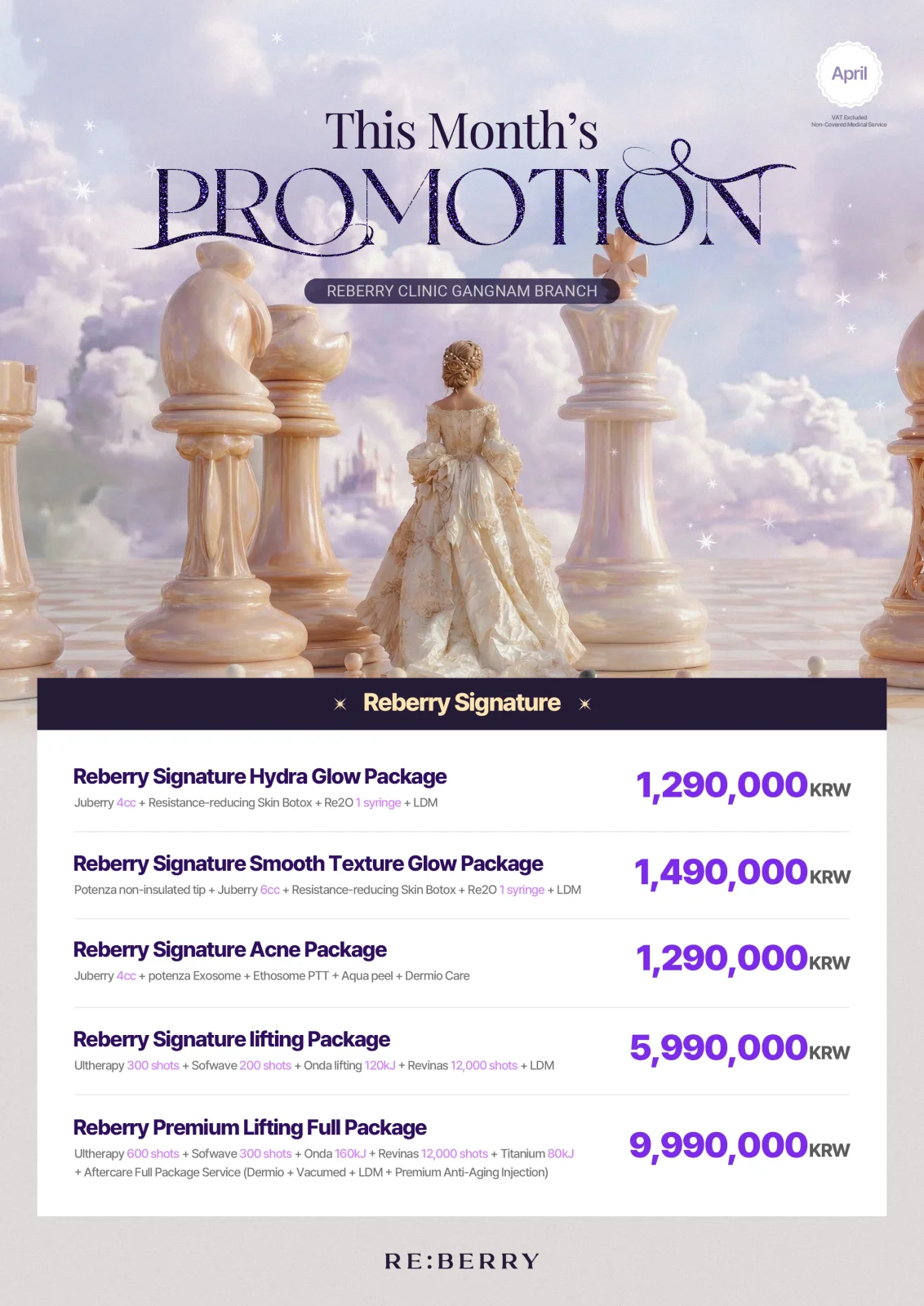
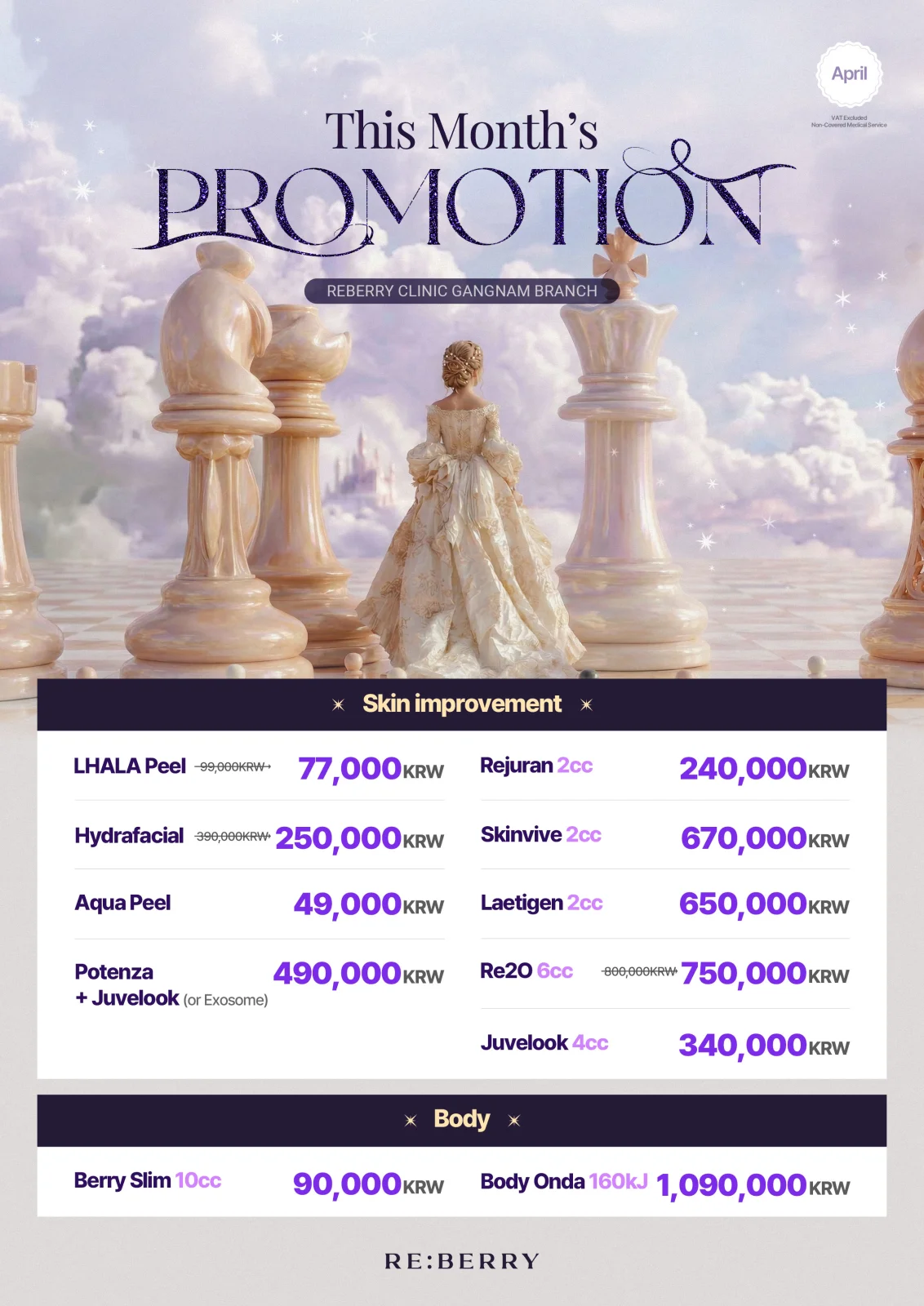
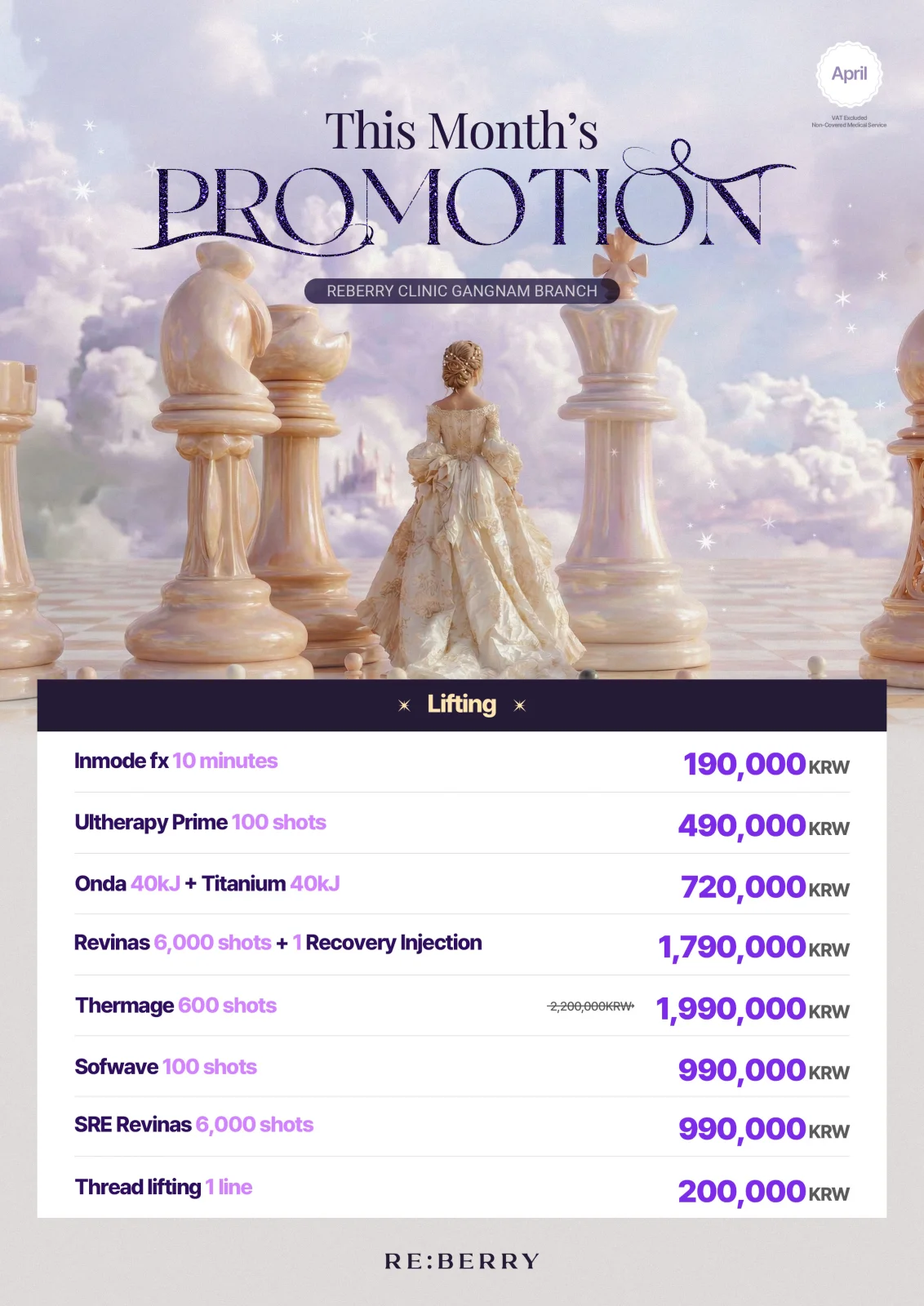
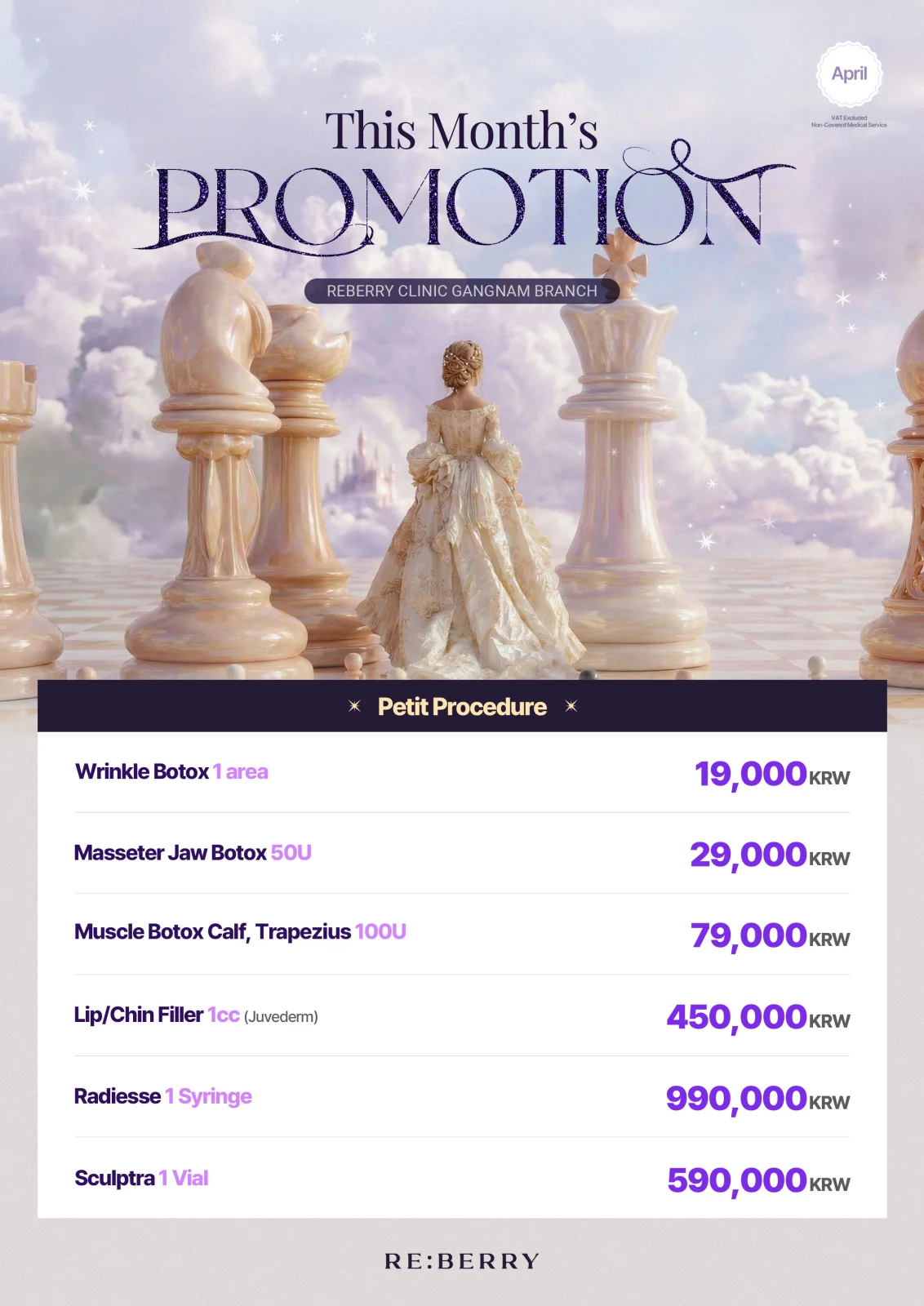
October – December 2026 Promotions
Exclusive packages for international patients. Swipe to see all offers.

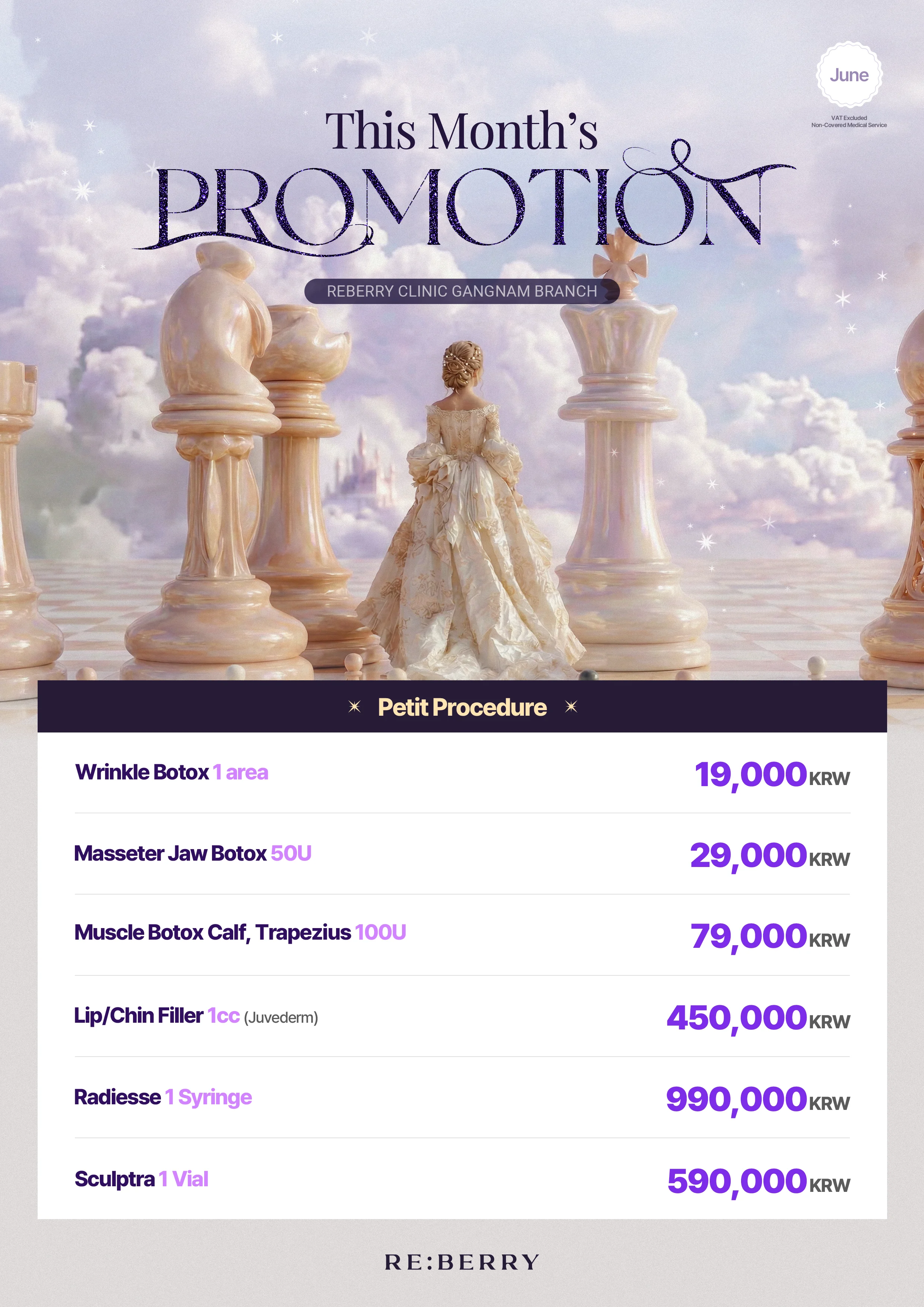
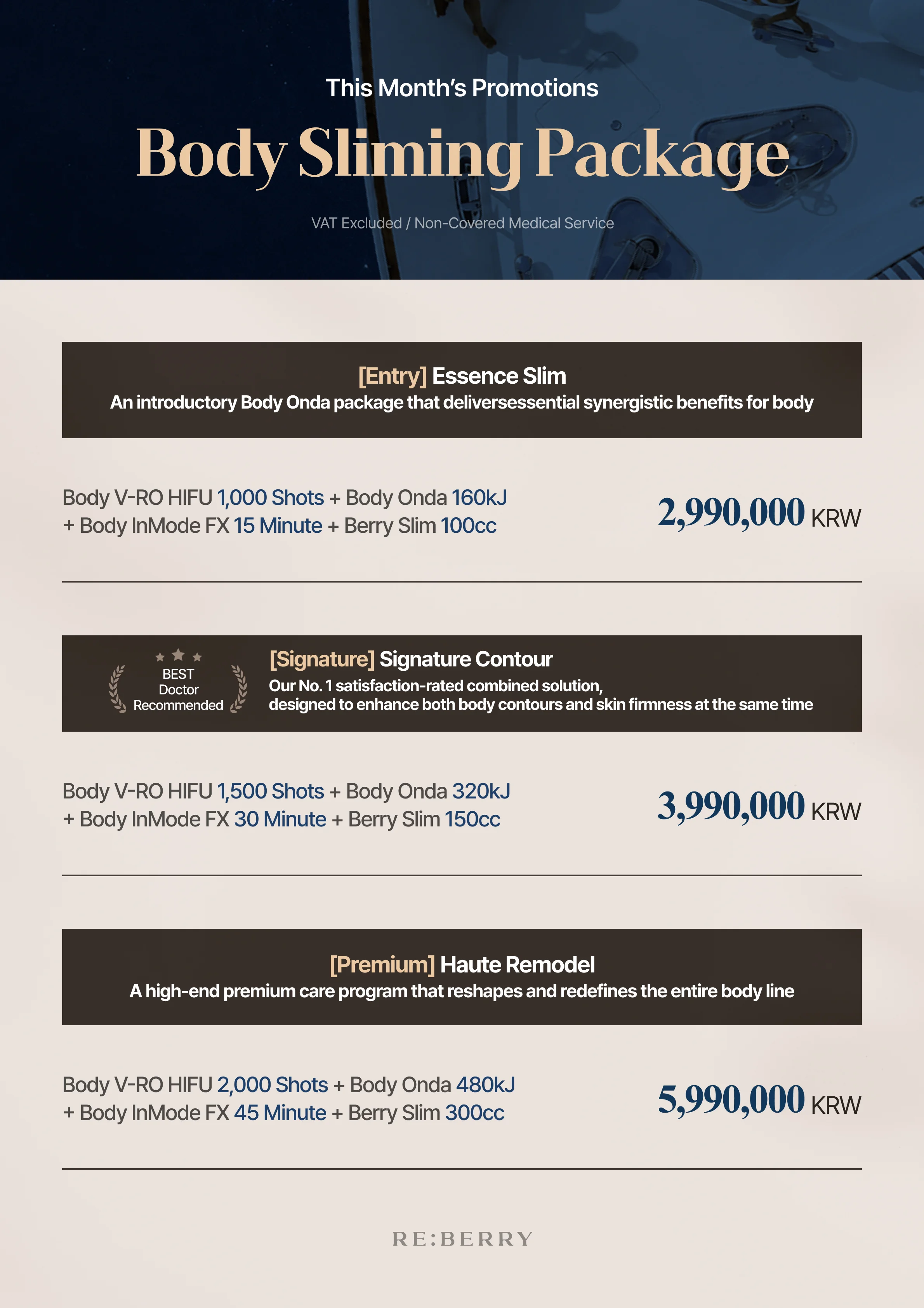
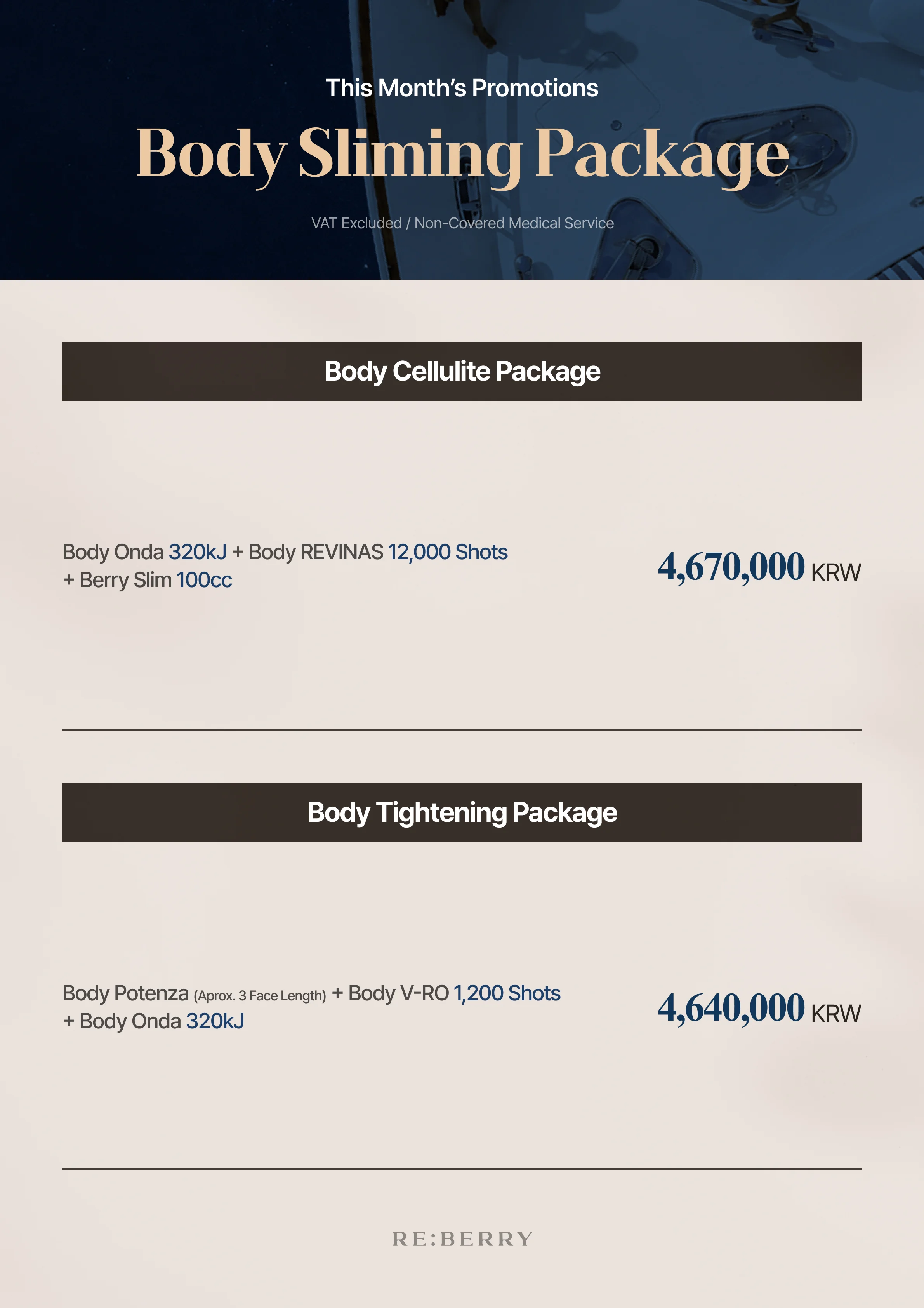
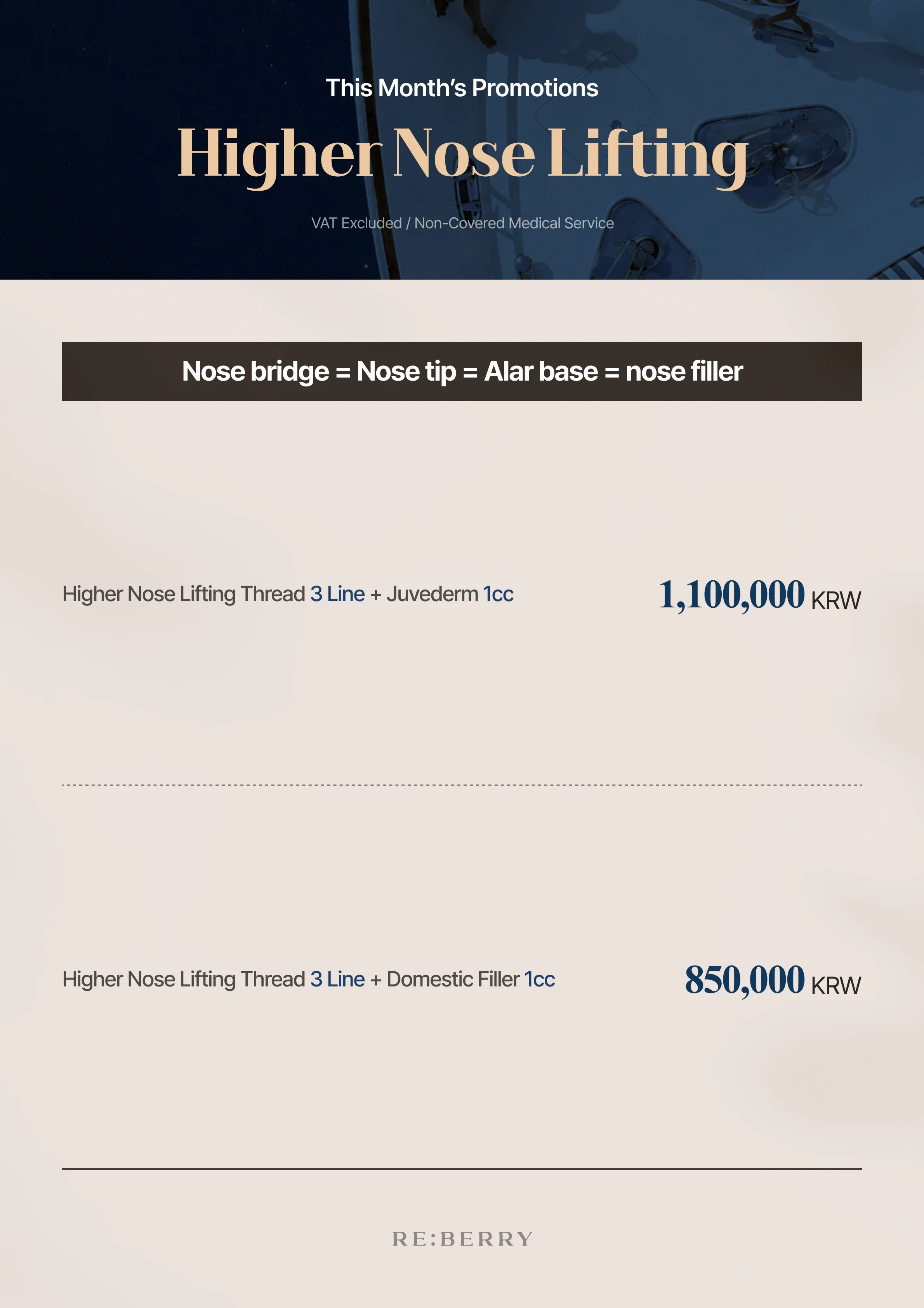
![RE:BERRY Gangnam October–December 2026 Promotion Page 10 — Body Slimming Package: [Entry] Essence Slim, an introductory Body Onda package that delivers essential synergistic benefits for body shaping and contouring: Body V-RO HIFU 1,000 Shots + Body Onda 160kJ + Body InMode FX 15 Minute + Berry Slim 100cc ₩2,990,000 · [BEST · Doctor Recommended] Signature Contour, our No. 1 satisfaction-rated combined solution, designed to enhance both body contours and skin firmness at the same time: Body V-RO HIFU 1,500 Shots + Body Onda 320kJ + Body InMode FX 30 Minute + Berry Slim 150cc ₩3,990,000 · VAT excluded](https://cdn-reberry.pages.dev/gangnam/promotion/en/gangnam-event-en-10.webp)
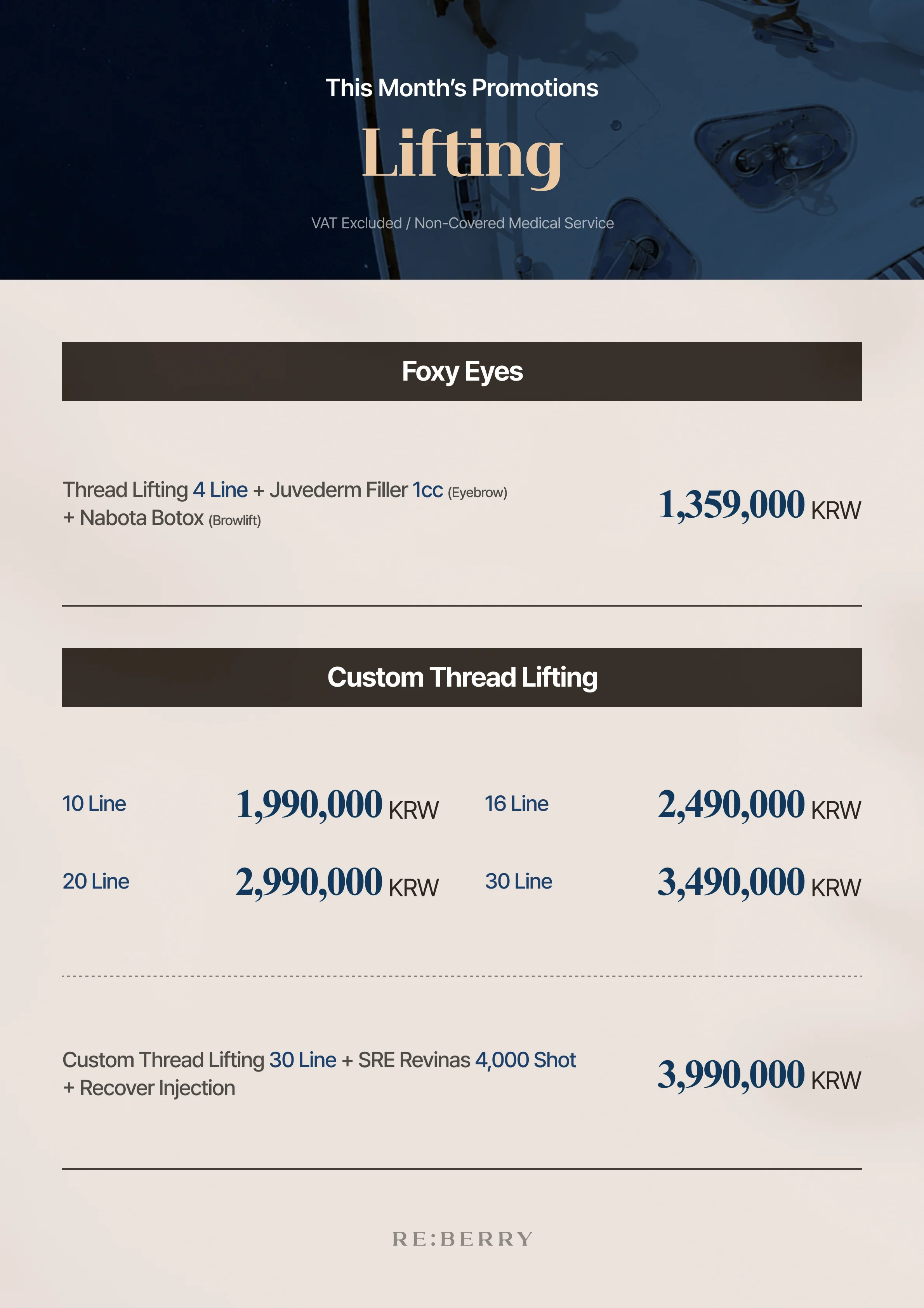
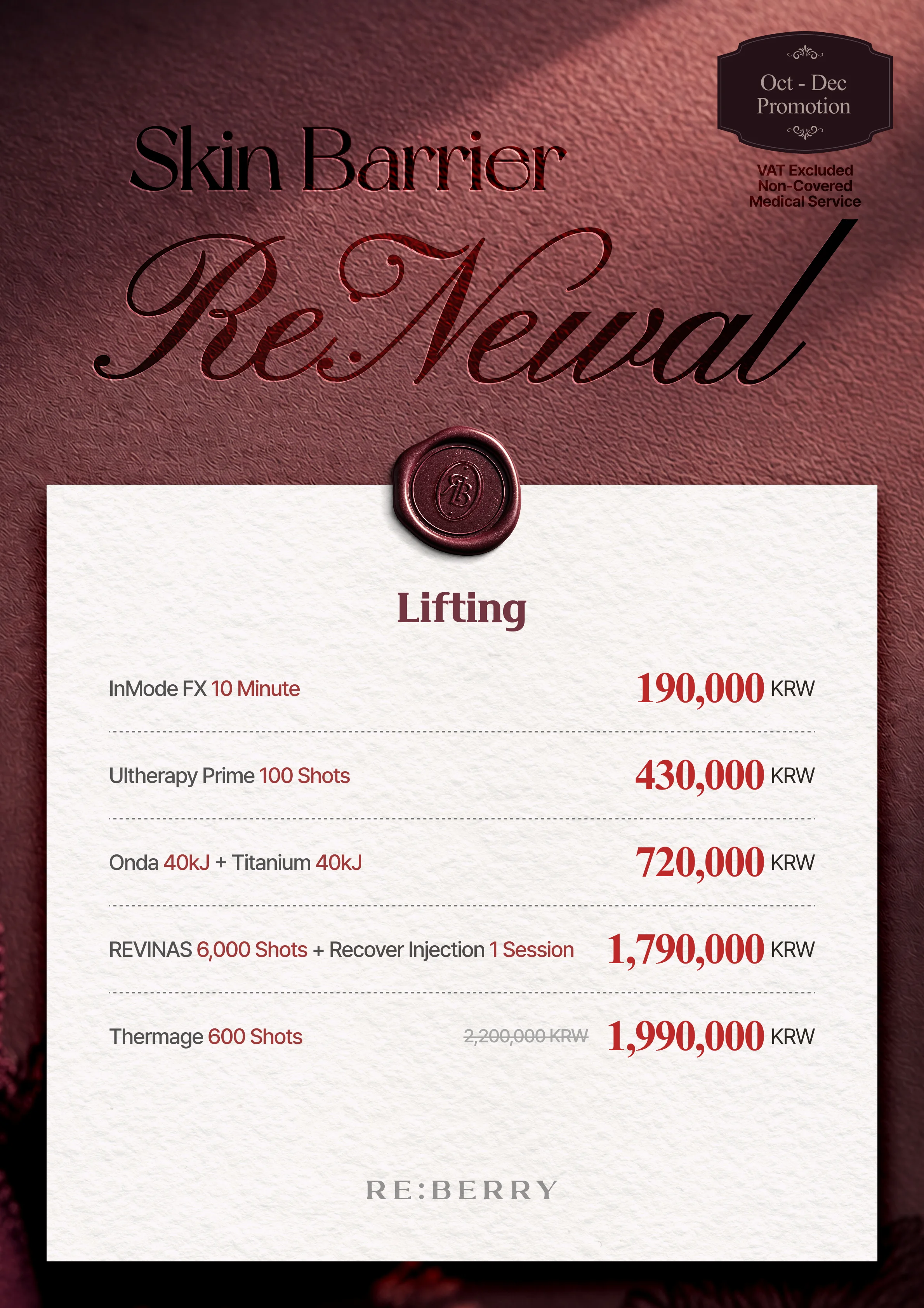
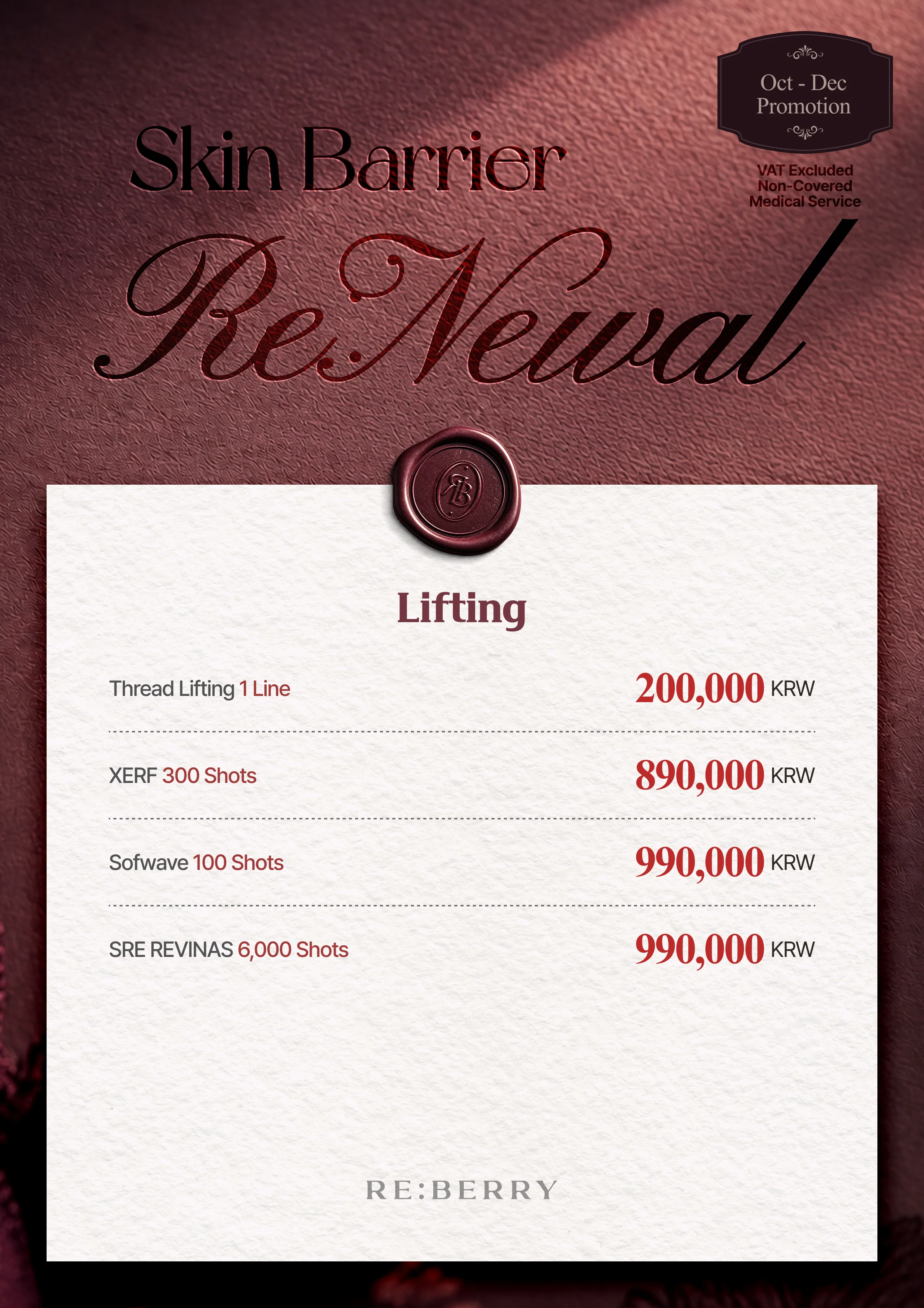
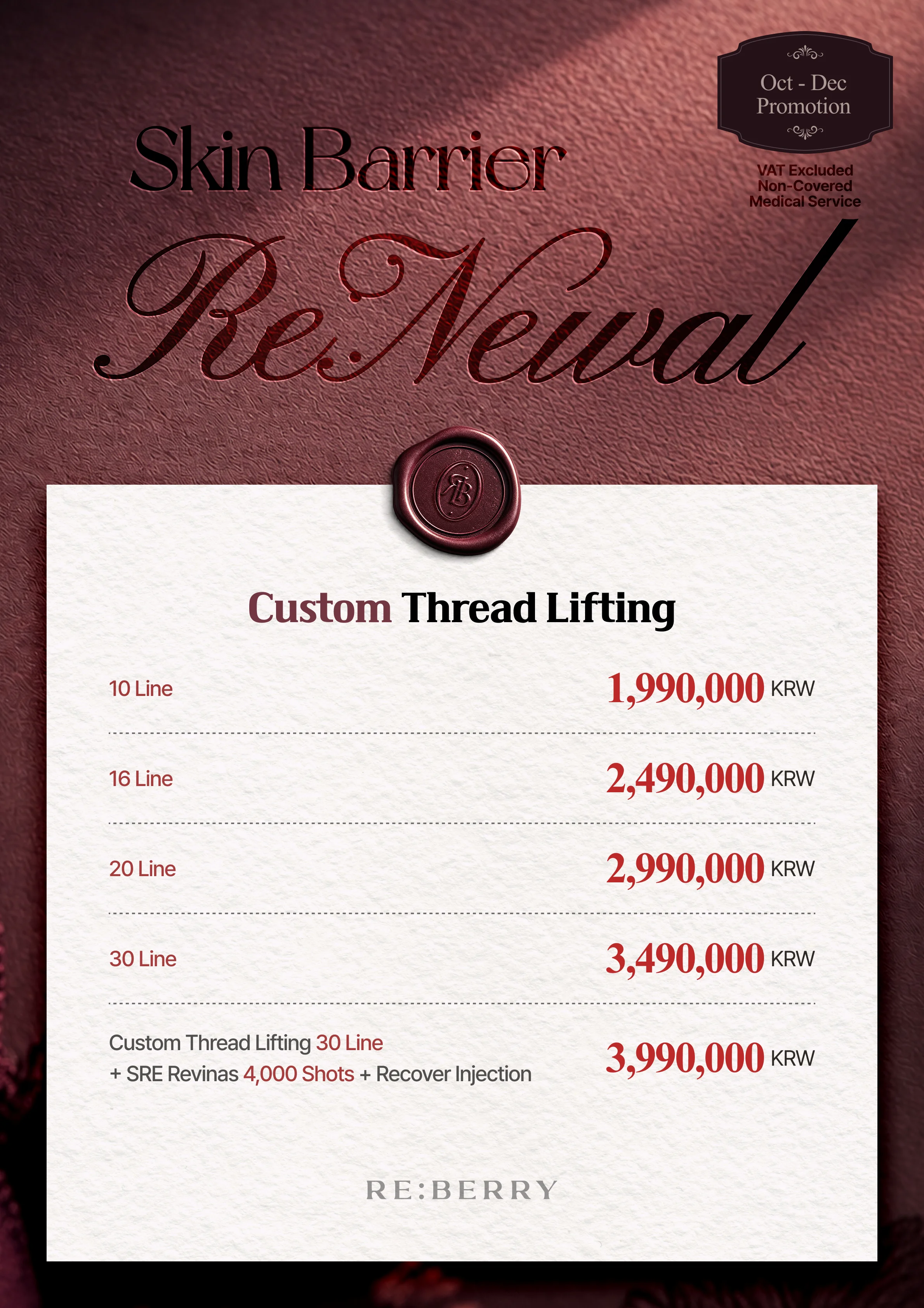
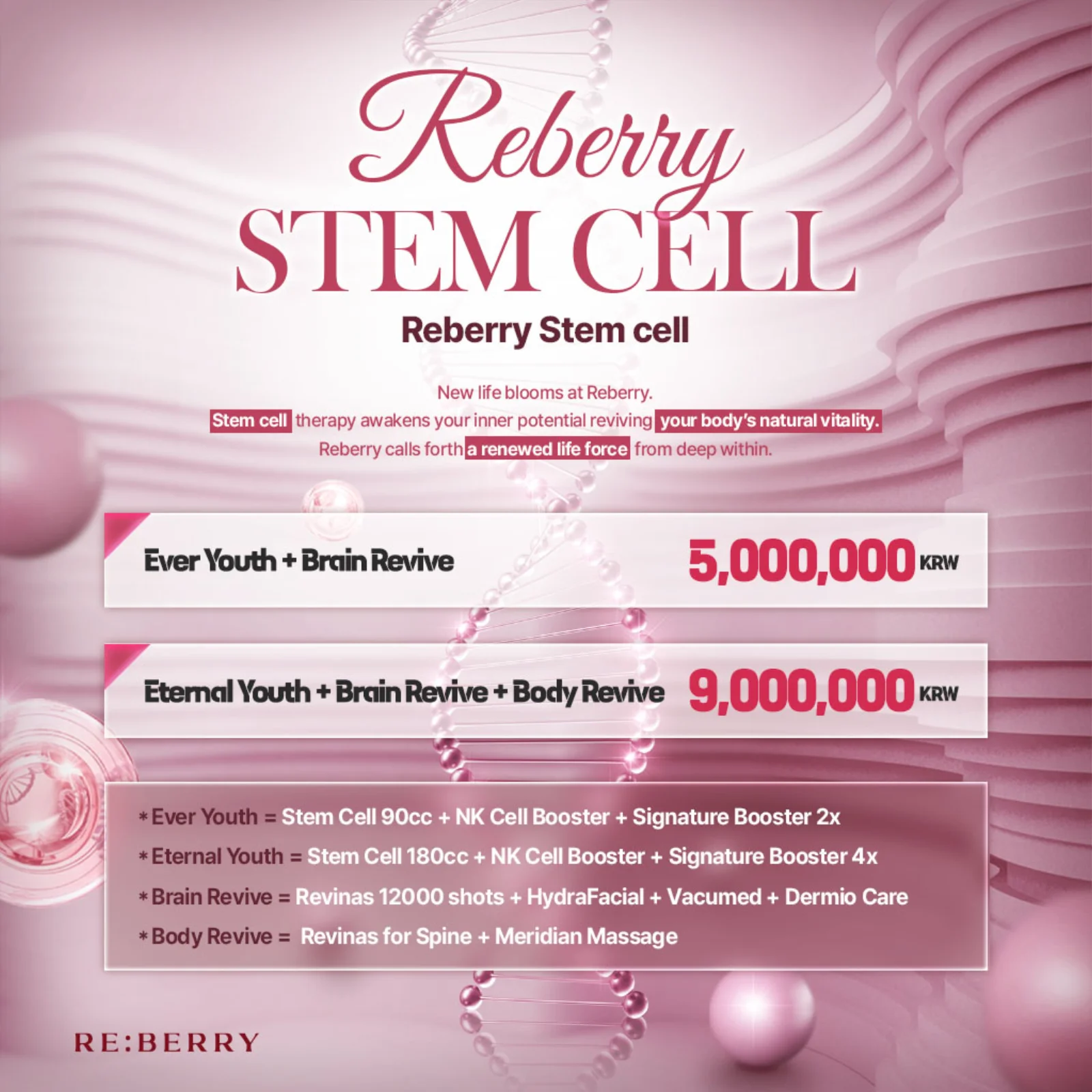
How a Trip-Planned Scar Course Is Quoted at RE:BERRY Gangnam
Your Medical Director
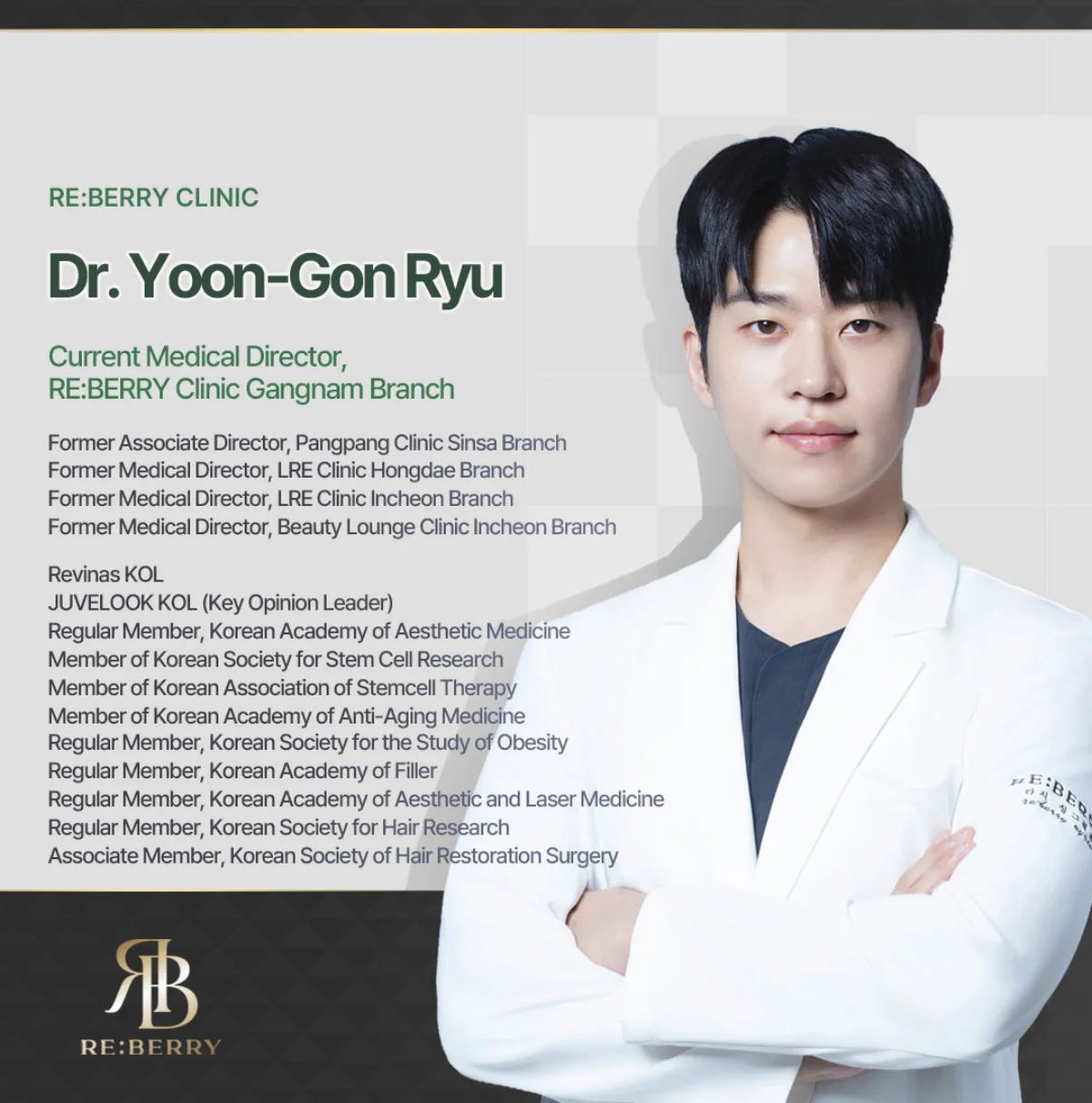
Dr. Yoon-Gon Ryu
- Medical Director, RE:BERRY Aesthetic Clinic Gangnam — Korean MOHW Medical License No.131644
- Manufacturer-appointed KOL invited to teach injection and energy-device technique to Korean peers
- Regular Member, Korean Academy of Aesthetic Medicine
- Co-manages every case with Dr. Yejin Oh (Korean MOHW Medical License No.144238)
- Featured in Authority Magazine (2026)
Medically reviewed by Dr. Yoon-Gon Ryu, CEO / Medical Director, RE:BERRY
A Fourteen-Thousand-Square-Foot Hush Above Gangnam-daero
Step past the black gallery facade and the bustle of Gangnam-daero falls away. Fourteen thousand square feet of hushed corridors, marble installations, a cascading water feature and fully enclosed consultation suites — arranged so you rarely cross paths with another guest, because our appointment-first diary keeps every hour deliberately underbooked.
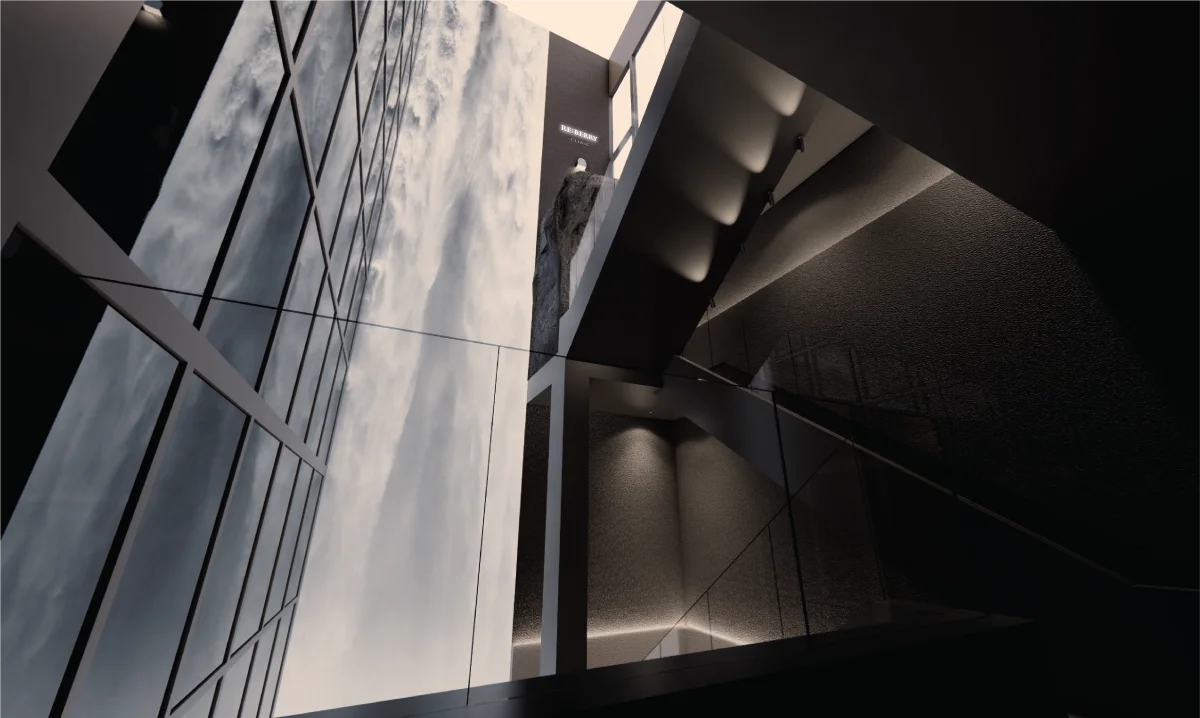
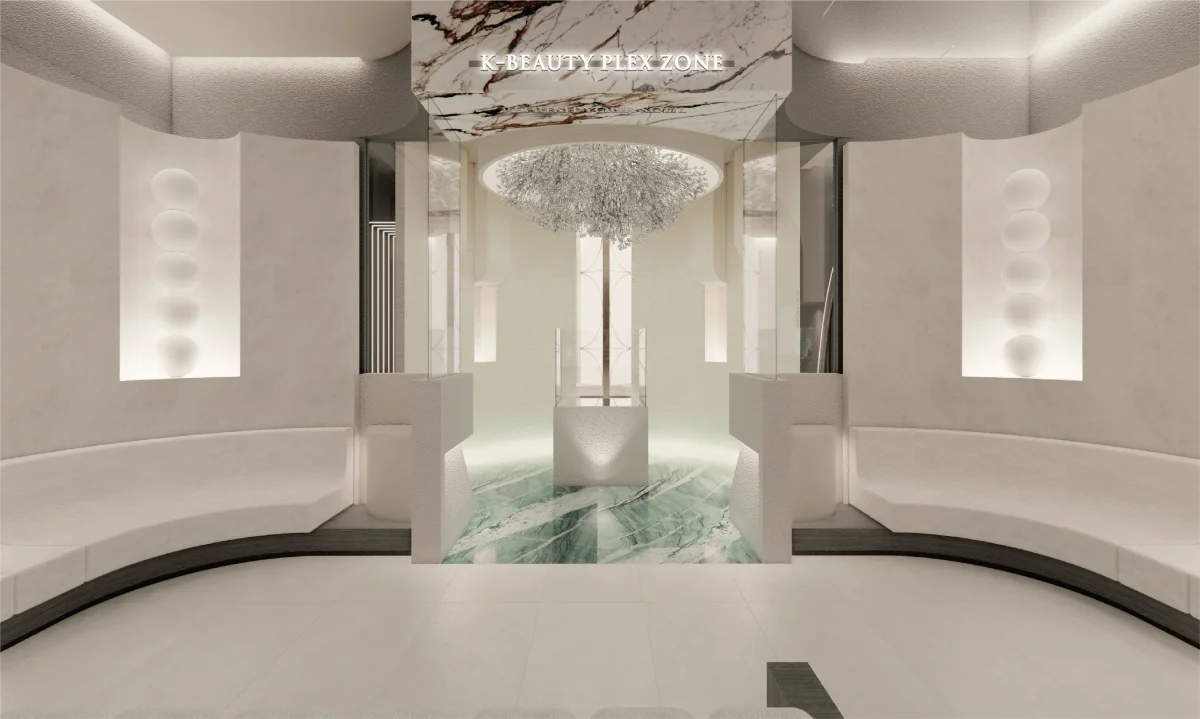
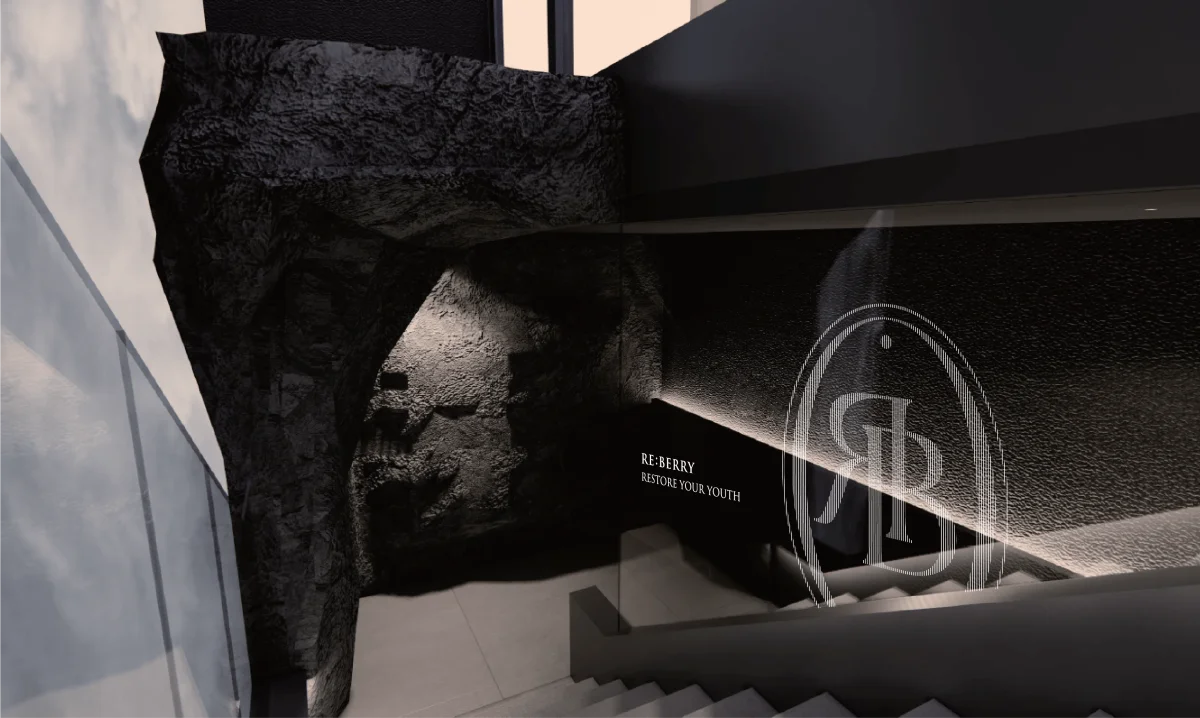
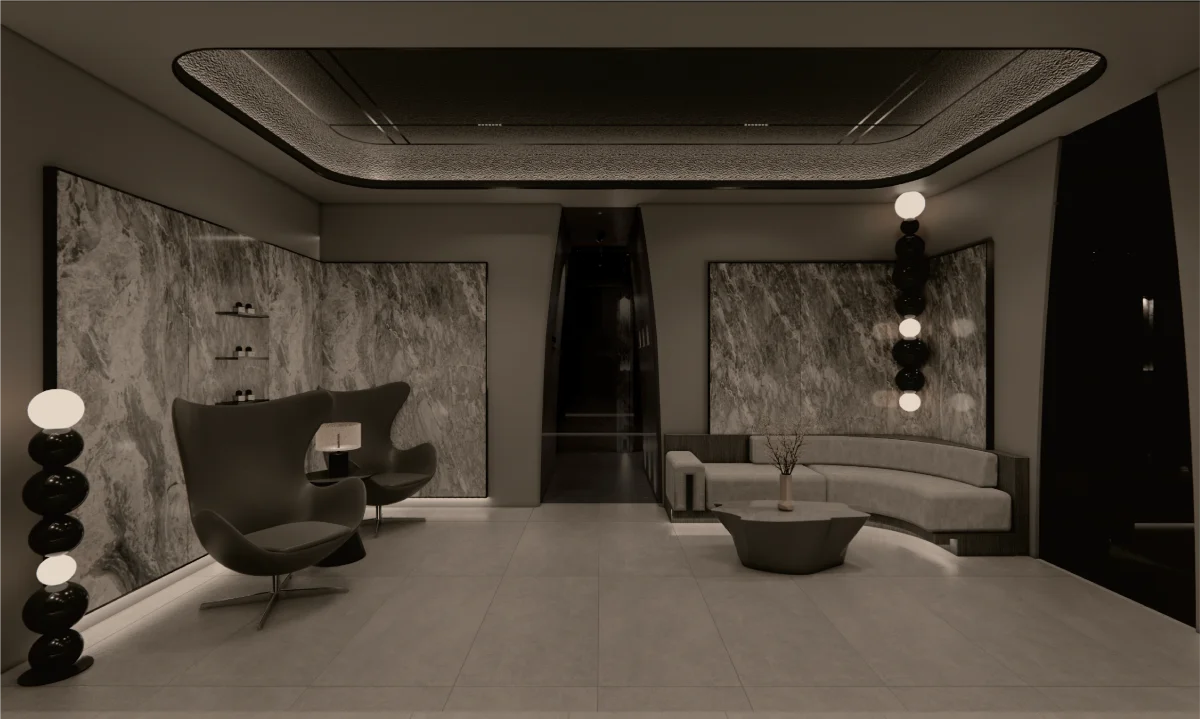
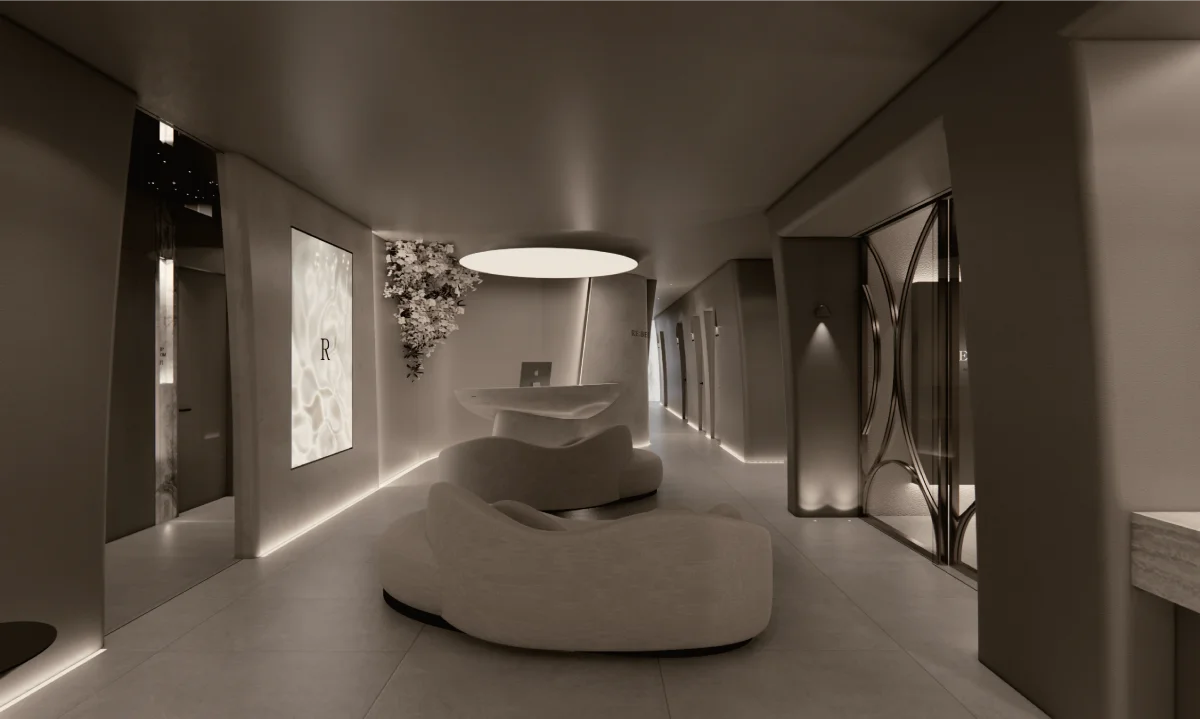
(1,322 m²)
Suites
KI Tower, Gangnam-daero
Station Exit 10
Why the Calendar Follows the Collagen, Not the Flight
A scar course cannot be crammed into one week, and the limit comes from dermal biology instead of from scheduling. Every subcision release or resurfacing pass sets off a repair cycle in the dermis that unfolds over weeks: existing collagen is partially disrupted, then fresh collagen and elastin are laid down as the wound heals, and the freed pocket beneath a released scar fills only as that new tissue organizes. Bipolar fractional radiofrequency work documented this dual response directly, showing both neoelastogenesis and neocollagenesis in treated skin. A second pass laid onto a floor still rebuilding from the first works against its own foundation; the first cycle has to close before the next one earns its place.
Hantash BM, Ubeid AA, Chang H, Kafi R, Renton B. Bipolar fractional radiofrequency treatment induces neoelastogenesis and neocollagenesis. Lasers Surg Med. 2009;41(1):1-9. doi:10.1002/lsm.20731
The energy technique that supports a scar plan is deliberately gentle for the same travel-friendly reason. A large physician survey of monopolar radiofrequency facial treatments established that a multiple-pass, moderate-energy protocol reaches a clinical tightening endpoint with markedly better comfort and a lower adverse-event rate than a single high-energy pass, the trade a visitor wants, since a restrained setting means a bruise or flush that fades before a flight, not a reaction that shadows the rest of a trip. RE:BERRY Gangnam applies that layered, moderate-energy approach across the scar course precisely so each in-trip pass settles predictably inside the days a visitor has.
Dover JS, Zelickson B; 14-Physician Multispecialty Consensus Panel. Results of a survey of 5,700 patient monopolar radiofrequency facial skin tightening treatments: assessment of a low-energy multiple-pass technique leading to a clinical end point algorithm. Dermatol Surg. 2007;33(8):900-907. doi:10.1111/j.1524-4725.2007.33191.x
Skin tone shapes the between-trips risk more than scar type does. Radiofrequency heats by tissue resistance and leaves melanin untouched, so it is applied across phototypes, and a Japanese series of non-ablative monopolar RF in Asian skin reported sustained improvement through six-month follow-up with no scarring or pigmentary change. That matters for a course a patient carries home: darker and easily-pigmenting skin can still throw a post-inflammatory mark during the healing weeks, so the physician screens phototype at the mapping visit, sets a moderate energy for that reason, and uses the overlay checkpoints partly to catch any pigment shift early and adjust the next pass before it lands. The literature explains why a released, RF-supported scar keeps improving over months; the standardized-lighting photos you send between trips are what confirm a given scar actually did.
Kushikata N, Negishi K, Tezuka Y, Takeuchi K, Wakamatsu S. Non-ablative skin tightening with radiofrequency in Asian skin. Lasers Surg Med. 2005;36(2):92-97. doi:10.1002/lsm.20136
Questions Visitors Ask About Planning Scar Removal in Korea
How many trips to Korea does a full scar course take?
There is no fixed number; it depends on how you split it. The course itself is 3-5 sessions spaced four to six weeks apart, so a visitor returning to Seoul every one to two months might do it across three or four trips, one cycle each. Someone who cannot return does the mapping and first pass in a single stay, then continues the remaining sessions remotely off overlay photos. The physician sets the split at the mapping visit around your travel reality, and the a consultation-based quote figure is confirmed there once the number of cycles is clear.
Can I get more than one session done in a single longer stay?
Sometimes, but not by stacking passes on consecutive days. A collagen cycle needs weeks to settle, so a second pass in the same stay is only added where your scar mix leaves untreated, unbruised skin, for example resurfacing one zone while a released zone heals separately. The physician decides at the mapping visit whether any of your scars can be paired that way, and says plainly which cannot share a stay.
I only have four or five days in Seoul. What can realistically be done?
A concentrated four-to-five-day stay usually finishes one clean cycle: the mapping visit, a subcision release or a resurfacing pass, and a same-visit review before you fly, with the bruise or flush fading over five to seven days. That is a real, self-contained step, not a partial one. The remaining passes of a 3-5 session course are then carried on later trips or continued by photo, dated off how your healing reads.
How does the remote follow-up between trips actually work?
After you fly home you send checkpoint photos on WhatsApp at set dates, and the same physician compares them against the standardized-lighting baseline taken in Seoul, overlaying the two to judge how far each freed pocket has filled. Because scar change is slow and easy to miss in a bathroom mirror, this overlay read is what dates your next pass and flags anything, like a pigment shift, worth adjusting before your return.
Does splitting the course across trips make the result worse?
No. The correction ceiling is set by scar type, not by whether the sessions happen on one trip or four, and the four-to-six-week spacing is required either way, so split trips simply let the natural gap do the spacing for you. What splitting demands is discipline on the follow-up photos, since those are how the physician keeps a course consistent when the patient is not in the room.
What if I book a treatment abroad and something looks wrong after I get home?
That is exactly what the pre-departure review and the overlay track are built to prevent. The in-person check before you fly confirms the pass took cleanly, so you are not left to read a fresh bruise alone, and the same physician stays reachable on WhatsApp for the healing weeks. If a photo shows something off-pattern, the doctor who did the pass advises directly, which is far more useful than a stranger assessing work they never performed.
How far ahead should I book if I am flying in for scar treatment?
Three to four weeks ahead is comfortable, and more during holiday peaks, because the goal is to fit the mapping visit and the first session into the same trip, so you do not lose a day to a consultation-only slot. Sending your scar photos and exact dates when you book lets the physician pre-read what your stay can finish, so the calendar is roughly drawn before you land.
Can I fly home the same day or day after a scar session?
For a single session, generally yes. A subcision release or a laser pass fits an afternoon and leaves a bruise or redness that settles over the following days with no peeling or crusting from the way sessions are run here, so flying a day or two later is routine. The pre-departure review is timed to confirm you are clear to travel before you go.
My scars are on darker skin and I live somewhere hot. Is that a problem for travel?
It is something the scar plan builds in, and it does not rule you out. Darker and easily-pigmenting phototypes get a restrained, moderate-energy technique to hold post-inflammatory marks low, and the between-trips overlay photos are used partly to catch any pigment shift early. Daily sun protection in a hot climate is stressed in your written aftercare, since sun exposure on healing skin is the main driver of marks after you leave.
What does the aftercare look like once I have left Korea?
You leave with a written card covering heat, cleaning, and daily sun protection while the dermis remodels, plus the checkpoint dates for your follow-up photos. The physician reviews each set on WhatsApp, so aftercare stays an active read of how your specific scars are healing, with the next step adjusted to what the images show. You are never left interpreting a leaflet alone.
Will the same doctor handle every session even if they are months apart?
Yes, and that continuity is what makes a split course work. The physician who stretch-tested your scars and felt which cords released performs every return pass and reads every overlay in between, so a slow-filling pocket at day 90 is judged against how that exact scar behaved on the table, a read no fresh chart can reconstruct when your sessions are scattered across trips.
Should I plan sightseeing around the treatment, or the other way round?
For a single in-trip cycle the treatment slots easily into a normal Seoul itinerary, since the clinic is a two-minute walk from Gangnam Station, so an afternoon session leaves the rest of the day free, and most guests are out that evening. The one thing worth protecting is the pre-departure review slot, so leave the last morning flexible instead of booking it against a tight airport run.
Can I combine scar work with other treatments while I am already in Seoul?
Often, within the same spacing logic. Since a scarred cheek usually carries enlarged pores and post-acne redness too, those can be settled alongside the scar work when they do not compete for the same healing skin, and other unrelated treatments can share a trip if the physician confirms nothing overlaps. It is planned at the mapping visit so a combined stay still respects each cycle rather than crowding them.
What do I send first to plan scar treatment in Seoul from abroad?
Message RE:BERRY on WhatsApp with close, well-lit scar photos and your exact Seoul dates. A coordinator replies in English, the physician pre-reads what your stay can finish, and you get a rough trip calendar before you fly, then the full written plan at the in-person mapping visit. Scar mapping for international guests is best booked ahead (walk-ins possible), and an interpreter in one of five languages sits in on the visit.
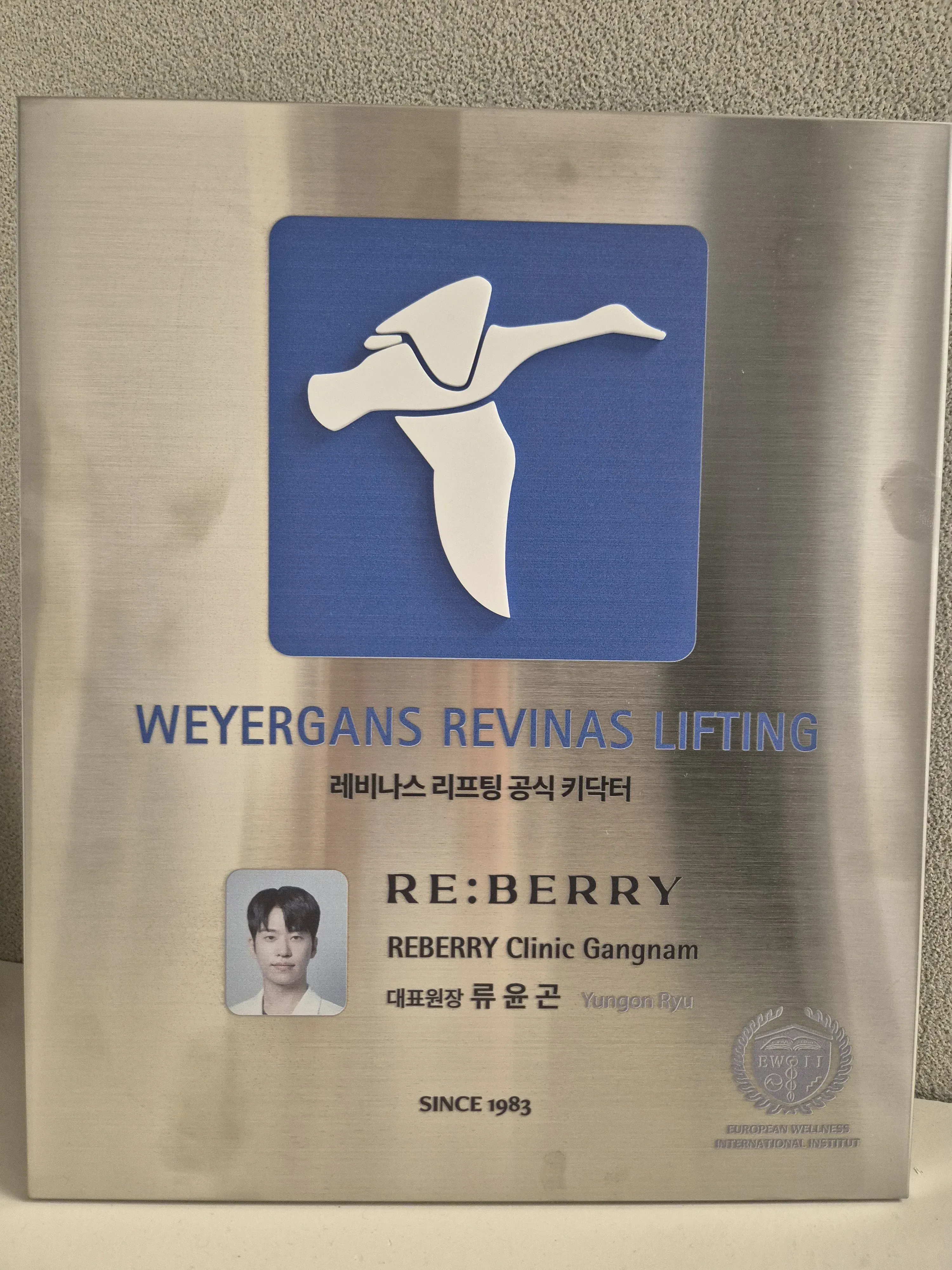
Only Authentic, Brand-Certified Equipment
Every device at RE:BERRY is MFDS-certified and manufacturer-verified. We never use counterfeit or grey-market equipment.
Plan Your Scar Course Around Your Seoul Trip
Send close scar photos and your exact Seoul dates to RE:BERRY on WhatsApp. The physician pre-reads what one stay can finish, drafts the trip calendar backwards from your flight home, and tells you plainly which scars should lift and which will only blend, with the a consultation-based quote figure in writing before anything is scheduled. The doctor who maps your scars runs every session and every overlay checkpoint, in Seoul or from home.
Why Tens of Thousands of Foreign Patients Are Choosing This Gangnam Clinic — Business Wire, 2026-04-13
Numbers That Tell Our Story
Cumulative across RE:BERRY clinics (Gangnam · Myeongdong · Incheon Airport).
Brand-Authenticated Equipment & Training




Our doctors are certified by Korea's top dermatological societies






Latest from Our Instagram
Real treatments, patient reactions, and behind-the-scenes from RE:BERRY.
Tap any video for sound & fullscreen
What our patients say
Real verified reviews from our Google Business Profile
I had a really nice experience at Reberry Clinic Gangnam. I received a Hydrafacial treatment, and the whole process was very comfortable. The staff were kind and explained everything clearly, and the clinic itself felt clean and relaxing. I also loved the interior — the clinic felt very clean, elegant, and luxurious, w...
I had such an amazing experience at this clinic! The clinic itself is absolutely stunning the design is beautiful, elegant, and luxurious, and the service is truly top-notch. Everything was so well organized, and I felt very comfortable from the moment I walked in.
I had a Korean filler treatment to reduce my nasolabia...
i had a good time having the Juvelook treatment!
It was my first time in Korea, all the Doctor & team are bery helpful. Dr. Ian & cheong a lee(jenny) are really helpful.
I understand more about my skin.
The clinic is calm, welcoming.
there are many activities i didn’t expect to find in a beauty clinic; phot...
So happy to found the beauty clinic in Korea that very inclusive and Muslim friendly. They have a prayer space for muslim and they prepare a female doctor for me. The clinic is so comfortable with aesthetic design make me feel relaxed. The doctor and the staff are very professional and helpful so all of the procedure r...
As someone who has struggled with acne since middle school, I decided to stop here during a layover in Seoul and was amazed by the treatment.
Firstly, the environment is elegant and peaceful. Feels very luxurious and the treatment from staff was as such as well. Speaking of staff, they were extremely professional, car...
Book Your Personalized Consultation
Share your details and our multilingual team will contact you as soon as possible through your preferred messenger.
- ✓ Free online skin consultation with a doctor
- ✓ Personalized treatment plan & pricing
- ✓ 5-language support (EN/ZH-CN/ZH-TW/JA/ES)
- ✓ Response as soon as possible via your preferred messenger
Science Collagen-cycle biology, moderate-energy technique, and pigment safety across trips — peer-reviewed references
Planning a scar course around a trip rests on the biology of the collagen cycle each pass sets off. Hantash (2009) showed that bipolar fractional radiofrequency drives both neoelastogenesis and neocollagenesis in treated skin, the weeks-long repair that fills a freed scar pocket and the reason passes cannot be stacked. Dover (2007), surveying 5,700 monopolar radiofrequency treatments, established a multiple-pass, moderate-energy technique that reaches a clinical endpoint with markedly better comfort — the restrained approach that lets an in-trip pass settle before a flight. Kushikata (2005) documented sustained improvement in Asian skin with no pigmentary change, reflecting that radiofrequency heats by resistance and leaves melanin untouched, which frames the phototype screening and the between-trips overlay checks used to keep post-inflammatory marks low.
- Hantash BM, Ubeid AA, Chang H, Kafi R, Renton B. Bipolar fractional radiofrequency treatment induces neoelastogenesis and neocollagenesis. Lasers Surg Med. 2009;41(1):1-9. doi:10.1002/lsm.20731
- Dover JS, Zelickson B; 14-Physician Multispecialty Consensus Panel. Results of a survey of 5,700 patient monopolar radiofrequency facial skin tightening treatments: assessment of a low-energy multiple-pass technique leading to a clinical end point algorithm. Dermatol Surg. 2007;33(8):900-907. doi:10.1111/j.1524-4725.2007.33191.x
- Kushikata N, Negishi K, Tezuka Y, Takeuchi K, Wakamatsu S. Non-ablative skin tightening with radiofrequency in Asian skin. Lasers Surg Med. 2005;36(2):92-97. doi:10.1002/lsm.20136
These references shape how a visitor's scar course is planned at RE:BERRY's Gangnam aesthetic clinic: a physician stretch-test to sort each scar and a trip calendar built backwards from the departure date; subcision to release tethered scars and RF microneedling or laser to resurface textured floors, sequenced so no pass lands on skin still bruised; the multiple-pass, moderate-energy radiofrequency technique chosen so an in-trip pass settles before a flight and holds post-inflammatory risk low for darker phototypes; and standardized-lighting overlay photos read on WhatsApp through the remodeling window under the same licensed physician, whether the course runs across one stay or several. This information is for educational purposes only and is not medical advice.
How to Find RE:BERRY Gangnam
2 minutes from Gangnam Station Exit 10. B1–B2, KI Tower — the building with the all-black entrance you can't miss.
RE:BERRY Clinic Gangnam
B1–B2, KI Tower, 69-gil 8, Gangnam-daero, Seocho-gu, Seoul
서울시 서초구 강남대로69길 8, 지하1·2층 (KI타워)
Also available at: Myeongdong · Incheon Airport