Laser Spot Removal When It Is Recommended in Korea
Whether a laser is the right call depends on the spot, not the wish. The physician reads the mark on the imaging, names it, then recommends a targeted pass for a defined lentigo or holds back for melasma and deep pigment, a short walk from Gangnam Station in Seoul.
Laser Spot Removal
Laser Spot Removal
Laser Spot Removal: When to Choose It
Whether a laser is the right call depends on the spot, not the wish. The physician reads the mark on the imaging, names it, then recommends a targeted pass for a defined lentigo or holds back for melasma and deep pigment, a short walk from Gangnam Station in Seoul.

Across RE:BERRY Clinics
1,000,000+ Treatments
Direct Consult & Treatment
Medical Director
From Gangnam Station Exit 10
2-Min WalkWhen does a physician recommend a laser to remove a spot?
A laser is recommended when the mark is a well-defined, epidermal pigment lesion such as a solar lentigo or a freckle, sitting as a discrete brown spot on skin that tolerates the energy. It is held back, or paired with tranexamic-acid prep and low-fluence toning, when the pigment is melasma, sits deep in the dermis, spreads as a blended haze, or the skin tone runs deep enough to rebound. At RE:BERRY Gangnam the physician names the lesion on the imaging screen before the recommendation is made, and says so plainly when a laser is not the right tool for what you brought in.
Effects & Progress
Effects & Progress
Each pass is matched so the light is absorbed by the target pigment and little else, which is how a defined epidermal spot becomes the case a laser is recommended for while a blended field usually is not.
A defined spot crusts into a fine speck and low-fluence toning leaves only brief warmth. The pass is timed early in the stay, and sun protection starts at once so the barrier settles before the flight.
The discrete lentigo sloughs and reads lighter first, since epidermal pigment clears fastest. This is the checkpoint where the physician decides whether one pass finished it or a second is worth it, usually once you are home.
The working phase for anything deeper or blended that a course was recommended for, spaced three to four weeks apart. Dermal pigment and melasma respond gradually as tone evens, with a light collagen benefit alongside. Response speed varies by individual.
Maintenance period. Because a sun-driven tendency can re-form pigment, especially with travel to sunnier climates, daily SPF plus a guided toning rhythm for melasma-prone skin hold the result; RE:BERRY sets the interval that suits your skin.
Treatment Process
Laser Spot Removal — How the Recommendation Is Reached
※ Illustrative images are AI-generated to help explain the treatment process.Effects & Progress
Effects & Progress
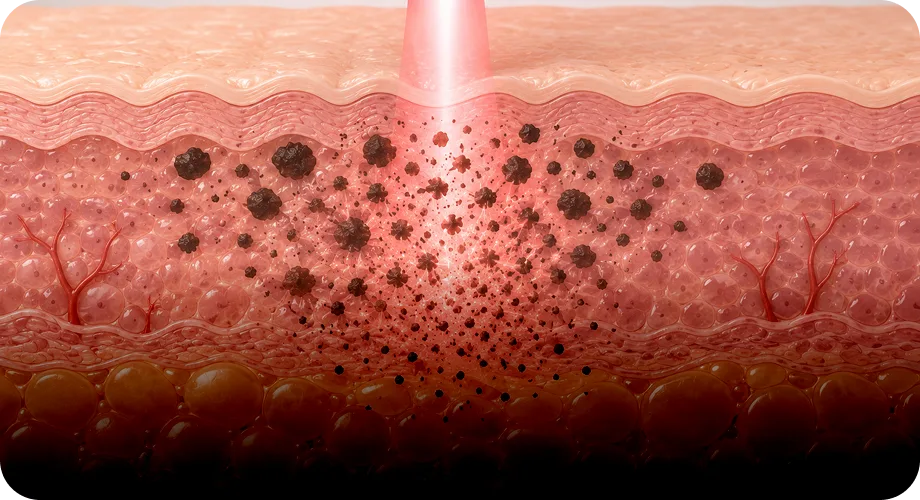
The whole basis for recommending a laser on one spot but not another is that light of the right wavelength and pulse is absorbed by the target melanin and heats it while sparing the tissue around it. A defined, shallow lentigo is close to the ideal target, a dense parcel of pigment the laser can fracture cleanly. The further a mark drifts from that, toward blended melasma or deep dermal pigment, the weaker the case becomes, because the energy no longer lands on a clean target. This is the physical reason the physician names the lesion before recommending anything, and never just fires one preset at whatever is brown.
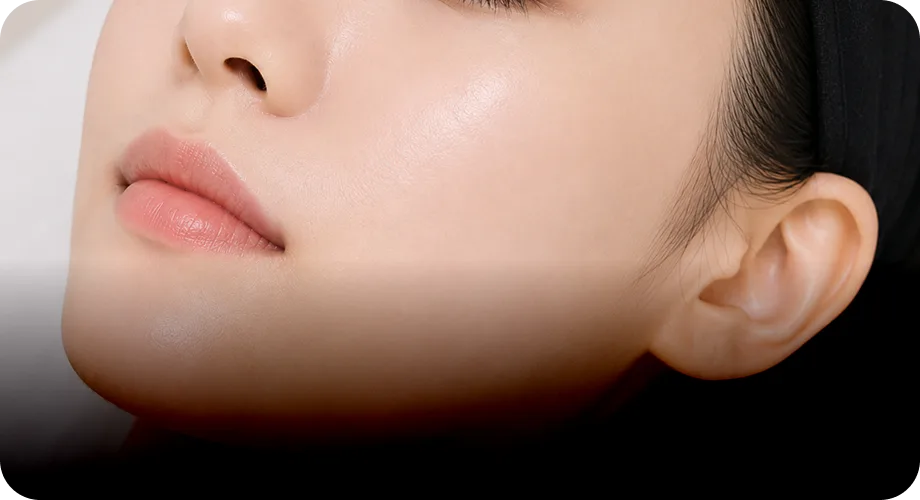
A face rarely carries one tidy spot. There is usually a discrete mark sitting inside a wider field of uneven tone, and sometimes melasma underneath. When the reading supports a laser, the matched pass lifts the defined lentigo while the surrounding tone evens alongside it, so the spot and the field improve in step, with no single mark cleared while the rest stays patchy. For the mixed case the honest picture is that some pigment resolves in a visit or two while the blended or deeper part is recommended as a slower, spaced plan, which is exactly what the recommendation is built to separate.
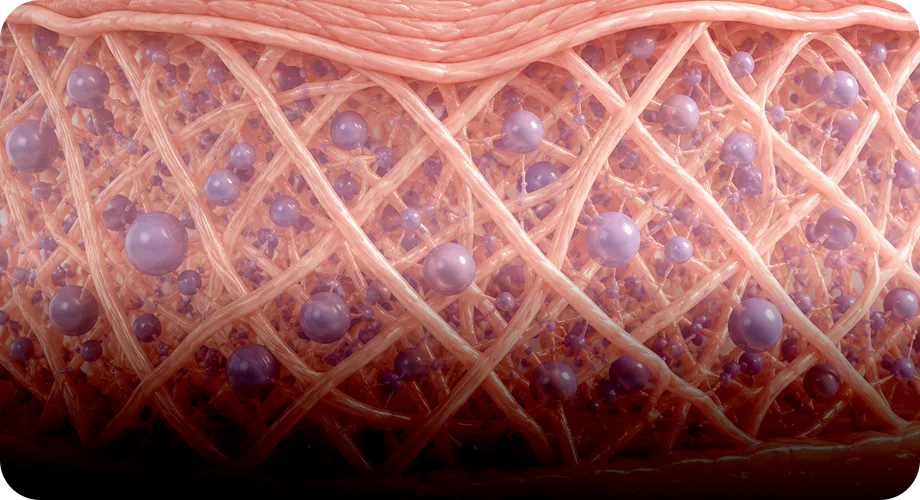
The same short pulses that fracture pigment carry a photomechanical stimulus into the dermis, and that nudges a measure of collagen remodeling as a secondary effect. Clearing the defined spot is the job; this comes with the wavelength. Over the weeks after a pass many guests find the treated zone reads a little smoother as well as more even, particularly around the cheeks where texture and pigment sit together, and much of that shows up once you are already home. It is a useful add-on that comes free with a recommended pass, not a separate treatment being sold, and it never tips the decision on whether to laser in the first place.

A recommended spot pass is built to fit a normal life, and for a visitor the recovery is planned around the calendar. A defined lentigo forms a small dark speck that flakes over several days; low-fluence toning for melasma shows little more than a brief warmth that passes within the hour. The physician times the pass early in the stay so any of that clears before departure. The only firm asks are diligent sun protection, a short hold on retinoids and acids, and skipping sauna, which keeps the barrier calm while the pigment clears and keeps a clean sunspot case clean.
Treatment Process
Laser Spot Removal — How the Recommendation Is Reached
※ Illustrative images are AI-generated to help explain the treatment process.
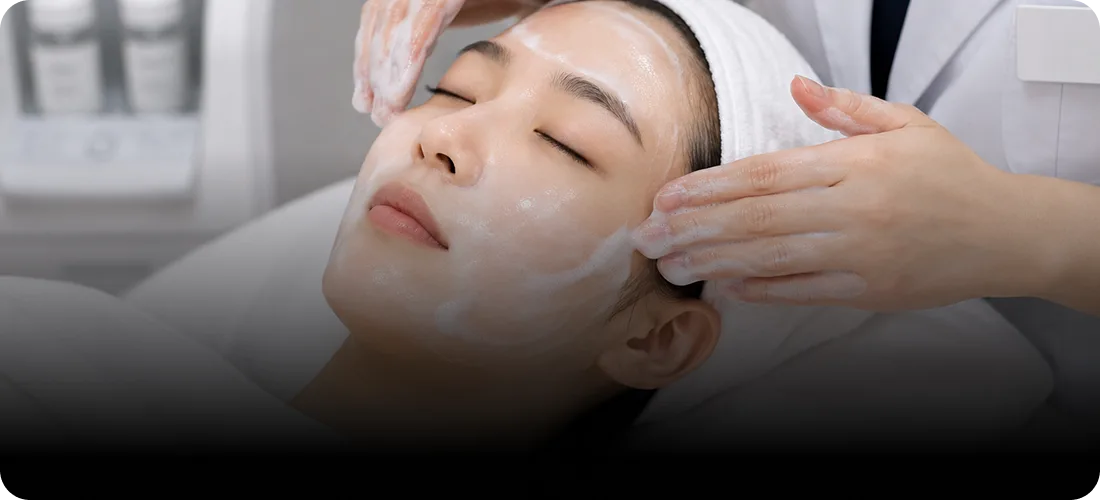
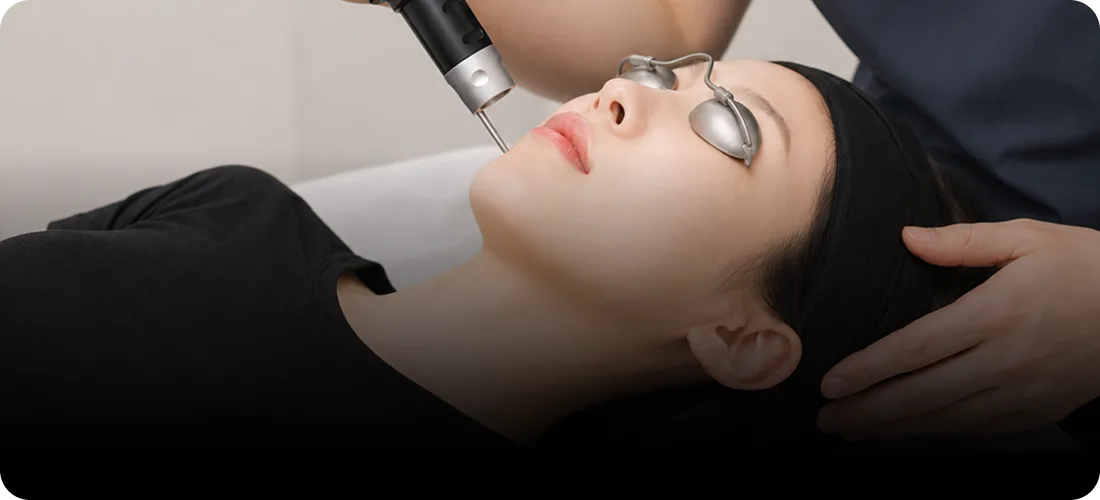
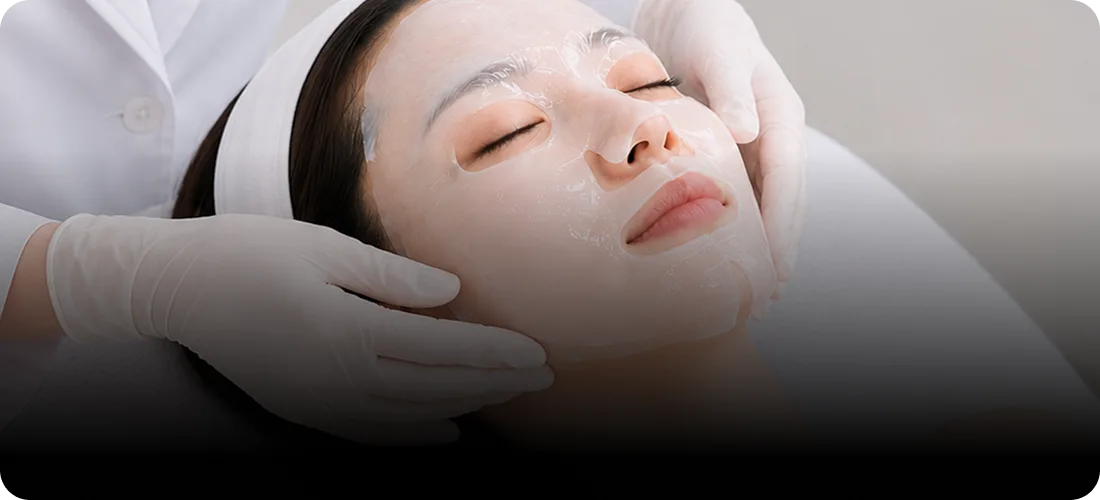
What a Recommended Laser Spot Removal Actually Gives You
- A named lesion before a recommendation: the physician logs whether the mark is a solar lentigo, freckle, melasma, Hori's nevus, or post-inflammatory pigment, so the advice you get matches the spot you have
- The completeness of a discrete case: a well-defined epidermal sunspot on tolerant skin is often a one-session job, occasionally two, and that gets stated as a plain fact
- A clear no when a laser is wrong: melasma, deep dermal pigment, and blended fields are flagged for restraint or a different route, so you are not talked into firing energy that can make the mark worse
- Skin-tone-aware energy: deeper phototypes get a patch test behind the ear and the fluence pulled down, because the risk of rebound pigment rises with melanin and climbs steeply on deeper skin
- The same physician from the imaging read through the pass to your review, so the person who decided the recommendation is the person who delivers and checks it
- Documented, standardized-lighting photos before and after, so the fade is judged against your own skin, not a memory or a marketing image
| Timeline | What to Expect |
|---|---|
| A treated lentigo takes on a fine dark speck and the skin shows brief warmth and pinkness that fades within hours; toning-treated melasma shows little more than a flush, and makeup is fine within a day | |
| The pinpoint darkening on a defined spot flakes away on its own; let it shed on its own and do not pick it, which keeps a clean sunspot case clean | |
| The discrete spot reads noticeably lighter as epidermal pigment clears fastest, and this is the checkpoint where a physician decides whether one pass finished it or a second is worth it | |
| For the deeper or blended pigment that a course was recommended for, tone evens gradually across the spaced sessions; response speed varies by individual and by lesion type |
Which Spots a Laser Is Recommended For, and Which Ones It Is Not
| Lesion read on the imaging | Typical laser recommendation | Why the criteria land there |
|---|---|---|
| Solar lentigo (defined sunspot) | Recommended: targeted pigment pass, often one session | Crisp border, epidermal depth, and a discrete target make it the cleanest case for a laser |
| Freckles (ephelides) | Recommended, with a sun-season caveat | Shallow and well-defined, though they can re-form with heavy sun, so aftercare carries weight |
| Melasma | Cautious: low-fluence toning course, not a single aggressive pass | Heat and light can provoke it, so restraint and tranexamic-acid prep replace a one-shot approach |
| Hori's nevus / dermal pigment | Recommended as a staged course, not one visit | Pigment sits deep in the dermis and answers only to repeated, spaced passes |
| Post-inflammatory pigment (PIH) | Often deferred first, then gentle if needed | It can settle on its own, and firing early risks feeding the very inflammation that caused it |
| Count: a few discrete marks | Leans toward a laser recommendation | Discrete targets are easier to clear completely than a diffuse scatter |
| Count: a blended, diffuse field | Leans toward toning or a combined plan | A haze without borders is a tone problem more than a spot problem |
| Skin tone: fair, tolerant (Fitzpatrick I-III) | Standard fluence, straightforward candidacy | Lower rebound risk widens the settings a physician can safely use |
| Skin tone: deeper (Fitzpatrick IV-VI) | Patch test, lower energy, closer follow-up | Rebound pigment risk rises with melanin, so the plan is built around caution |
Why This Matters
The single biggest predictor of whether a laser is recommended is what the spot is; how much someone wants it gone does not change that. A defined solar lentigo is the textbook case for a pigment pass; melasma sitting under a bright surface mark is the textbook reason a physician slows down. At RE:BERRY Gangnam a face that carries both is planned as both, with the lentigo cleared and the melasma worked separately at low fluence, each on its own setting.
KHIDI's 2025 international patient survey found 41.4% of respondents rank keeping the same doctor throughout as their leading criterion. The recommendation to laser a spot, or not, only holds if the physician who read the imaging is the one who delivers the pass and reads your fade afterward. At RE:BERRY that continuity is the default, so the judgment and the follow-through belong to one person.
Seoul pricing is part of why guests fly in for pigment work, but a published rate is only useful once the recommendation behind it is sound. RE:BERRY publishes its spot-removal pricing before you book, and the physician will still tell you if your mark is a case where a course, or no laser at all, serves you better than the session you came in asking for.
October – December 2026 Promotions
Exclusive packages for international patients. Swipe to see all offers.


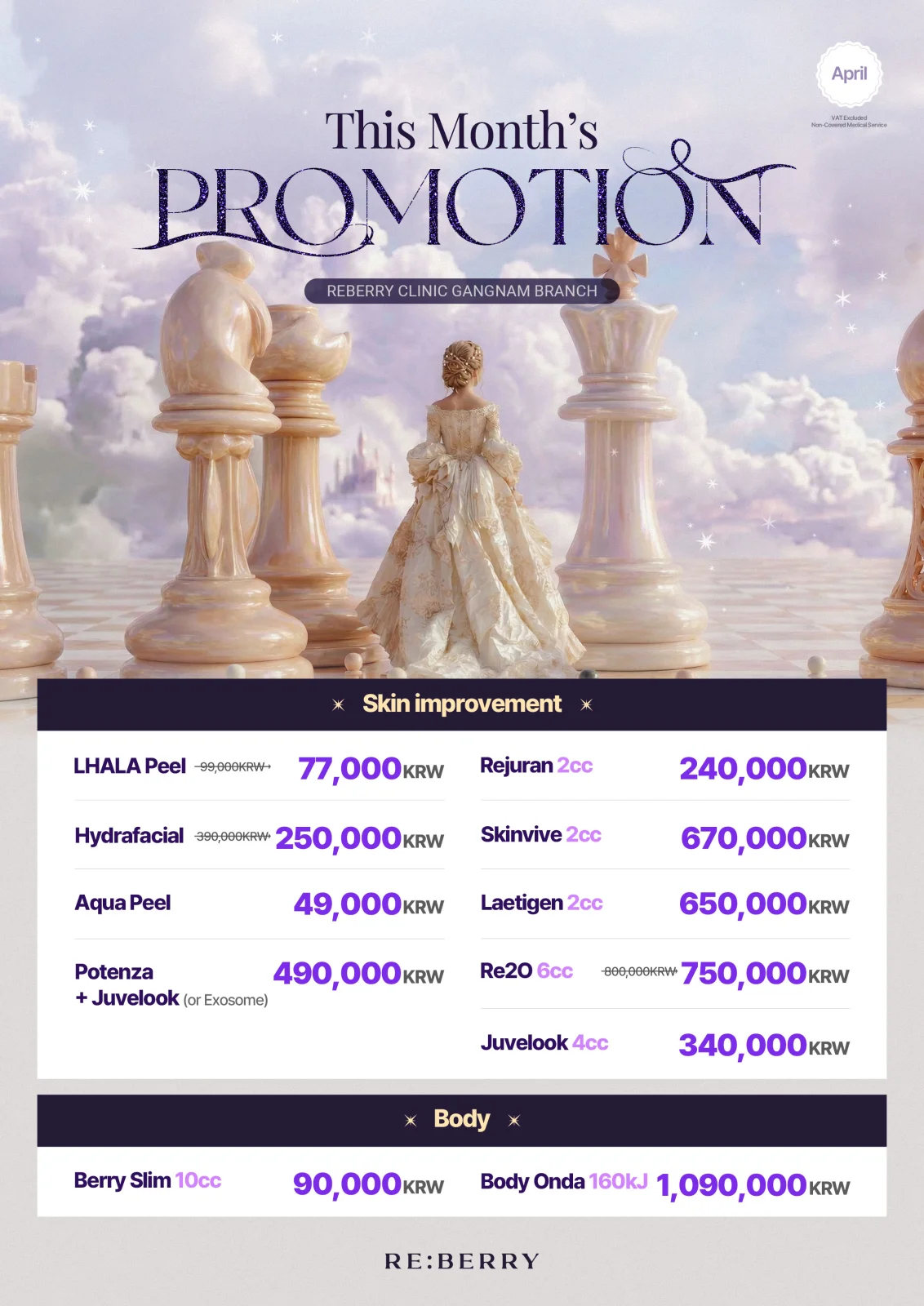
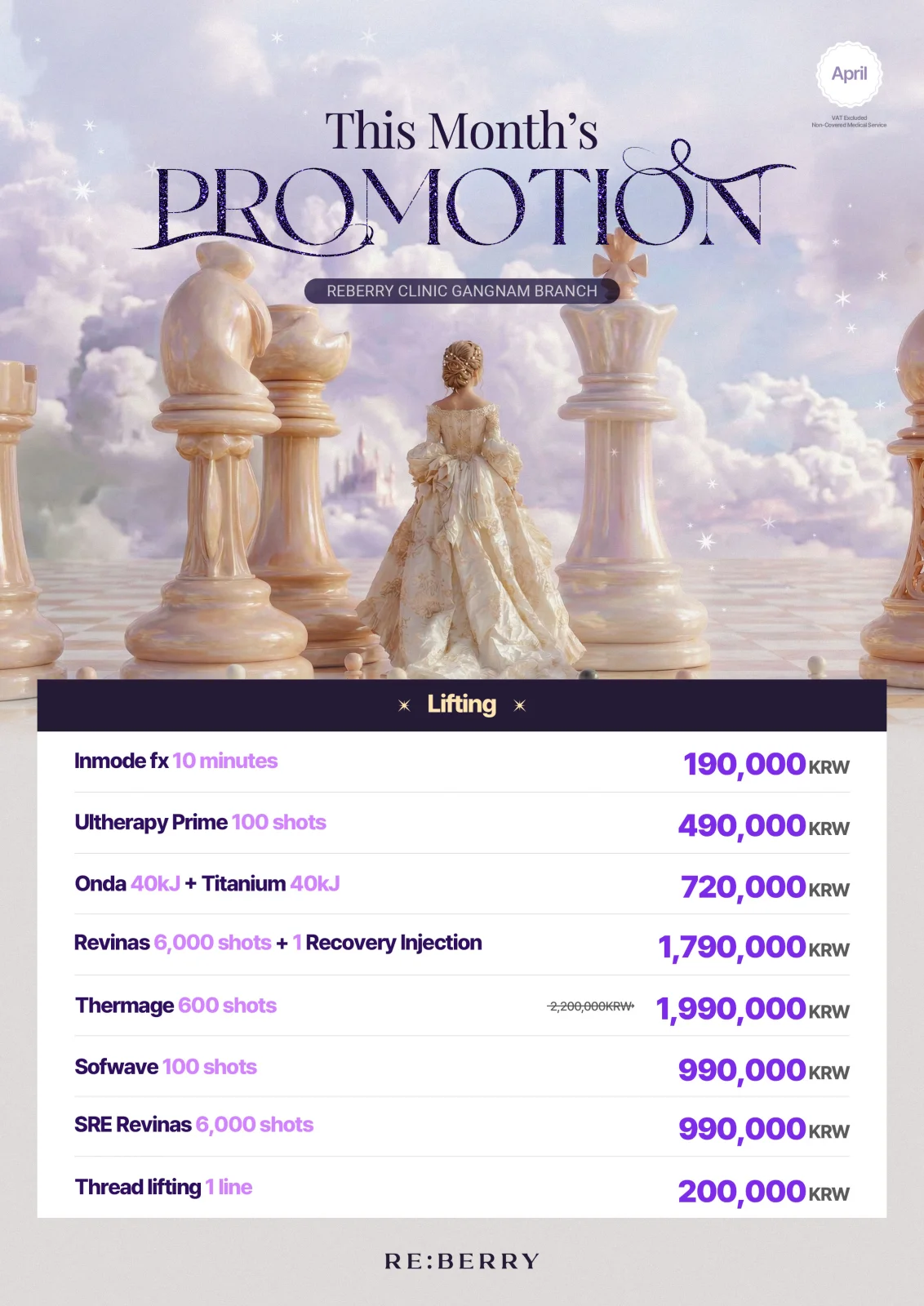
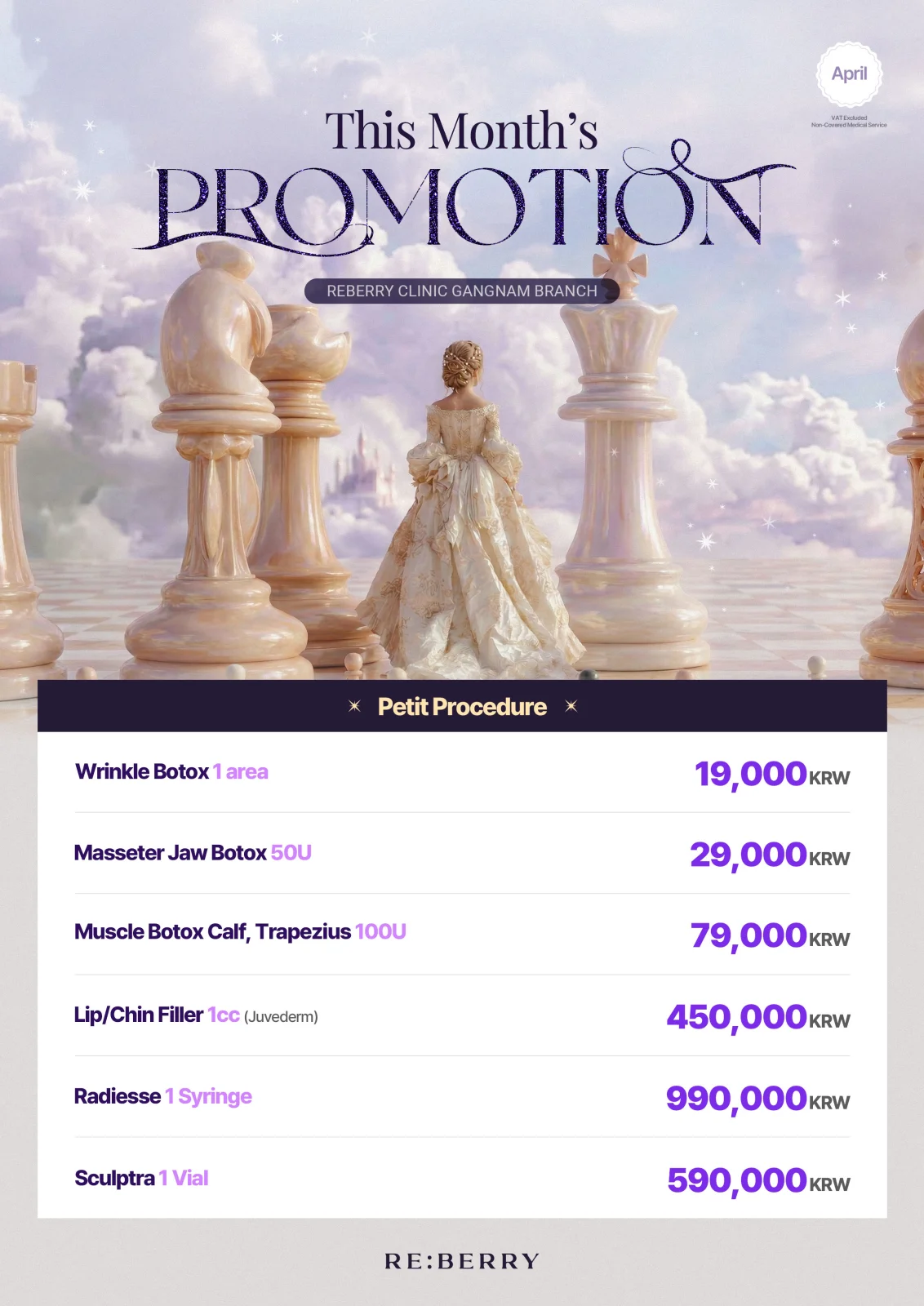
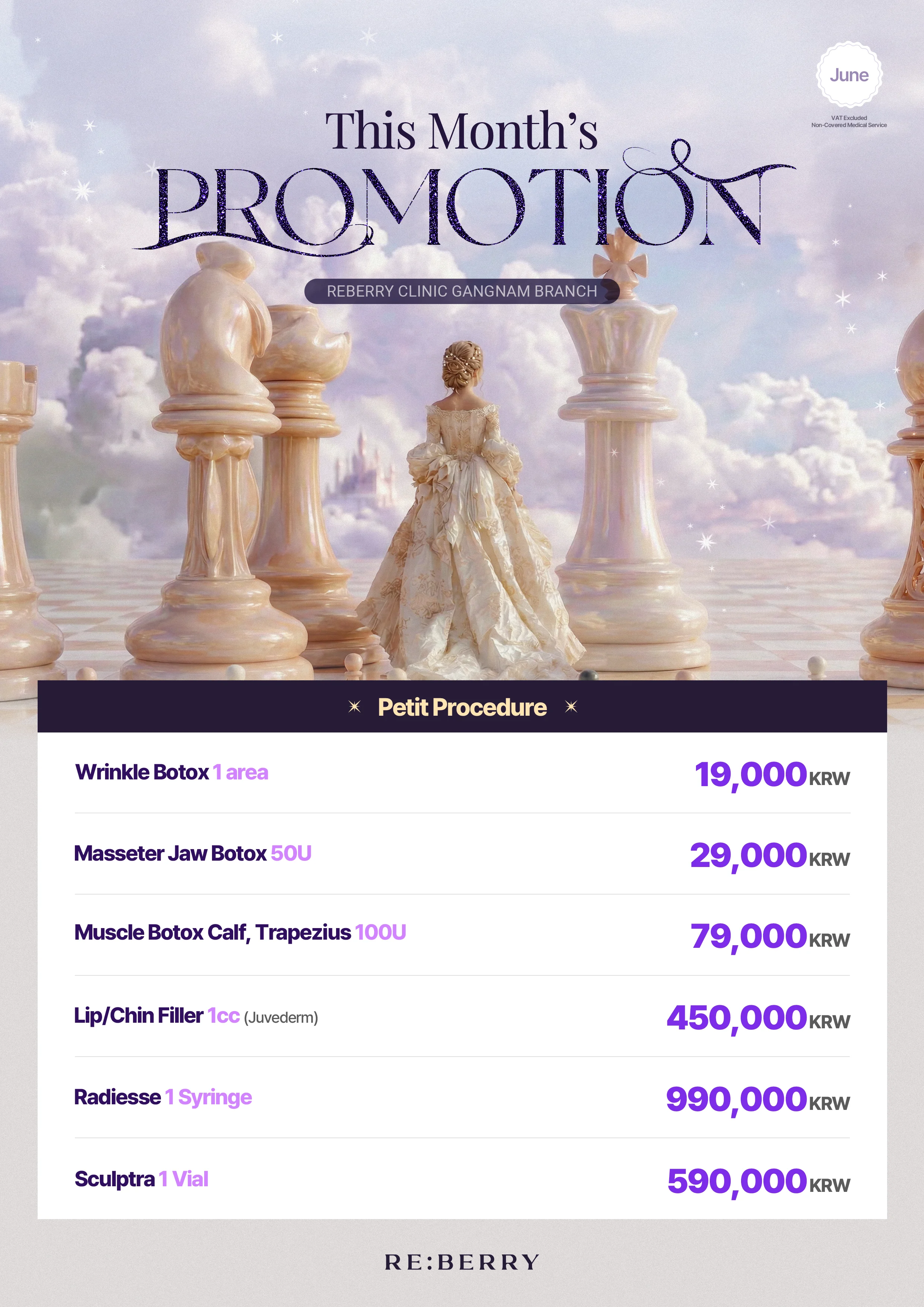
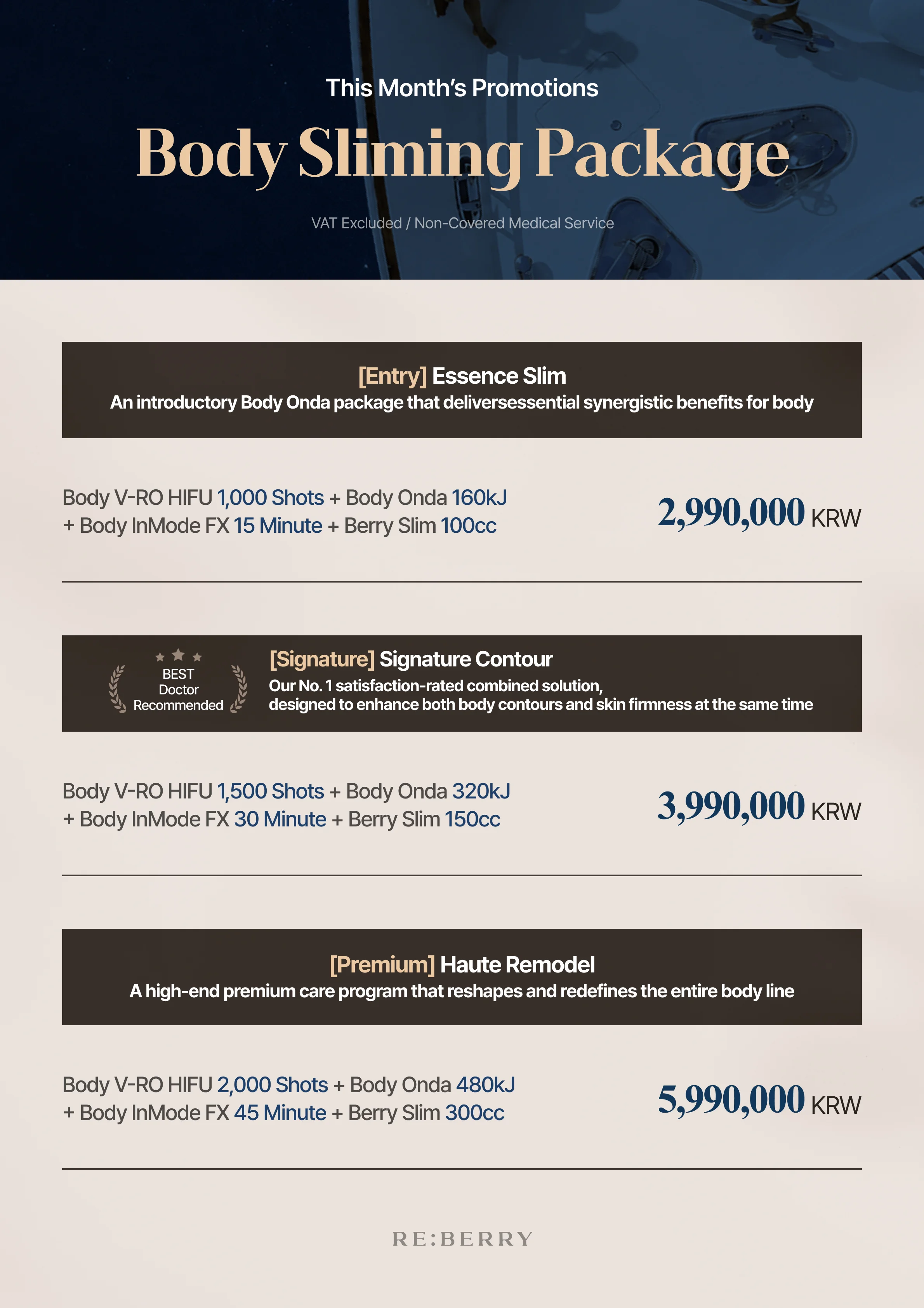
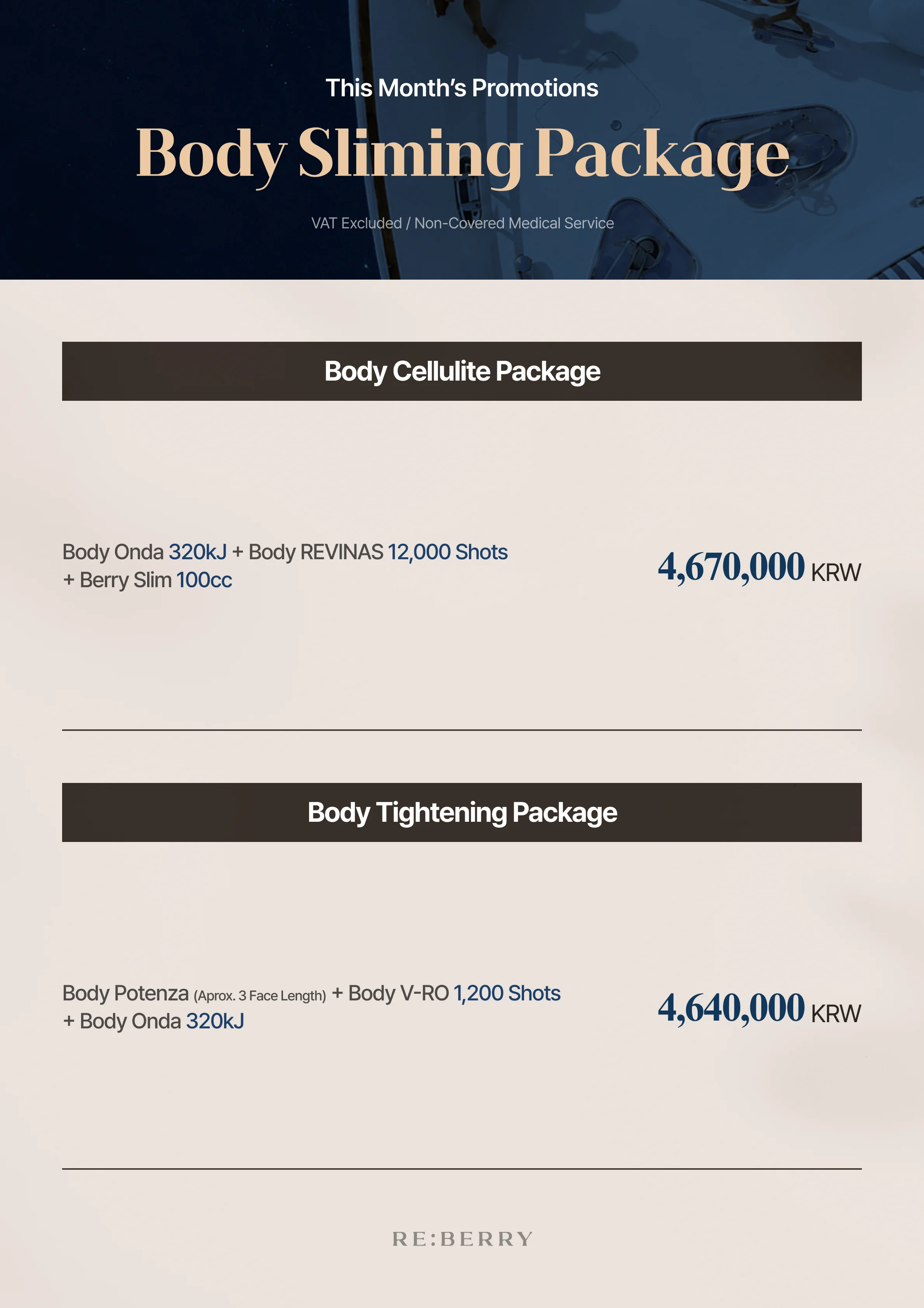
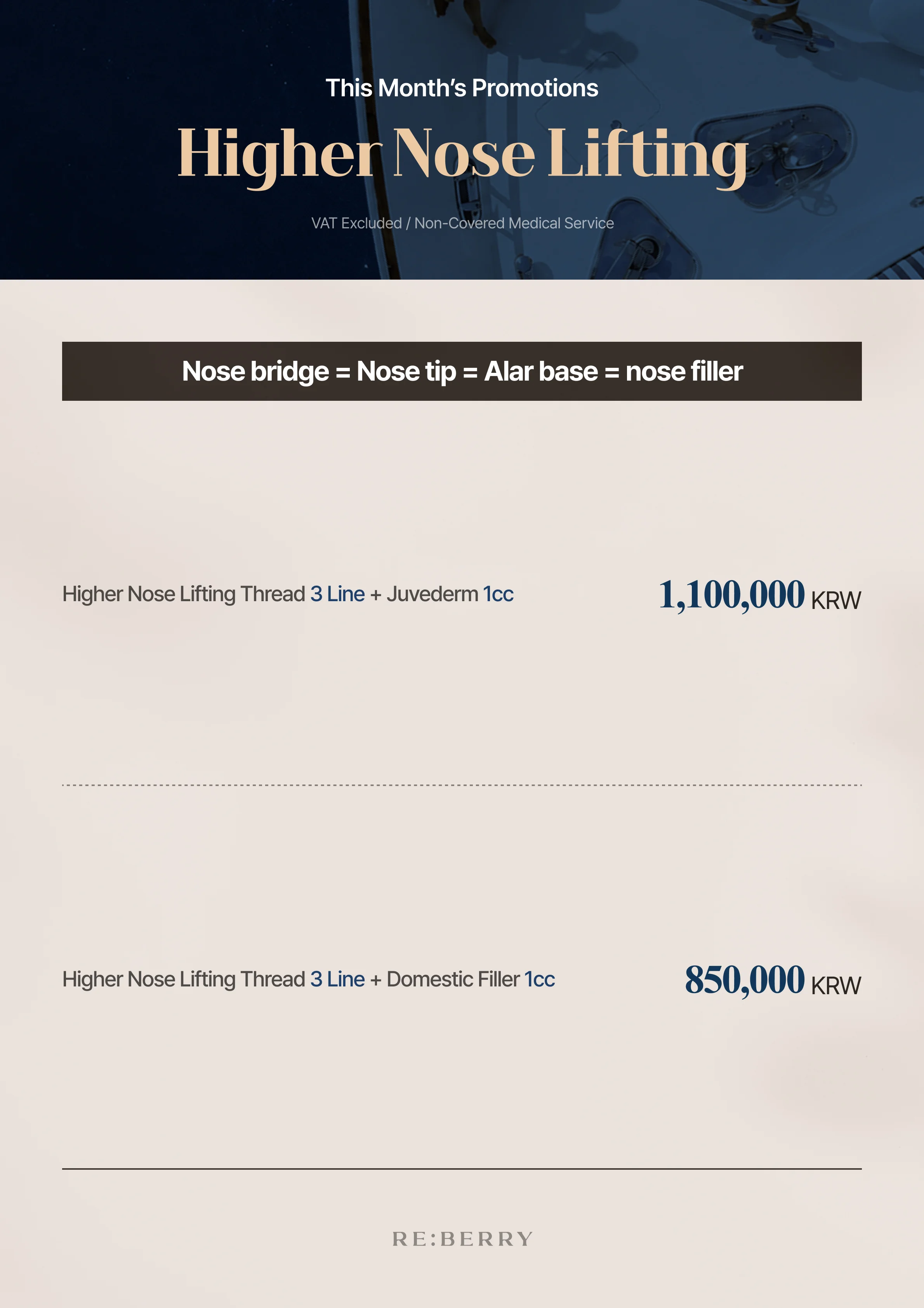
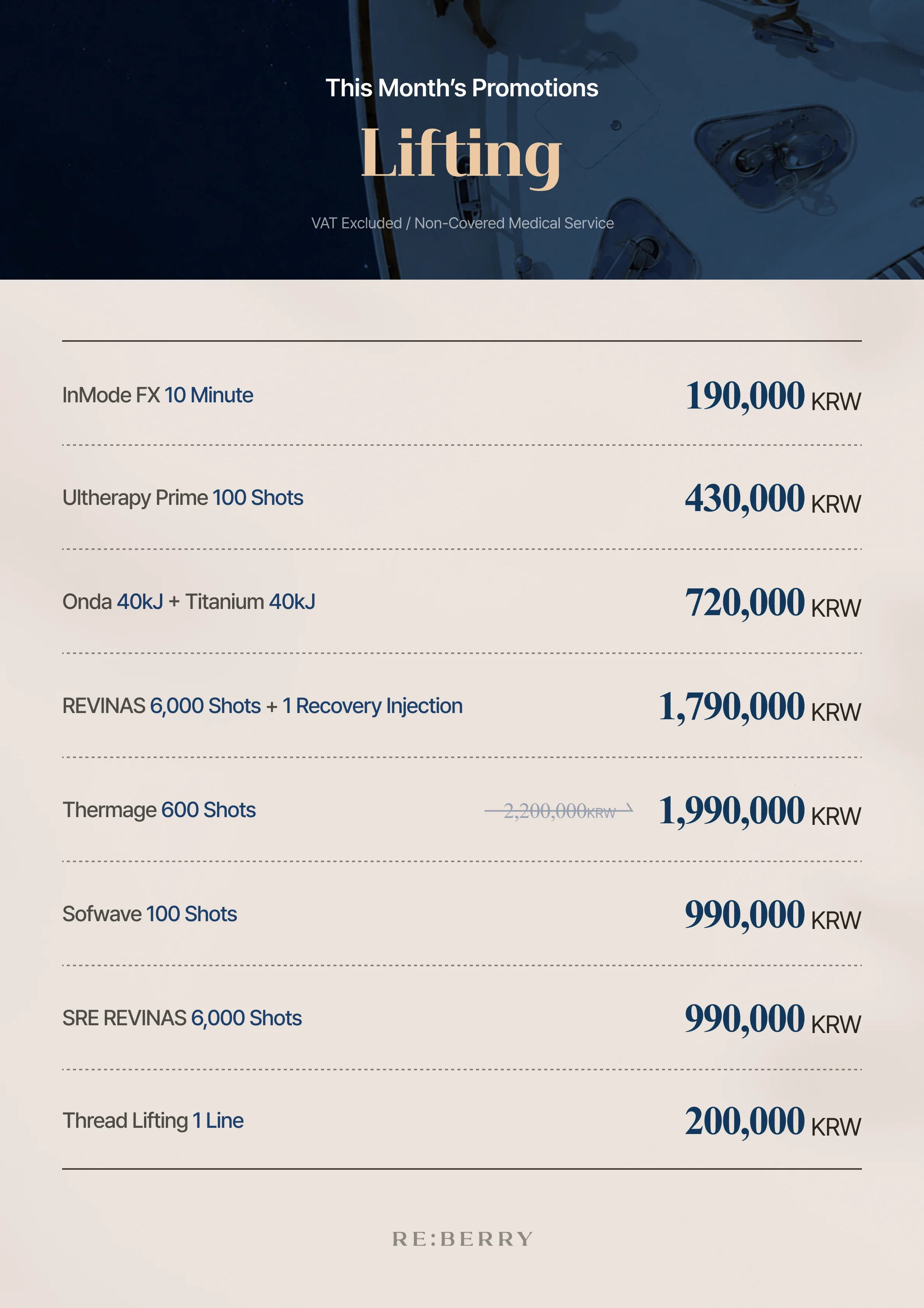
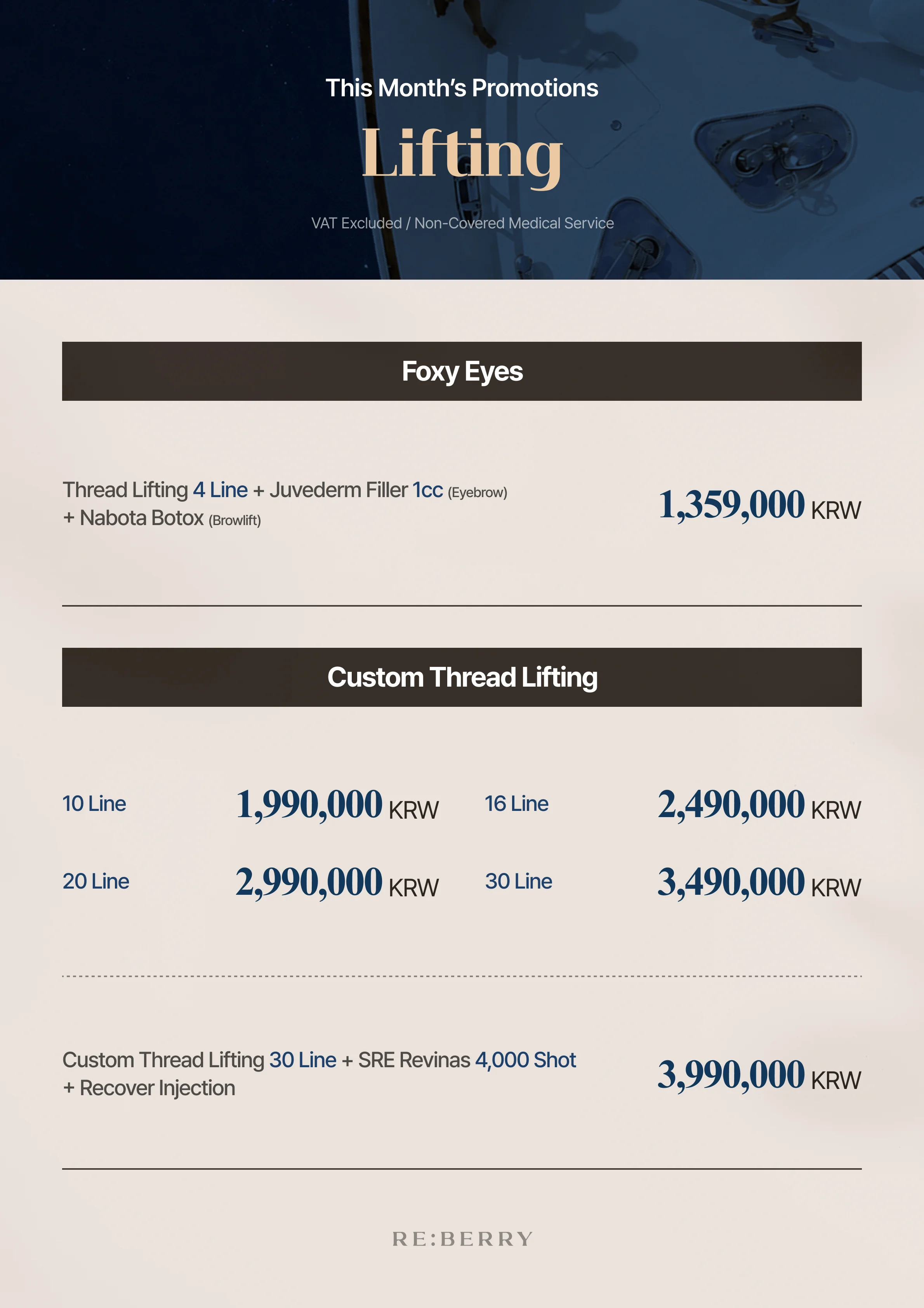
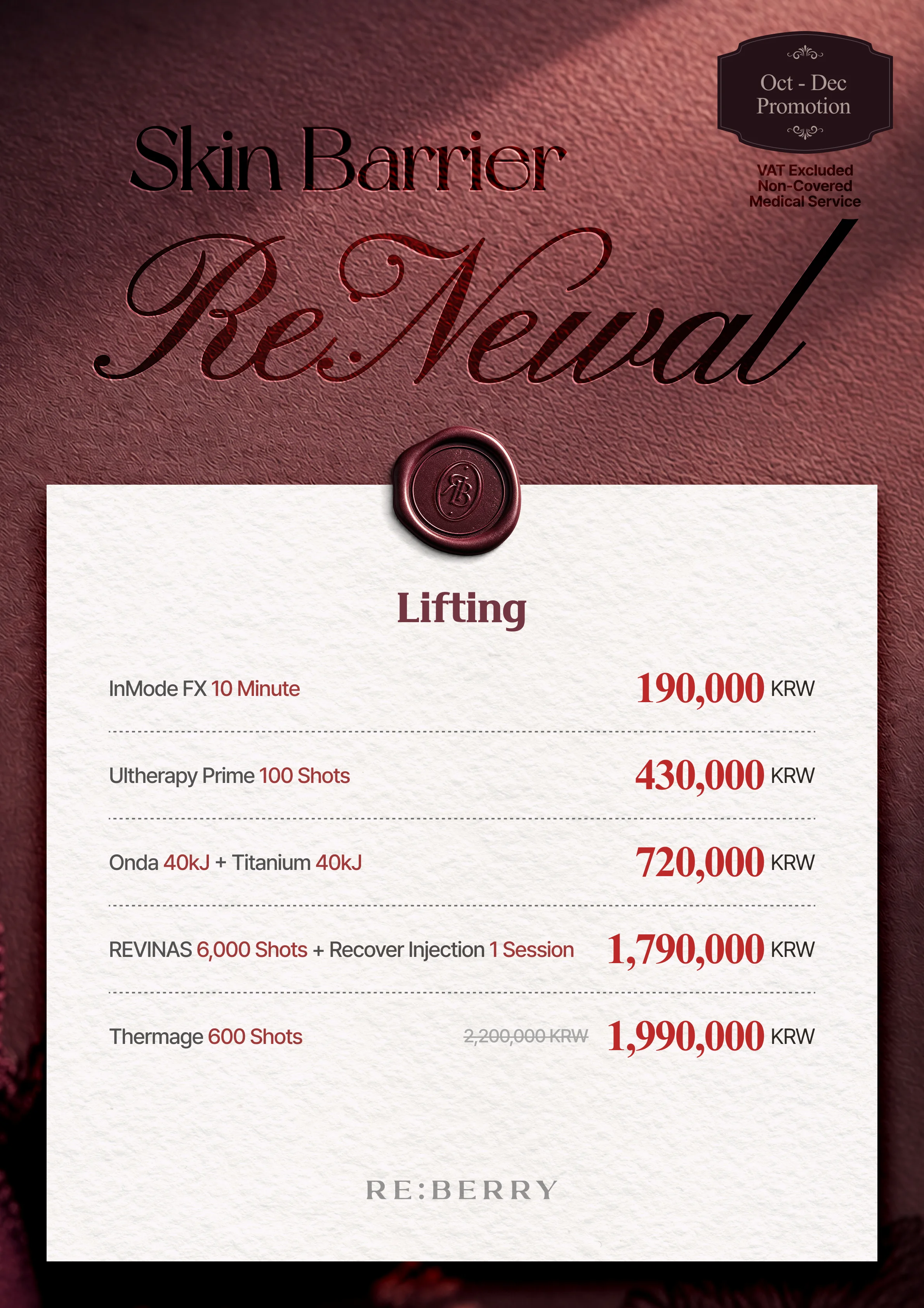
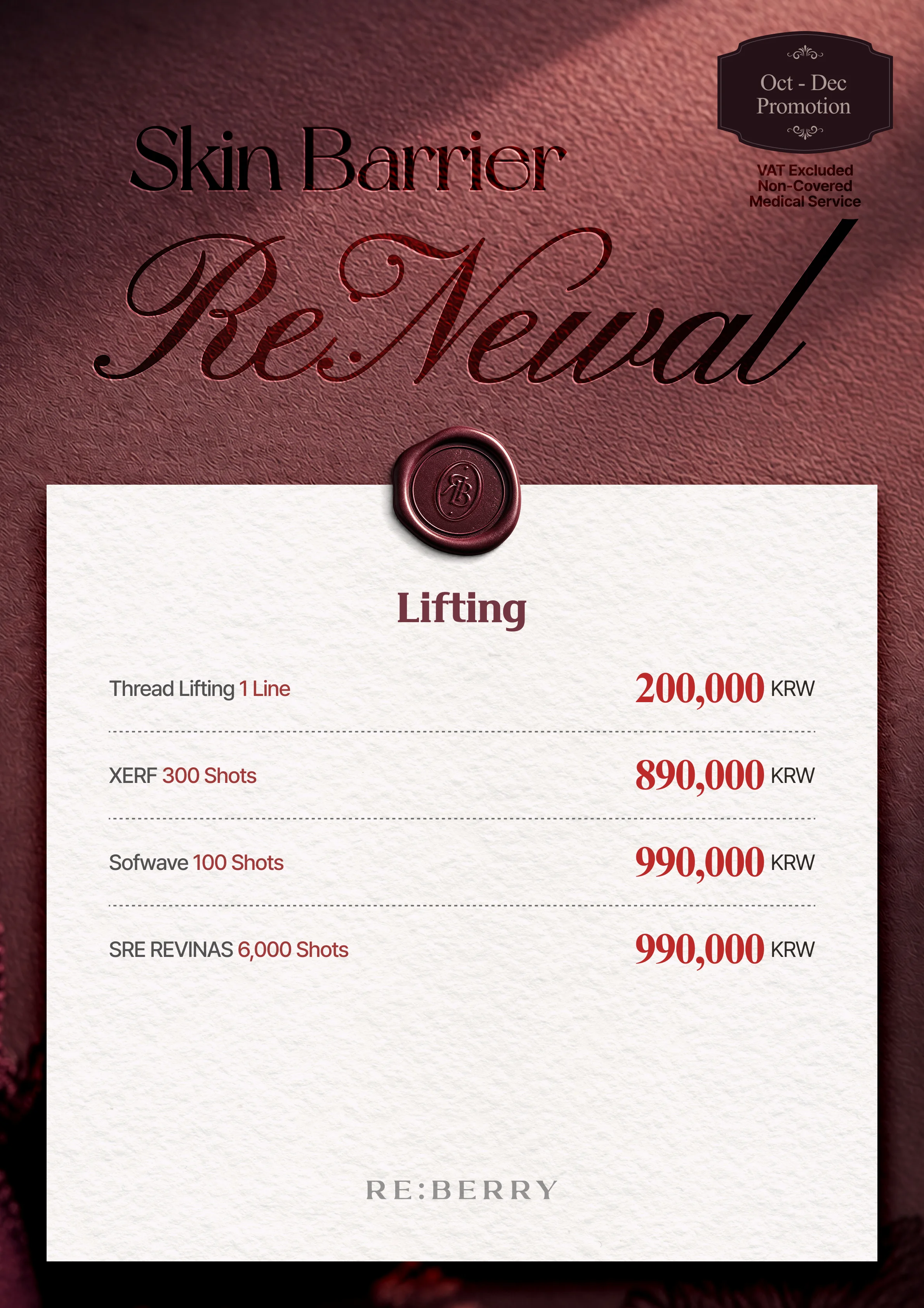
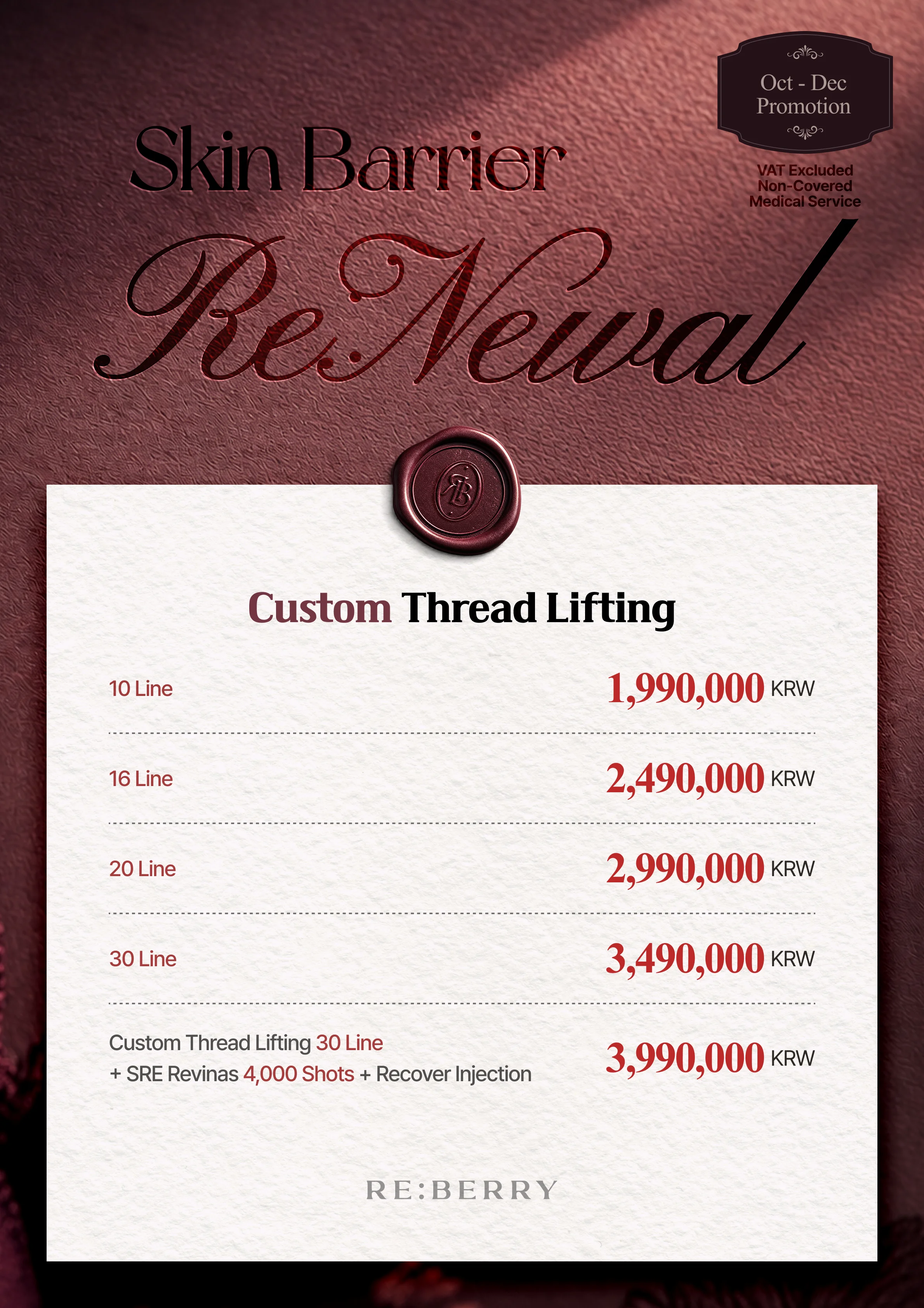
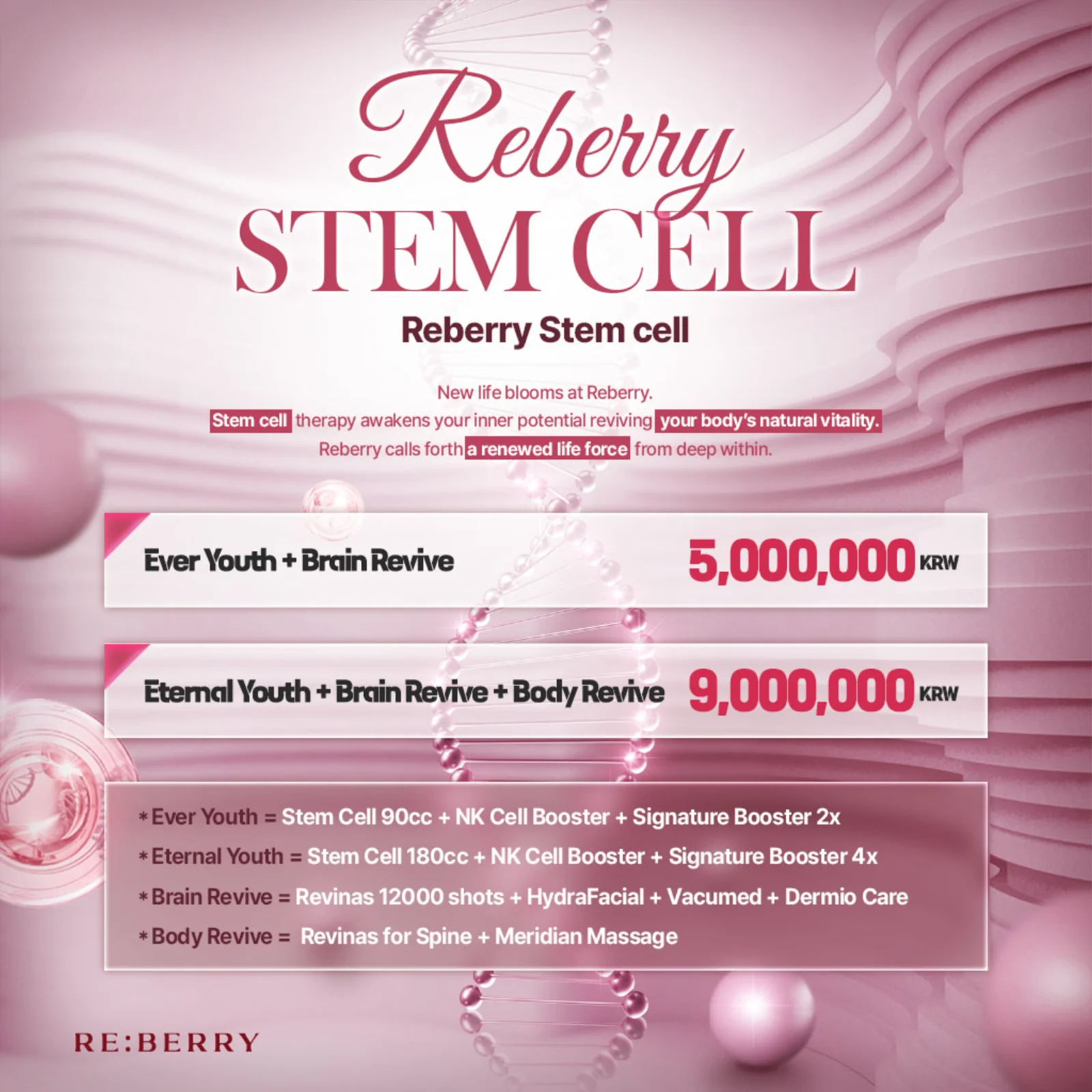
Published Laser Spot Removal Pricing at RE:BERRY Gangnam (VAT Excluded)
Your Medical Director
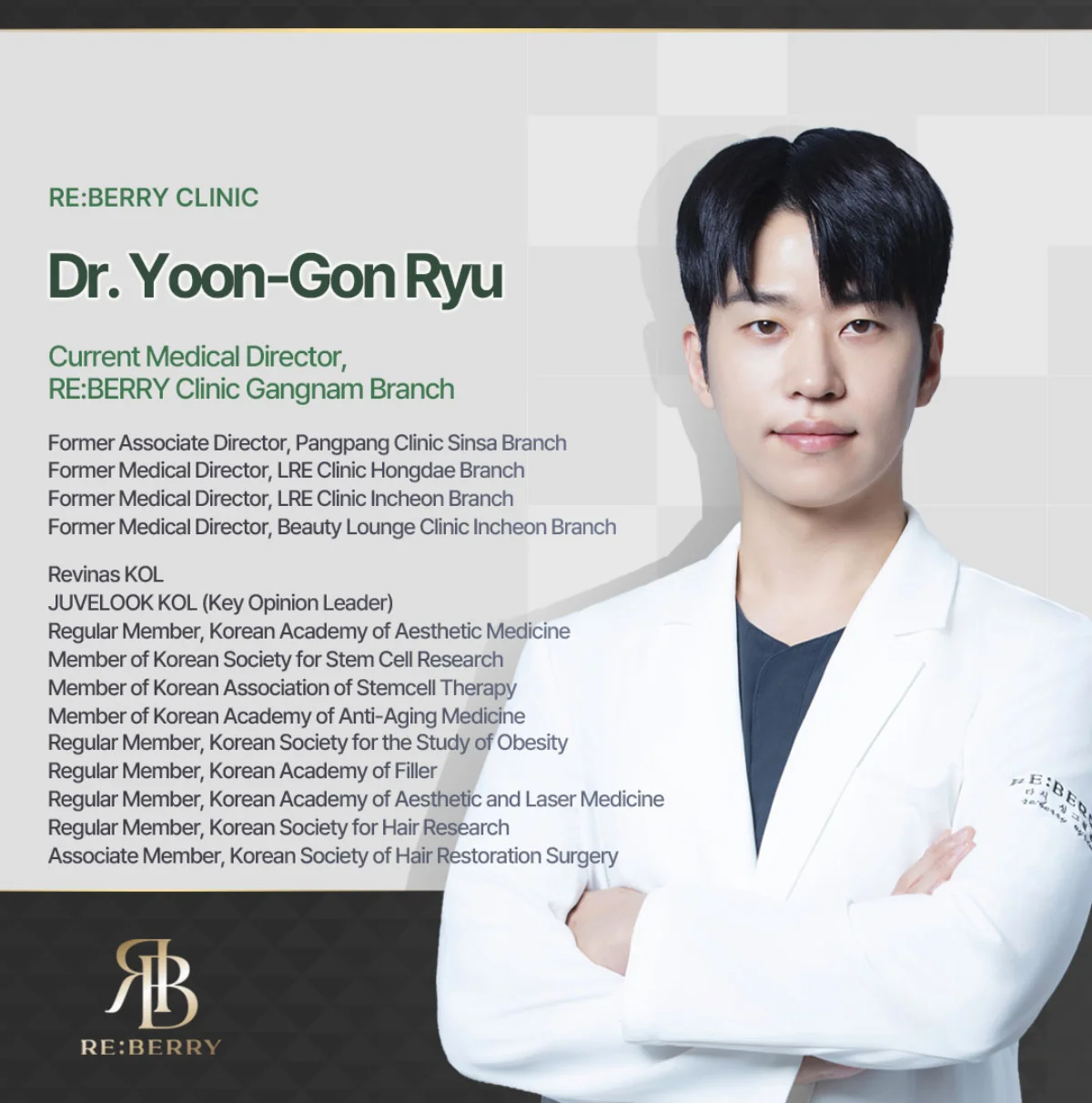
Dr. Yoon-Gon Ryu
- Medical Director, RE:BERRY Aesthetic Clinic Gangnam — Korean MOHW Medical License No.131644
- Manufacturer-appointed KOL invited to teach injection and energy-device technique to Korean peers
- Regular Member, Korean Academy of Aesthetic Medicine
- Co-manages every case with Dr. Yejin Oh (Korean MOHW Medical License No.144238)
- Featured in Authority Magazine (2026)
Medically reviewed by Dr. Yoon-Gon Ryu, CEO / Medical Director, RE:BERRY
A Fourteen-Thousand-Square-Foot Hush Above Gangnam-daero
Step past the black gallery facade and the bustle of Gangnam-daero falls away. Fourteen thousand square feet of hushed corridors, marble installations, a cascading water feature and fully enclosed consultation suites — arranged so you rarely cross paths with another guest, because our appointment-first diary keeps every hour deliberately underbooked.
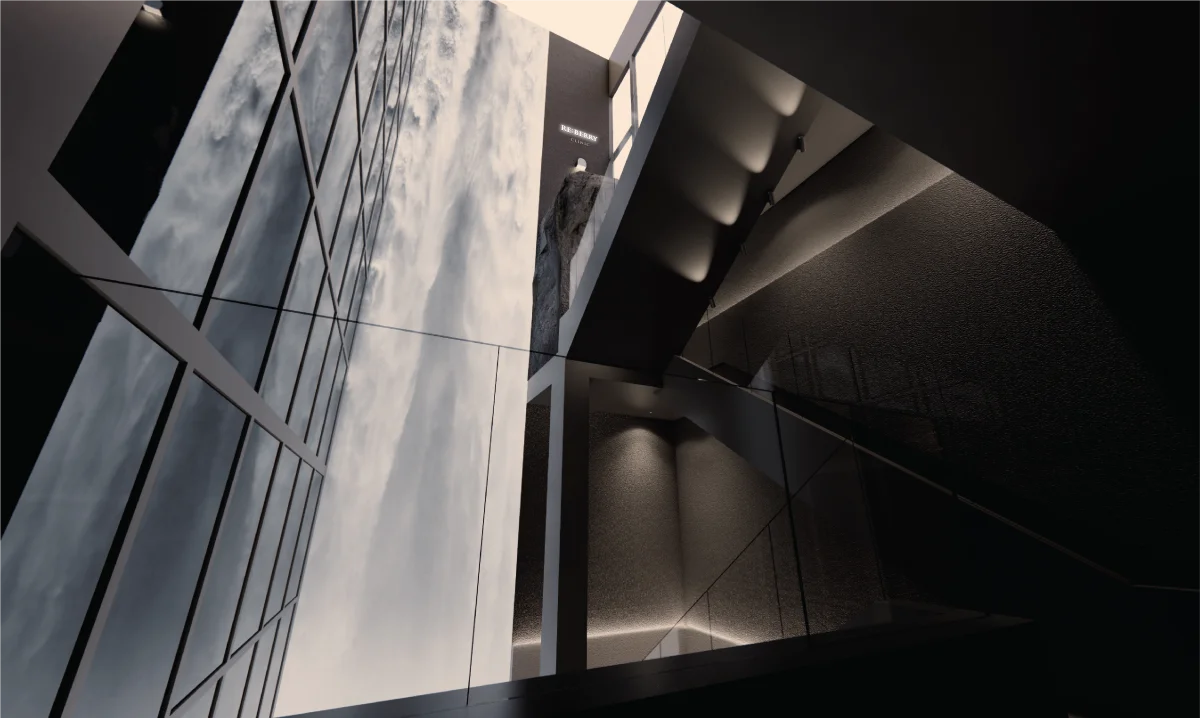

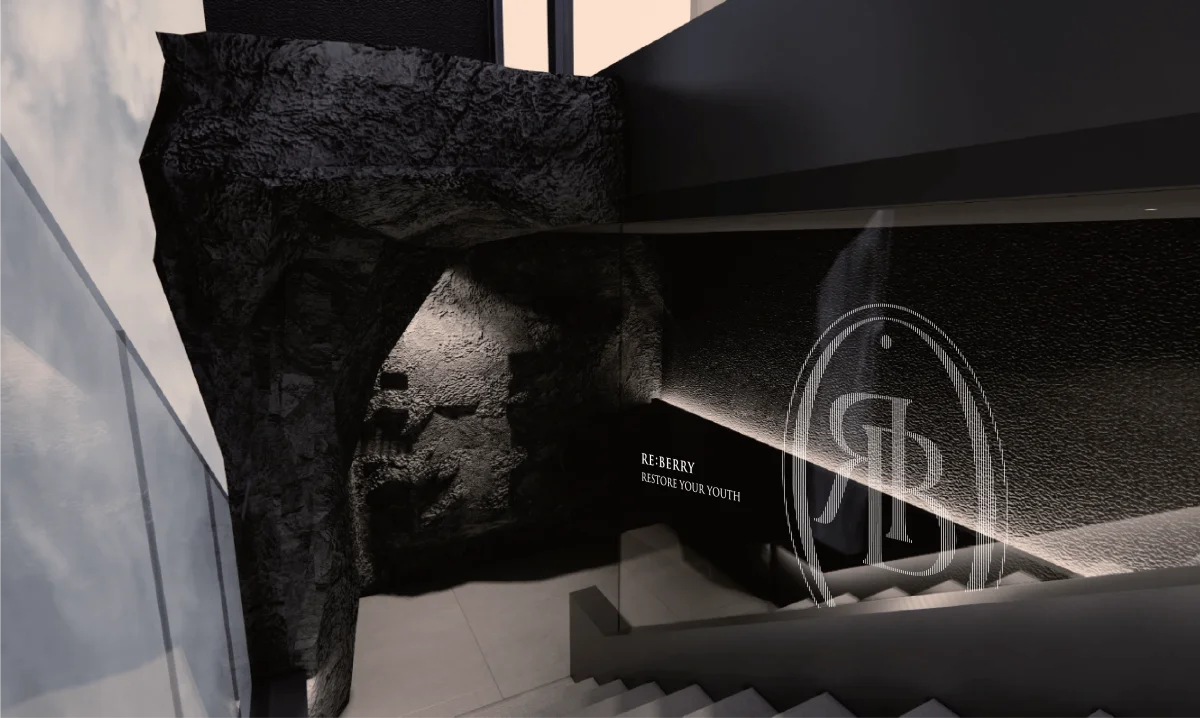
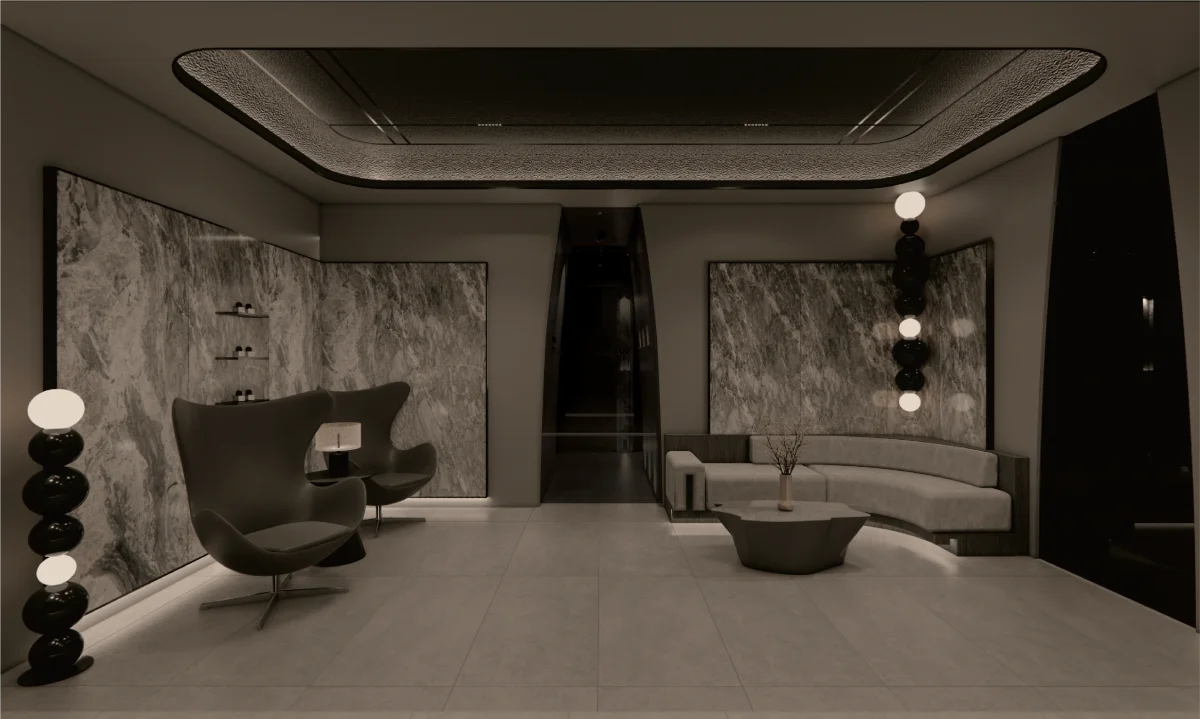

(1,322 m²)
Suites
KI Tower, Gangnam-daero
Station Exit 10
The Evidence Behind Recommending a Pigment Laser Selectively
The reason a physician recommends a laser for one spot and holds back on another traces to a single principle described in 1983. Anderson and Parrish showed that light of a chosen wavelength and pulse is absorbed preferentially by a target chromophore, heating it while the surrounding tissue stays cool, an effect they named selective photothermolysis. A well-defined epidermal lentigo is close to the ideal target for this: a dense, shallow parcel of melanin the laser can heat and fracture cleanly. The further a lesion drifts from that ideal, the less confident the recommendation becomes.
Anderson RR, Parrish JA. Selective photothermolysis: precise microsurgery by selective absorption of pulsed radiation. Science. 1983;220(4596):524-527. doi:10.1126/science.6836297
Picosecond platforms extended that idea by delivering the energy in far shorter pulses, and the literature reviewing them supports the discrimination clinics apply. A systematic review of picosecond lasers in dermatology found strong evidence for clearing discrete epidermal pigment such as lentigines while cautioning that melasma responds inconsistently and can worsen with over-treatment. A split-face comparison of a picosecond alexandrite laser against a Q-switched Nd:YAG in pigmented lesions likewise reported that lesion type, not the machine badge, drove the outcome, so a recommendation starts with naming the spot, and the device follows from that.
Wu DC, Goldman MP, Wat H, Chan HHL. A systematic review of picosecond laser in dermatology: evidence and recommendations. Lasers Surg Med. 2021;53(1):9-49. doi:10.1002/lsm.23244
Lee YJ, Shin HJ, Noh TK, Choi KH, Chang SE. A split-face study: comparison of picosecond alexandrite laser and Q-switched Nd:YAG laser in the treatment of facial pigmentation. Lasers Med Sci. 2018;33(8):1697-1703. doi:10.1007/s10103-018-2529-2
Melasma is where the criteria matter most, and the evidence is candid about it. A review of laser and light therapy for melasma concluded that these devices sit as second-line options behind photoprotection and topical agents, and warned that aggressive settings provoke a rebound. Broader work on hyperpigmentation reaches the same practical end: the underlying tendency has to be managed alongside any device, since sun exposure and melanin biology keep re-forming the pigment. This is the published basis for a physician at RE:BERRY Gangnam recommending low-fluence toning and tranexamic-acid prep for melasma, while reserving a straightforward targeted pass for the defined sunspot that suits it.
Trivedi MK, Yang FC, Cho BK. A review of laser and light therapy in melasma. Int J Womens Dermatol. 2017;3(1):11-20. doi:10.1016/j.ijwd.2017.01.004
Choi CW, Jo G, Lee DH, Cho SI, Park HS, Kim KH, Kim NH. Efficacy and safety of a novel picosecond laser using combination of 1064 and 595 nm wavelengths on Asian skin. Lasers Surg Med. 2017;49(10):899-907. doi:10.1002/lsm.22735
Questions Guests Ask About When Laser Spot Removal Is Recommended
How do I know if my spot is one a laser is recommended for?
The physician images it and names it first. A defined, well-bordered brown mark that sits shallow, a solar lentigo or a freckle, is the kind of spot a laser is usually recommended for. A soft, blended, grey-brown area is more likely melasma or dermal pigment, where a single aggressive pass is not advised. You can send a clear, well-lit photo on WhatsApp before you travel and get a straight read on which one you are looking at.
Can a single laser session really remove a spot completely?
For a discrete solar lentigo or freckle on tolerant skin, one targeted pass often finishes it, and occasionally a second confirms the result. That completeness is real for the right lesion. It is not the case for melasma, deep dermal pigment, or a blended field, where clearing in one visit is not offered because the pigment simply does not answer that way.
Why would a physician recommend against a laser for my pigment?
Because firing at the wrong lesion can make it darker. Melasma is provoked by heat and light, so an aggressive pass often triggers a rebound. Post-inflammatory pigment can settle on its own and firing early risks feeding it. Deep dermal pigment needs a spaced course over several visits. In those cases the recommendation is restraint, a low-fluence plan, or a different route, and a good clinic will say so.
Does my skin tone change whether a laser is recommended?
Yes, meaningfully. Deeper Fitzpatrick phototypes carry a higher risk of rebound pigment, so the plan shifts toward a patch test behind the ear, lower energy, and closer follow-up. A laser can still be recommended for deeper skin, but the settings and pacing are built around caution, with the fluence pulled well below what fair skin tolerates.
How many spots is too many for a one-session recommendation?
It is less about a number and more about whether the marks are discrete or blended. A handful of separate, well-defined spots can often be handled cleanly, sometimes in one visit. A diffuse scatter without clear borders reads as a tone problem, and that leans toward toning or a combined plan across sessions over a single spot-by-spot pass.
What is the difference between a sunspot and melasma when it comes to laser?
A sunspot, or solar lentigo, is a defined patch of surface pigment that a matched pass can fracture and clear. Melasma is a deeper, hormonally and light-driven condition that spreads without a crisp edge and flares when over-treated. They can look similar in a mirror, so the physician names the lesion on the imaging before recommending anything, since the pass that clears one can worsen the other.
If a laser is recommended, what should I confirm before agreeing?
Confirm three things: what the lesion is called, whether the plan is one session or a course, and who delivers and reviews it. Ask what happens if it does not fully clear, and what the aftercare window means for your trip. At RE:BERRY Gangnam the physician who reads your imaging is the one who performs the pass and reads your fade, so those answers come from one person and never a chain of staff.
What does the aftercare look like if I have a spot lasered?
A treated lentigo darkens into a small speck that flakes over several days, and that speck is left to shed on its own; picking it only invites a mark. Cooling and a ceramide repair cream calm the skin, and SPF 50+ is treated as part of the treatment for the following weeks. On a sightseeing trip in strong sun, that sun-avoidance window carries extra weight, because ultraviolet re-triggers the pigment you just cleared.
Can I fly home the same day after laser spot removal?
For a single targeted pass, yes, there is no wound and makeup is fine within a day. The pinkness fades within hours and the pinpoint speck on a treated spot settles over the days that follow. The physician times the pass early enough in your stay that the visible part is behind you before departure, and the remaining fade is tracked from home.
What if the physician says my spot should not be lasered at all?
That happens, and it is a genuine recommendation in its own right. Some marks are better watched, managed with photoprotection and topicals, or referred for a different assessment entirely. Advice to leave a spot alone, or to treat something smaller than you asked for, shows the skin is being read carefully before any appointment slot is filled. You leave with a plan either way.
Who makes the laser-or-not call on my spot at RE:BERRY Gangnam?
One physician. At RE:BERRY Gangnam the doctor who reads the imaging of your spot is the one who decides for or against a laser, delivers the pass if there is one, and reviews the fade afterward. That continuity is built into every spot-removal case, with interpreters covering 5 languages so the reasoning behind a yes or a no is not lost in translation.
Can I find out whether my spot is a laser case before I book a trip to Seoul?
Send a clear, well-lit photo of the spot to RE:BERRY on WhatsApp with a note on your skin tone and how long you have had it. A coordinator replies in English as soon as possible, and the physician gives a candid read on whether it looks like a laser case, a course, or something better left, before you commit any travel days to it.
Where is RE:BERRY for a spot-removal appointment, and how do I get there from Gangnam Station?
You will find RE:BERRY in KI Tower on Gangnam-daero, 2 minutes on foot from Exit 10 of Gangnam Station (Seoul Metro Line 2); from Incheon Airport, allow about 45 to 60 minutes by AREX and subway or by direct taxi. Being steps from the station means a spot-removal appointment slots easily between Gangnam sightseeing, dining, and shopping.
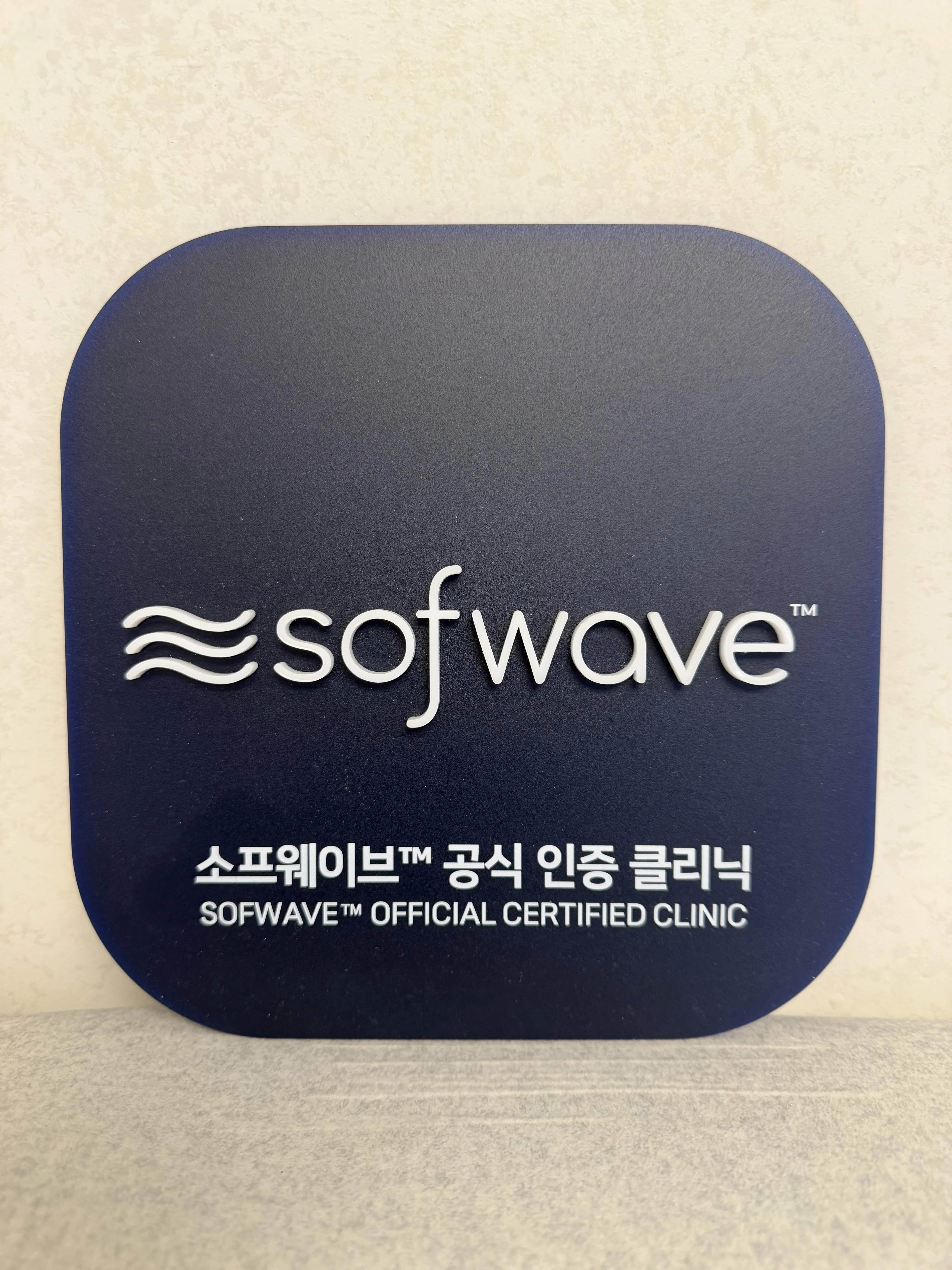
Only Authentic, Brand-Certified Equipment
Every device at RE:BERRY is MFDS-certified and manufacturer-verified. We never use counterfeit or grey-market equipment.
Ask Whether Your Spot Is a Laser Case at RE:BERRY Gangnam
Send a clear photo of the mark and a note on your skin tone to RE:BERRY on WhatsApp. A coordinator replies in English as soon as possible, and the physician tells you plainly whether a laser is recommended, whether it is a one-session case, or whether a course or a different route serves you better. The physician who reads your imaging is the one who treats and reviews you, and nothing is scheduled until you agree.
Related Treatments
Why Tens of Thousands of Foreign Patients Are Choosing This Gangnam Clinic — Business Wire, 2026-04-13
Numbers That Tell Our Story
Cumulative across RE:BERRY clinics (Gangnam · Myeongdong · Incheon Airport).
Brand-Authenticated Equipment & Training




Our doctors are certified by Korea's top dermatological societies









Latest from Our Instagram
Real treatments, patient reactions, and behind-the-scenes from RE:BERRY.
Tap any video for sound & fullscreen
What our patients say
Real verified reviews from our Google Business Profile
I had a really nice experience at Reberry Clinic Gangnam. I received a Hydrafacial treatment, and the whole process was very comfortable. The staff were kind and explained everything clearly, and the clinic itself felt clean and relaxing. I also loved the interior — the clinic felt very clean, elegant, and luxurious, w...
I had such an amazing experience at this clinic! The clinic itself is absolutely stunning the design is beautiful, elegant, and luxurious, and the service is truly top-notch. Everything was so well organized, and I felt very comfortable from the moment I walked in.
I had a Korean filler treatment to reduce my nasolabia...
i had a good time having the Juvelook treatment!
It was my first time in Korea, all the Doctor & team are bery helpful. Dr. Ian & cheong a lee(jenny) are really helpful.
I understand more about my skin.
The clinic is calm, welcoming.
there are many activities i didn’t expect to find in a beauty clinic; phot...
So happy to found the beauty clinic in Korea that very inclusive and Muslim friendly. They have a prayer space for muslim and they prepare a female doctor for me. The clinic is so comfortable with aesthetic design make me feel relaxed. The doctor and the staff are very professional and helpful so all of the procedure r...
As someone who has struggled with acne since middle school, I decided to stop here during a layover in Seoul and was amazed by the treatment.
Firstly, the environment is elegant and peaceful. Feels very luxurious and the treatment from staff was as such as well. Speaking of staff, they were extremely professional, car...
Book Your Personalized Consultation
Share your details and our multilingual team will contact you as soon as possible through your preferred messenger.
- ✓ Free online skin consultation with a doctor
- ✓ Personalized treatment plan & pricing
- ✓ 5-language support (EN/ZH-CN/ZH-TW/JA/ES)
- ✓ Response as soon as possible via your preferred messenger
Science Pigment laser candidacy and selective photothermolysis. peer-reviewed references
The decision to recommend a laser for a given spot rests on published dermatology, not on preference. Anderson and Parrish (1983) established selective photothermolysis, the principle that a defined epidermal pigment target absorbs matched light and heats cleanly while surrounding skin is spared, which makes a discrete solar lentigo the model case for treatment. Wu (2021) systematically reviewed picosecond lasers and confirmed strong clearance of discrete epidermal pigment alongside inconsistent, sometimes worsening, results in melasma. Lee (2018) compared a picosecond alexandrite laser with a Q-switched Nd:YAG on facial pigmentation and found lesion type governed the outcome. Trivedi (2017) placed laser and light therapy as second-line in melasma behind photoprotection, and Choi (2017) reported wavelength- and skin-type-dependent responses in Asian skin, together forming the basis for pulling energy down and prepping deeper phototypes. Sarkar (2013) reviewed the topical management that any recommendation has to sit alongside for durable results.
- Anderson RR, Parrish JA. Selective photothermolysis: precise microsurgery by selective absorption of pulsed radiation. Science. 1983;220(4596):524-527. doi:10.1126/science.6836297
- Wu DC, Goldman MP, Wat H, Chan HHL. A systematic review of picosecond laser in dermatology: evidence and recommendations. Lasers Surg Med. 2021;53(1):9-49. doi:10.1002/lsm.23244
- Lee YJ, Shin HJ, Noh TK, Choi KH, Chang SE. A split-face study: comparison of picosecond alexandrite laser and Q-switched Nd:YAG laser in the treatment of facial pigmentation. Lasers Med Sci. 2018;33(8):1697-1703. doi:10.1007/s10103-018-2529-2
- Trivedi MK, Yang FC, Cho BK. A review of laser and light therapy in melasma. Int J Womens Dermatol. 2017;3(1):11-20. doi:10.1016/j.ijwd.2017.01.004
- Choi CW, Jo G, Lee DH, Cho SI, Park HS, Kim KH, Kim NH. Efficacy and safety of a novel picosecond laser using combination of 1064 and 595 nm wavelengths on Asian skin. Lasers Surg Med. 2017;49(10):899-907. doi:10.1002/lsm.22735
- Sarkar R, Arora P, Garg VK, Sonthalia S, Gokhale N. Cosmeceuticals for hyperpigmentation: what is available? J Cutan Aesthet Surg. 2013;6(1):4-11. doi:10.4103/0974-2077.110089
These references shape how a laser spot removal is recommended at RE:BERRY's Gangnam aesthetic clinic: the lesion is named on the imaging before any energy is chosen, a defined epidermal lentigo is treated with a matched targeted pass under selective-photothermolysis principles, melasma and deeper phototypes are approached with low fluence, patch testing, and photoprotection ahead of any aggressive single pass, and results are read against standardized-lighting photographs by the same licensed physician. This information is for educational purposes only and is not medical advice.
How to Find RE:BERRY Gangnam
2 minutes from Gangnam Station Exit 10. B1–B2, KI Tower — the building with the all-black entrance you can't miss.
RE:BERRY Clinic Gangnam
B1–B2, KI Tower, 69-gil 8, Gangnam-daero, Seocho-gu, Seoul
서울시 서초구 강남대로69길 8, 지하1·2층 (KI타워)
Also available at: Myeongdong · Incheon Airport