IPL Therapy Korea
IPL at RE:BERRY Gangnam is broadband light from 515 to 1200 nanometres on a genuine Inmode platform, filtered per condition to fade sun pigment, diffuse redness, and fine vessels across a planned 3-5 session course, steps from Gangnam Station in Seoul.
IPL Photofacial
IPL Photofacial
IPL Therapy in Korea
IPL at RE:BERRY Gangnam is broadband light from 515 to 1200 nanometres on a genuine Inmode platform, filtered per condition to fade sun pigment, diffuse redness, and fine vessels across a planned 3-5 session course, steps from Gangnam Station in Seoul.
Across RE:BERRY Clinics
1,000,000+ Treatments
Direct Consult & Treatment
Medical Director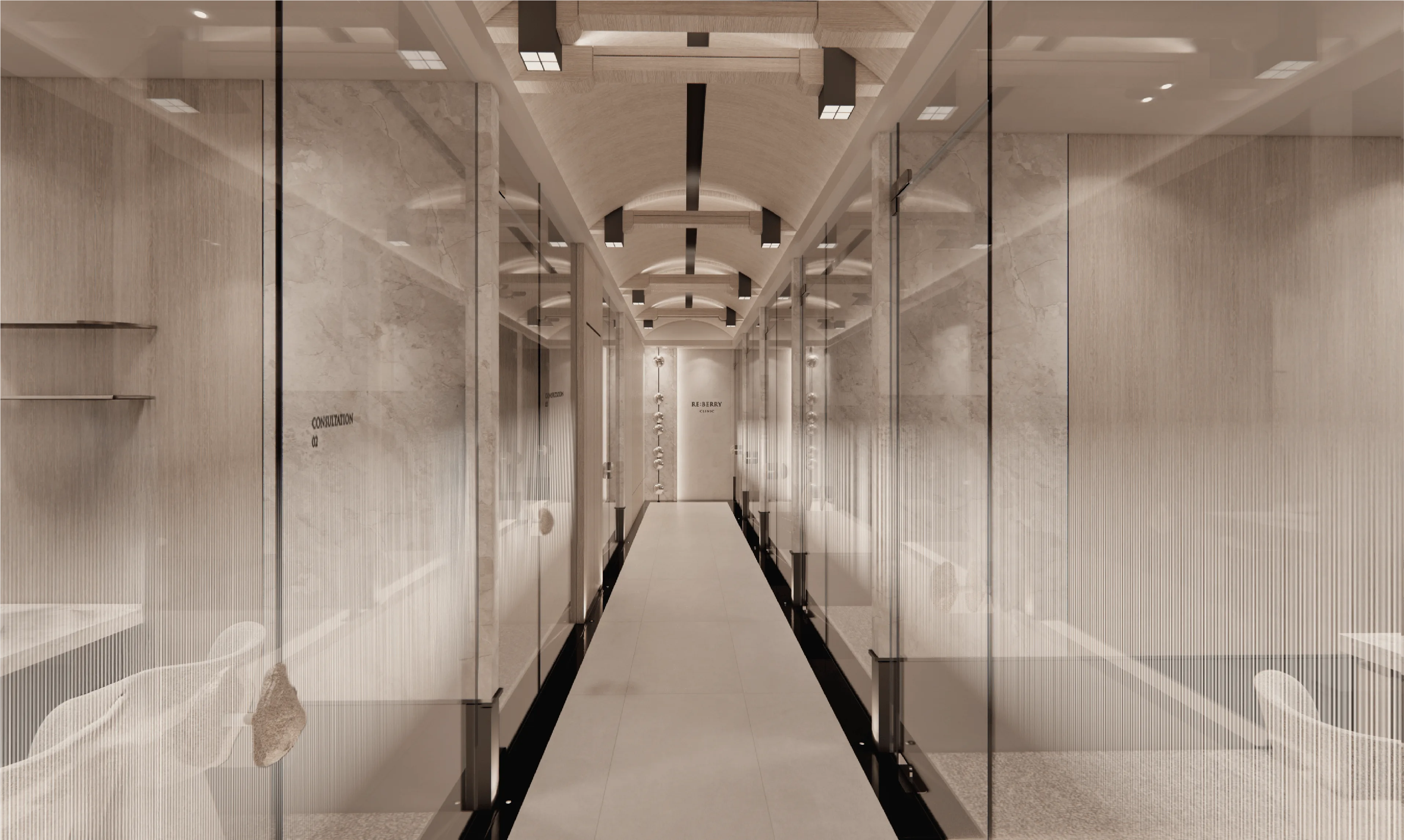
From Gangnam Station Exit 10
2-Min WalkWhat is IPL therapy in Korea, and why is it planned as a course?
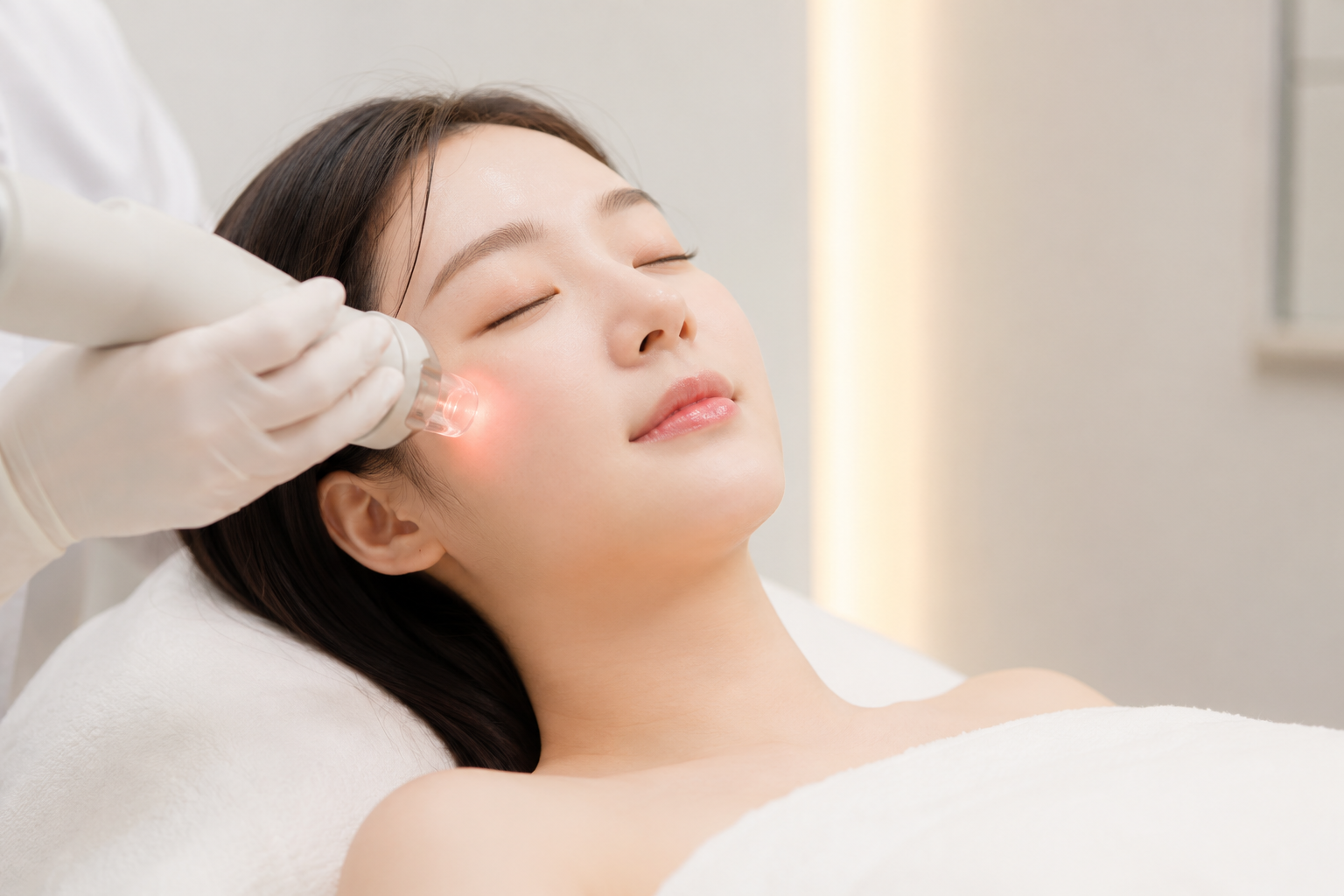
IPL therapy at RE:BERRY Gangnam is a broadband-light photofacial delivered on a genuine Inmode platform across 515 to 1200 nanometres, filtered per condition to fade sun pigmentation, diffuse redness, and fine vessels. Because each pass uses a deliberately gentle fluence on Asian skin, clearance builds over a 3-5 session course spaced three to four weeks apart, not in one sitting. Many international guests run that rhythm across two or three Seoul trips, with the same physician reading progress each time.
Effects & Progress
Effects & Progress
Filtered broadband light heats melanin across the treated field, so sun pigment absorbs the energy and lifts toward the surface evenly across the whole field.
Warmth and pinkness fade within two to four hours, and sun spots frost to a faintly darker shade as the pigment lifts. Light makeup is fine by evening; do not pick at the darkened flecks.
The darkened spots flake off on their own over five to ten days and the treated skin looks clearer underneath. Superficial marks show early clearance by the end of the first week.
Redness eases and tone reads more even as the course progresses; the next session is scheduled into the three-to-four-week window. Response speed varies by individual and by sun discipline.
Maintenance period. Clearance from a completed course holds while sun exposure is managed; RE:BERRY will guide a refresh pass every six to twelve months against fresh pigment.
Treatment Process
IPL Photofacial — 4 Steps from Chromophore Map to Aftercare
※ Illustrative images are AI-generated to help explain the treatment process.Effects & Progress
Effects & Progress
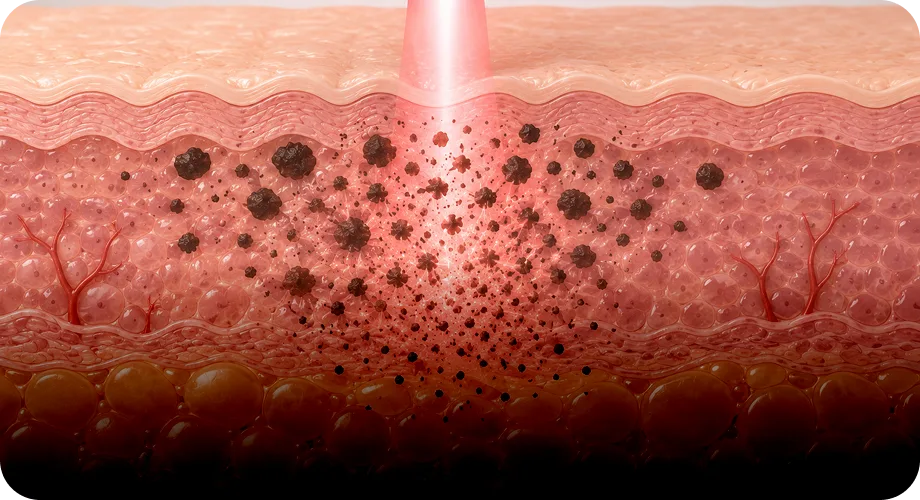
Sun-induced pigment rarely sits in one spot. Solar lentigines and freckles spread across the cheeks, forehead, and the backs of the hands as years of exposure accumulate. IPL delivers filtered broadband light so melanin across the whole treated field absorbs the energy in each pass, drawing the pigment toward the surface evenly. Selecting the shorter-wavelength cut-off filter concentrates the light on this superficial pigment, which is the layer a photofacial clears best.
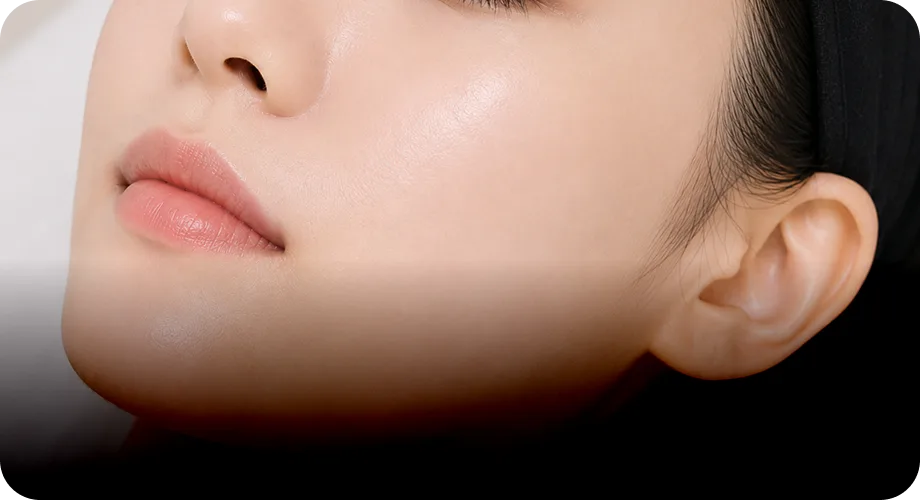
The point of a course is even tone, not a single dramatic result. Because the fluence is kept deliberately gentle on pigmented skin, each of the 3-5 sessions clears a portion: superficial marks fade, darker patches recede, and the overall tone reads more uniform as the passes accumulate three to four weeks apart. Building it this way, gently and over several visits, is what keeps post-inflammatory darkening low on Fitzpatrick III-IV skin. Results vary by individual and by how disciplined the sun protection is between sessions.
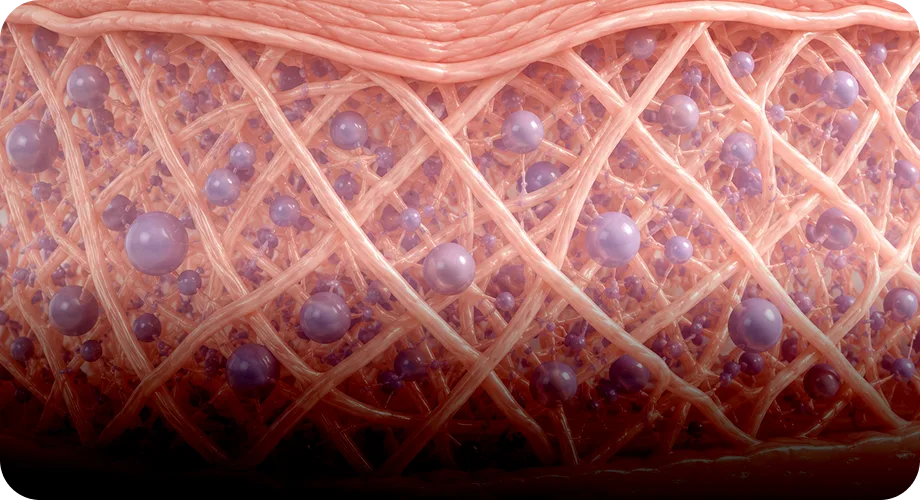
IPL is not only a pigment tool. Switching to the vascular cut-off filter aims the light at oxyhaemoglobin, so diffuse facial redness, rosacea flush, and fine telangiectasia can be worked in the same visit as the sun spots. The broadband heating also delivers a mild dermal warming that adds a modest collagen stimulus alongside the primary pigment and vessel work — a secondary benefit rather than the reason to book, since dedicated tightening devices do that job far more directly.

A photofacial is planned as a short in-clinic pass with little to recover from. The sapphire tip pre-cools the skin so the pulses feel like a warm snap for most guests rather than pain, and afterward the warmth and pinkness fade within two to four hours with no wound. Darkened spots flake off over five to ten days, so the only real commitment is the four-week sun rule. Guests can therefore fit an IPL session between sightseeing and, when a course runs long, split it across more than one Seoul trip.
Treatment Process
IPL Photofacial — 4 Steps from Chromophore Map to Aftercare
※ Illustrative images are AI-generated to help explain the treatment process.
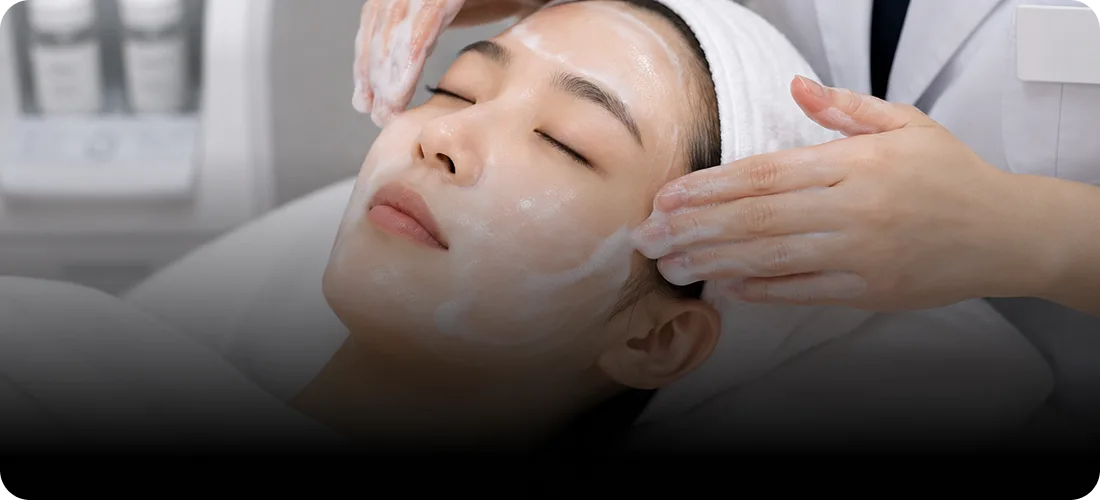
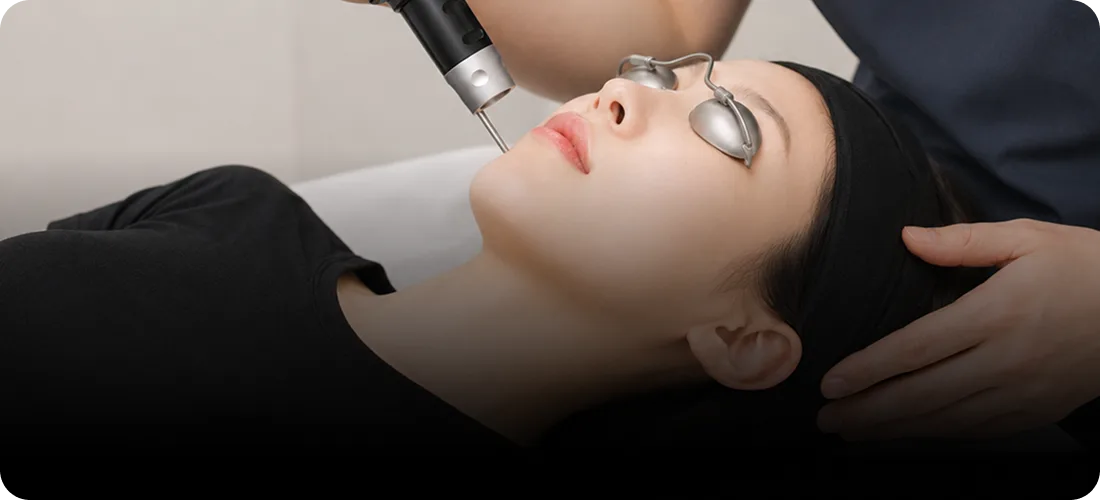
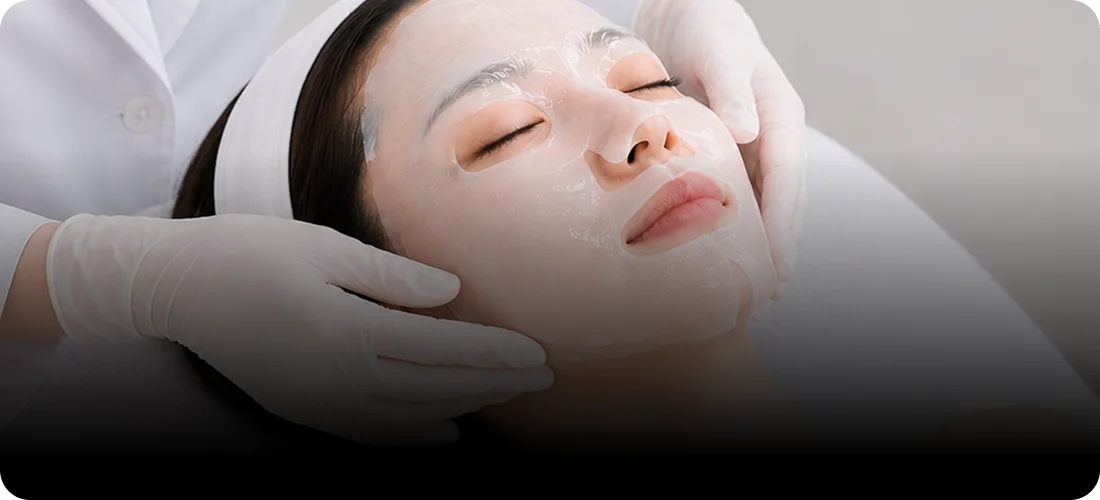
What an IPL Course in Korea Clears — and the Week-by-Week Path There
- One device, several targets: broadband light from 515 to 1200nm lets the physician switch filters within a single visit, so sun pigment, diffuse redness, and telangiectasia can be worked in the same 20-minute pass
- Conservative fluence built for Asian skin: at RE:BERRY the energy stays on the gentler side of the 12-22 J/cm² range for Fitzpatrick III-IV faces, trading a faster result for a lower chance of post-inflammatory darkening
- A melasma check before any IPL flash: IPL is not the first pick for true melasma, and the physician says so at consultation, redirecting deeper pigment to laser toning when a broadband course would not serve it
- Minimal downtime that fits a trip: warmth and pinkness fade within a few hours and there is no wound, so sightseeing the same afternoon and a flight home after 24 to 72 hours are both realistic
- Same physician across every session in the course, so the filter and energy choices in session three are read against what your skin actually did after sessions one and two
- Aftercare written for the journey home: an five-language sheet covers in-flight barrier care and the four-week sun rule, because the weeks between sessions do more for the result than the flashes themselves
| Timeline | What to Expect |
|---|---|
| Mild erythema and a warm flush settle within two to four hours; sun spots show a faint frosting as the pigment lifts, and light makeup is fine by evening | |
| The darkened spots flake off on their own, with no picking, and the treated skin looks clearer underneath as the debris sheds | |
| Around 30-40% of superficial marks have cleared by the end of week one; by week four redness has eased and the skin is ready for the next session in the course | |
| Across the full 3-5 session plan cumulative clearance commonly reaches 70-85%; a maintenance pass every 6-12 months holds it against fresh sun exposure |
IPL Photofacial vs Laser Toning vs Pico Laser — Matching the Tool to the Pigment
| Criteria | IPL Photofacial (RE:BERRY Gangnam) | Laser Toning (Q-switched) | Pico Laser |
|---|---|---|---|
| Light type | Broadband light, 515-1200nm, filtered | Single-wavelength 1064nm, nanosecond | Single-wavelength, picosecond pulse |
| Best target | Sun spots, diffuse redness, fine vessels | Melasma, even-toning of dermal pigment | Stubborn or deep pigment, tattoo ink |
| How it acts | Filtered bands heat several chromophores at once | Low-fluence heat sub-shatters melanin gradually | Photomechanical shockwave fragments pigment |
| Redness / vessels | Directly treated with the vascular filter | Not its primary role | Not its primary role |
| Course length | 3-5 sessions, 3-4 weeks apart | Often 8-10 sessions, weekly to fortnightly | Typically 3-5 sessions |
| Session time | About 20 minutes | 10-15 minutes | 10-20 minutes |
| Downtime | Hours of warmth; spots flake over 5-10 days | Essentially none | Brief redness, occasional pinpoint marks |
| Melasma suitability | Not first-line — physician redirects | A first-line option | Used selectively, carefully dosed |
Why This Matters
These are not ranked best to worst — they answer different questions. IPL covers a face where brown and red concerns sit together, laser toning is the patient workhorse for melasma, and pico laser earns its place on deep or stubborn pigment. At RE:BERRY Gangnam the chromophore map drawn at consultation, not a fixed menu, decides which one you start on, and a face may end up staging two of them a few weeks apart.
Course-based pigment work and international travel have to be reconciled openly. An IPL course wants three to four weeks between sessions and four weeks of disciplined sun protection afterward, which sits awkwardly against a single short holiday. Many RE:BERRY guests instead split a course across two or three Seoul trips, and the physician sequences the sessions so the gaps fall between flights rather than inside them.
KHIDI's 2025 international patient survey found 41.4% of respondents rank keeping the same doctor throughout as their leading criterion. That matters more for a photofacial course than for a one-off: the person choosing the filter and fluence in your later sessions is the one who watched how your skin answered the earlier ones, remotely reviewing progress photos between trips.
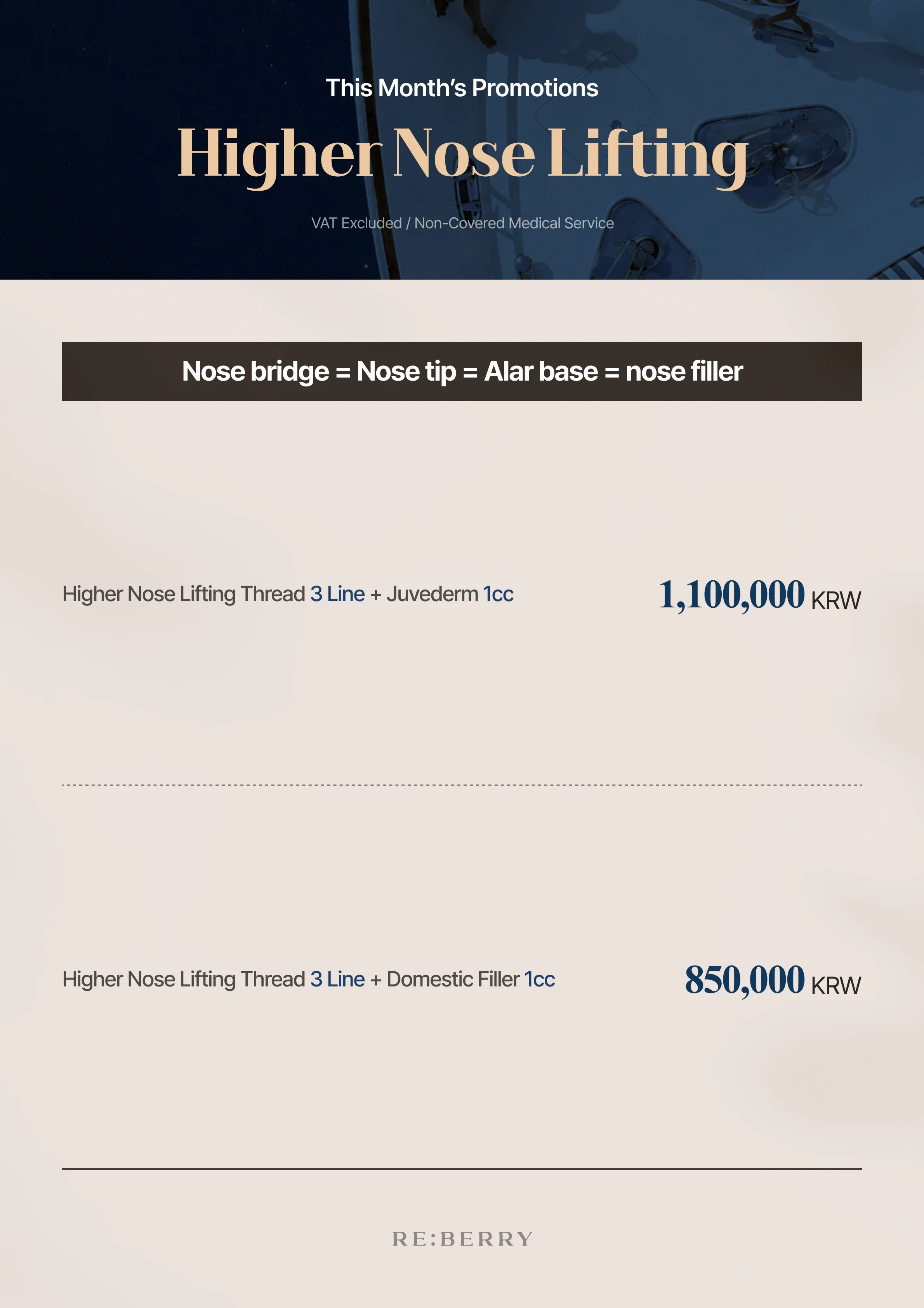
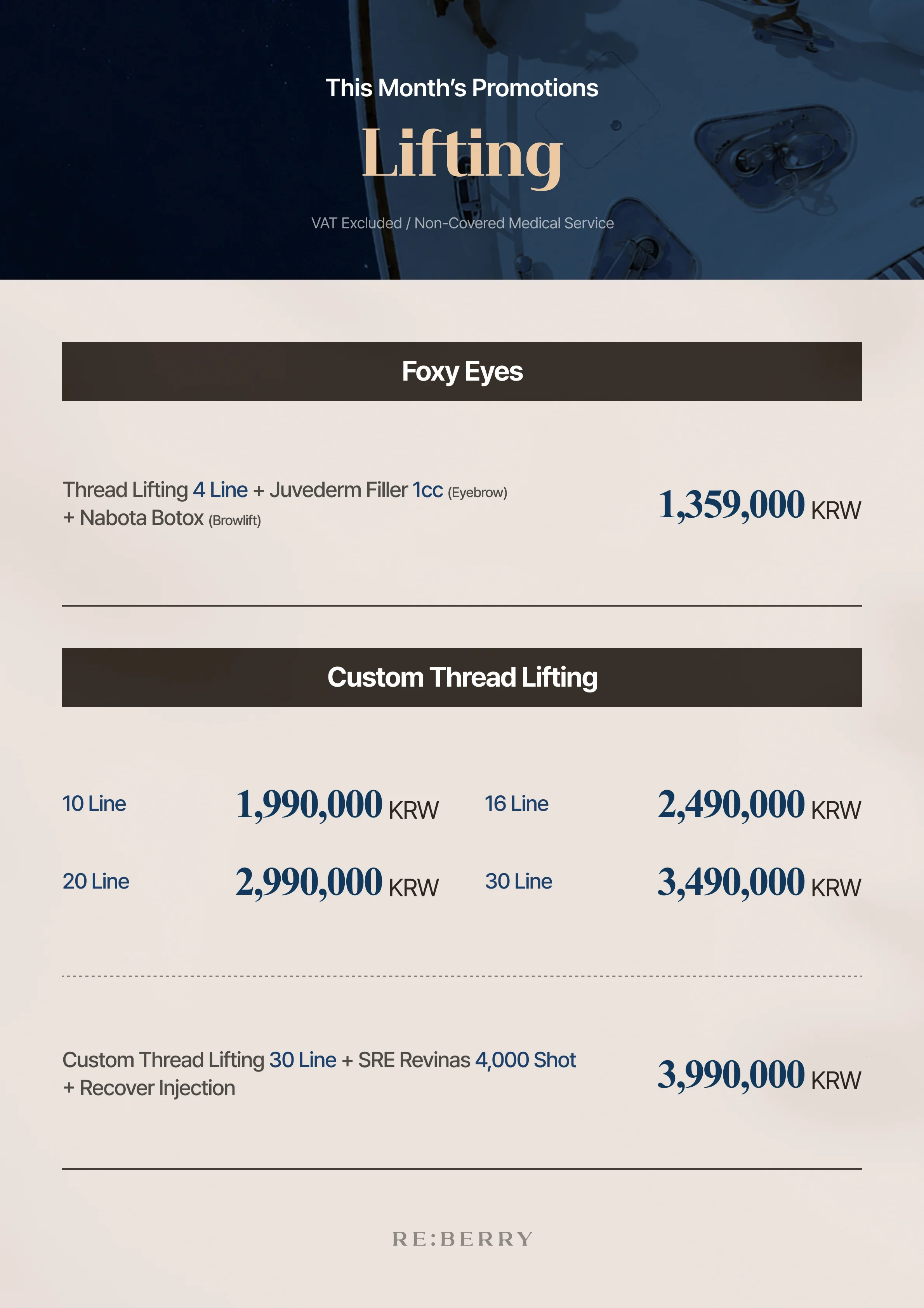
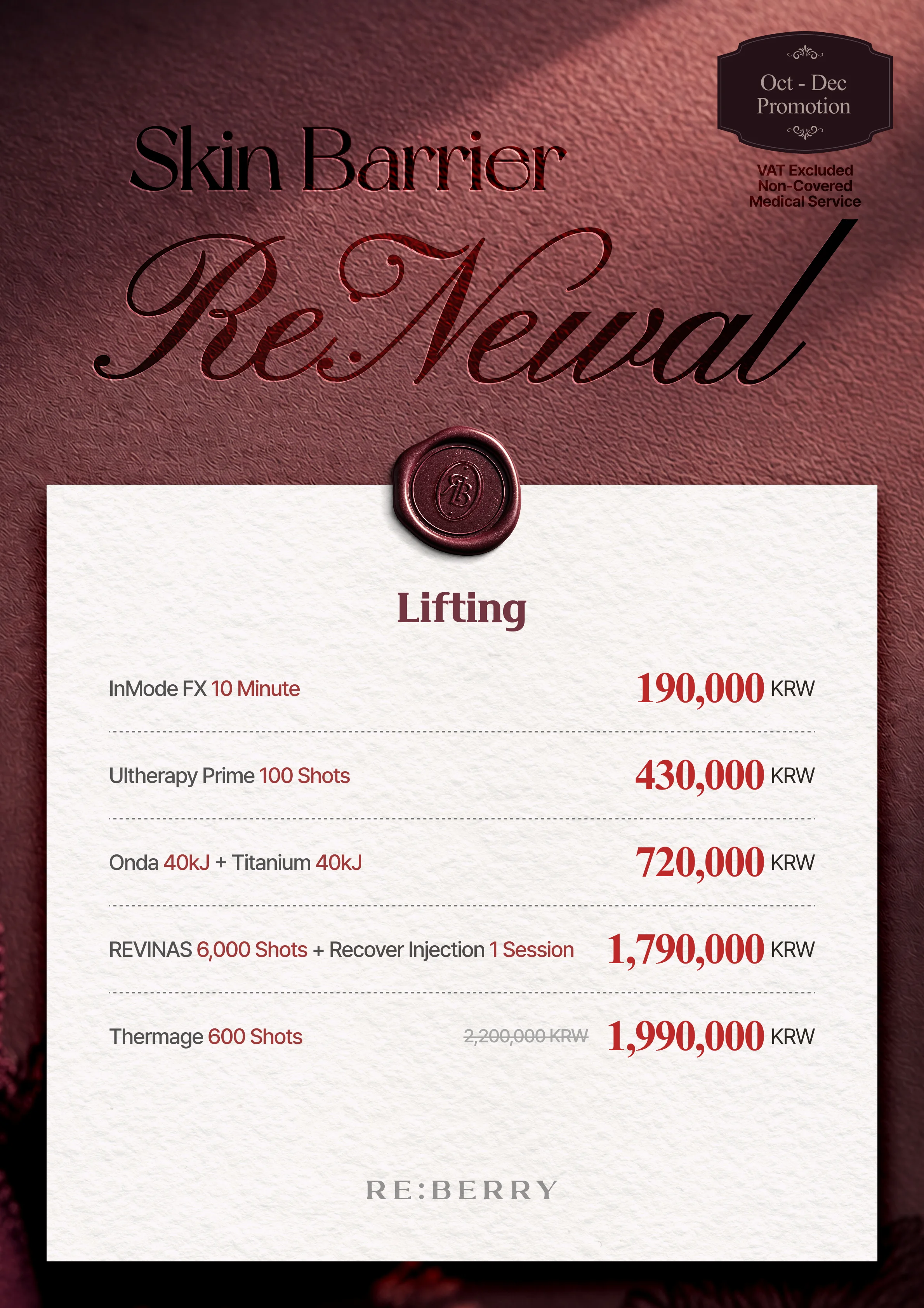
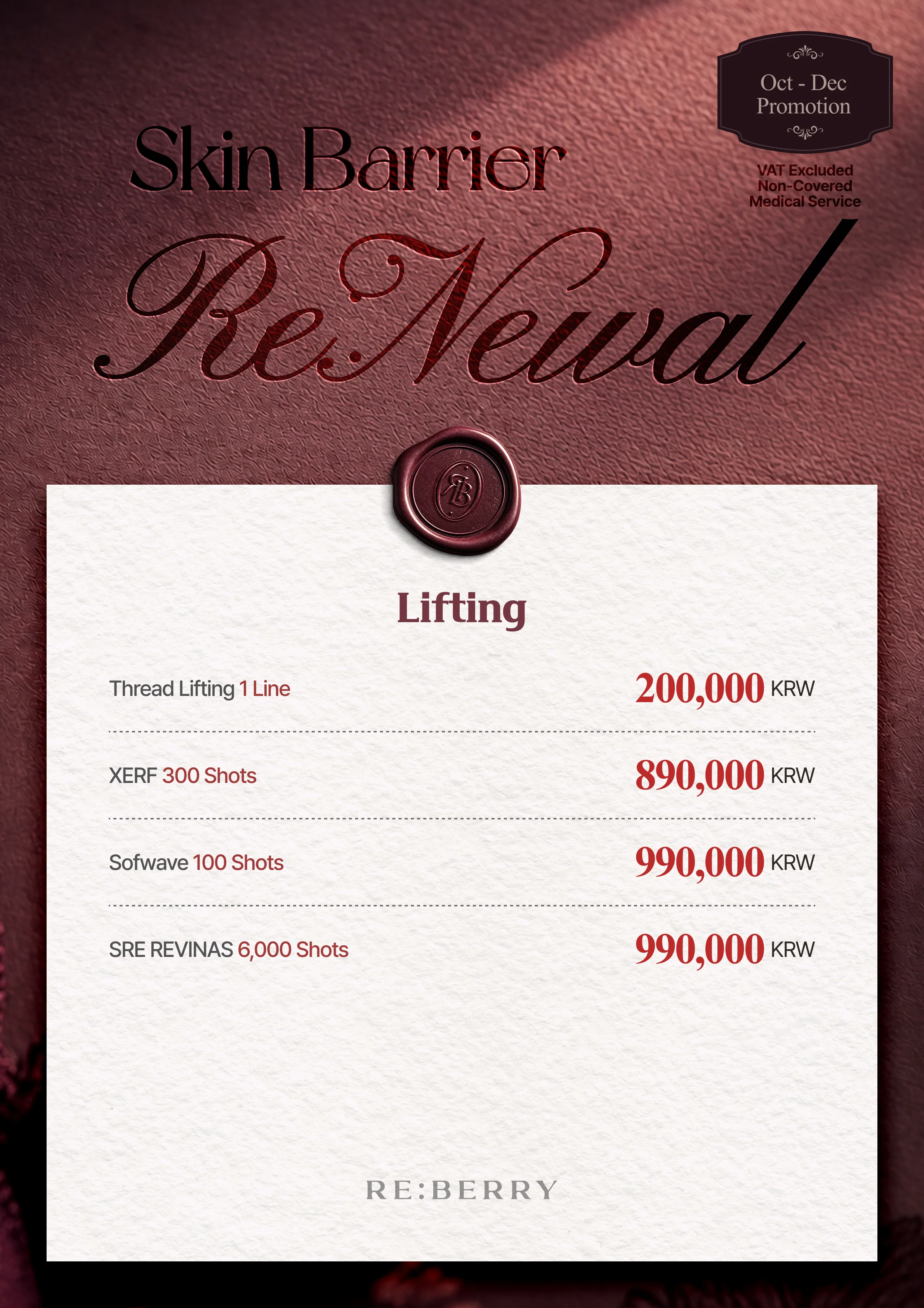
October – December 2026 Promotions
Exclusive packages for international patients. Swipe to see all offers.
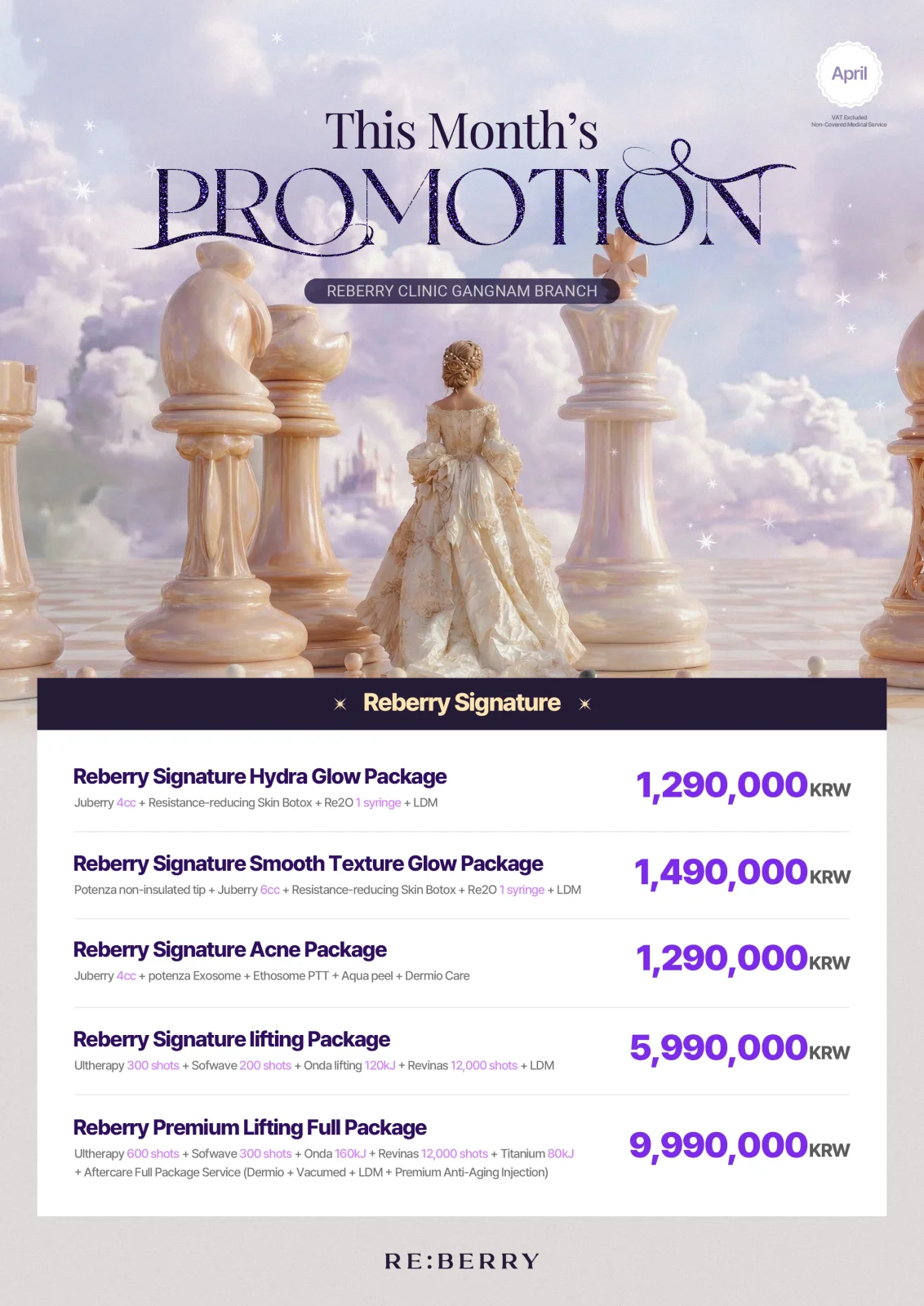
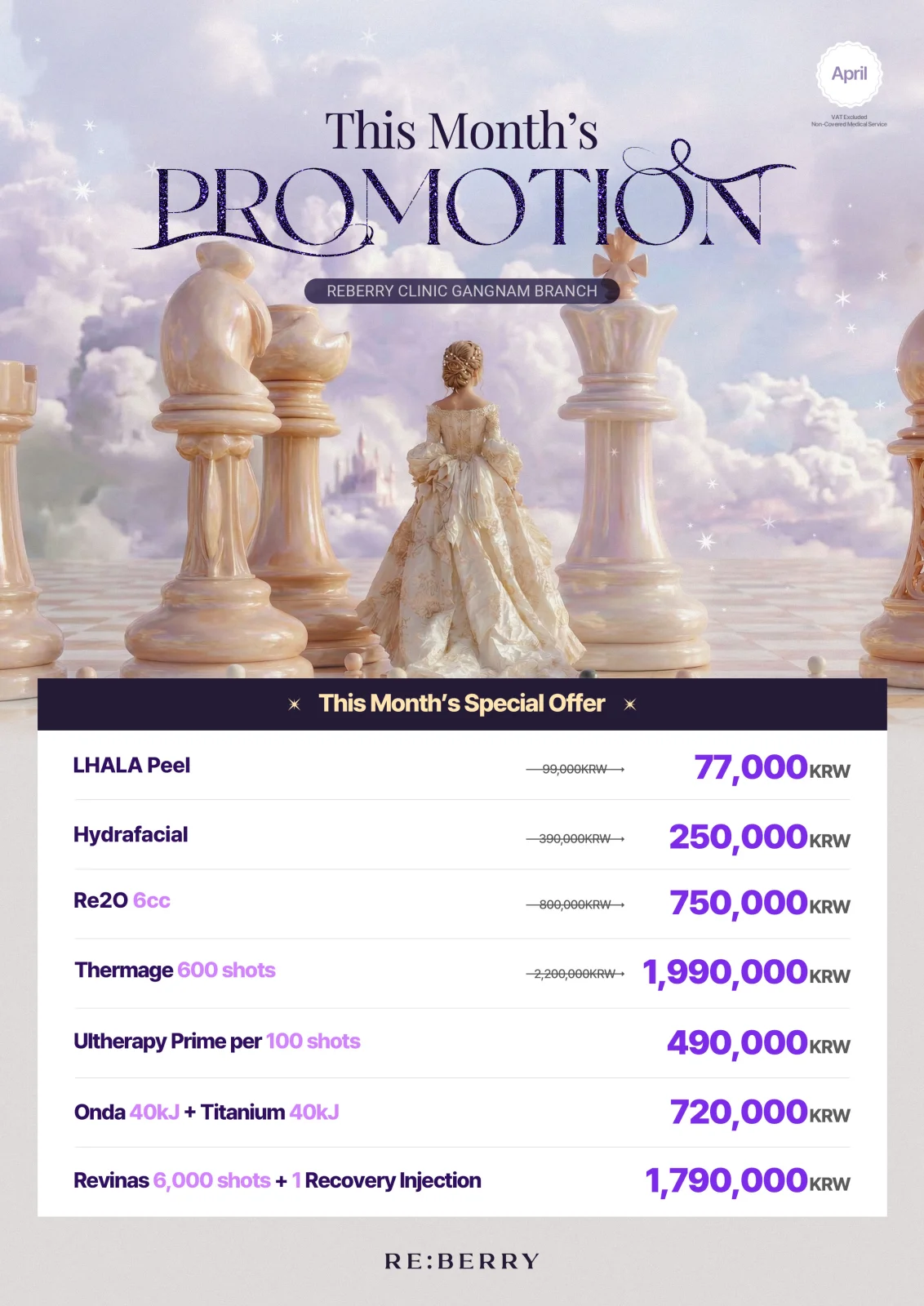
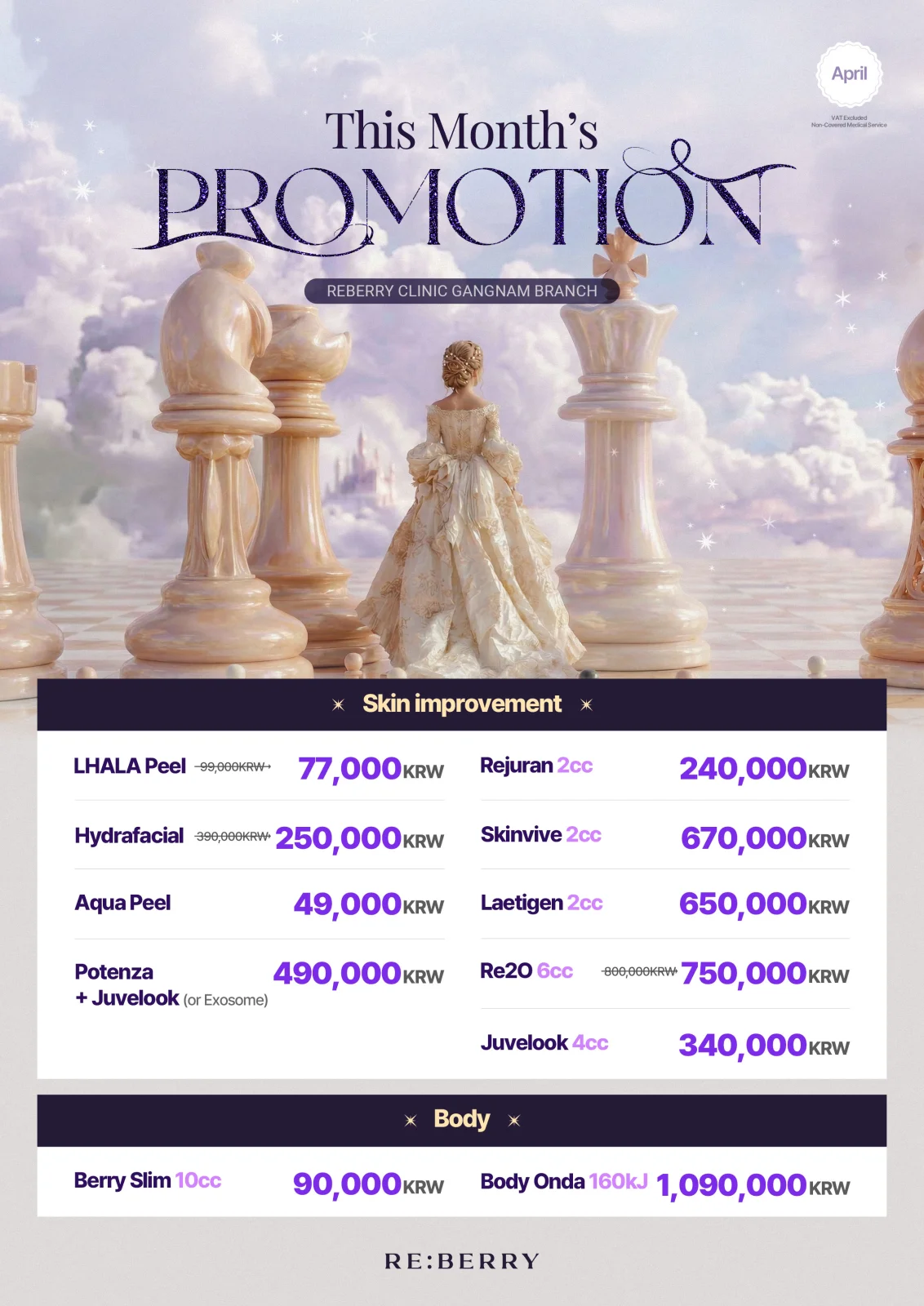
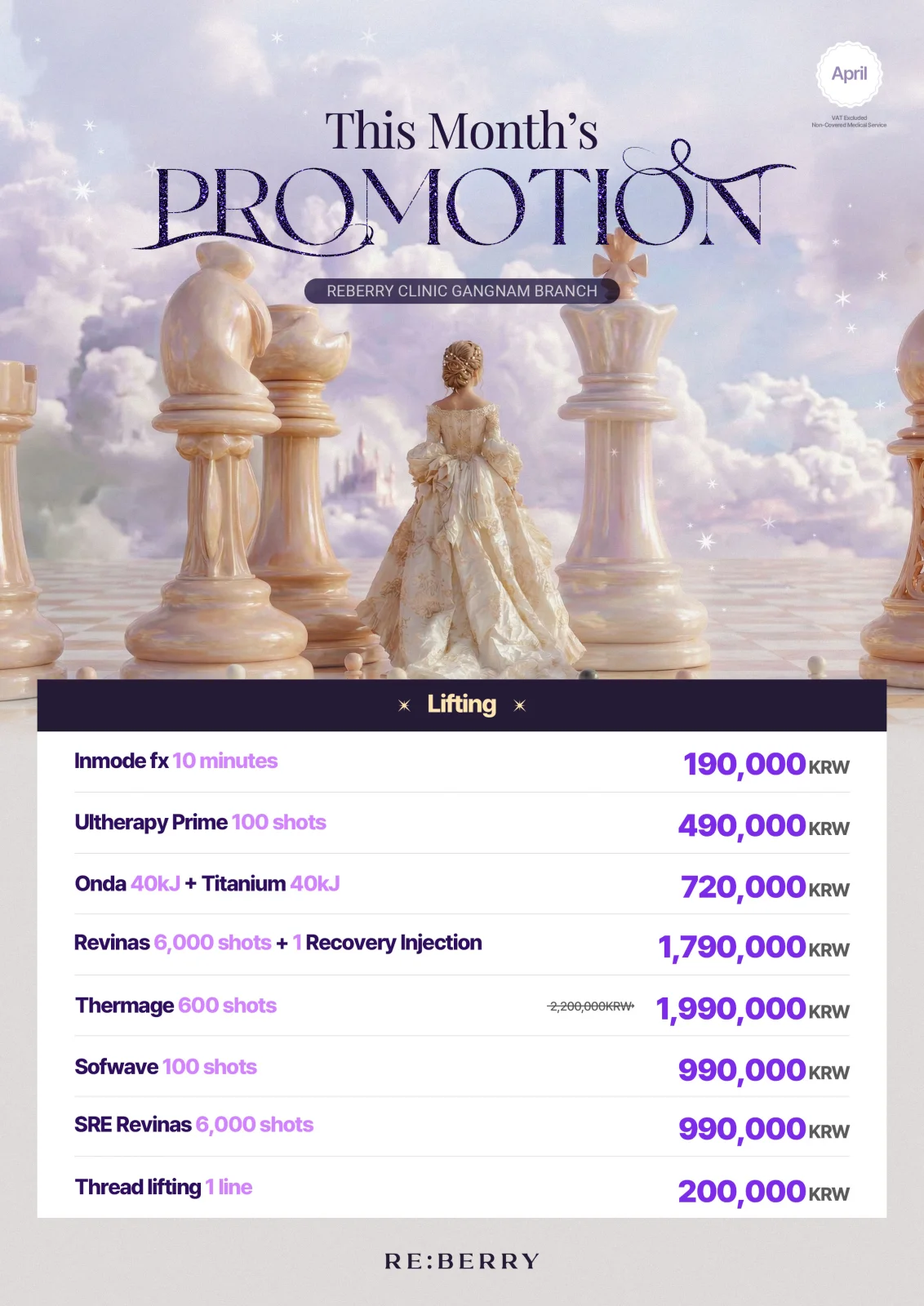
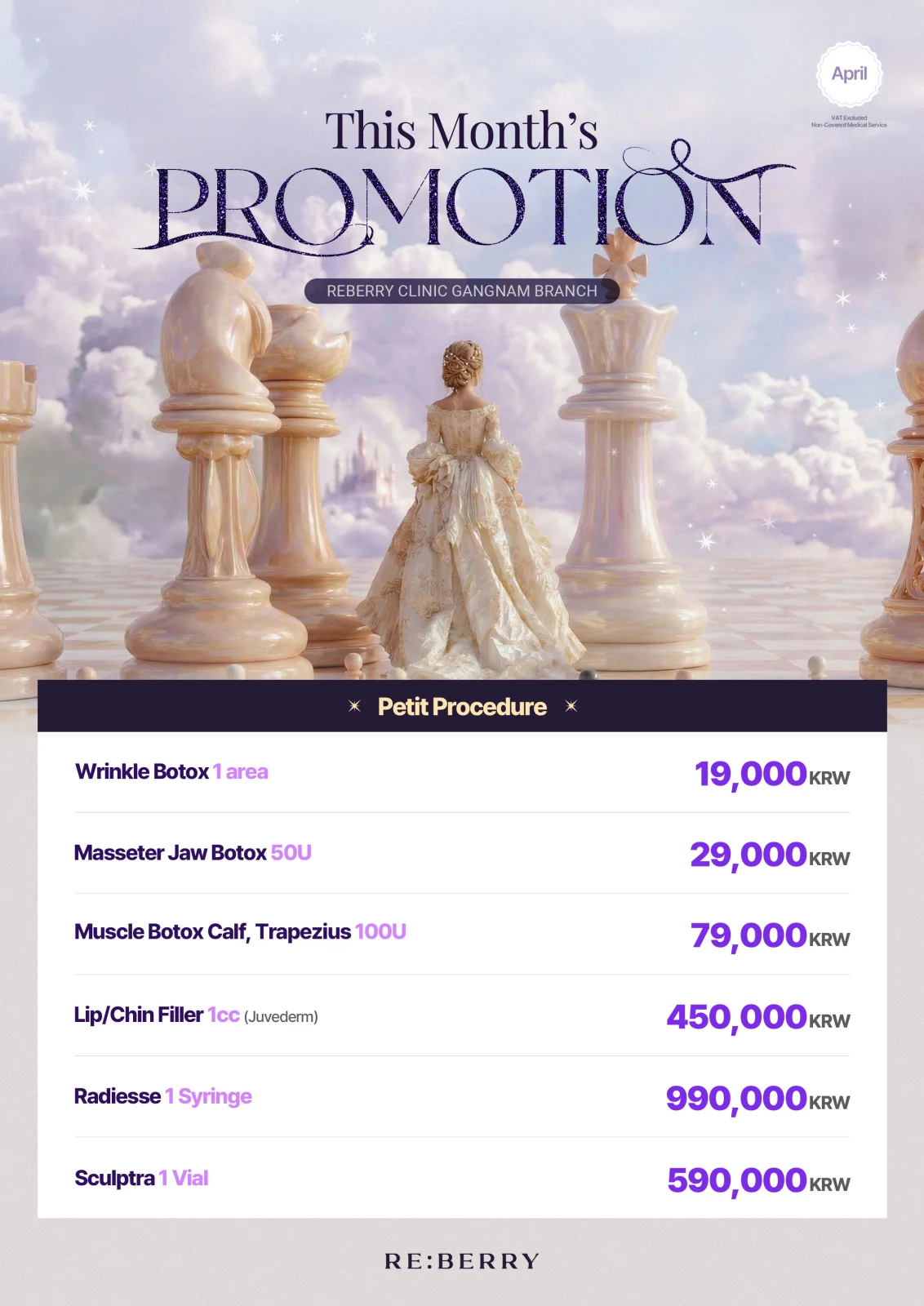
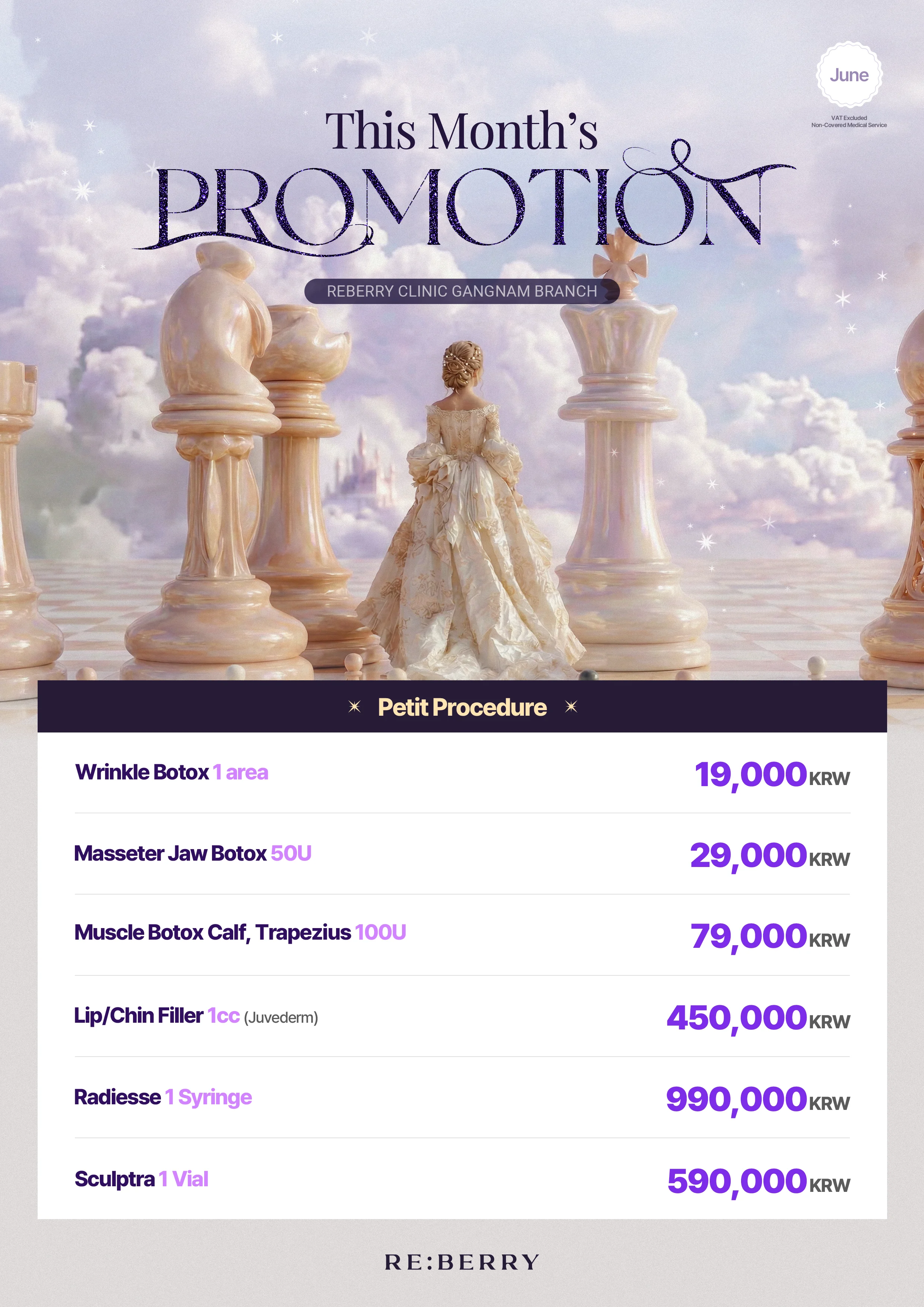
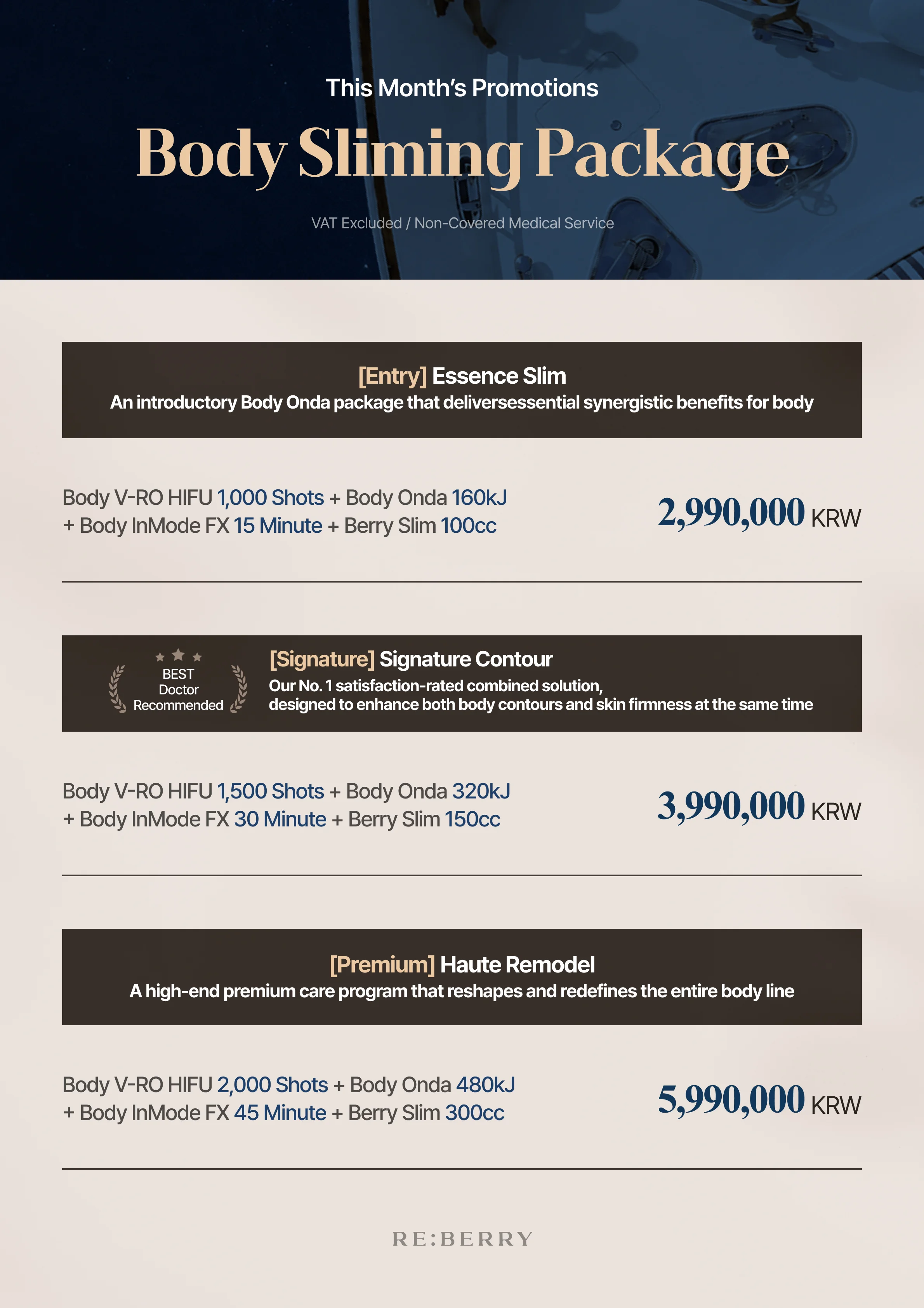
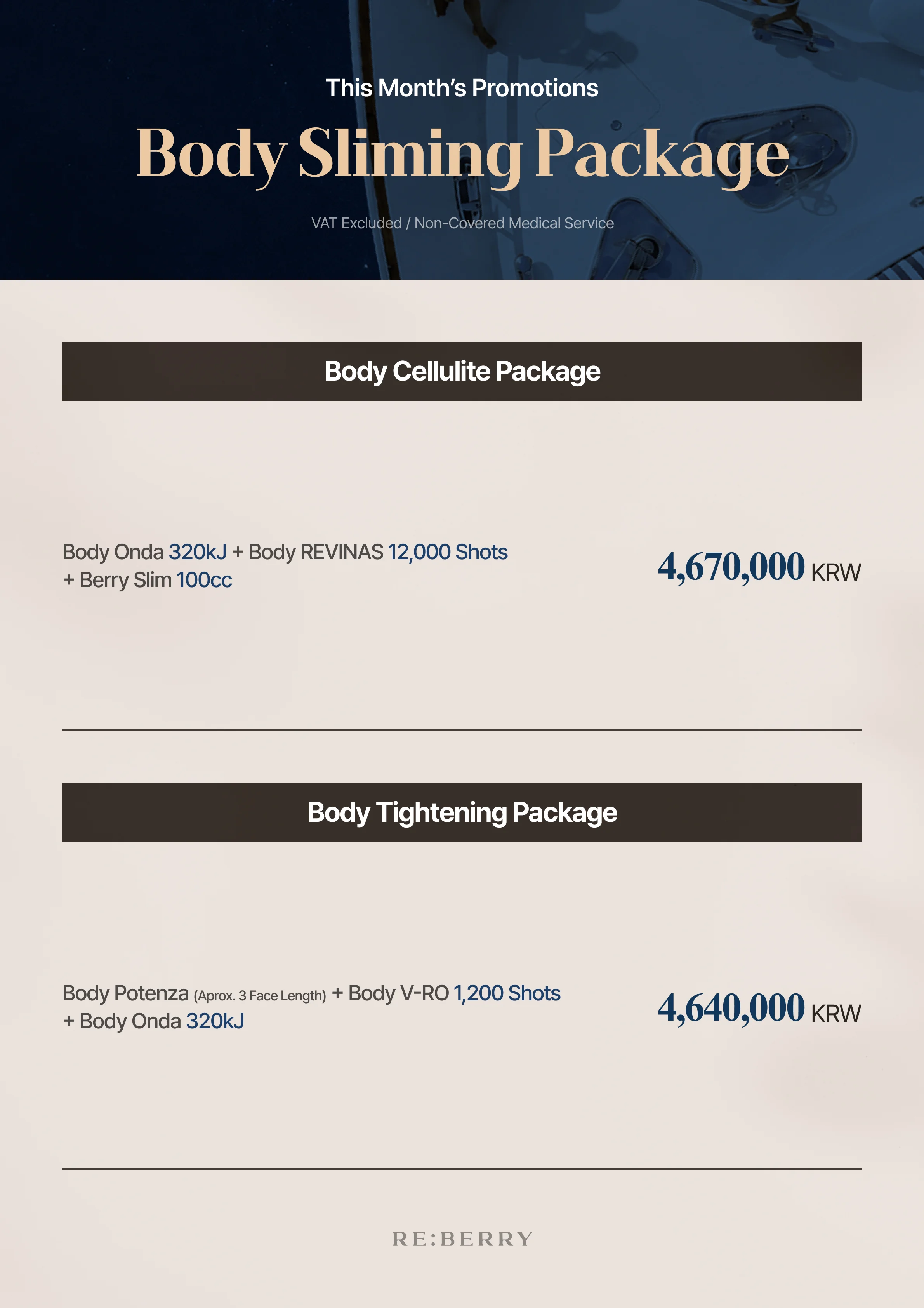
![RE:BERRY Gangnam October–December 2026 Promotion Page 10 — Body Slimming Package: [Entry] Essence Slim, an introductory Body Onda package that delivers essential synergistic benefits for body shaping and contouring: Body V-RO HIFU 1,000 Shots + Body Onda 160kJ + Body InMode FX 15 Minute + Berry Slim 100cc ₩2,990,000 · [BEST · Doctor Recommended] Signature Contour, our No. 1 satisfaction-rated combined solution, designed to enhance both body contours and skin firmness at the same time: Body V-RO HIFU 1,500 Shots + Body Onda 320kJ + Body InMode FX 30 Minute + Berry Slim 150cc ₩3,990,000 · VAT excluded](https://cdn-reberry.pages.dev/gangnam/promotion/en/gangnam-event-en-10.webp)
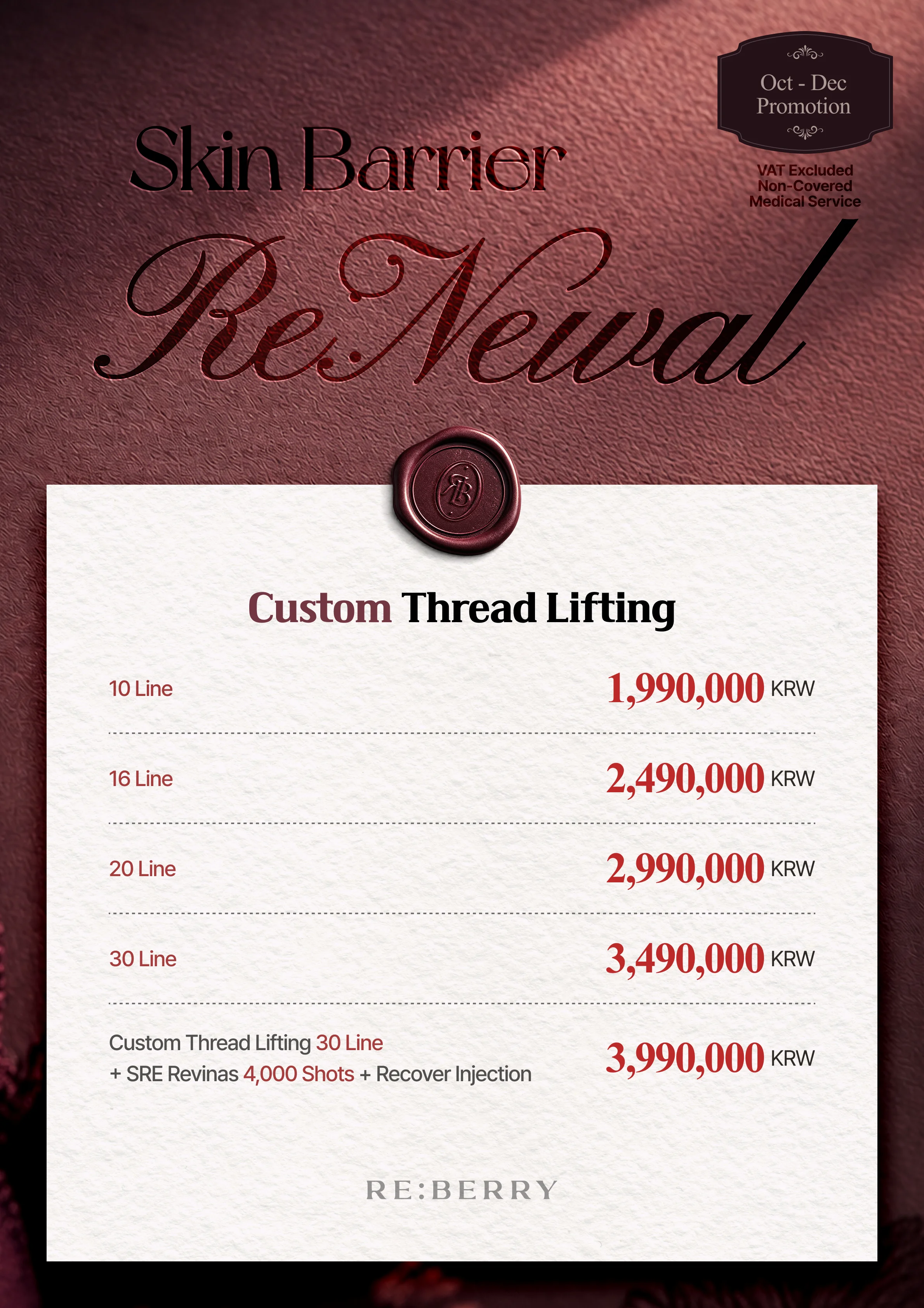
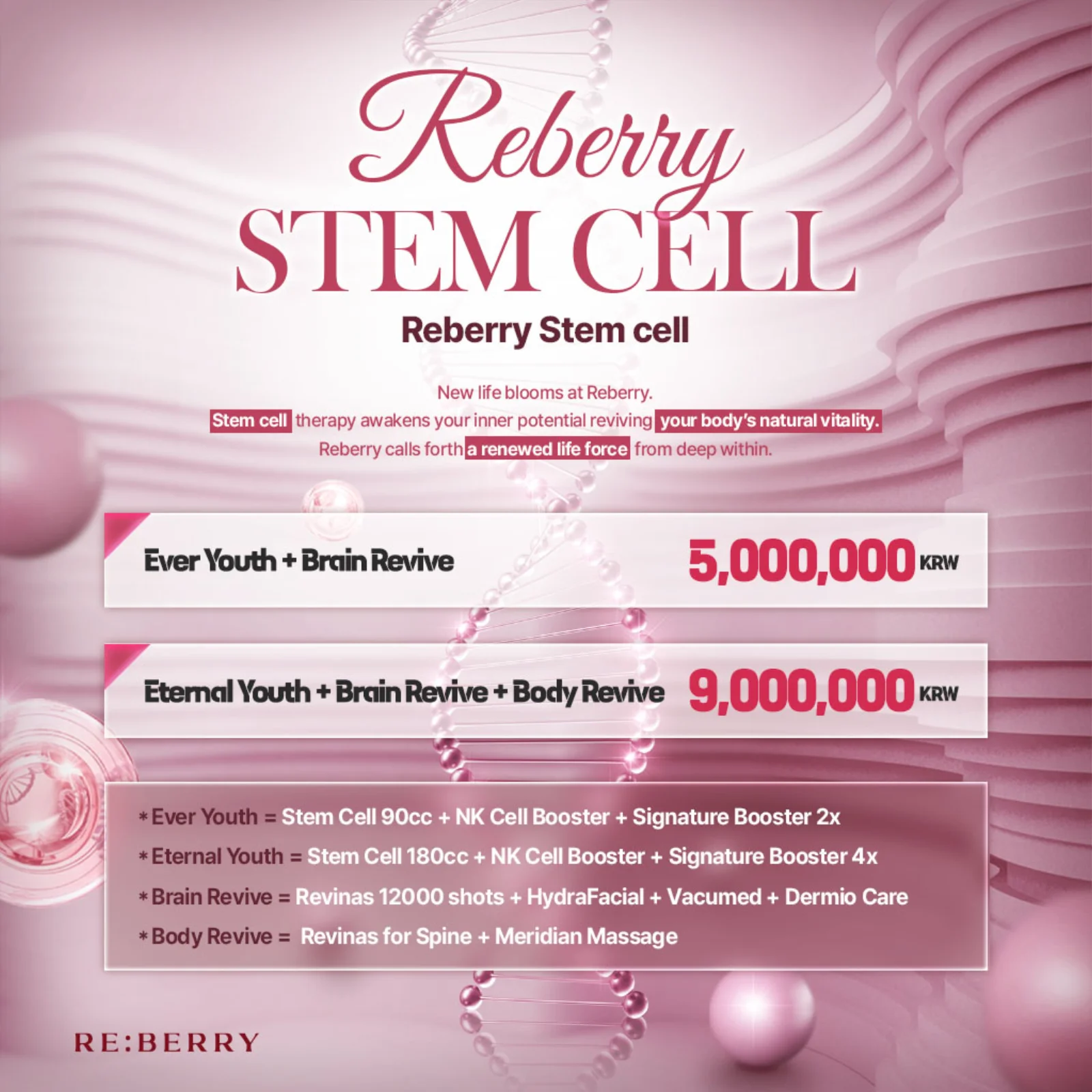
IPL Photofacial Planning at RE:BERRY Gangnam (Rates Confirmed at Consultation)
Your Medical Director
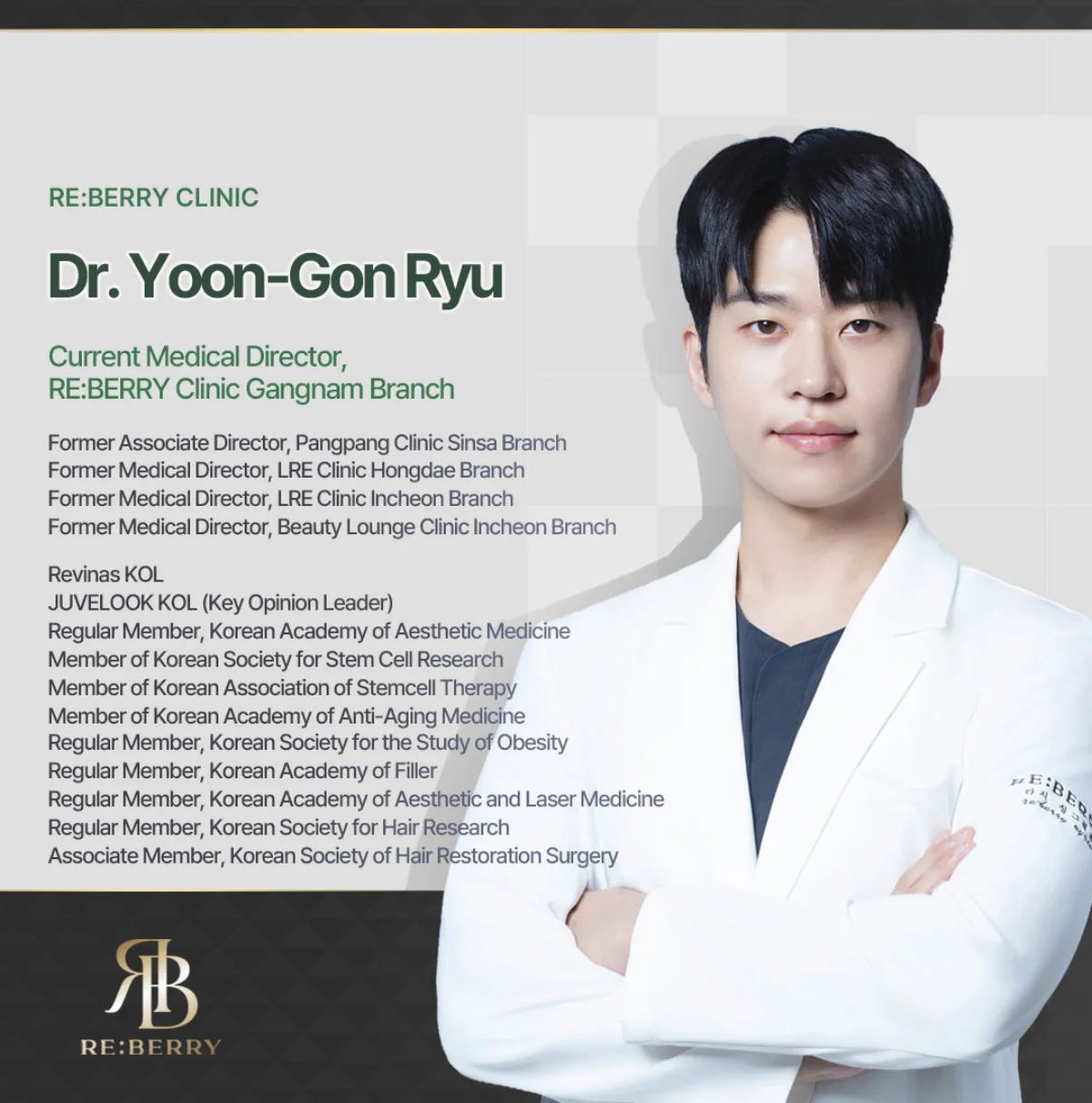
Dr. Yoon-Gon Ryu
- Medical Director, RE:BERRY Aesthetic Clinic Gangnam — Korean MOHW Medical License No.131644
- Manufacturer-appointed KOL invited to teach injection and energy-device technique to Korean peers
- Regular Member, Korean Academy of Aesthetic Medicine
- Co-manages every case with Dr. Yejin Oh (Korean MOHW Medical License No.144238)
- Featured in Authority Magazine (2026)
Medically reviewed by Dr. Yoon-Gon Ryu, CEO / Medical Director, RE:BERRY
A Fourteen-Thousand-Square-Foot Hush Above Gangnam-daero
Step past the black gallery facade and the bustle of Gangnam-daero falls away. Fourteen thousand square feet of hushed corridors, marble installations, a cascading water feature and fully enclosed consultation suites — arranged so you rarely cross paths with another guest, because our appointment-first diary keeps every hour deliberately underbooked.
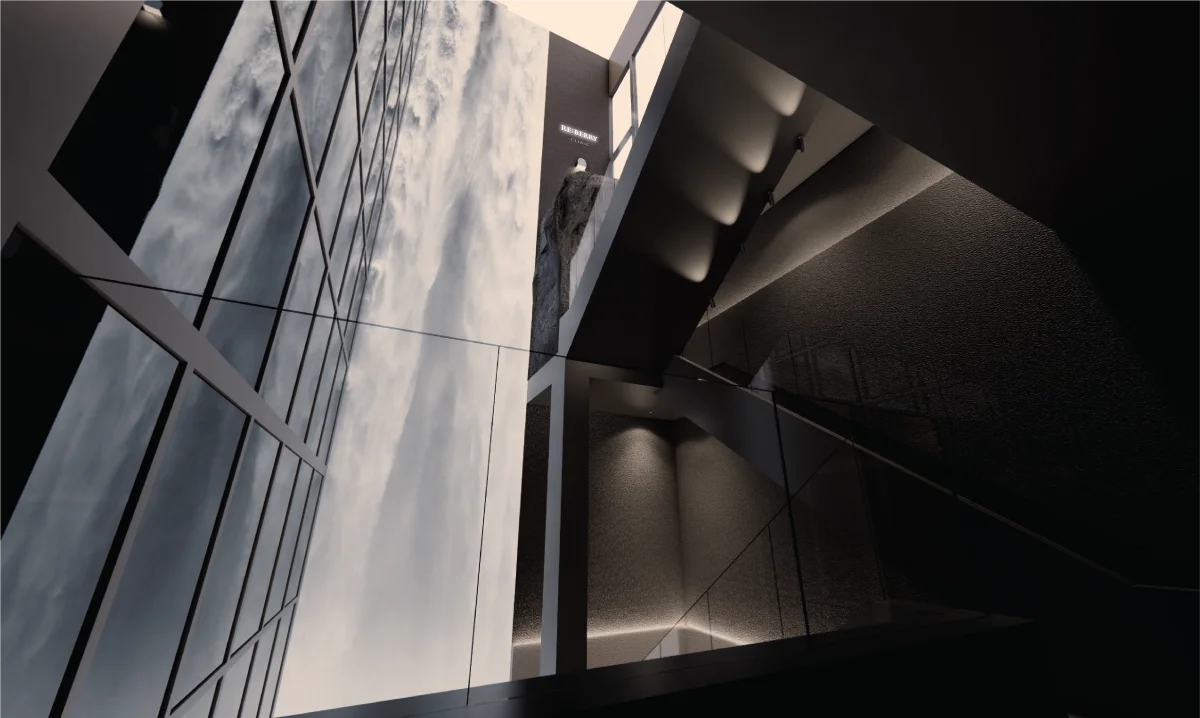
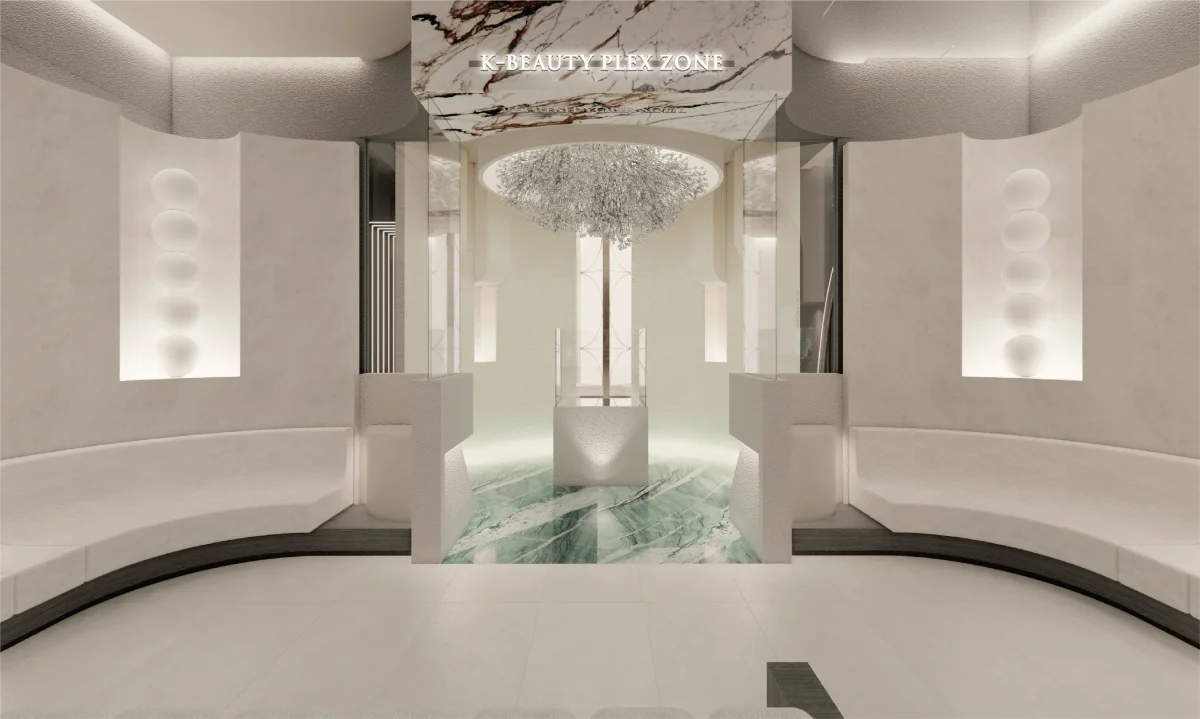
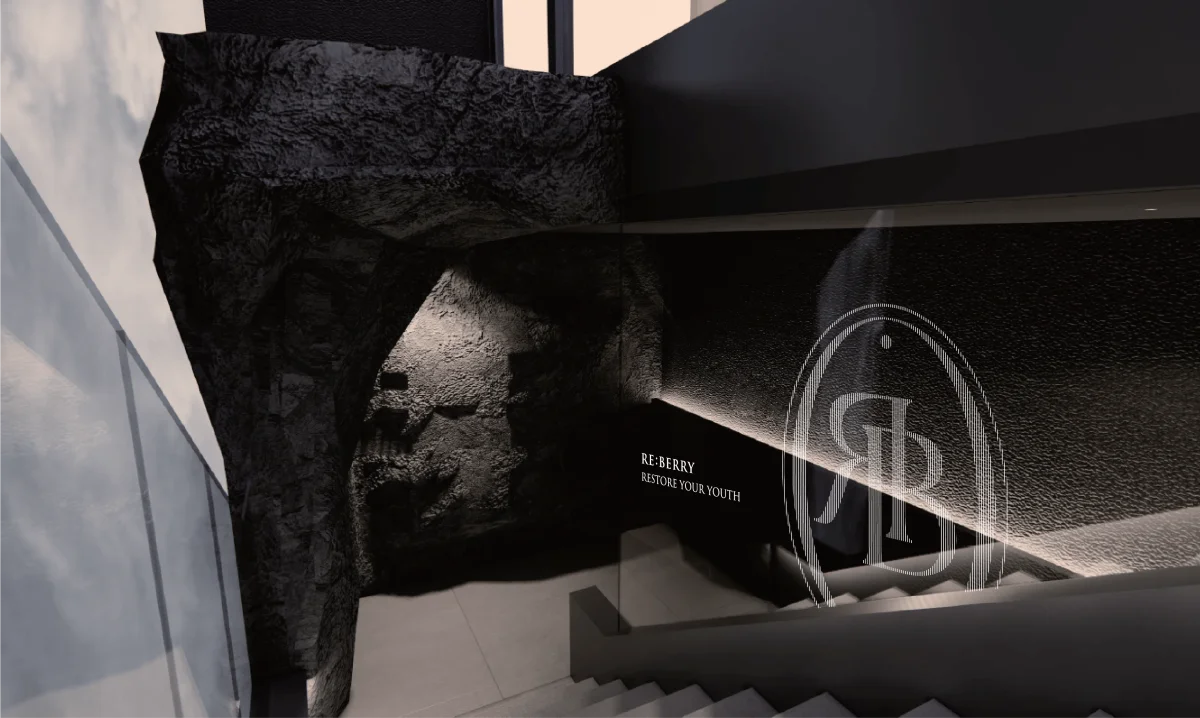
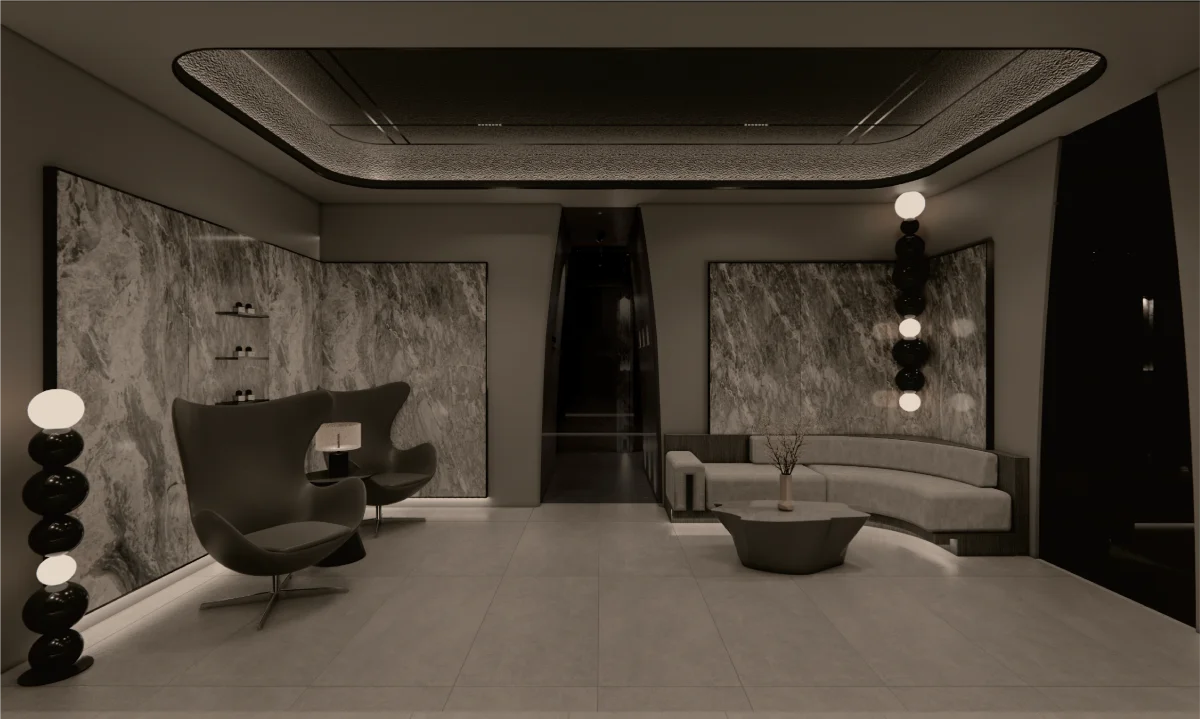
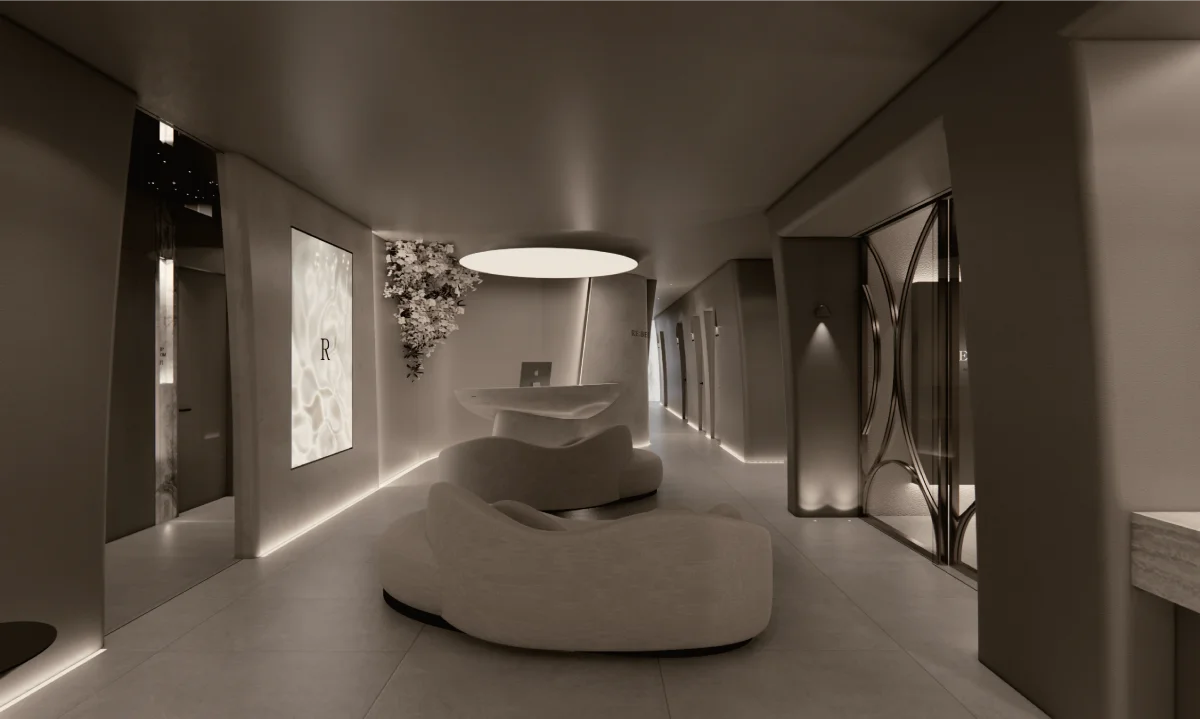
(1,322 m²)
Suites
KI Tower, Gangnam-daero
Station Exit 10
The Evidence Behind Broadband Light and Pigment Clearance
IPL rests on the principle of selective photothermolysis, first set out by Anderson and Parrish in 1983: choose a wavelength and pulse duration matched to a chromophore's absorption and thermal relaxation time, and the light heats that target while sparing the tissue around it. Broadband light applies this idea across a whole range of wavelengths at once: melanin absorbs strongly at shorter wavelengths, oxyhaemoglobin at its own bands. A cut-off filter, by removing the shorter light, lets the physician steer the same device toward brown pigment or red vessels in turn.
Anderson RR, Parrish JA. Selective photothermolysis: precise microsurgery by selective absorption of pulsed radiation. Science. 1983;220(4596):524-527. doi:10.1126/science.6836297
For skin like that of most guests at a Seoul clinic, dose discipline is the whole game. Reviews of hyperpigmentation management stress that in darker Fitzpatrick types the risk of post-inflammatory darkening rises sharply when energy is pushed. That reasoning drives the conservative fluence and the choice to treat across several gentle sessions rather than one aggressive pass. It is also why the physician screens for melasma before starting: melasma responds unpredictably to broadband heat, and the same literature that supports IPL for solar lentigines cautions against it as a first move for melasma.
Sarkar R, Arora P, Garg VK, Sonthalia S, Gokhale N. Cosmeceuticals for hyperpigmentation: what is available? J Cutan Aesthet Surg. 2013;6(1):4-11. doi:10.4103/0974-2077.110089
Photoaging often arrives alongside another concern the same guest wants addressed — the acne and congestion that broadband light and combination protocols are frequently asked to help with. Consensus care guidance for acne underlines that light-based and physical modalities are adjuncts planned around a proper diagnosis, not standalone fixes, and that any energy treatment near active inflammation is timed and dosed by the treating physician. At RE:BERRY that same caution shapes intake: recent sun exposure and active breakouts are screened out before an IPL course begins.
Zaenglein AL, Pathy AL, Schlosser BJ, et al. Guidelines of care for the management of acne vulgaris. J Am Acad Dermatol. 2016;74(5):945-973. doi:10.1016/j.jaad.2015.12.037
None of this replaces a physician reading your particular skin. The published evidence sets the guardrails of selective absorption, conservative dosing in pigmented skin, and careful case selection around melasma and inflammation. The individual chromophore map drawn at your consultation decides how those guardrails apply to your face across the sessions of your course.
Questions International Guests Ask About IPL Therapy in Korea
What exactly does IPL treat, and is it a laser?
IPL is broadband light, not a laser — it spans 515 to 1200 nanometres and the physician narrows it with a cut-off filter to target sun-induced pigmentation, diffuse facial redness, rosacea and telangiectasia, solar lentigines, and general photoaging. A laser fires one wavelength at one target; IPL steers a whole band, which is what lets a single 20-minute pass at RE:BERRY Gangnam address more than one concern.
Why is IPL done as a course of 3-5 sessions and not one visit?
Each pass uses a deliberately gentle fluence, in the range of 12-22 J/cm², so clearance accumulates across the course and does not arrive all at once. The standard plan is 3-5 sessions spaced three to four weeks apart across roughly 12-20 weeks, because the skin needs recovery time between passes and building the result gradually is safer on pigmented Asian skin than a single aggressive session.
How does IPL compare with laser toning and pico laser for pigment?
IPL suits faces where brown pigment and red vascular tone sit together and covers both in one visit. Laser toning uses low-fluence 1064nm nanosecond passes and is a first-line choice for melasma. Pico laser delivers a photomechanical picosecond pulse for deep or stubborn pigment. At RE:BERRY Gangnam the chromophore map from your consultation decides which you start on, and some faces stage two of them a few weeks apart.
Is IPL a good choice for my melasma?
Usually not as a first move. Melasma responds unpredictably to broadband heat and can darken if pushed, so the physician screens for it during mapping and, when melasma is the main finding, will redirect you to laser toning before starting an IPL course. IPL earns its place on discrete sun spots and freckles, not on the diffuse dermal pattern of true melasma.
What is the darkening I have heard about after IPL?
That is the expected frosting effect. Within about five to ten minutes of a pulse, treated sun spots turn a shade darker as the pigment is drawn toward the surface — it is not a burn. Over the next five to ten days those darkened flecks flake off naturally. The single rule that matters here is not to pick at them; let them shed on their own.
How much downtime does IPL need, and can I fly home afterward?
Downtime is minimal. Mild redness and warmth fade within two to four hours, there is no wound, and light makeup is fine by evening. Flying home 24 to 72 hours after a session is realistic. The one thing that continues after you leave is sun protection, SPF 50+ daily for four weeks, which the written aftercare sheet spells out for the journey and the days that follow.
How should I prepare my skin before an IPL course?
Avoid direct sun and self-tanners for two to four weeks beforehand, because tanned or recently burned skin is not safe to treat and raises the pigment risk. Guests flying in send intake photos at least seven days before arrival so the physician can pre-plan the mapping and flag anything that would change the plan before the first session: recent sun, active acne, a suspected melasma pattern.
What does the aftercare involve once I get home?
The written sheet lists three things: SPF 50+ every day for four weeks, no heat exposure (saunas, hot showers, intense workouts) for two days, and no exfoliation or scrubs for seven days. Keep the skin moisturised and let the darkened spots flake off on their own. The four weeks of sun discipline between sessions carry the result as much as the light does.
Does IPL hurt, and how is the skin kept comfortable?
Most guests rate it a two or three out of ten, a warm snap with each pulse well short of pain. Comfort comes from the sapphire contact tip, which is pre-cooled below zero and chills the skin surface immediately before and during each flash. No injected anaesthetic is needed, and the physician adjusts the energy to your feedback through the roughly 20-minute session.
When will I see IPL results, and how long do they last?
Superficial marks show around 30-40% clearance by the end of week one, and redness eases noticeably by week four. Across a full 3-5 session course cumulative clearance commonly reaches 70-85%. Results hold as long as sun exposure is managed; a maintenance pass every 6 to 12 months keeps fresh pigment from re-accumulating.
Can IPL be combined with other treatments on the same trip?
Yes, with spacing. IPL is commonly staged with glass skin laser toning, an aqua peel, or a Rejuran booster, but the physician keeps at least a week between different modalities so the skin is not overloaded. On a short trip that spacing is planned deliberately, and the sequence (which comes first, how many days apart) is set at consultation, not improvised.
How can I run an IPL course if I only visit Seoul briefly?
Many guests split the 3-5 sessions across two or three trips. The physician sequences the passes so the three-to-four-week gaps fall between flights and never inside a single stay, and reviews progress photos remotely between visits so the later sessions arrive pre-planned. The five-language aftercare sheet covers in-flight barrier care and the sun rule for the weeks you are away.
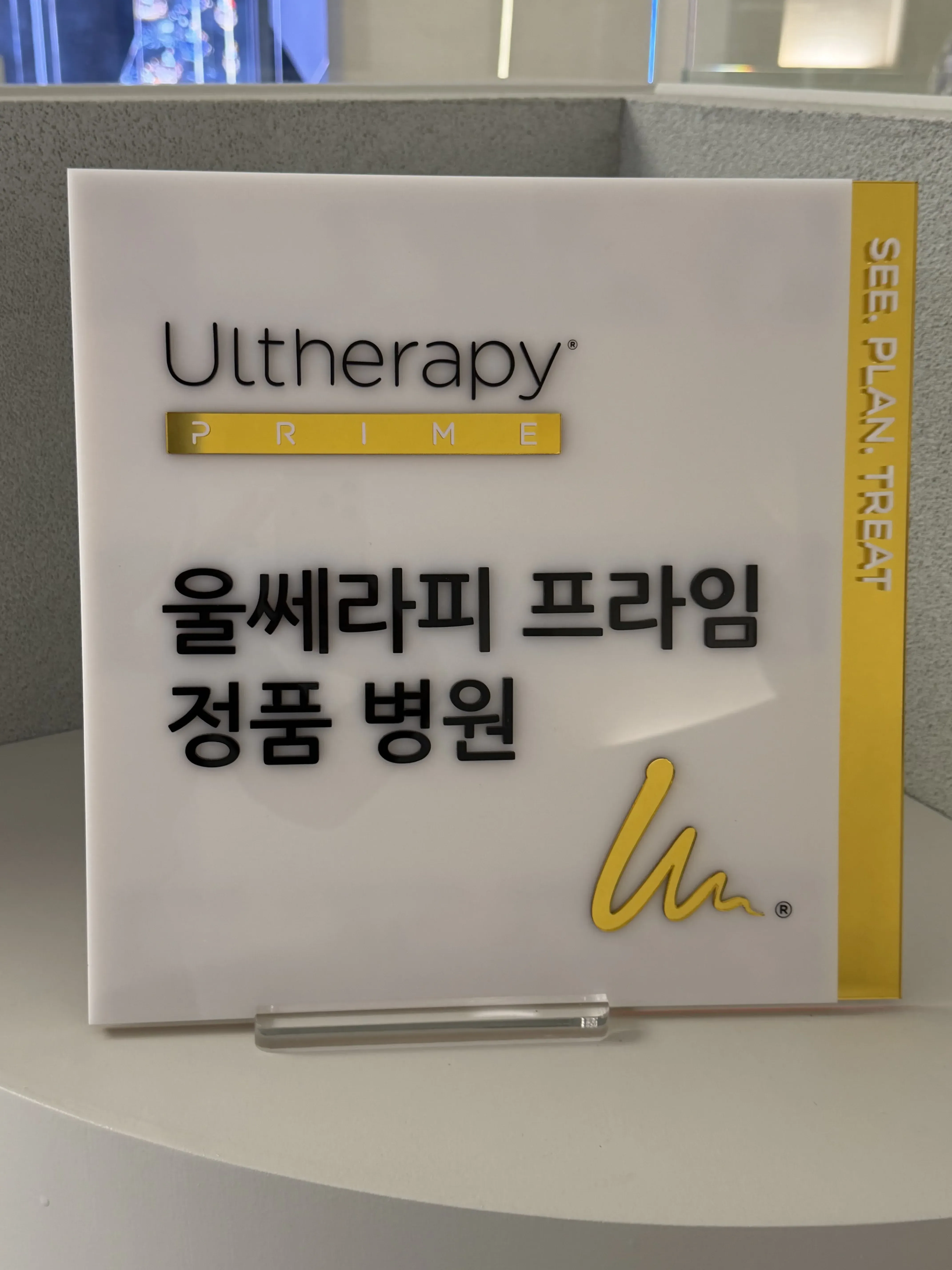
Which IPL device is used, and is it genuine?
RE:BERRY Gangnam uses a genuine Inmode broadband-light platform running 515 to 1200 nanometres with dual cooling and the sapphire contact tip. It is an officially imported, manufacturer-supported device, and the physician selects the cut-off filter by what your chromophore map shows: 515nm for shallow pigment, 560nm for vessels, 640nm for deeper melanin.
Is IPL safe during pregnancy or breastfeeding?
IPL courses are generally deferred during pregnancy and breastfeeding, and the physician confirms this during intake. If you are pregnant, nursing, or planning to be during the course window, tell the clinic when you send your intake photos so the schedule can be adjusted or postponed to a suitable time.
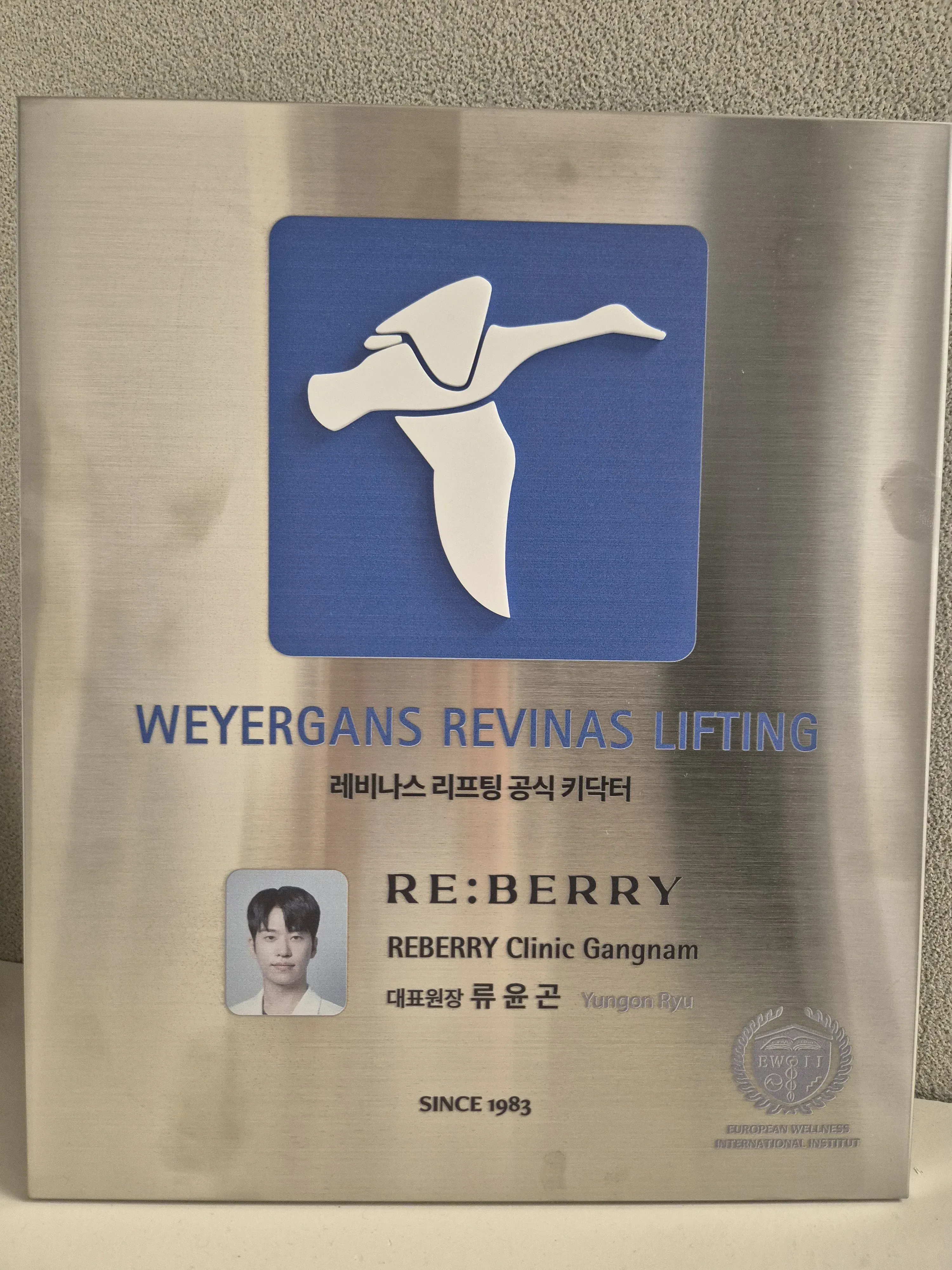
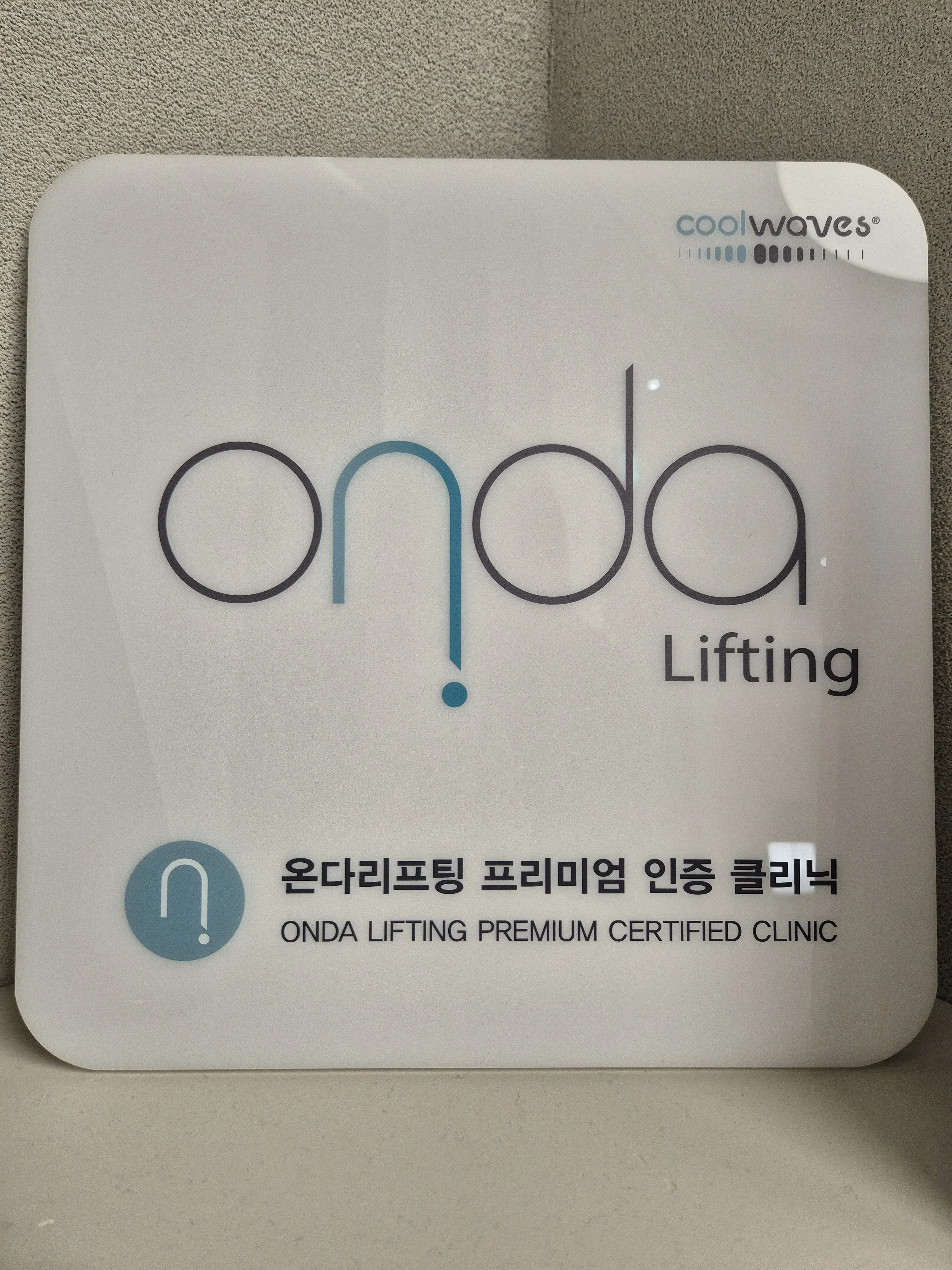
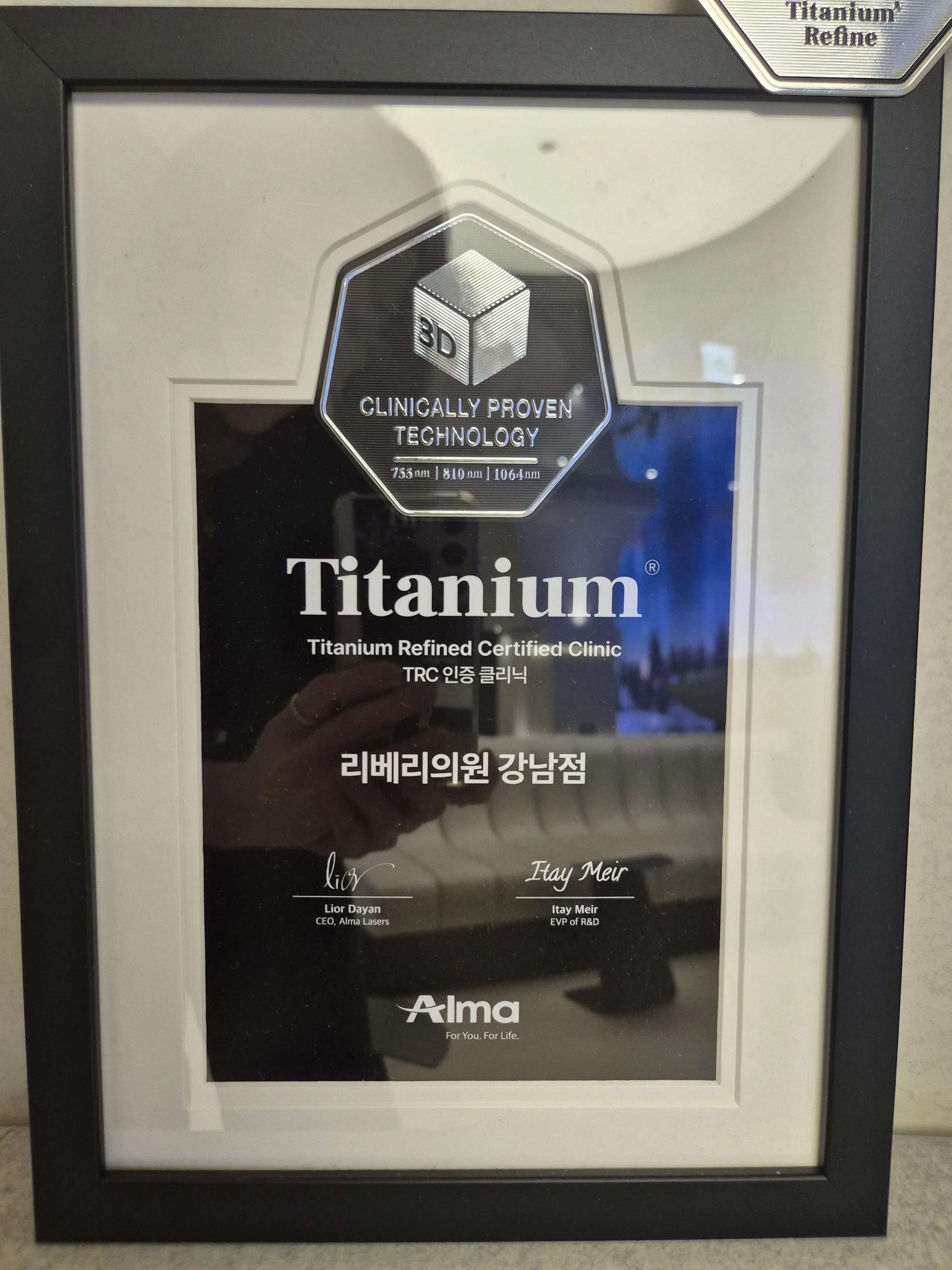
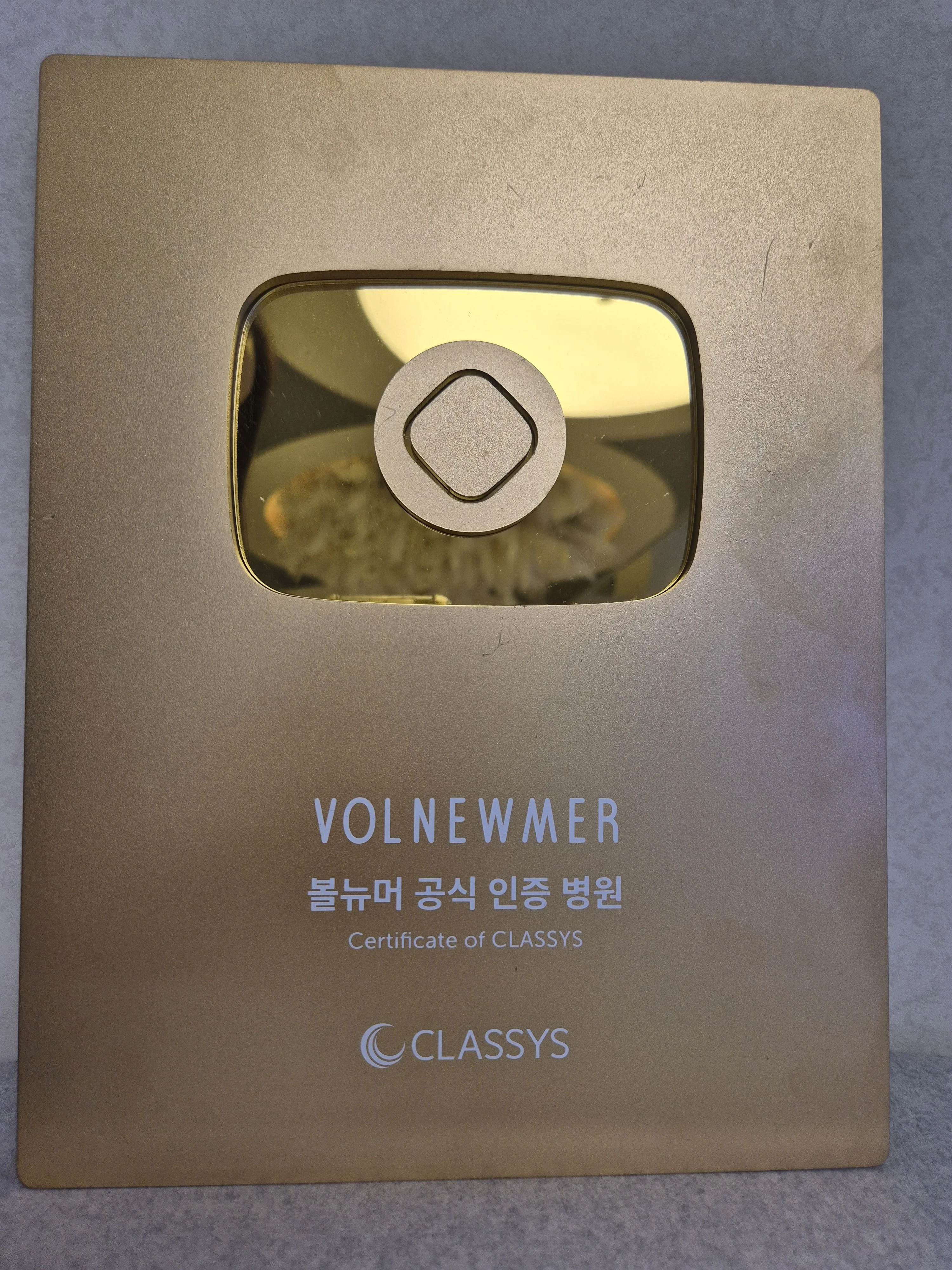
Only Authentic, Brand-Certified Equipment
Every device at RE:BERRY is MFDS-certified and manufacturer-verified. We never use counterfeit or grey-market equipment.
Plan Your IPL Photofacial Course in Gangnam
Send your pigment and redness concerns, a few intake photos, and your Seoul travel dates to RE:BERRY on WhatsApp. A coordinator replies as soon as possible, and the physician pre-maps your chromophores so your course is sequenced to your trips before you arrive. Nothing is scheduled until you confirm, and the same physician reads every session in the course.
Related Treatments
Why Tens of Thousands of Foreign Patients Are Choosing This Gangnam Clinic — Business Wire, 2026-04-13
Numbers That Tell Our Story
Cumulative across RE:BERRY clinics (Gangnam · Myeongdong · Incheon Airport).
Brand-Authenticated Equipment & Training




Our doctors are certified by Korea's top dermatological societies




Latest from Our Instagram
Real treatments, patient reactions, and behind-the-scenes from RE:BERRY.
Tap any video for sound & fullscreen
What our patients say
Real verified reviews from our Google Business Profile
I had a really nice experience at Reberry Clinic Gangnam. I received a Hydrafacial treatment, and the whole process was very comfortable. The staff were kind and explained everything clearly, and the clinic itself felt clean and relaxing. I also loved the interior — the clinic felt very clean, elegant, and luxurious, w...
I had such an amazing experience at this clinic! The clinic itself is absolutely stunning the design is beautiful, elegant, and luxurious, and the service is truly top-notch. Everything was so well organized, and I felt very comfortable from the moment I walked in.
I had a Korean filler treatment to reduce my nasolabia...
i had a good time having the Juvelook treatment!
It was my first time in Korea, all the Doctor & team are bery helpful. Dr. Ian & cheong a lee(jenny) are really helpful.
I understand more about my skin.
The clinic is calm, welcoming.
there are many activities i didn’t expect to find in a beauty clinic; phot...
So happy to found the beauty clinic in Korea that very inclusive and Muslim friendly. They have a prayer space for muslim and they prepare a female doctor for me. The clinic is so comfortable with aesthetic design make me feel relaxed. The doctor and the staff are very professional and helpful so all of the procedure r...
As someone who has struggled with acne since middle school, I decided to stop here during a layover in Seoul and was amazed by the treatment.
Firstly, the environment is elegant and peaceful. Feels very luxurious and the treatment from staff was as such as well. Speaking of staff, they were extremely professional, car...
Book Your Personalized Consultation
Share your details and our multilingual team will contact you as soon as possible through your preferred messenger.
- ✓ Free online skin consultation with a doctor
- ✓ Personalized treatment plan & pricing
- ✓ 5-language support (EN/ZH-CN/ZH-TW/JA/ES)
- ✓ Response as soon as possible via your preferred messenger
Science IPL broadband-light photofacial — peer-reviewed references
The photofacial protocol at RE:BERRY Gangnam is anchored in the physics of selective absorption and the caution the pigment literature demands. Anderson and Parrish (1983) established selective photothermolysis, the principle that a wavelength and pulse duration matched to a chromophore heat that target while sparing surrounding tissue — the basis for steering filtered broadband light at brown pigment or red vessels in turn. Reviews of hyperpigmentation management (Sarkar 2013) underline that in darker Fitzpatrick skin the risk of post-inflammatory darkening rises with energy, so fluence is kept conservative and the result built across gentle sessions. Consensus acne guidance (Zaenglein 2016) frames light-based and physical modalities as physician-planned adjuncts around a proper diagnosis, mirroring the intake screening for active inflammation and recent sun before an IPL course begins.
- Anderson RR, Parrish JA. Selective photothermolysis: precise microsurgery by selective absorption of pulsed radiation. Science. 1983;220(4596):524-527. doi:10.1126/science.6836297
- Sarkar R, Arora P, Garg VK, Sonthalia S, Gokhale N. Cosmeceuticals for hyperpigmentation: what is available? J Cutan Aesthet Surg. 2013;6(1):4-11. doi:10.4103/0974-2077.110089
- Zaenglein AL, Pathy AL, Schlosser BJ, et al. Guidelines of care for the management of acne vulgaris. J Am Acad Dermatol. 2016;74(5):945-973. doi:10.1016/j.jaad.2015.12.037
These references shape how the IPL course is run at RE:BERRY's Gangnam aesthetic clinic: chromophore mapping by the treating physician before any filter is chosen; conservative fluence on Fitzpatrick III-IV skin with case selection that redirects melasma away from broadband heat; and intake screening for recent sun exposure and active inflammation before the first of the 3-5 sessions. This information is for educational purposes only and is not medical advice.
How to Find RE:BERRY Gangnam
2 minutes from Gangnam Station Exit 10. B1–B2, KI Tower — the building with the all-black entrance you can't miss.
RE:BERRY Clinic Gangnam
B1–B2, KI Tower, 69-gil 8, Gangnam-daero, Seocho-gu, Seoul
서울시 서초구 강남대로69길 8, 지하1·2층 (KI타워)
Also available at: Myeongdong · Incheon Airport