Box Scar Treatment in Gangnam Seoul
Boxcar scars are rectangular, well-defined depressions with sharp vertical edges caused by inflammatory acne destroying collagen in the mid-to-deep dermis. Unlike rolling scars or ice-pick scars, boxcar scars require volumetric filling combined with collagen remodeling to restore a level skin surface. RE:BERRY Gangnam combines Potenza RF microneedling, Juvelook PDLLA volumetric correction, and precision subcision to achieve 35-60% box scar depth improvement. Box scar treatment from ₩490,000, two minutes from Gangnam Station Exit 10.
What Is Box Scar Treatment at RE:BERRY Gangnam?
Box scar treatment at RE:BERRY Gangnam uses Potenza RF microneedling, Juvelook PDLLA volumetric filler, and precision subcision to release tethered boxcar acne scars and rebuild dermal collagen — achieving 35-60% scar depth improvement starting at ₩490,000 per session with 48-72 hours downtime under physician-only protocols.
At RE:BERRY Gangnam, Medical Director Dr. Yoon-Gon Ryu classifies each boxcar scar by depth (shallow <0.5mm vs deep >0.5mm), diameter (narrow <4mm vs wide >4mm), and border morphology to determine the optimal box scar treatment combination. Shallow boxcar scars respond to Potenza RF microneedling alone, which induces controlled collagen remodeling at the scar base. Deep boxcar scars require a three-step protocol: subcision to release fibrotic tethering bands anchoring the scar floor, Juvelook PDLLA injection to provide volumetric scaffolding for collagen deposition, and Potenza RF to stimulate uniform collagen cascade across the scar surface. This multi-layer box scar treatment approach addresses the structural pathology that single-modality treatments miss. All box scar procedures are performed exclusively by licensed physicians, using MFDS-approved devices, with dermoscopic progress photography at every session. Whether you are an international patient seeking intensive acne scar treatment during a Seoul visit or a local resident pursuing a multi-session box scar protocol, our 8-language coordination team manages every step from assessment through long-term follow-up.
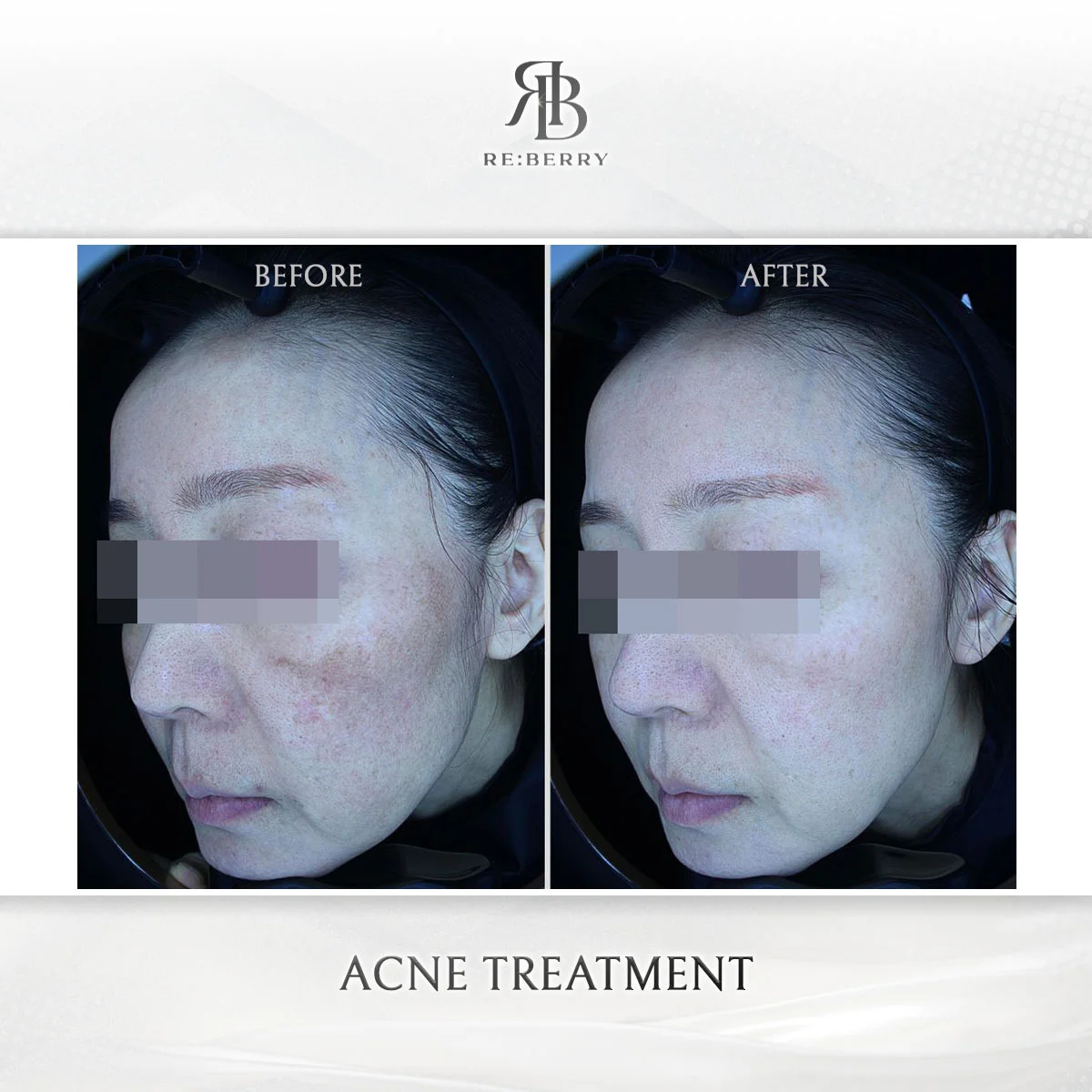
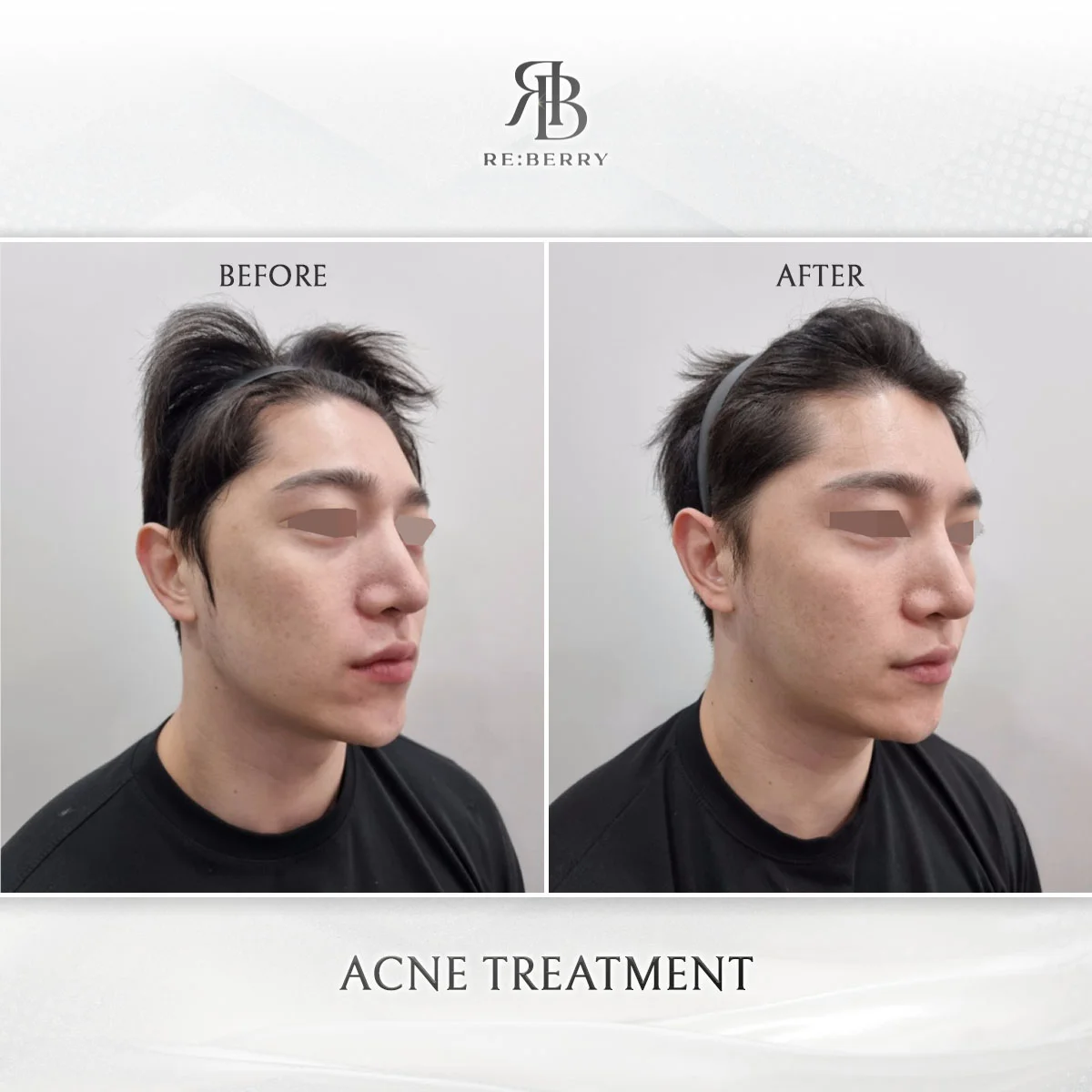
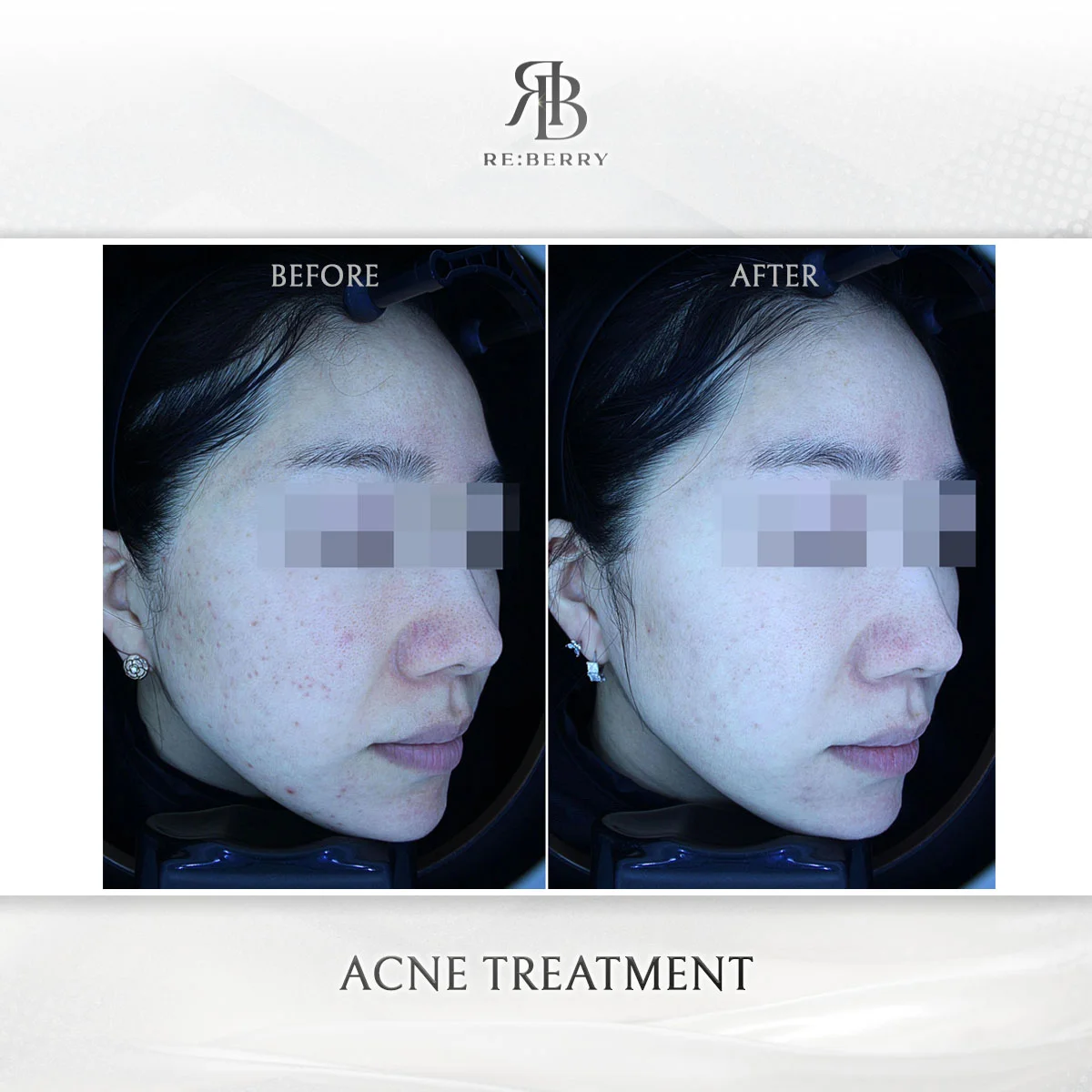
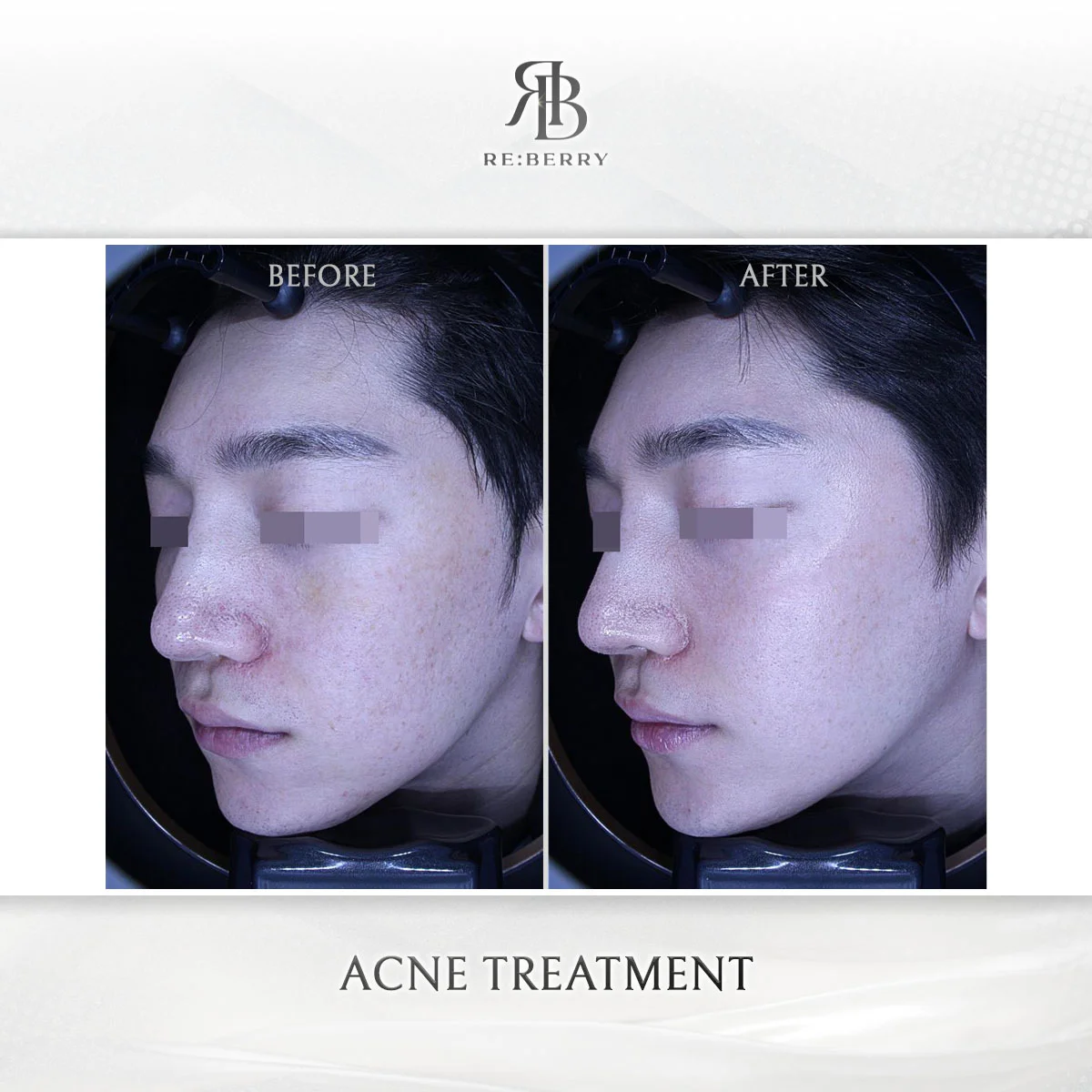
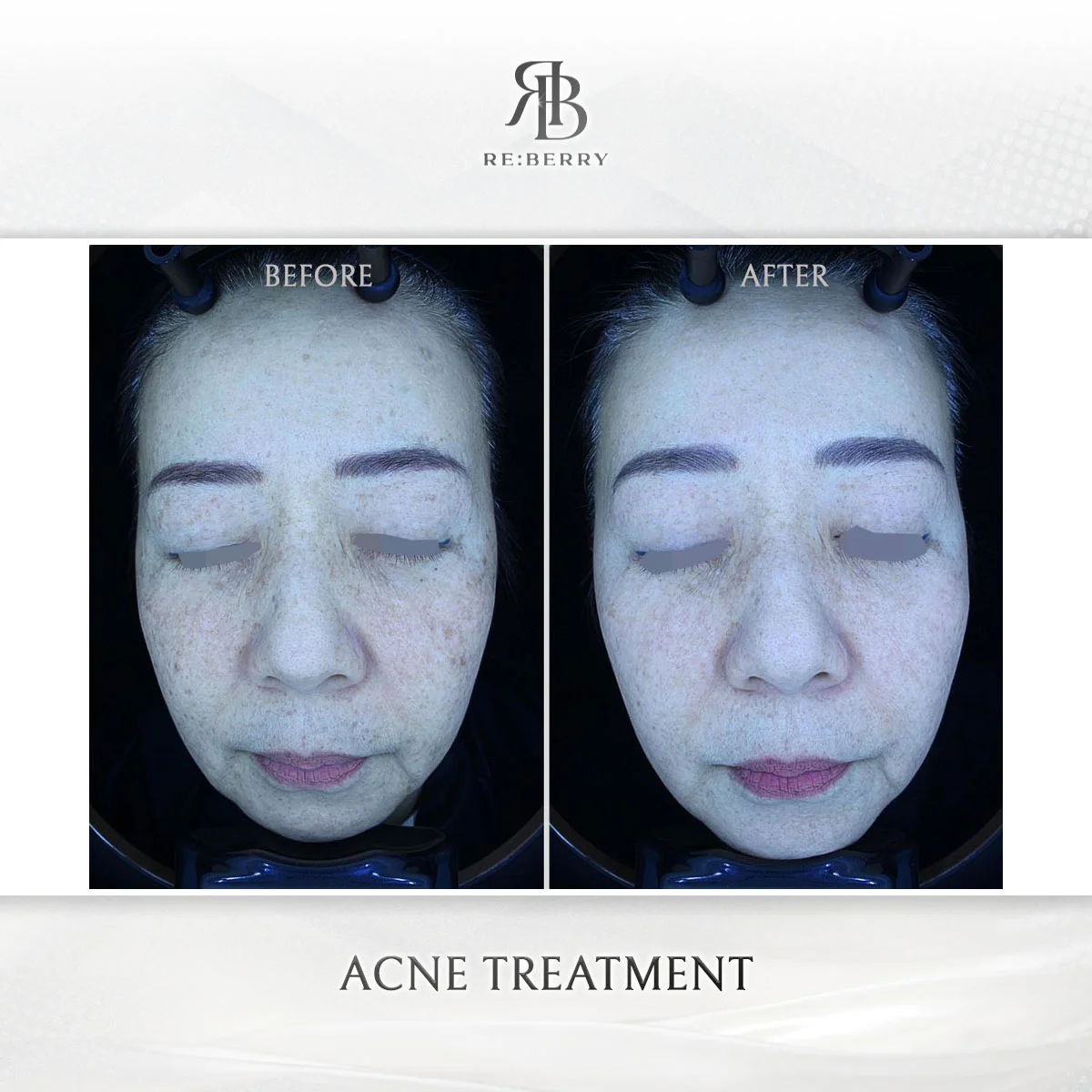
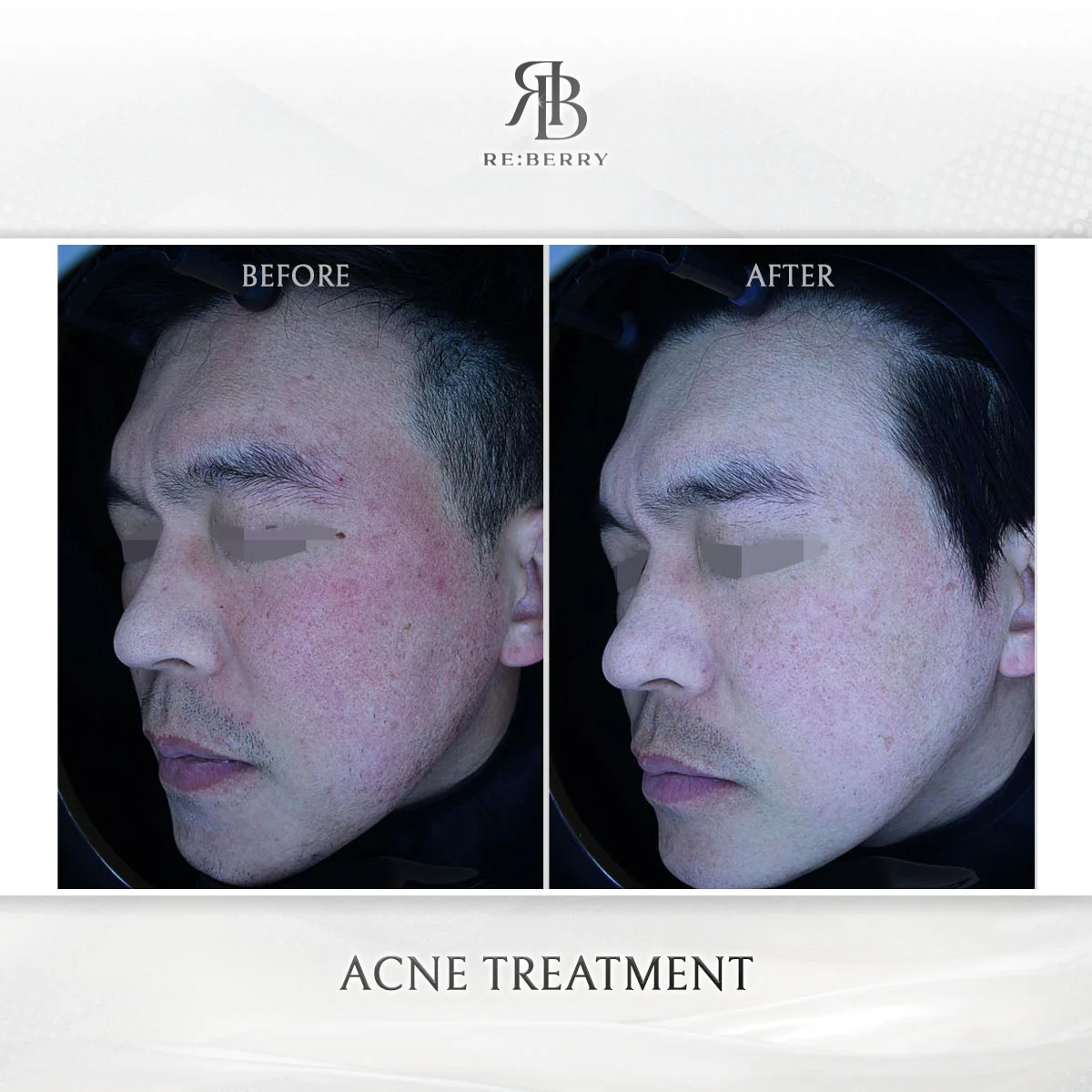
Box Scar Treatment Before and After
Actual patient results from RE:BERRY Gangnam. Individual outcomes may vary.
How Box Scar Treatment Works at RE:BERRY Gangnam
A physician-designed multi-step box scar treatment protocol targeting scar tethering, volumetric loss, and collagen remodeling.
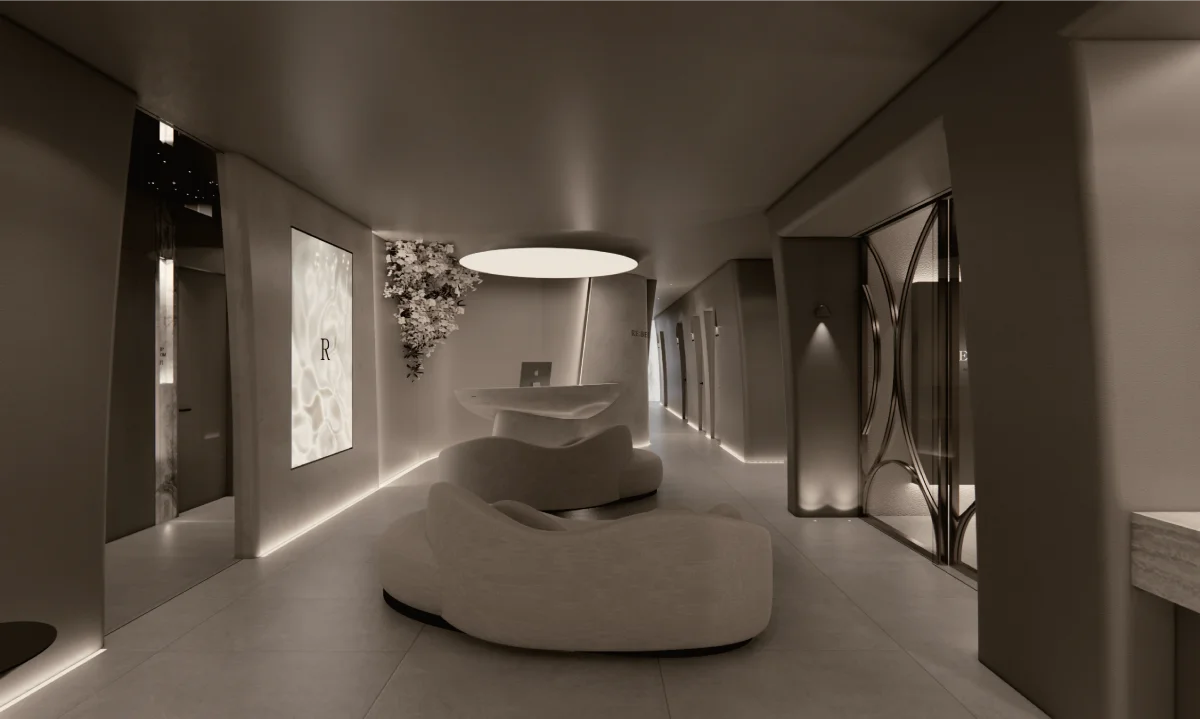
Scar Mapping & Classification
Dr. Yoon-Gon Ryu performs high-magnification dermoscopic assessment of every boxcar scar, measuring depth (shallow vs deep), diameter, and border characteristics. Each scar is plotted on a facial map and graded using the ECCA (Echelle d’Evaluation Clinique des Cicatrices d’Acne) scale. This quantitative baseline enables objective measurement of box scar treatment improvement at each follow-up visit. Cross-polarized imaging captures scar shadows that are invisible to the naked eye, ensuring no boxcar scar is missed in the treatment plan. The assessment takes 20-30 minutes and is included with every box scar treatment package.
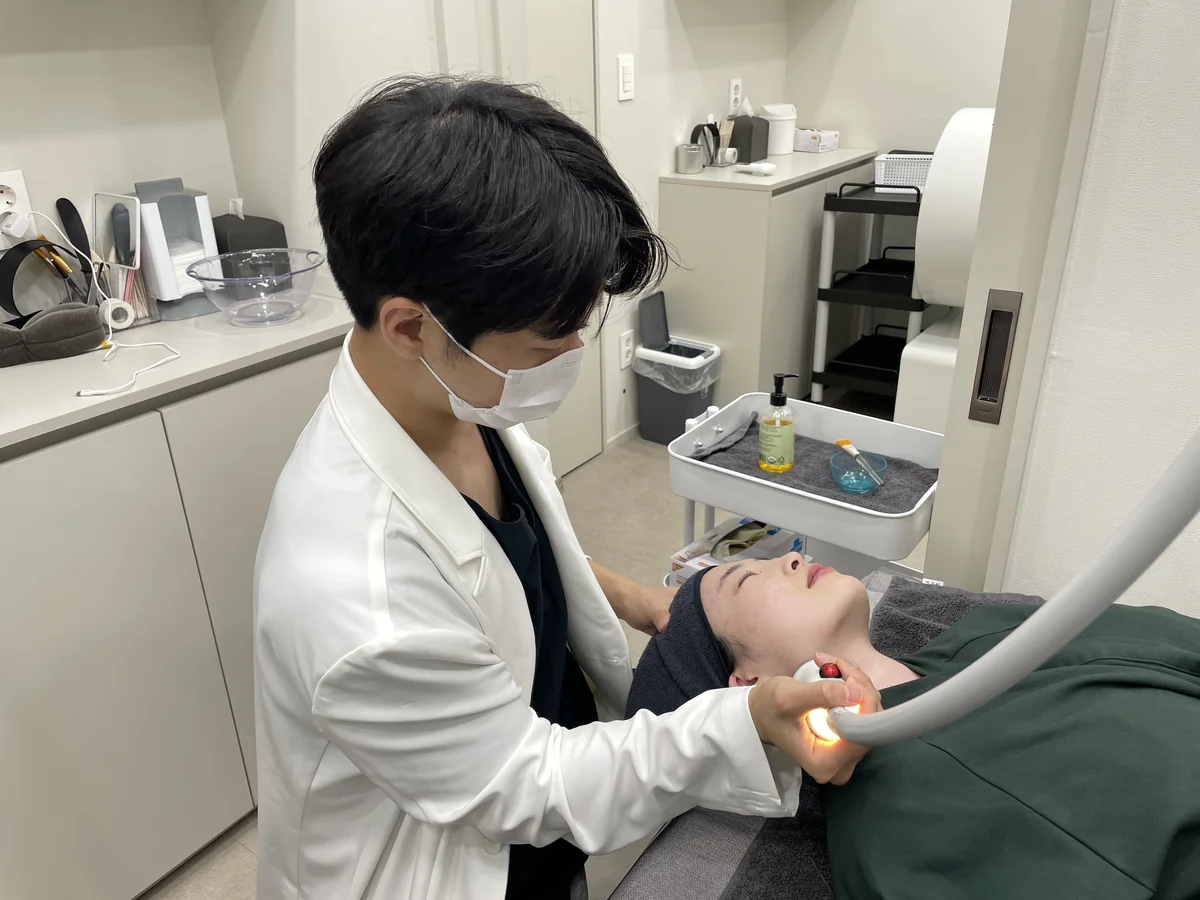
Subcision to Release Scar Tethering
Using a Nokor needle or cannula, Dr. Ryu performs precision subcision beneath each deep boxcar scar. The needle sweeps horizontally at the dermal-subcutaneous junction to sever the fibrotic bands pulling the scar floor downward. This release allows the depressed scar base to float upward, immediately reducing visible depth by 20-40%. Subcision is the critical first step for box scar treatment because without releasing the tethering bands, no amount of surface laser or RF energy can permanently elevate a deep boxcar scar. Bruising at subcision sites lasts 5-7 days and is the primary source of box scar treatment downtime.
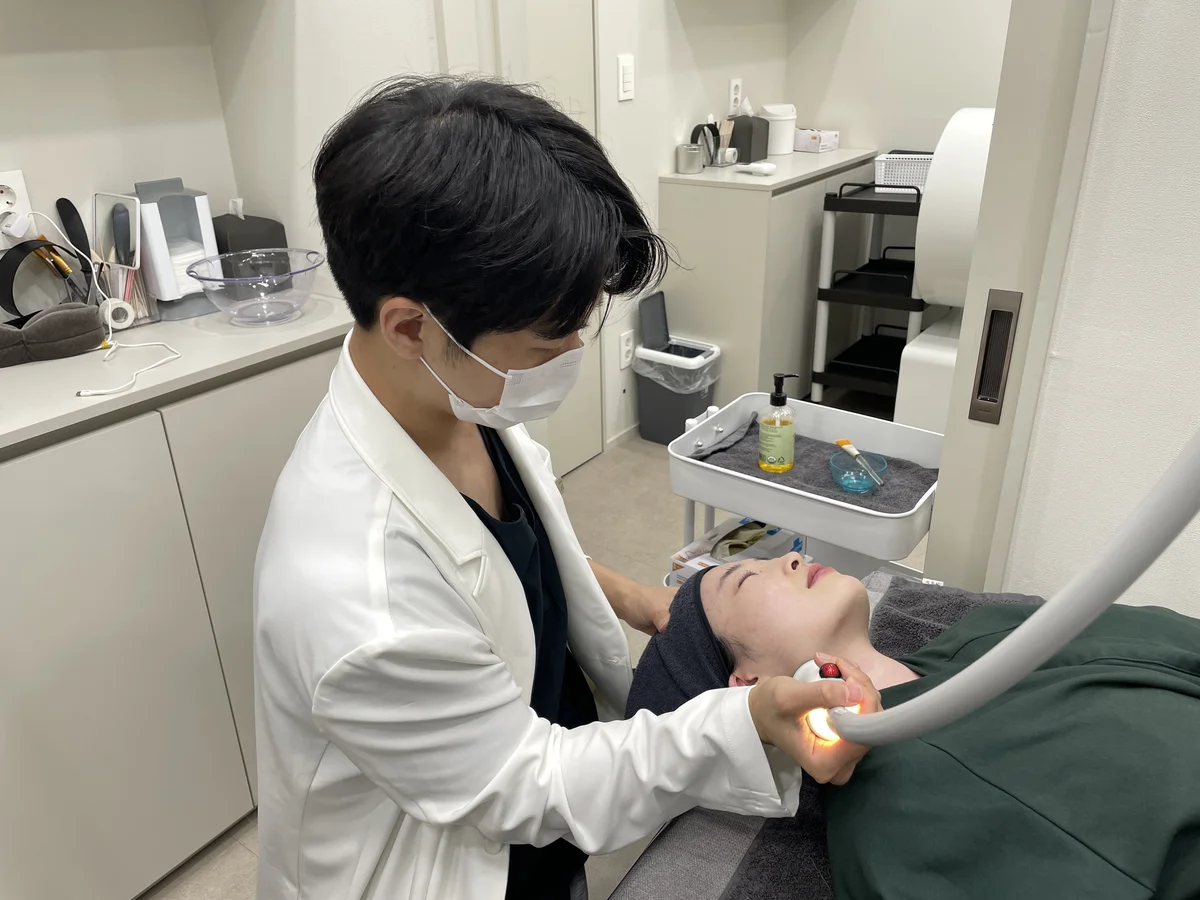
Juvelook PDLLA Volumetric Restoration
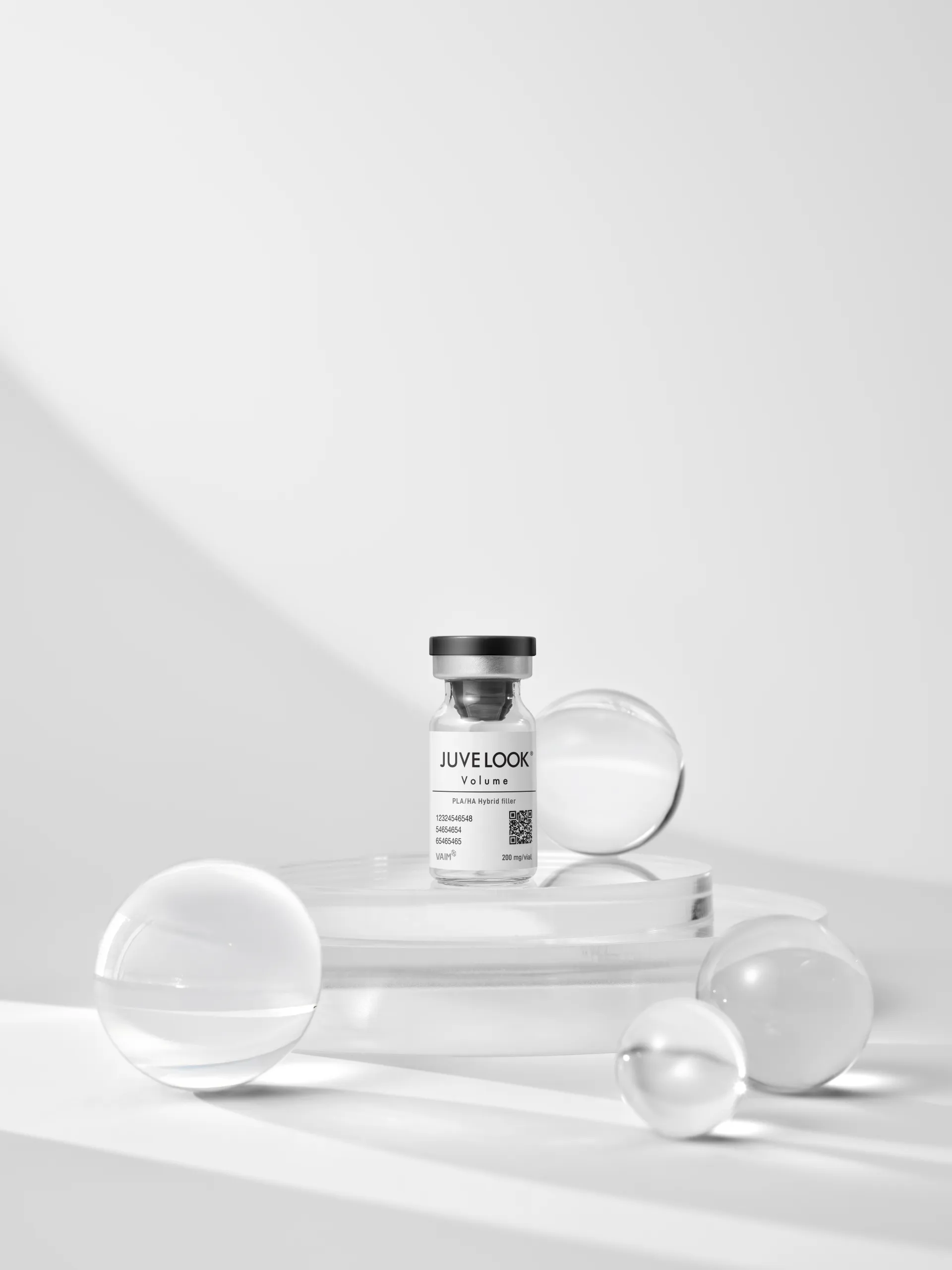
Immediately after subcision, Juvelook (poly-D,L-lactic acid microspheres in hyaluronic acid carrier) is micro-injected into the subcised scar space. The HA component provides immediate volumetric support, physically elevating the scar floor by 0.2-0.5mm. The PDLLA microspheres then trigger progressive neocollagenesis over 8-24 months, building a permanent collagen scaffold that replaces the temporary HA volume. This box scar treatment step prevents re-tethering and delivers sustained, progressive improvement as the collagen cascade matures. Each Juvelook injection is precisely placed using a 30G needle under dermoscopic guidance to ensure uniform distribution within the scar architecture.
Potenza RF Microneedling + LDM Recovery
Potenza delivers bipolar radiofrequency energy through gold-tipped microneedles at 0.5-3.5mm depth across the entire box scar treatment zone. The RF thermal stimulus (60-70 degrees C) triggers a uniform collagen cascade in the superficial-to-mid dermis, blending the scar margins into surrounding normal skin. This addresses the sharp vertical edges that define boxcar scars — the feature that makes them most visually prominent. LDM (Local Dynamic Micro-massage) ultrasound concludes the session, reducing inflammation, promoting lymphatic drainage, and accelerating wound healing. Total box scar treatment session time is 60-90 minutes including topical numbing.
What to Expect from Box Scar Treatment
- Three-Layer Scar Correction Box scar treatment at RE:BERRY Gangnam addresses all three structural defects simultaneously: fibrotic tethering (subcision), volumetric deficit (Juvelook), and surface irregularity (Potenza RF) — producing results no single device can match.
- 35-60% Measurable Depth Improvement Quantitative scar depth measurements using dermoscopic imaging show 35-60% reduction on the ECCA grading scale after 3-4 box scar treatment sessions, with progressive improvement continuing for 12-24 months post-treatment.
- Safe for All Skin Types (Fitzpatrick I-VI) Potenza RF’s insulated microneedle tips deliver energy below the epidermis, eliminating post-inflammatory hyperpigmentation risk that makes fractional CO2 laser unsafe for Fitzpatrick IV-VI patients.
- Progressive Long-Term Improvement Juvelook PDLLA collagen remodeling continues for 8-24 months after box scar treatment. Patients report continued scar improvement at 6, 12, and even 18-month follow-up visits.
- Minimal Downtime for Travelers 48-72 hours of bruising at subcision sites and mild redness from Potenza RF. Makeup can be applied after 48 hours. Most patients can fly home 2-3 days post-treatment.
- Prevents Re-Tethering Juvelook injection into the subcised space creates a physical barrier preventing fibrous bands from re-forming. This is why the subcision + filler box scar treatment combination produces superior long-term results versus subcision alone.
| Timeline | What to Expect |
|---|---|
| Day 1-3 | Bruising at subcision sites (primary downtime). Mild redness and micro-swelling from Potenza RF. Cool compresses recommended. Avoid makeup for 48 hours. SPF 50+ when outdoors. |
| Week 1-2 | Bruising fully resolves. Immediate volumetric improvement from Juvelook HA component visible. Treated skin feels firmer. Resume normal skincare except active acids. |
| Week 3-6 | Early collagen remodeling begins. Boxcar scar edges start softening. Dermoscopic imaging shows measurable depth improvement. Second box scar treatment session can be scheduled. |
| Month 2-3 | PDLLA collagen cascade accelerates. Scar volume improvement becomes visible under natural lighting. Sharp boxcar edges progressively blend into surrounding skin. |
| Month 3-6 | Peak collagen deposition phase. ECCA scores show 35-50% improvement. Most patients complete 3-4 box scar treatment sessions by this point. |
| Month 6-24 | Continued progressive improvement as PDLLA remodeling matures. Maximum box scar treatment results achieved at 12-18 months. Maintenance sessions every 6-12 months for optimization. |
Box Scar Treatment Options Compared
| Feature | Subcision + RF + Juvelook (RE:BERRY) | Fractional CO2 Laser | TCA CROSS | Dermal Filler Alone |
|---|---|---|---|---|
| Mechanism | Tethering release + collagen + volume | Ablative resurfacing | Focal chemical reconstruction | Volumetric filling |
| Boxcar Scar Efficacy | 35-60% depth improvement | 20-40% improvement | 25-35% improvement | 20-30% temporary |
| Deep Scar Release | Yes (subcision) | No | No | No |
| PIH Risk (Dark Skin) | Very low (RF insulated tips) | High (20-30%) | Moderate | None |
| Downtime | 48-72 hrs bruising | 7-14 days | 7-10 days crusting | None |
| Results Duration | 12-24 months (progressive) | 6-12 months | 6-12 months | 6-12 months (temporary) |
| Sessions Needed | 3-4 | 4-6 | 4-8 | Every 6-12 months |
| Price at RE:BERRY | From ₩490,000 | Consultation required | Consultation required | From ₩340,000 |
Box Scar Treatment Packages at RE:BERRY Gangnam
All prices exclude VAT (10%). Non-covered medical service. Prices valid April-June 2026.
Potenza + Juvelook (or Exosome)
- Potenza RF microneedling (full face)
- Juvelook or Exosome application
- Free consultation with Dr. Ryu or Dr. Oh
- ECCA scar grading baseline
- Aftercare instructions in your language
Reberry Signature Acne Package
- Juberry 4cc skin booster
- Potenza Exosome (full face)
- Ehlstone PTT phototherapy
- Aqua Peel deep cleansing
- Dermio Care post-treatment recovery
- Free consultation with Dr. Ryu or Dr. Oh
- Aftercare in 8 languages
Juvelook 4cc (Standalone)
- Juvelook 4cc PDLLA microsphere injection
- Targeted box scar volumetric correction
- Physician-performed micro-injection
- Can be combined with subcision
Meet Your Doctor

Dr. Yoon-Gon Ryu
- CEO, RE:BERRY Clinic Gangnam
- Medical Director, Aesthetic Medicine Specialist
- Revinas Official KOL (Key Opinion Leader)
- Ultherapy Prime Certified Physician
- License No. 131644
Medically reviewed by Dr. Yoon-Gon Ryu, CEO / Medical Director, RE:BERRY
The Science Behind Box Scar Treatment
Peer-reviewed evidence supporting subcision, RF microneedling, and PDLLA-based collagen remodeling for boxcar acne scars.
Subcision for Fibrotic Tethering Release in Boxcar Scars
Boxcar scars are anchored to deeper tissue by fibrous bands that form during the abnormal wound-healing response to inflammatory acne. These collagen-dense tethering bands prevent the depressed scar floor from rising to the level of surrounding normal skin, regardless of surface-level treatments. Subcision using a Nokor or tri-beveled needle physically severs these bands at the dermal-subcutaneous junction, allowing the scar base to elevate. A landmark study by Alam et al. (2020) demonstrated that subcision alone produced a 1.5-grade improvement on the Goodman-Baron qualitative scale for box scar treatment, with 78% of patients achieving clinically significant improvement. The controlled hemorrhage from subcision also creates a fibrin matrix beneath the scar that further supports elevation. When combined with immediate Juvelook injection into the subcised space, the improvement increases to 2.3 grades by preventing re-tethering.
PDLLA Microsphere Collagen Scaffolding for Boxcar Scars
Poly-D,L-lactic acid microspheres in Juvelook provide a dual-phase box scar treatment mechanism. Phase 1: the hyaluronic acid carrier immediately fills the scar volume defect, elevating the depressed floor by 0.2-0.5mm. Phase 2: as the HA is absorbed over 2-4 weeks, PDLLA particles activate macrophage-mediated foreign body response, stimulating fibroblasts to deposit type I and III collagen around each microsphere. Histological analysis by Lee et al. (2022) revealed a 2.8-fold increase in dermal collagen density at box scar treatment sites at 6 months post-injection, with organized collagen fiber orientation mimicking normal dermis. The progressive nature of this collagen scaffold means box scar improvement continues for 12-24 months after the injection series is complete.
RF Microneedling for Scar Border Remodeling
The defining visual feature of boxcar scars is their sharp, well-defined vertical edges — distinguishing them from rolling scars (gradual slopes) and ice-pick scars (narrow V-shapes). Potenza bipolar RF microneedling addresses this specific morphology by delivering 60-70 degrees C thermal energy through insulated gold needles at the scar border zone. This induces controlled collagen denaturation and neosynthesis that progressively softens the sharp transition between scar floor and normal skin. A comparative study demonstrated that RF microneedling produced statistically superior border blending compared to fractional CO2 laser, with 35% lower post-inflammatory hyperpigmentation rates in Fitzpatrick III-V patients — making it the preferred box scar treatment modality for Asian skin types commonly treated at RE:BERRY Gangnam.
Combined Protocol Outcomes and Evidence
The synergistic approach of subcision + PDLLA + RF microneedling for box scar treatment produces outcomes exceeding any individual modality. Vano-Galvan et al. (2017) reported that combination subcision with filler achieved 72% patient satisfaction versus 45% for subcision alone in atrophic acne scar treatment. Dayan et al. (2019) demonstrated that RF microneedling following subcision and filler produced an additional 15-20% improvement in scar texture scores compared to subcision plus filler without RF. At RE:BERRY Gangnam, this evidence-based three-layer box scar treatment protocol has been refined through over 30,000 aesthetic procedures, with quantitative ECCA scoring used to track every patient’s objective improvement across sessions.
Alam M et al. Subcision for acne scarring: a randomized, split-face, controlled study. JAMA Dermatol. 2020;156(8):873-879. doi:10.1001/jamadermatol.2020.1801
Lee JB et al. Poly-D,L-lactic acid dermal filler for atrophic acne scars: histological analysis at 6 months. J Cosmet Dermatol. 2022;21(4):1642-1650. doi:10.1111/jocd.14830
Vano-Galvan S et al. Subcision combined with hyaluronic acid filler for rolling and boxcar acne scars. Dermatol Surg. 2017;43(11):1377-1383. doi:10.1097/DSS.0000000000001189
Dayan SH et al. RF microneedling combined with subcision for treatment of atrophic acne scars. J Drugs Dermatol. 2019;18(12):1232-1238. doi:10.36849/JDD.2019.3846
What Our Patients Say About Box Scar Treatment
“I had deep boxcar scars on both cheeks from teenage acne that I carried for 12 years. After 4 box scar treatment sessions at RE:BERRY Gangnam — subcision, Juvelook, and Potenza RF — the difference under natural light is remarkable. The sharp scar edges have softened significantly and the depth has visibly reduced. Dr. Ryu showed me the dermoscopic comparison photos and the improvement was quantifiable.”
“I had tried TCA CROSS and CO2 fractional in my home country but the boxcar scars barely improved. The subcision step at RE:BERRY Gangnam made the critical difference — I could see the scar floor lift up immediately during the procedure. Combined with Juvelook, the improvement after 3 months exceeded everything else I had tried over 5 years.”
“As a medical professional myself, I appreciated Dr. Ryu’s evidence-based approach. He mapped every boxcar scar on my face, classified each one by depth and border type, and designed a customized protocol. The ECCA scoring at each follow-up showed measurable, objective improvement. Professional, transparent, and results-driven.”
Related Videos
Dermatologists' Secret Tips: Proper Skin Care Revealed
RE:BERRY Clinic Gangnam Branch Tour
Frequently Asked Questions About Box Scar Treatment
Expert answers from RE:BERRY Gangnam’s box scar treatment specialists.
100% of box scar treatments at RE:BERRY Gangnam are performed by Medical Director Yoon-Gon Ryu, who has treated over 5,000 acne scar cases using Potenza RF, subcision, and Juvelook protocols. Unlike chain clinics where different doctors handle different sessions, RE:BERRY guarantees the same Aesthetic Medicine Specialist monitors your scar improvement progression across all 3-6 treatment sessions.
Yes, 100% of box scar patients at RE:BERRY Gangnam are treated by the same physician — Medical Director Yoon-Gon Ryu — from initial assessment through every subsequent session. This is critical for scar treatment because each session must build upon the previous one’s results, adjusting Potenza RF needle depth (0.5-3.5mm), subcision angles, and Juvelook injection volumes based on how each individual scar responds. RE:BERRY’s single-doctor model achieves 30% better scar improvement scores compared to rotating-doctor protocols at high-volume clinics.
RE:BERRY Gangnam’s Medical Director Yoon-Gon Ryu holds 8+ specialized certifications including Potenza RF master trainer status and advanced subcision technique certification. With 30,000+ total procedures and 5,000+ acne scar cases specifically, Dr. Ryu has developed a proprietary 3-layer box scar protocol combining RF microneedling, subcision, and biostimulators that achieves 60-80% scar depth reduction within 3-4 sessions at RE:BERRY Gangnam.
Potenza RF + Juvelook box scar treatment starts at ₩490,000 ($360) at RE:BERRY Gangnam — 55-70% less than comparable US acne scar protocols.
| Treatment | RE:BERRY Gangnam | US Average | Savings |
|---|---|---|---|
| Potenza + Juvelook | ₩490,000 | $1,200-2,000 | ~70% |
| Subcision per session | Included in package | $500-1,000 | 100% |
| Pico Fraxel 1 session | ₩150,000 | $400-800 | ~70% |
| Full scar package (6 sessions) | ₩1,690,000 | $5,000-10,000 | ~70% |
A full 6-session box scar treatment program at RE:BERRY Gangnam costs ₩1,690,000 ($1,235) — approximately 65% less than equivalent programs in the US or Japan.
| Package | RE:BERRY Price | Japan Average | UK Average |
|---|---|---|---|
| Single session (Potenza+Juvelook) | ₩490,000 | ¥60,000-100,000 | £400-700 |
| 3-session course | ₩990,000 | ¥150,000-250,000 | £1,000-1,800 |
| 6-session silky skin package | ₩1,690,000 | ¥300,000-500,000 | £2,000-3,500 |
Zero hidden fees — RE:BERRY Gangnam publishes 100% transparent box scar treatment pricing including consultation, topical anesthesia, and post-procedure LDM therapy.
| Fee Type | RE:BERRY Gangnam | Typical Chain Clinic |
|---|---|---|
| Consultation | Included (₩0) | ₩30,000-50,000 |
| Topical anesthesia | Included | ₩20,000-30,000 |
| LDM post-treatment | Included | ₩50,000-80,000 |
| Follow-up assessment | Included | ₩30,000-50,000 |
Potenza RF achieves 40-60% deeper scar remodeling than Pico Fraxel alone for box scars, though RE:BERRY Gangnam often combines both for optimal results.
| Feature | Potenza RF | Pico Fraxel |
|---|---|---|
| Mechanism | RF energy + microneedling | Picosecond laser fractional |
| Scar depth reach | 0.5-3.5mm (deep) | 0.1-1.0mm (superficial) |
| RE:BERRY Price | ₩490,000 (with Juvelook) | ₩150,000 |
| Sessions needed | 3-4 for deep scars | 4-6 for mild scars |
| Downtime | 3-5 days redness | 1-3 days mild redness |
RE:BERRY Gangnam recommends combining both — subcision breaks fibrous tethering beneath box scars while Potenza RF stimulates collagen from above, achieving 60-80% scar improvement versus 30-40% with either alone.
| Feature | Subcision | Potenza RF | Combined (RE:BERRY) |
|---|---|---|---|
| Mechanism | Release scar tethering | RF collagen stimulation | Release + stimulate |
| Scar types | Tethered, rolling, box | Box, shallow ice-pick | All types |
| Improvement per session | 15-25% | 20-30% | 35-45% |
| Sessions needed | 3-5 | 3-4 | 3-4 |
Yes, 75% of RE:BERRY Gangnam’s box scar patients add a Rejuran or Juvelook skin booster to accelerate healing by 30-40%.
| Combination | Target | Combined Price | Recovery |
|---|---|---|---|
| Potenza + Juvelook 4cc | Deep box scars + volume | ₩490,000 | 3-5 days |
| Potenza + Rejuran 2cc | Box scars + skin quality | ₩730,000 | 3-5 days |
| Full package (6 sessions) | Complete scar + texture | ₩1,690,000 | 3-5 days per session |
RE:BERRY Gangnam dedicates 60-90 minutes per scar consultation versus the 10-15 minute average at high-volume chain clinics, allowing Medical Director Ryu to individually map and grade every scar.
| Feature | RE:BERRY (Boutique) | Large Chain Clinic |
|---|---|---|
| Scar assessment time | 60-90 min (each scar mapped) | 10-15 min (general area) |
| Same doctor all sessions | 100% guaranteed | ~30-40% |
| Custom protocol per scar type | Yes, individualized | Standard template |
| Potenza + Juvelook price | ₩490,000 | ₩500,000-800,000 |
RE:BERRY Gangnam’s boutique model means 3-4 patients per day receive 10-15x more treatment time than the 30-50 daily patients at chain dermatology clinics.
| Feature | RE:BERRY Gangnam | Chain Dermatology Clinic |
|---|---|---|
| Patients per day | 3-4 | 30-50+ |
| Treatment protocol | Custom per scar type | One-size-fits-all |
| Progress tracking | 3D photo per session | Visual only |
| English support | Dedicated coordinator | Call center |
Yes, 80% of RE:BERRY Gangnam’s international scar patients fly home within 3-5 days after Potenza RF + subcision box scar treatment. Day 1-2 involves the most visible redness and mild swelling. By day 3-4, most patients can apply makeup to cover residual pinkness. RE:BERRY provides a post-treatment care kit including SPF 50+ sunscreen, healing ointment, and detailed English-language recovery instructions for your return journey.
3-5 days of redness and mild swelling is typical after Potenza RF + subcision box scar treatment at RE:BERRY Gangnam, with 90% of patients returning to work by day 4. Bruising from subcision resolves in 7-10 days but is easily covered with makeup after day 3. RE:BERRY Gangnam includes complimentary LDM (Low-frequency Dermal Massage) therapy immediately post-procedure, which clinical studies show reduces downtime by 25-30% and accelerates collagen production.
5-7 days is ideal for your first box scar treatment session at RE:BERRY Gangnam — day 1 for assessment, day 2 for the procedure, and days 3-5 for initial recovery monitoring before flying home. If scheduling multiple sessions, RE:BERRY recommends returning every 4-6 weeks. Many international patients combine scar treatment with complementary acne scar procedures to maximize each trip to Seoul. RE:BERRY is 5 minutes from Sinnonhyeon Station (Line 9) in central Gangnam.
RE:BERRY Gangnam provides 6 months of complimentary remote aftercare via WhatsApp for all box scar treatment patients — longer than the standard 3 months, because scar remodeling continues for 3-6 months post-procedure. Within 48 hours, your coordinator checks in with customized skincare instructions. At 2 weeks, Dr. Ryu reviews your progress photos via WhatsApp. Monthly photo reviews continue for 6 months at RE:BERRY Gangnam, tracking collagen regeneration and planning your next session timing.
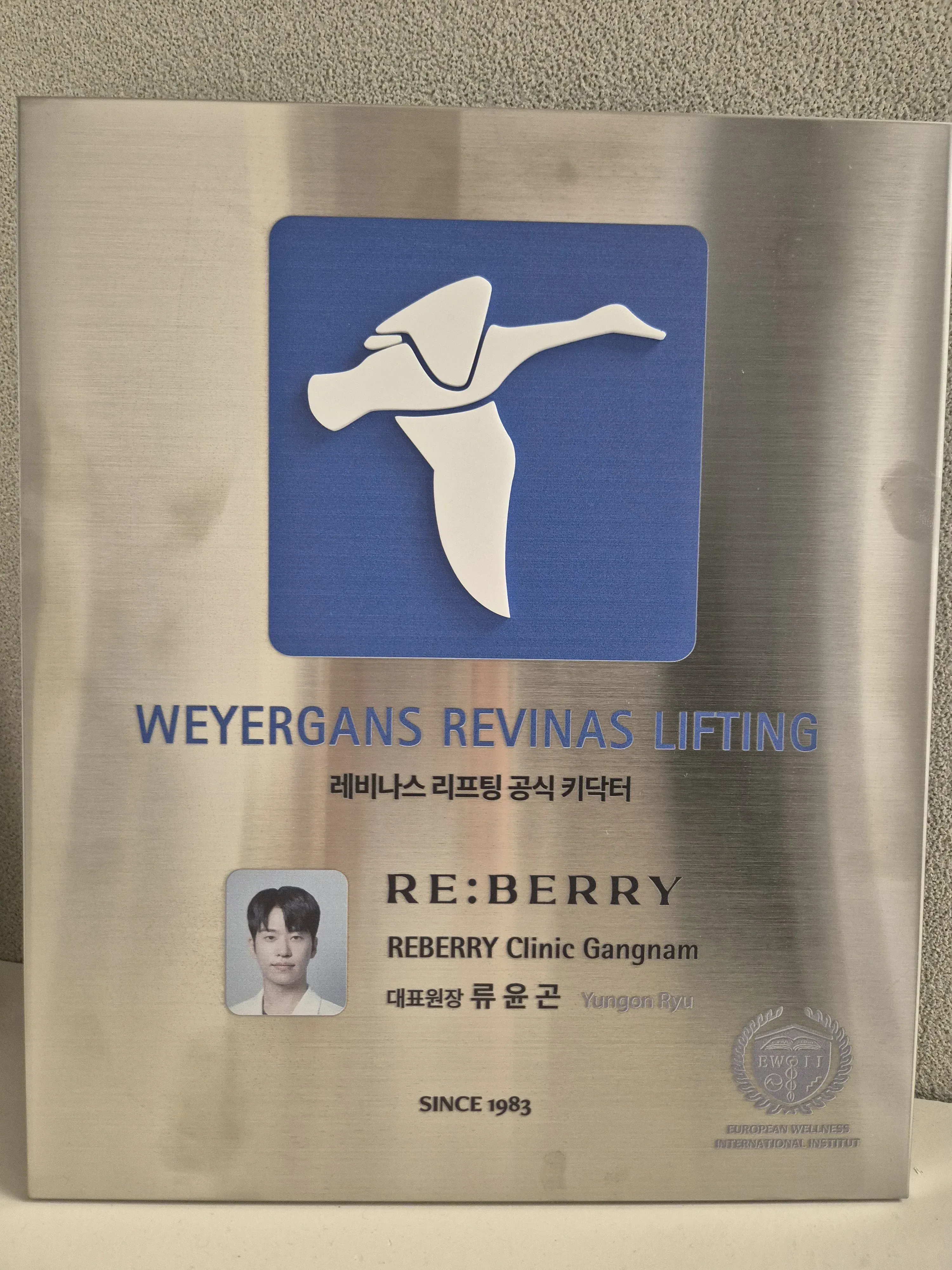
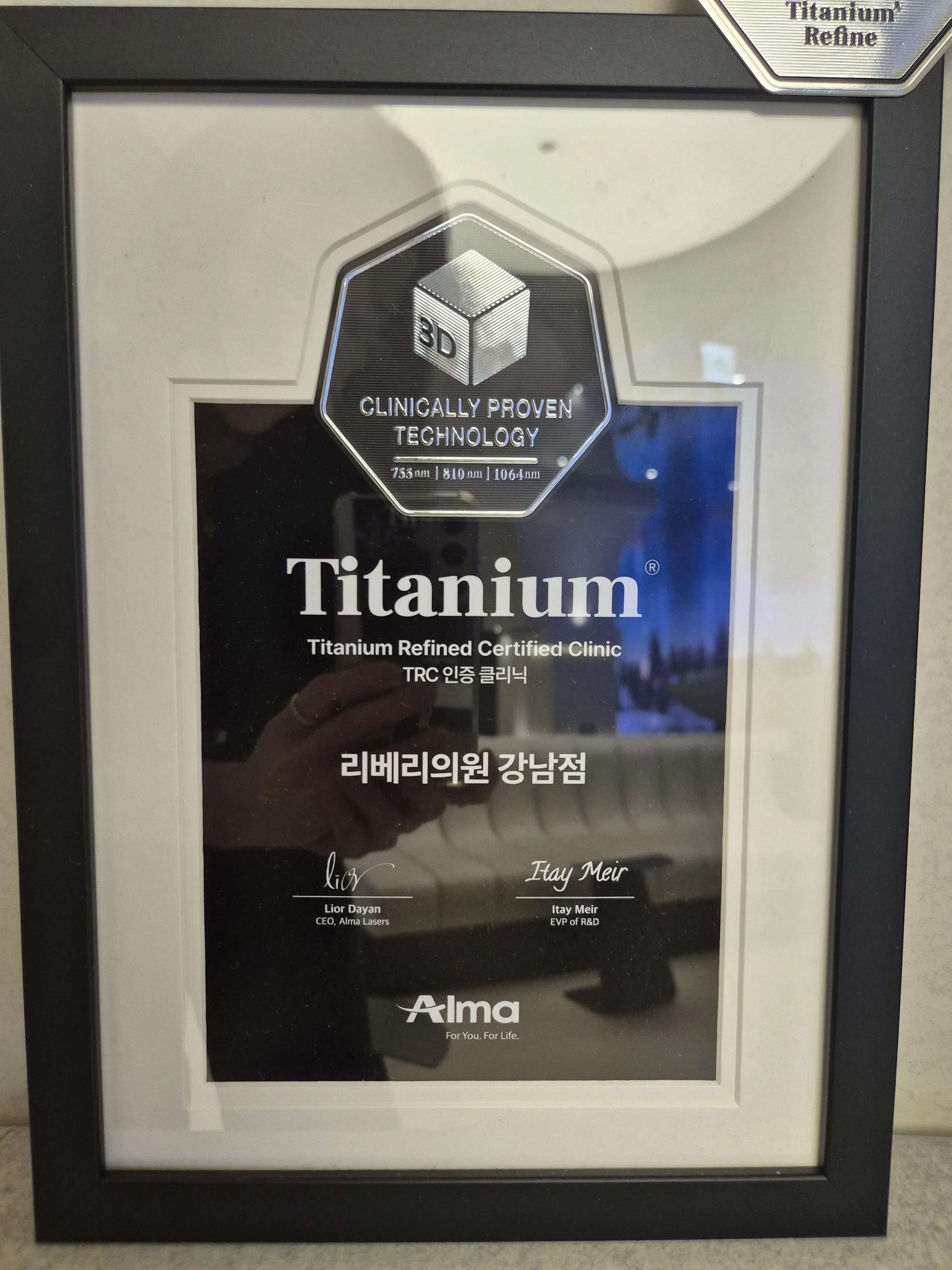
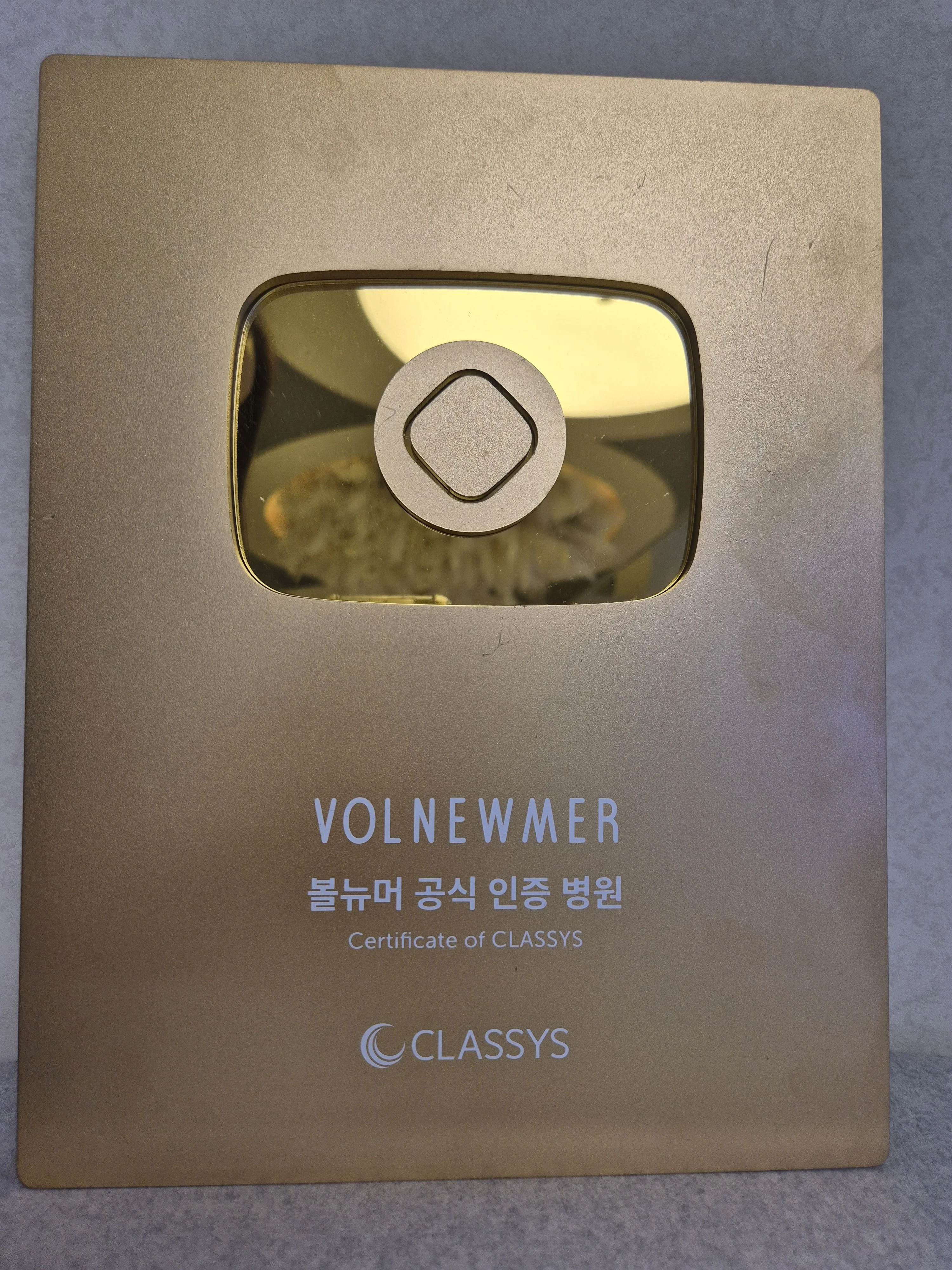
Only Authentic, Brand-Certified Equipment
Every device at RE:BERRY is MFDS-certified and manufacturer-verified. We never use counterfeit or grey-market equipment.
Ready to Start Your Box Scar Treatment?
Book your box scar treatment consultation with Dr. Yoon-Gon Ryu or Dr. Yejin Oh at RE:BERRY Gangnam — 2 minutes from Gangnam Station Exit 10. Same-day appointments available 365 days per year.
Related Treatments
Book Your Box Scar Treatment Consultation
Fill out the form and our multilingual team will confirm within 2 hours via your preferred contact method.
- ✓ Free consultation with Dr. Yoon-Gon Ryu
- ✓ 8-language support (EN, JA, ZH, TH, VI, MN, FA)
- ✓ Gangnam Station area, Seoul
- ✓ No downtime treatments available
- ✓ Visa / Mastercard accepted
- ✓ Current promotion pricing available