Chemical Peel Gangnam, Seoul
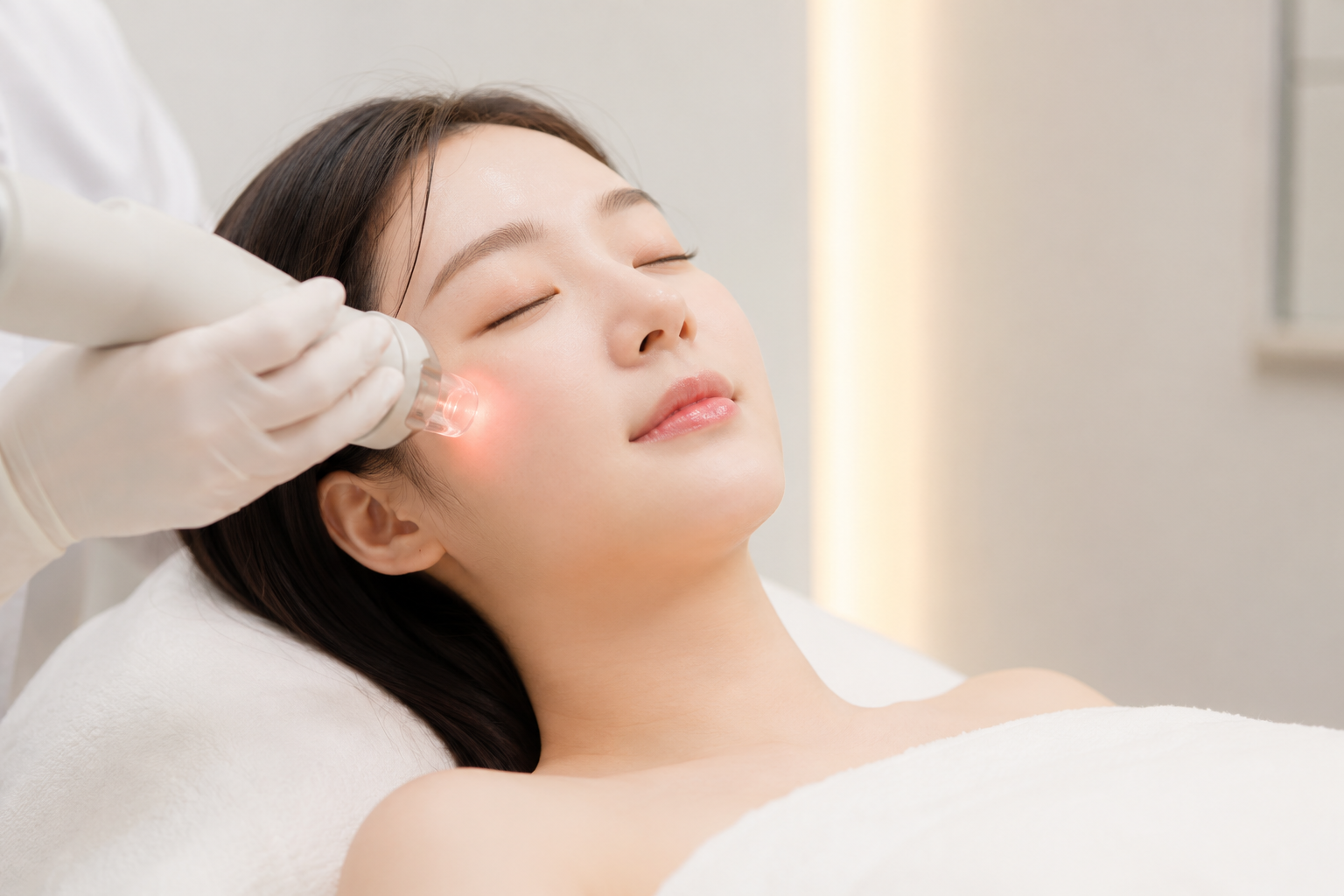
A chemical peel applies a keratolytic acid at a set strength and pH to loosen tired surface skin so a fresher layer surfaces. At RE:BERRY the physician reads your skin type first, then draws an acid map of superficial LHA, medium mandelic, and focal TCA, just steps from Gangnam Station in Seoul.
Chemical Peel
Chemical Peel
Chemical Peel in Gangnam, Seoul
A chemical peel applies a keratolytic acid at a set strength and pH to loosen tired surface skin so a fresher layer surfaces. At RE:BERRY the physician reads your skin type first, then draws an acid map of superficial LHA, medium mandelic, and focal TCA, just steps from Gangnam Station in Seoul.
Across RE:BERRY Clinics
1,000,000+ Treatments
Direct Consult & Treatment
Medical Director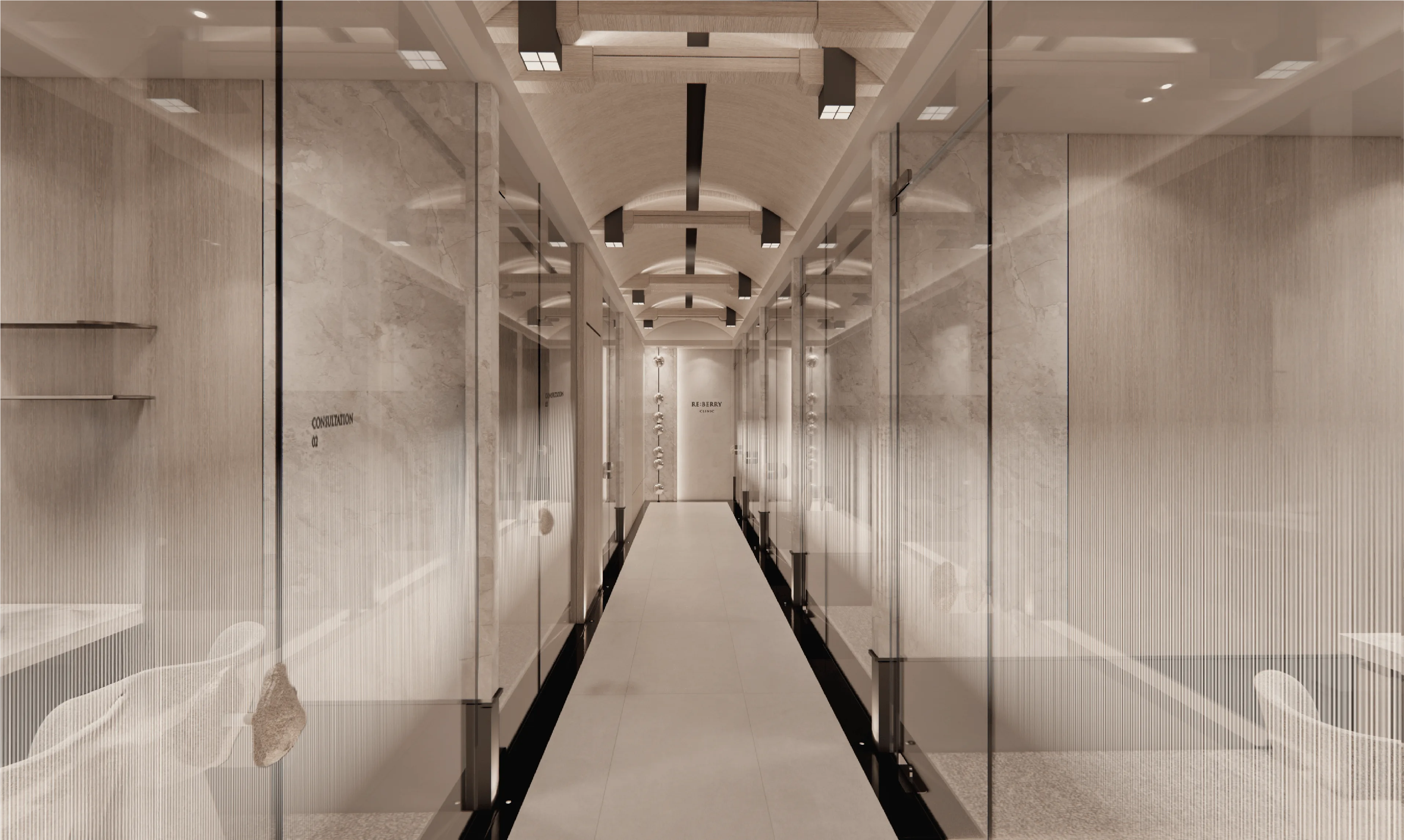
From Gangnam Station Exit 10
2-Min WalkWhat is a chemical peel, and how is the right acid chosen in Gangnam?
A chemical peel applies a keratolytic acid at a set concentration and pH to dissolve the bonds between dead surface cells, so a fresher layer of skin is revealed and, at deeper strengths, dermal repair is prompted. At RE:BERRY Gangnam the choice is a small acid map: superficial LHA for barrier-safe exfoliation, medium-depth mandelic at 30–40% for pore and texture work, and focal TCA at 15–25% dabbed only on stubborn spots. The physician matches acid and depth to your Fitzpatrick type after imaging your skin, and darker Asian skin is peeled deliberately shallow.
Effects & Progress
Effects & Progress
The acid dissolves the bonds holding dead surface cells together, so a whole tired layer detaches at once and fresher skin is uncovered, renewing the surface broadly, not one spot at a time.
Mild warmth and pinkness after the pass, fading within a couple of hours to a day. A superficial LHA peel leaves no visible trace; makeup the next morning is usually fine.
A medium mandelic peel flakes lightly around day two to four as the loosened surface sheds. Let it lift on its own; this is the window to keep retinoids paused.
The main renewal phase. Fresh skin surfaces smoother and clearer, pores read tighter, and tone looks more even across the face. Response speed varies by individual.
Maintenance period. After a completed 4 to 6 session course, results generally hold three to six months per session; RE:BERRY will guide the repeat interval that suits your skin.
Treatment Process
Chemical Peel — 4 Steps from Skin Analysis to Photoprotection
※ Illustrative images are AI-generated to help explain the treatment process.Effects & Progress
Effects & Progress
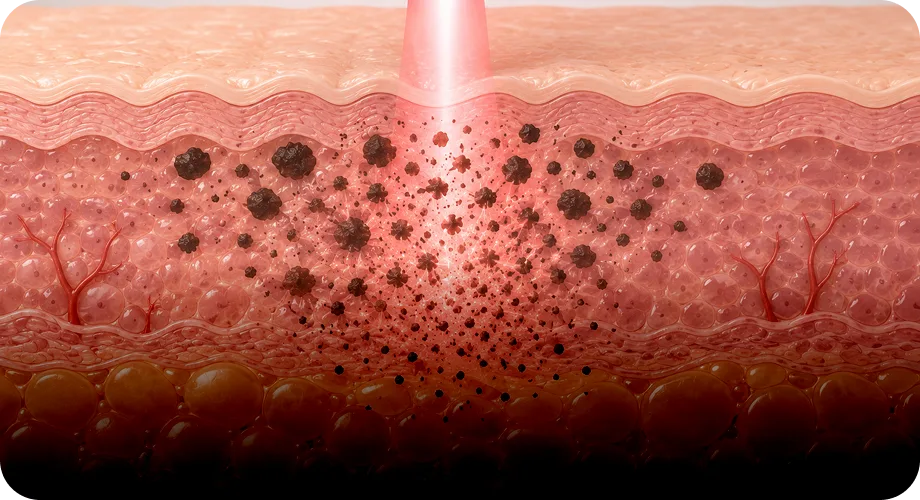
A peel works by keratolysis: the acid breaks the corneodesmosome bonds that glue dead cells together in the outer skin, so the tired layer detaches evenly and a fresher one surfaces. The acid family decides how far it reaches — water-soluble mandelic across the surface, oil-soluble LHA down inside congested pores. Because the whole treated area is renewed in a single pass, not chased point by point, a peel suits diffuse dullness, rough texture, and congestion where a targeted device would only touch part of the problem.
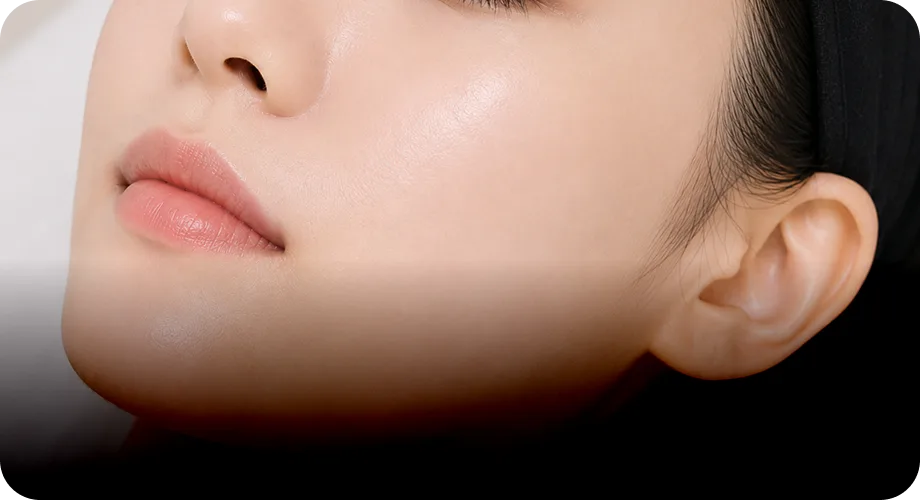
The visible change is mostly about clarity. As the loosened surface sheds and fresh skin comes up, diffuse dullness lifts and shallow, uneven pigment softens, so tone reads more even across the whole face. A peel is chromophore-blind: it renews the whole surface where a toning laser seeks out one color, so it suits broad dulling and mild discoloration well and set, deeper pigment less. For denser pigment the physician stages a pico toning course instead. Response varies by individual.
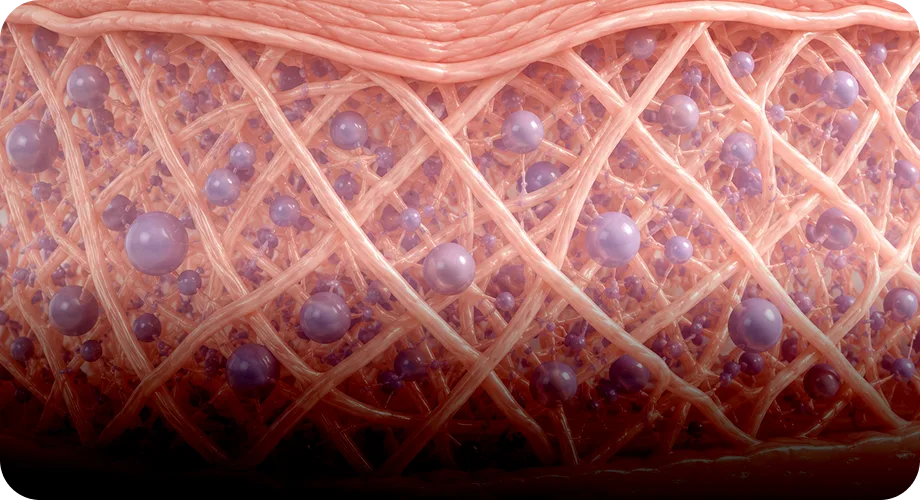
It helps to be clear about what a peel is and is not. Its main job is surface renewal and, for oily skin, pore work. But once a controlled depth is reached, the barrier breach triggers a repair cascade, with growth factors and fibroblasts responding much as they do to any measured wound, so a modest collagen-firming benefit rides along with the exfoliation. It is not a dedicated tightening treatment: real laxity is redirected to an energy device, which the physician can plan on separate visits, while the peel keeps to what acid does best.

A chemical peel is planned as a short in-clinic session with little recovery. A superficial LHA peel leaves no visible trace, since mild warmth and pinkness fade within a few hours, so makeup the next morning is fine. A medium mandelic peel brings light flaking at day two to four as the loosened surface lifts, which is the peel doing its work and settles on its own. The main aftercare is protective: pause retinoids and acid exfoliants for a week and stay strict on high-protection sunscreen while the freshly surfaced skin settles and stays briefly more sun-reactive.
Treatment Process
Chemical Peel — 4 Steps from Skin Analysis to Photoprotection
※ Illustrative images are AI-generated to help explain the treatment process.
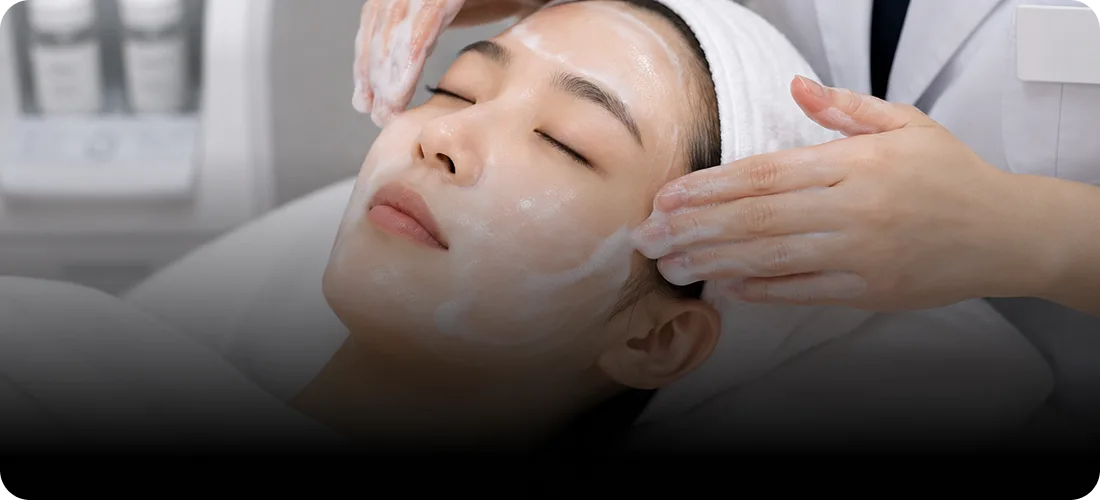
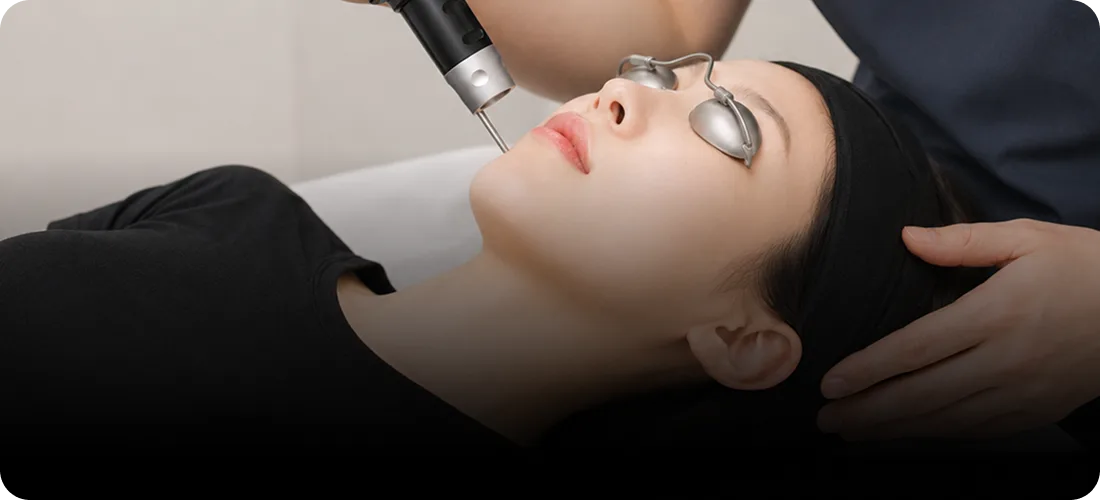
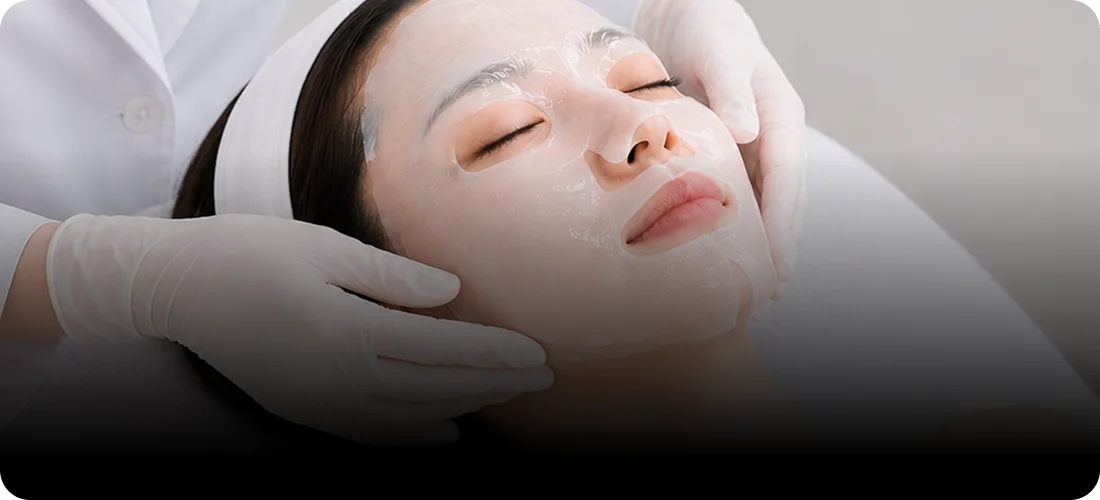
Reading the Acid Map — What Each Peel Reaches, and How the Result Settles
- The acid is chosen by lineage, not brand: alpha-hydroxy acids like mandelic loosen surface cells across a broad area, the beta-hydroxy and lipo-hydroxy family such as LHA is oil-soluble and works down inside congested pores, and TCA coagulates protein for deeper, focal correction
- Depth is capped by Fitzpatrick type at RE:BERRY Gangnam: I–II tolerate TCA 20–25%, III–IV 15–18%, and V–VI are held to mandelic 30% only, because deeper acid on darker skin risks post-inflammatory pigment
- A peel still earns its place beside lasers: it treats the whole surface at once, is chromophore-blind so it does not chase melanin the way a toning laser does, and refreshes texture and dullness at a gentler entry point
- Congestion is reached where lasers over surface oil cannot go: oil-soluble LHA descends into the follicle to lift the sebum and keratin that clog it, so shine and blackheads calm across a course
- Same physician from the skin scan through every acid pass to your review, so your chemical peel plan in Gangnam is never handed to another practitioner mid-course
- Conservative Asian-skin practice throughout: shallow depths, patch logic on pigment, and standardized-light photos before and after so any change is measured, not guessed
| Timeline | What to Expect |
|---|---|
| Mild warmth and pinkness after the pass, fading within a couple of hours to a day. A superficial LHA peel leaves no visible trace; makeup the next morning is usually fine | |
| A medium mandelic peel brings light flaking as the loosened surface sheds, which is the peel at work. Let it lift on its own; picking invites marks | |
| Fresh skin surfaces smoother and clearer; pores read tighter and tone looks more even. This is the window to keep retinoids paused and SPF strict | |
| The gain from one session holds around three to six months; a full course is 4–6 sessions at 3–4 week intervals, then maintenance every 6–12 months |
The Peeling-Acid Map — LHA vs Mandelic vs TCA in Gangnam
| Criteria | LHA (Superficial) | Mandelic (Medium) | TCA (Focal) |
|---|---|---|---|
| Acid family | Lipo-hydroxy / beta-hydroxy lineage | Alpha-hydroxy acid (AHA) | Trichloroacetic acid |
| Working strength | pH 1.8–2.2, low and self-limiting | 30–40% concentration | 15–25%, dabbed focally |
| Where it acts | Surface and inside oily pores | Upper epidermis, broad area | Deeper, protein coagulation at a spot |
| Best suited for | Barrier-safe exfoliation, congestion, sensitive skin | Pore refinement, texture, mild dullness | Individual dark spots and stubborn pigment |
| Visible shedding | None to speak of | Light flaking day 2–4 | Localized crusting at the treated spot |
| Darker skin (Fitz V–VI) | Suitable at low strength | Mandelic 30% is the ceiling here | Avoided on V–VI (pigment risk) |
| Session time | About 15 minutes of active pass | About 20–30 minutes | Minutes, spot by spot |
| Course | 4–6 sessions, 3–4 weeks apart | 4–6 sessions, 3–4 weeks apart | Fewer, spaced by healing |
Why This Matters
These three acids are not stronger-versus-weaker versions of one thing; they are different tools. AHAs like mandelic are water-loving and lift dead cells across a broad surface, the LHA and BHA family is oil-loving and works down inside the pore, and TCA coagulates protein for focal, deeper correction. Reading the family first is why a RE:BERRY Gangnam physician can put LHA on congestion and dab TCA on a single sunspot in the same visit.
In the laser era a peel still holds a specific place. A toning laser chases melanin selectively; a peel is chromophore-blind and simply renews the whole surface, which suits diffuse dullness, rough texture, and oily congestion at a gentle entry point. Many RE:BERRY guests run a peel course for skin quality and reserve pico toning for defined pigment, since the two solve different problems.
Depth discipline is the heart of peeling darker Asian skin. Higher Fitzpatrick types react to over-aggressive acid with post-inflammatory hyperpigmentation, so RE:BERRY caps V–VI skin at mandelic 30% and reserves TCA for lighter types only. The conservative map is not caution for its own sake — it is how a peel stays a fix and does not become a new mark to treat. Global figures on medical travel put keeping one physician high among patient priorities, and here that same doctor sets and holds the depth.
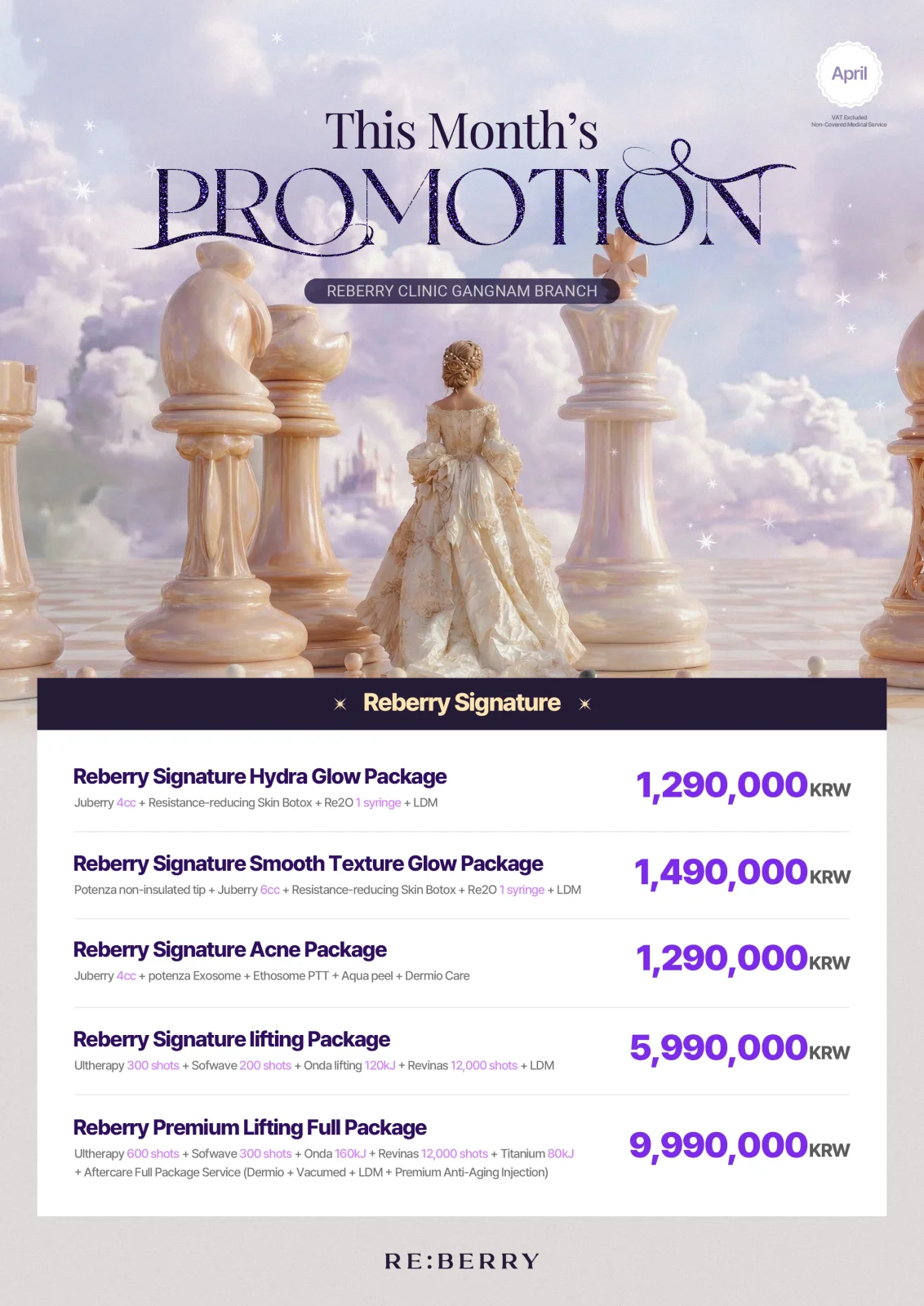
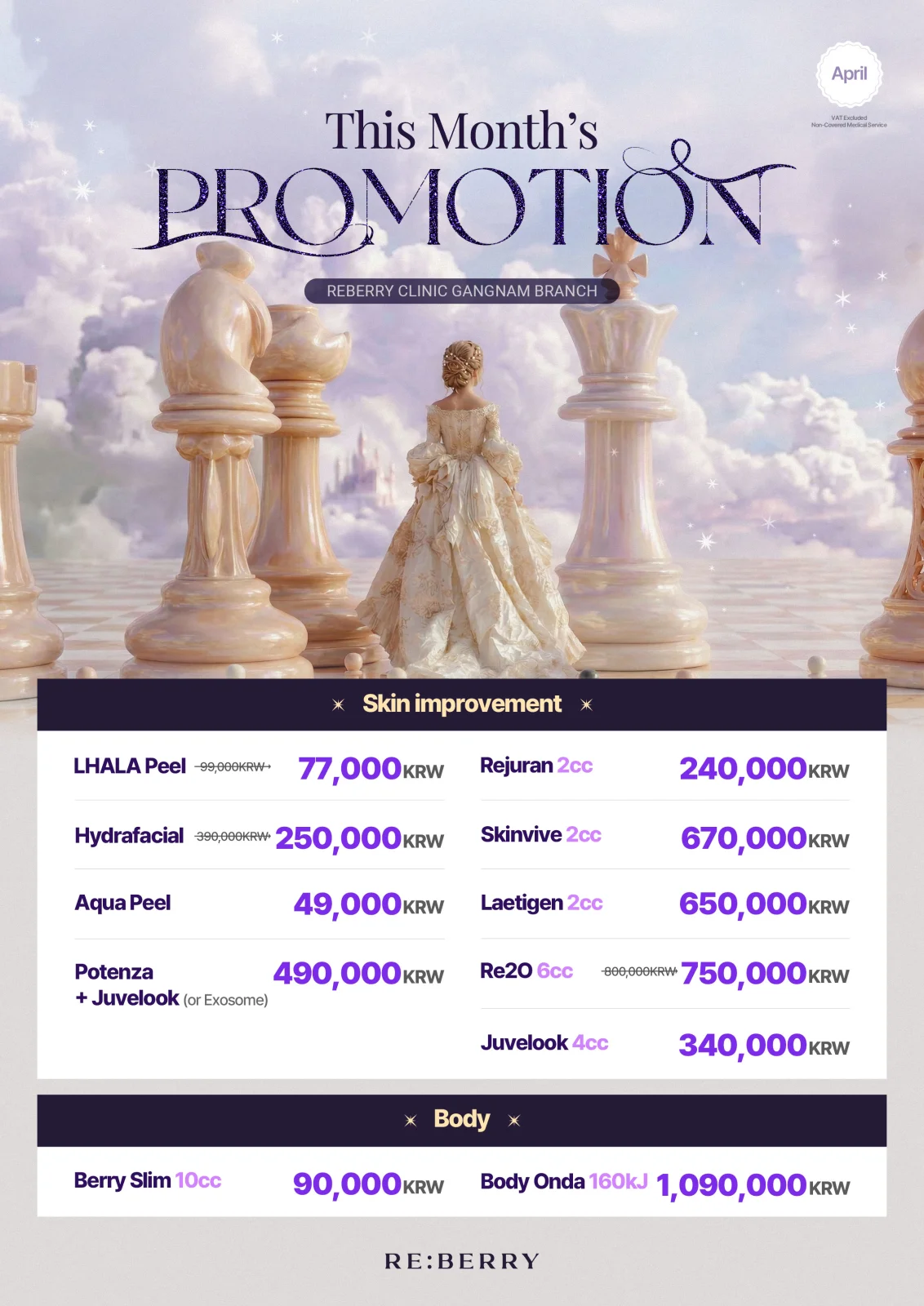
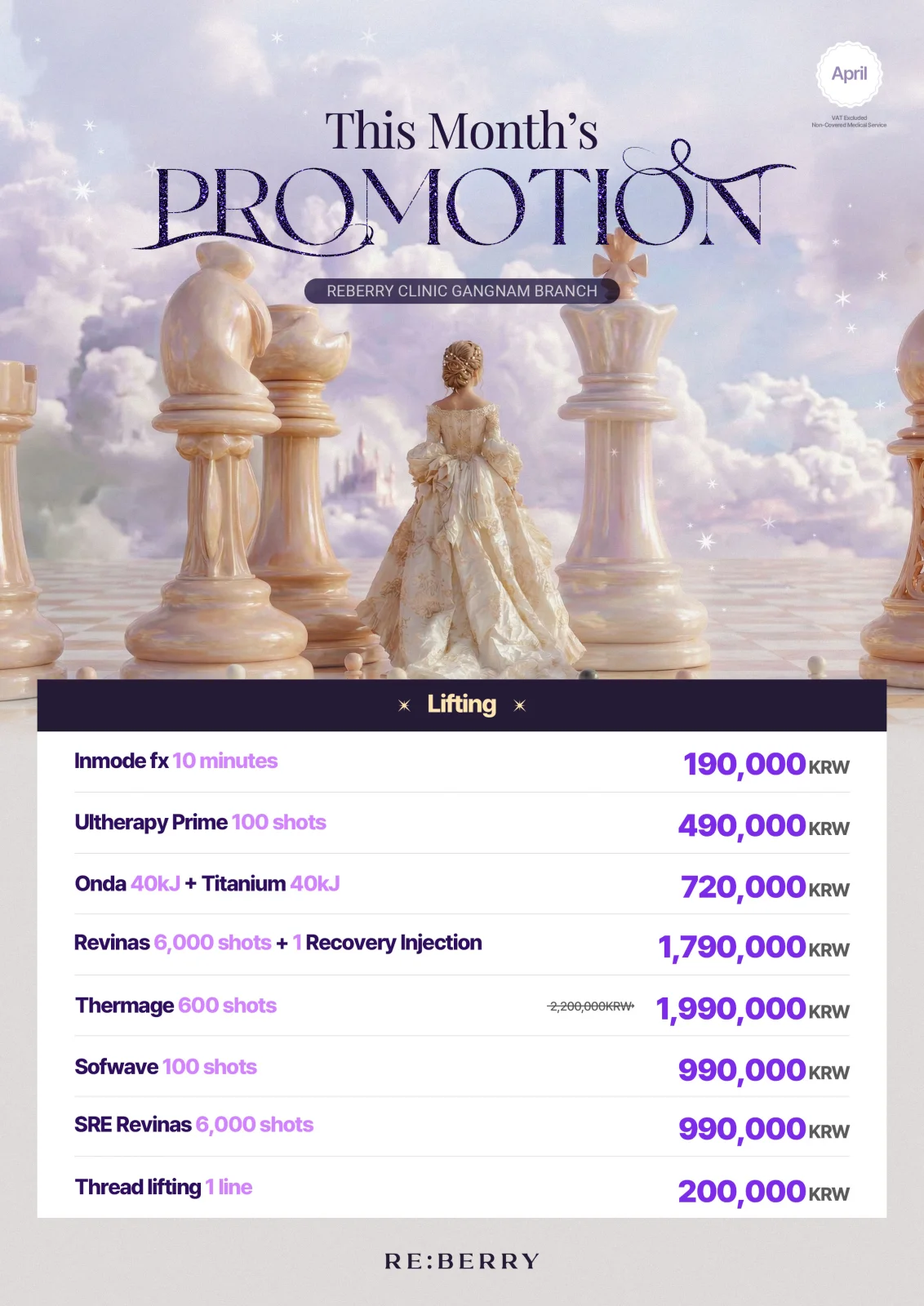
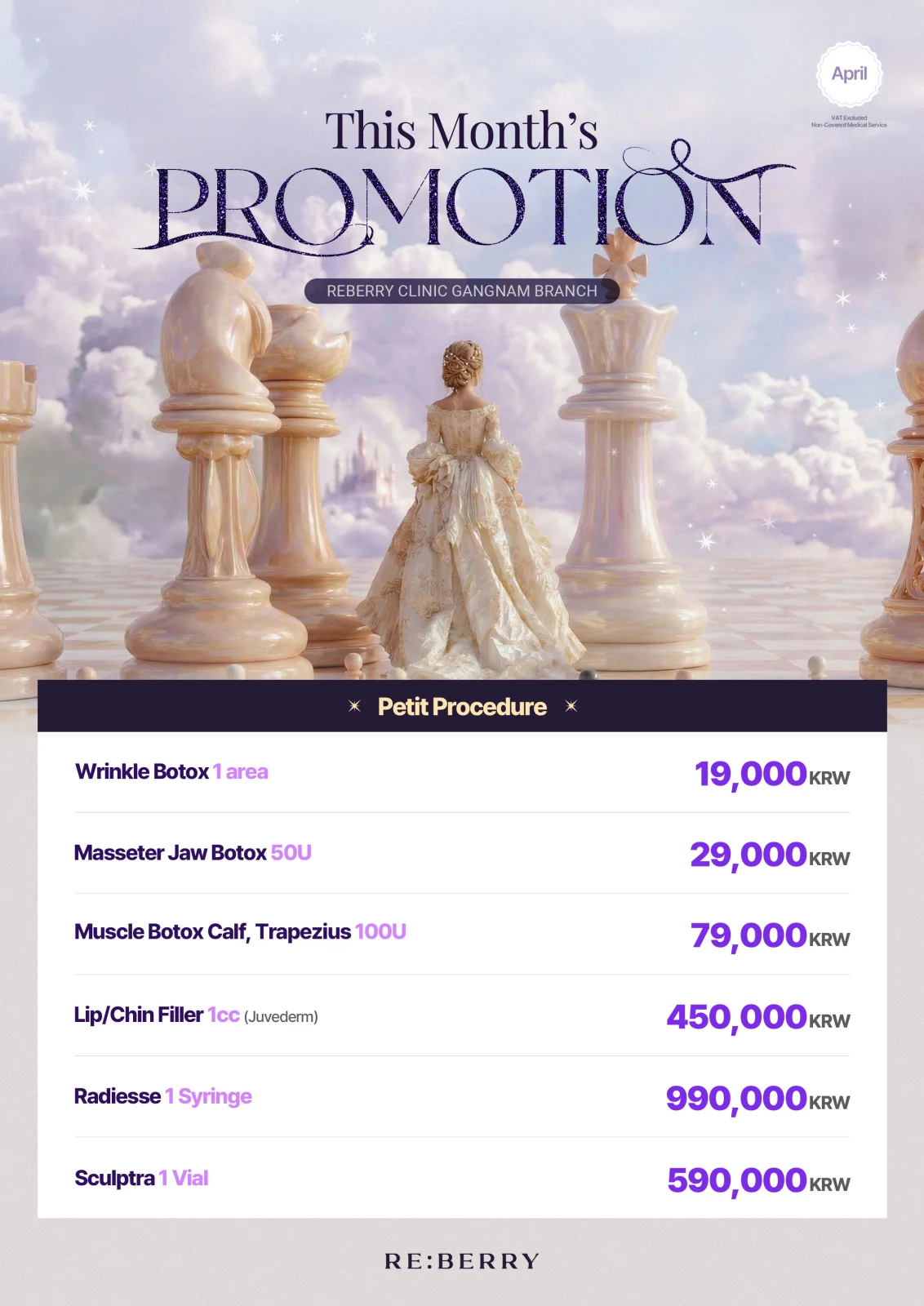
October – December 2026 Promotions
Exclusive packages for international patients. Swipe to see all offers.

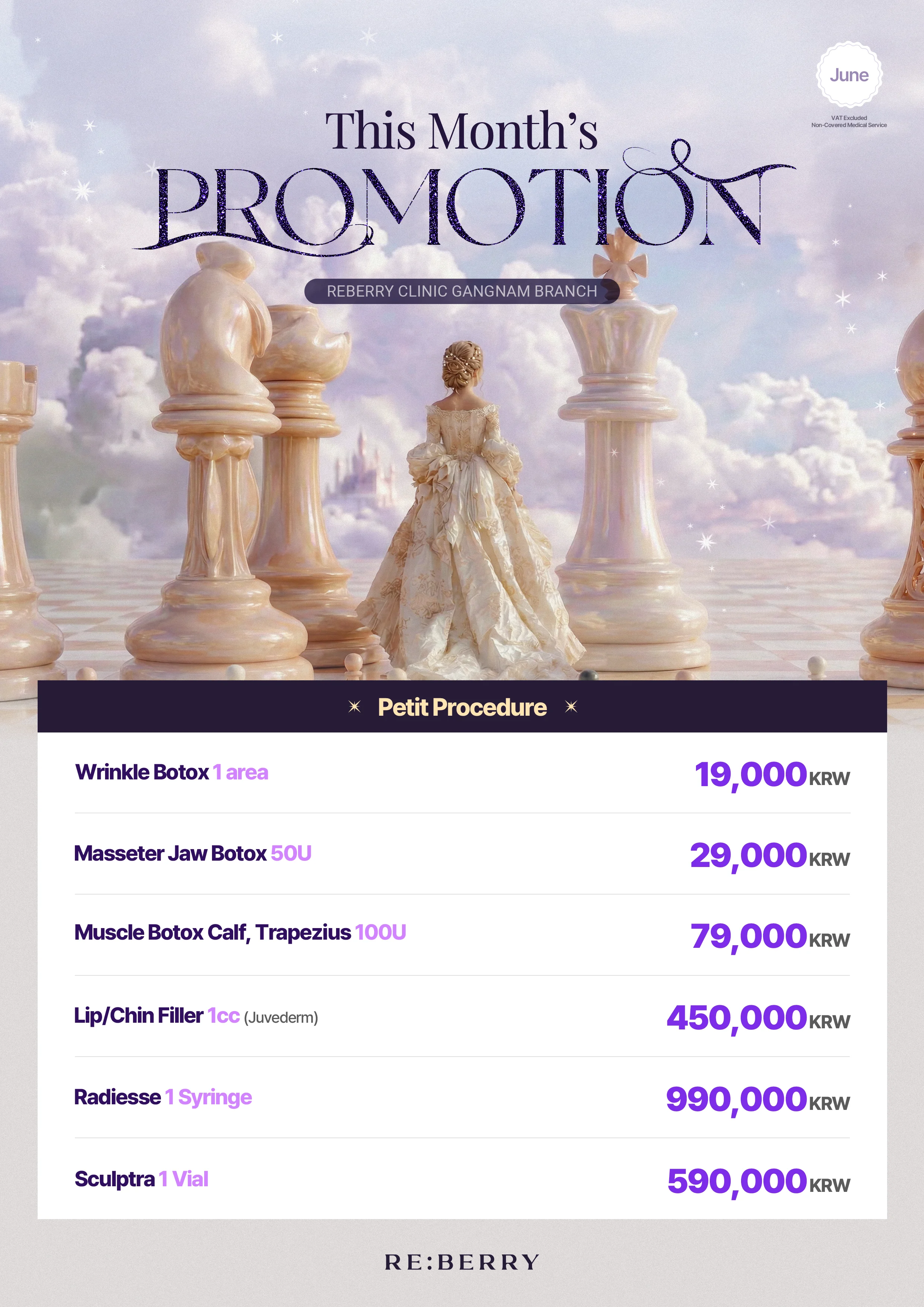
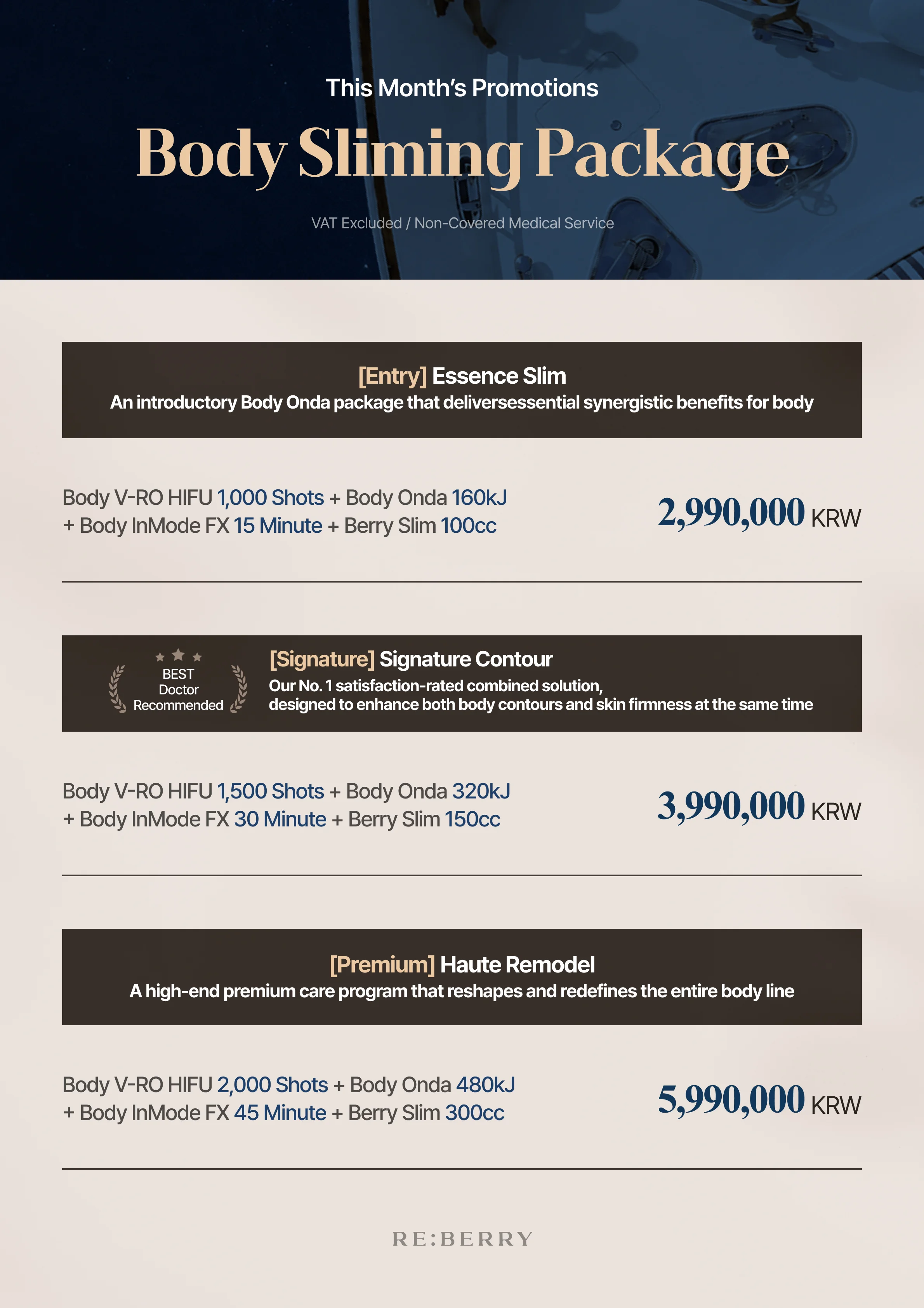
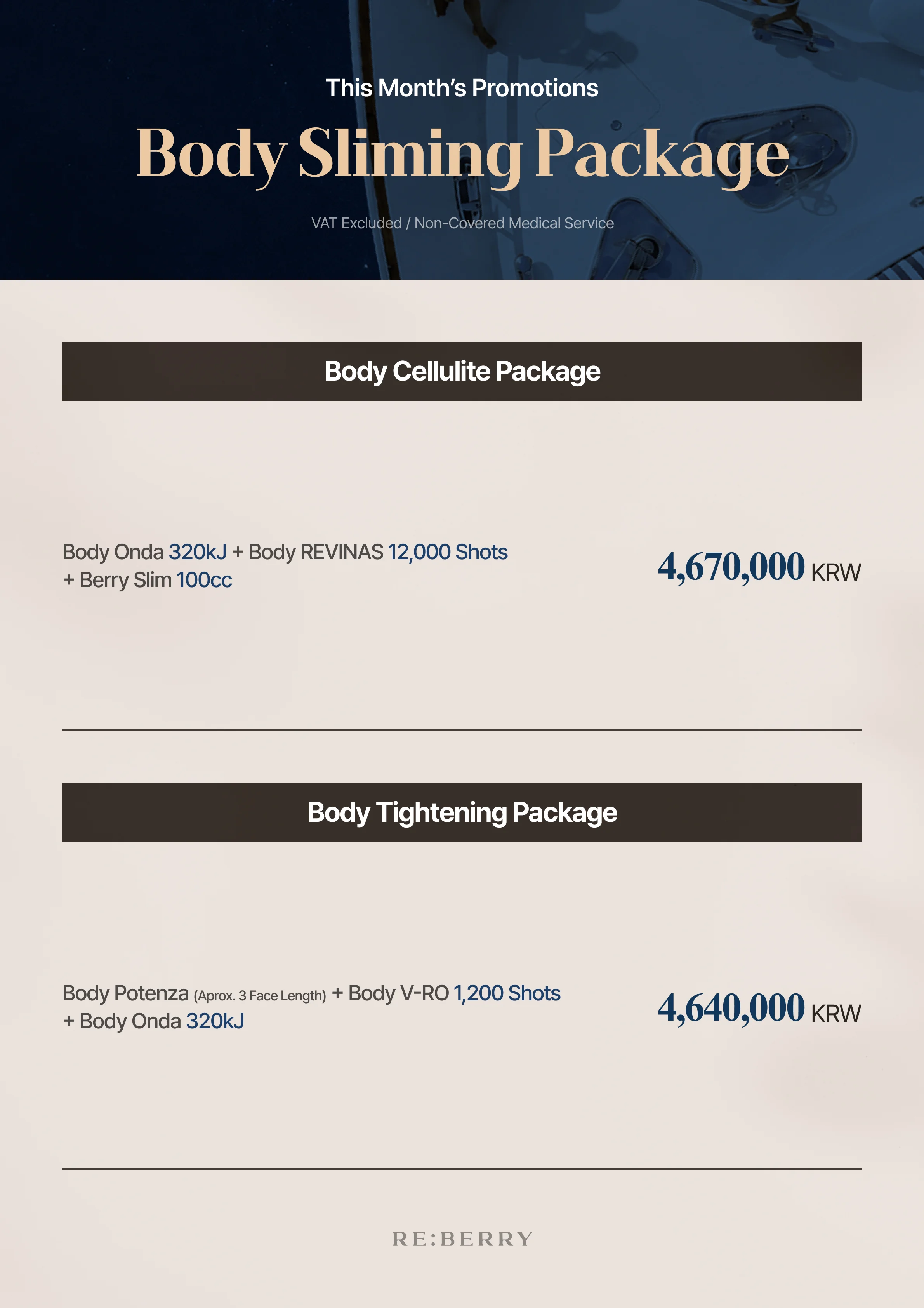
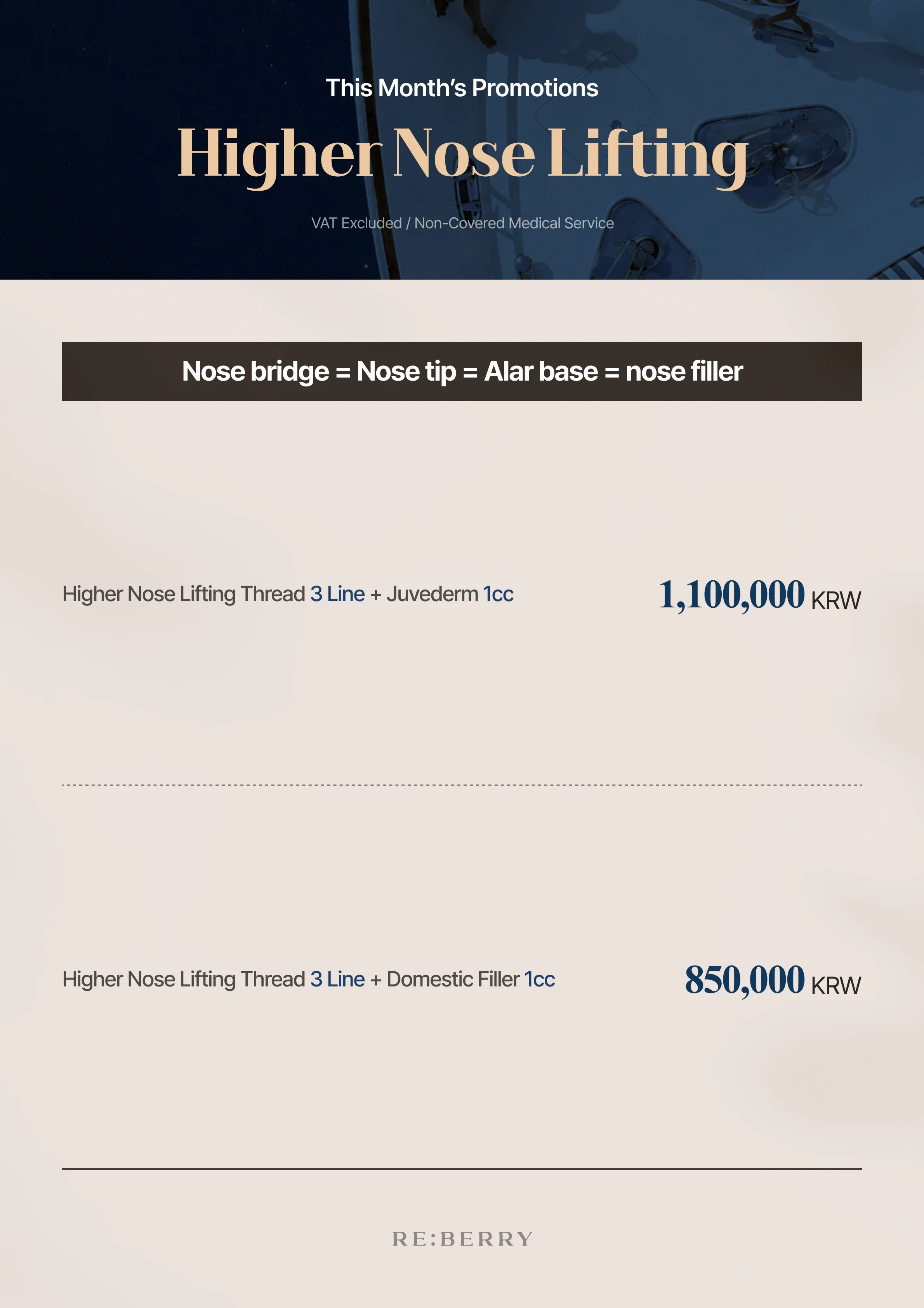
![RE:BERRY Gangnam October–December 2026 Promotion Page 10 — Body Slimming Package: [Entry] Essence Slim, an introductory Body Onda package that delivers essential synergistic benefits for body shaping and contouring: Body V-RO HIFU 1,000 Shots + Body Onda 160kJ + Body InMode FX 15 Minute + Berry Slim 100cc ₩2,990,000 · [BEST · Doctor Recommended] Signature Contour, our No. 1 satisfaction-rated combined solution, designed to enhance both body contours and skin firmness at the same time: Body V-RO HIFU 1,500 Shots + Body Onda 320kJ + Body InMode FX 30 Minute + Berry Slim 150cc ₩3,990,000 · VAT excluded](https://cdn-reberry.pages.dev/gangnam/promotion/en/gangnam-event-en-10.webp)
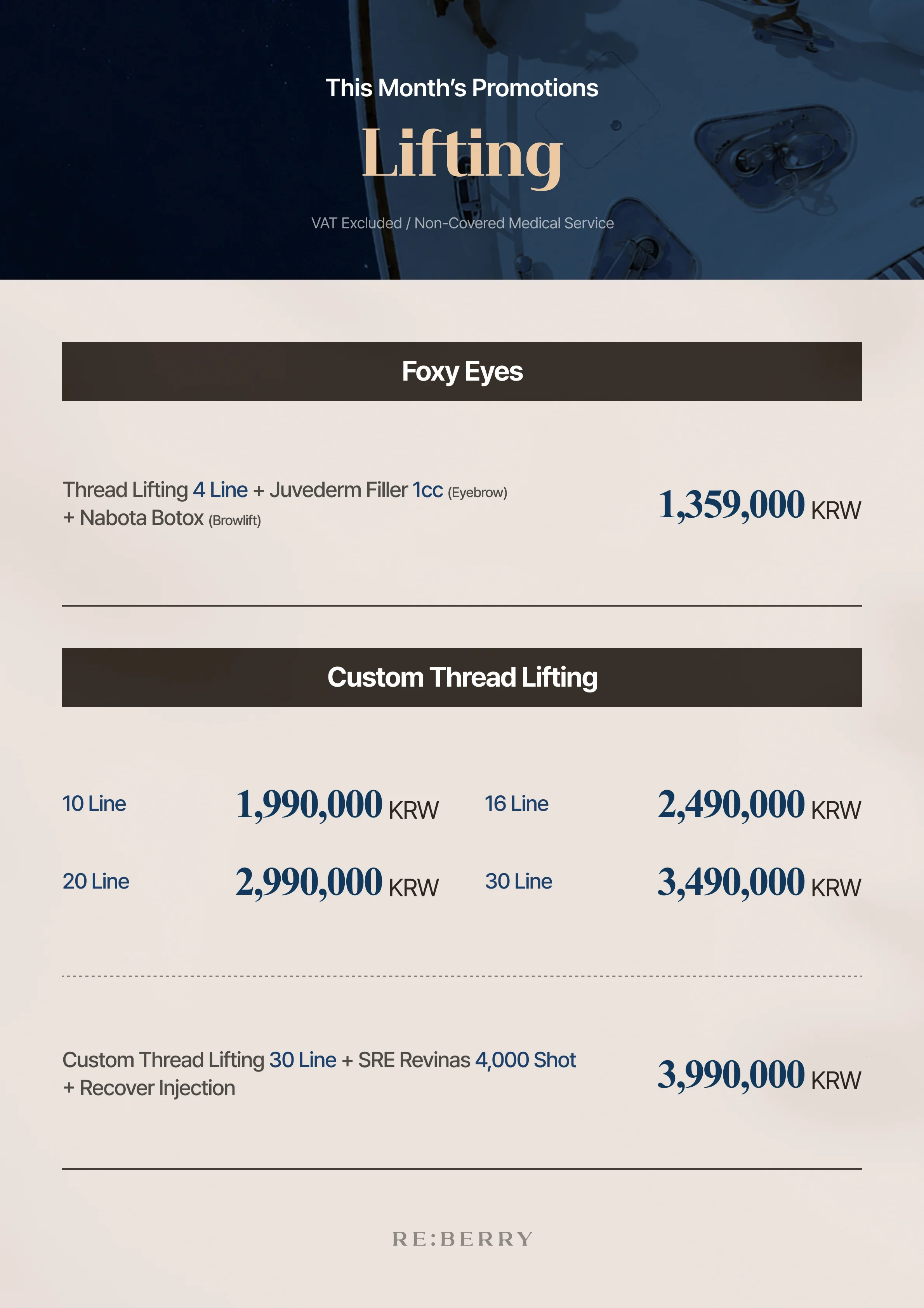
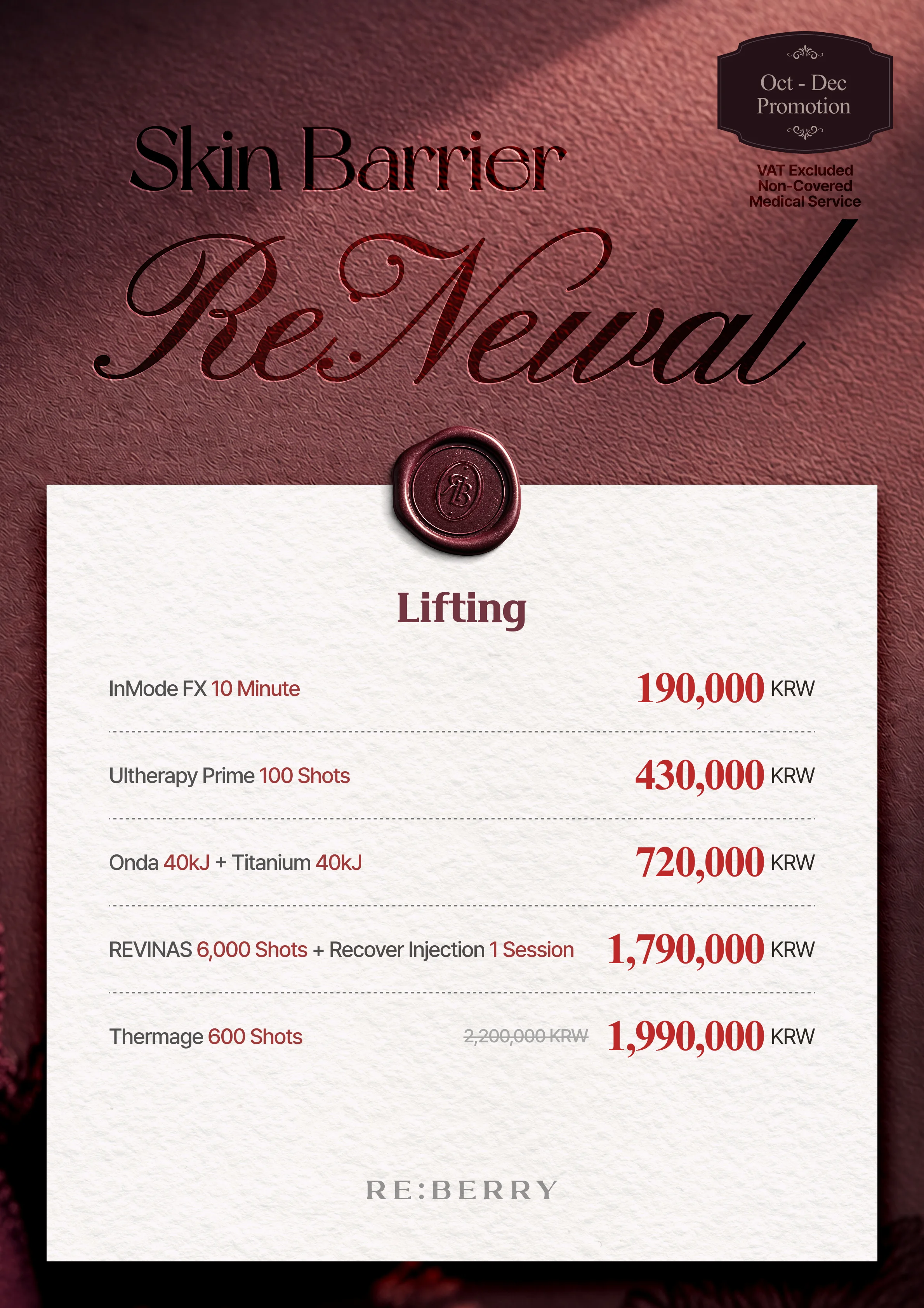
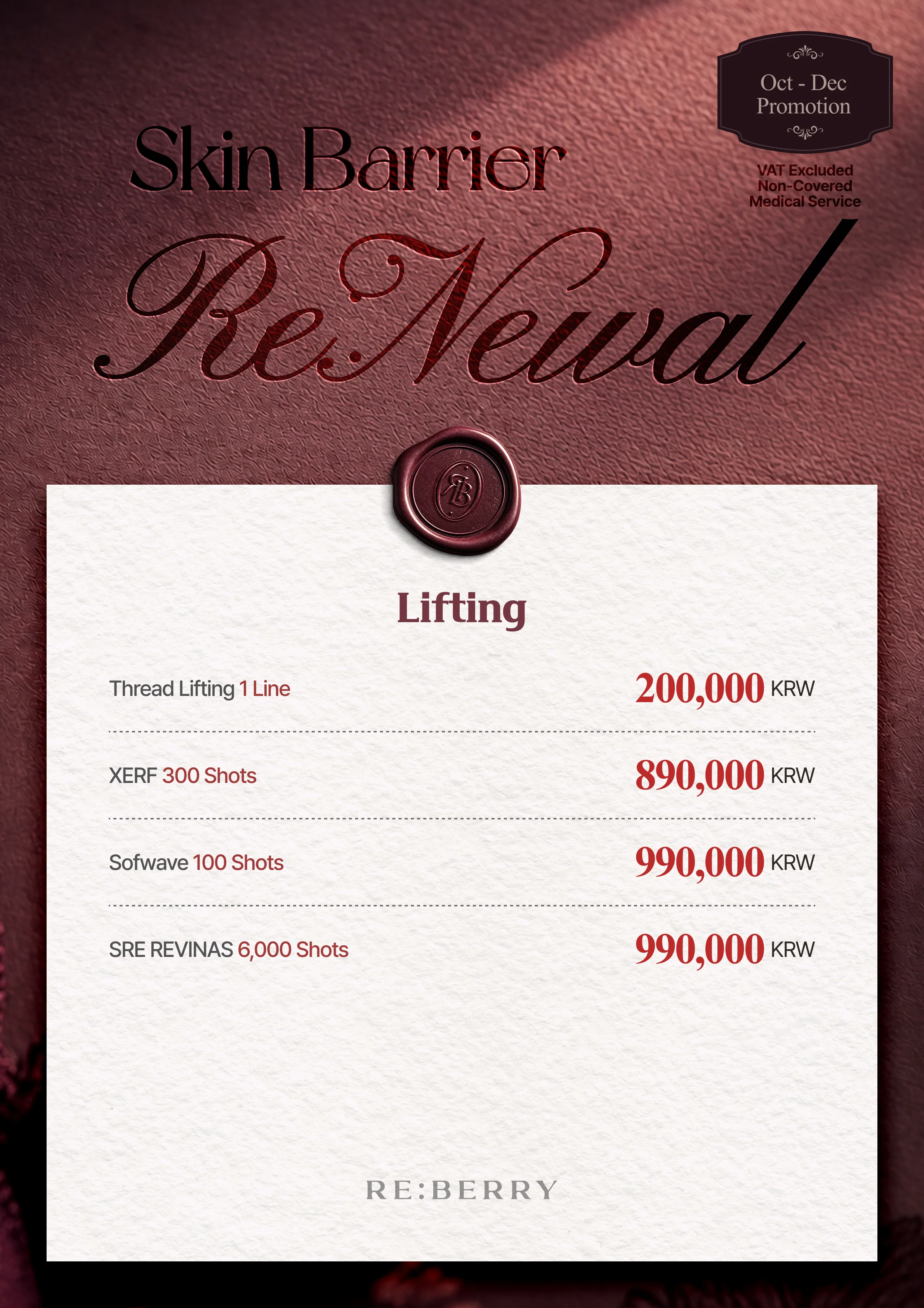
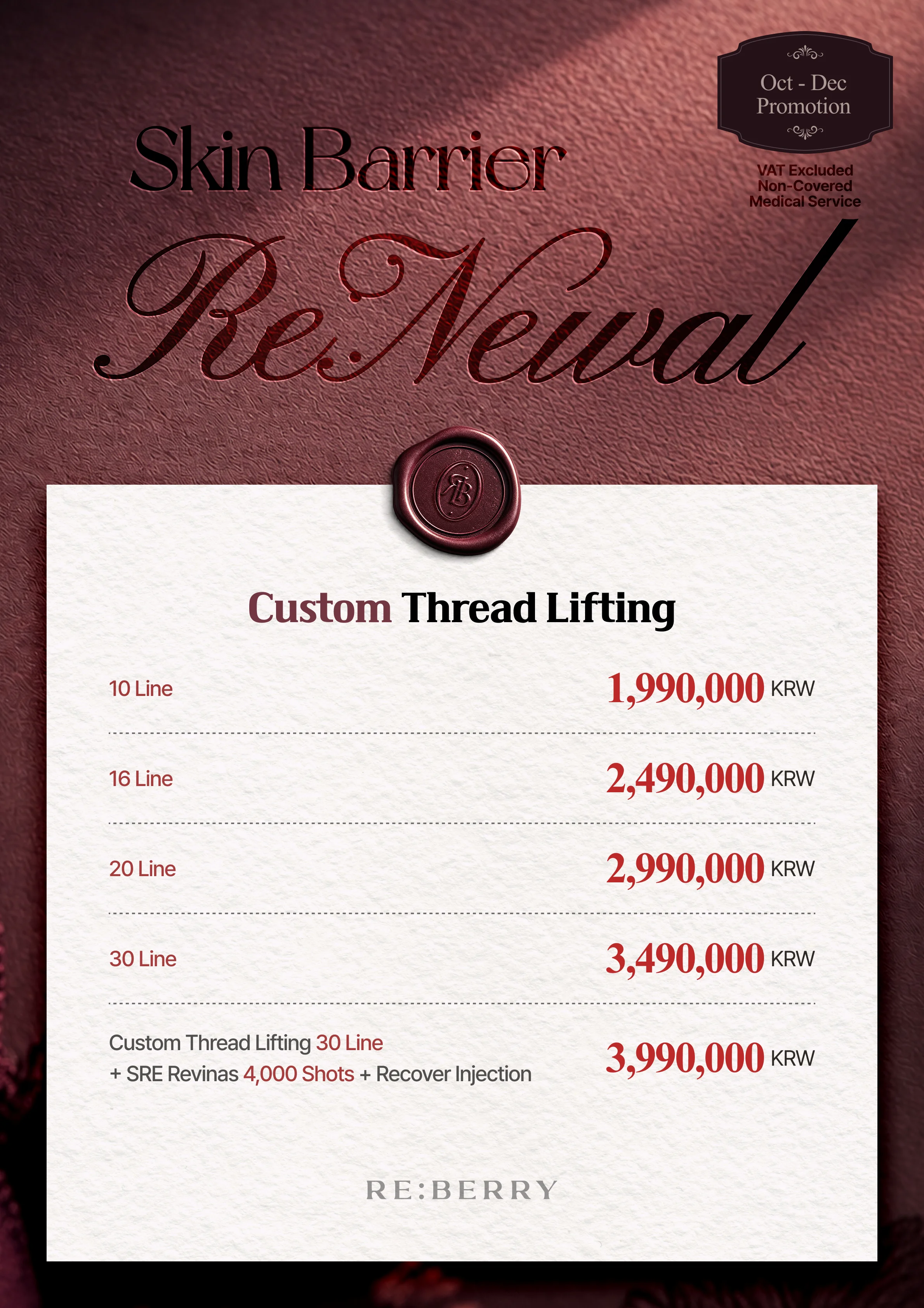
Published Chemical Peel Pricing in Gangnam (VAT Excluded)
Your Medical Director
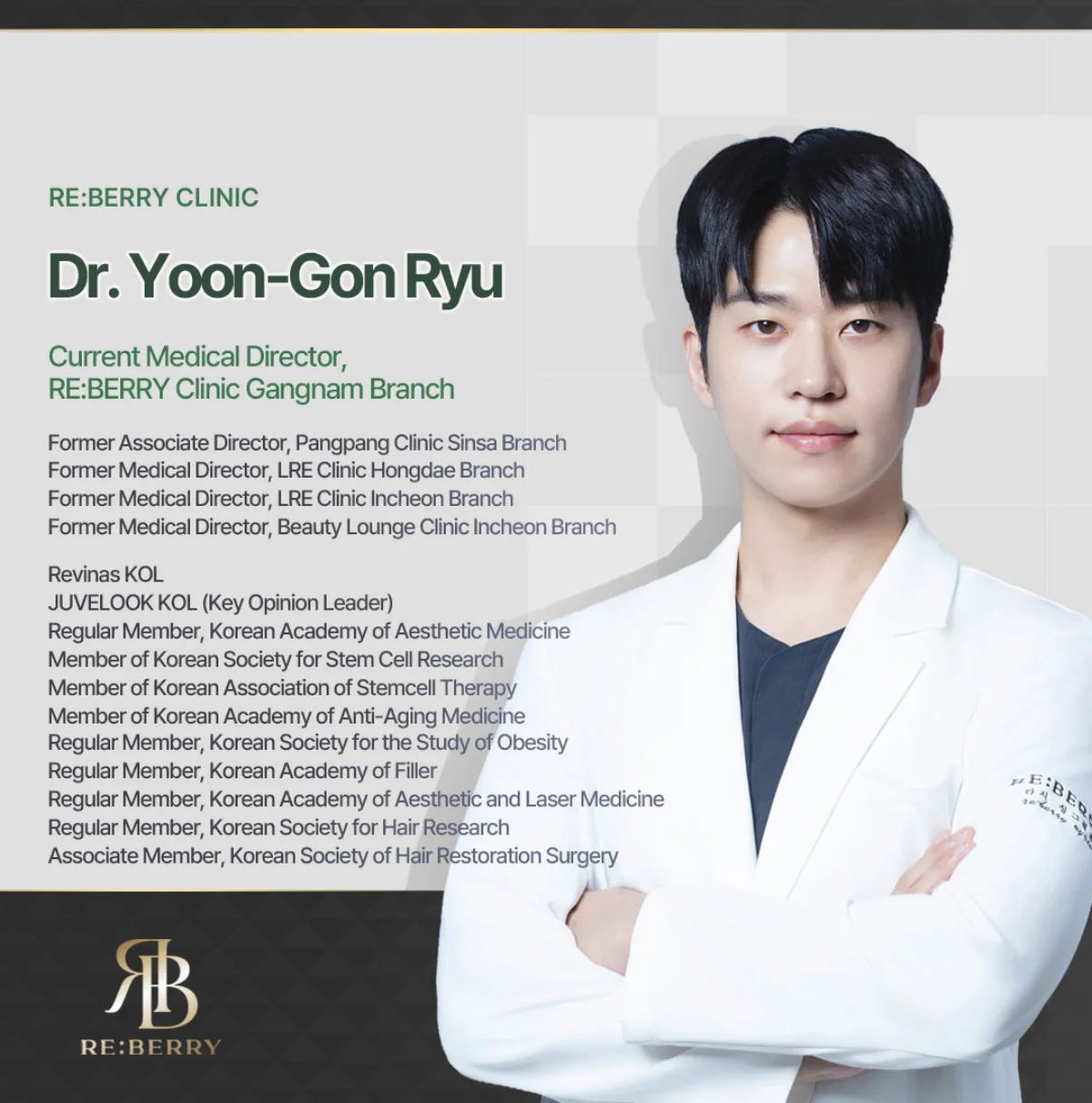
Dr. Yoon-Gon Ryu
- Medical Director, RE:BERRY Aesthetic Clinic Gangnam — Korean MOHW Medical License No.131644
- Manufacturer-appointed KOL invited to teach injection and energy-device technique to Korean peers
- Regular Member, Korean Academy of Aesthetic Medicine
- Co-manages every case with Dr. Yejin Oh (Korean MOHW Medical License No.144238)
- Featured in Authority Magazine (2026)
Medically reviewed by Dr. Yoon-Gon Ryu, CEO / Medical Director, RE:BERRY
A Fourteen-Thousand-Square-Foot Hush Above Gangnam-daero
Step past the black gallery facade and the bustle of Gangnam-daero falls away. Fourteen thousand square feet of hushed corridors, marble installations, a cascading water feature and fully enclosed consultation suites — arranged so you rarely cross paths with another guest, because our appointment-first diary keeps every hour deliberately underbooked.
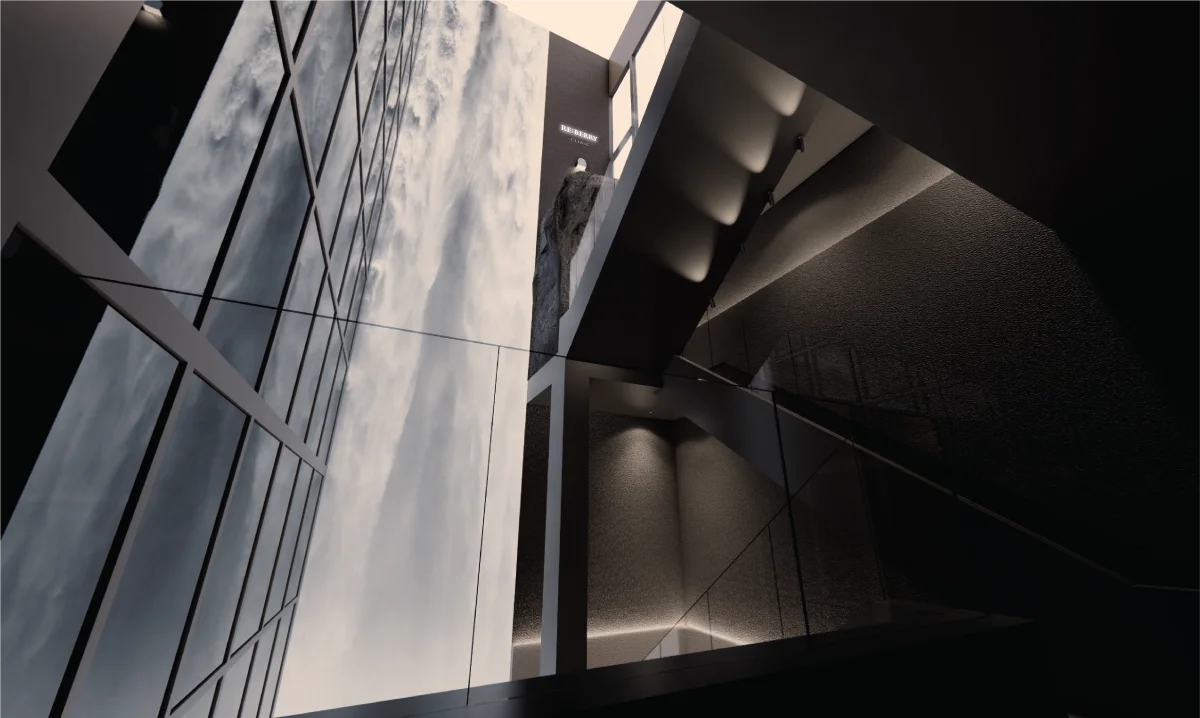
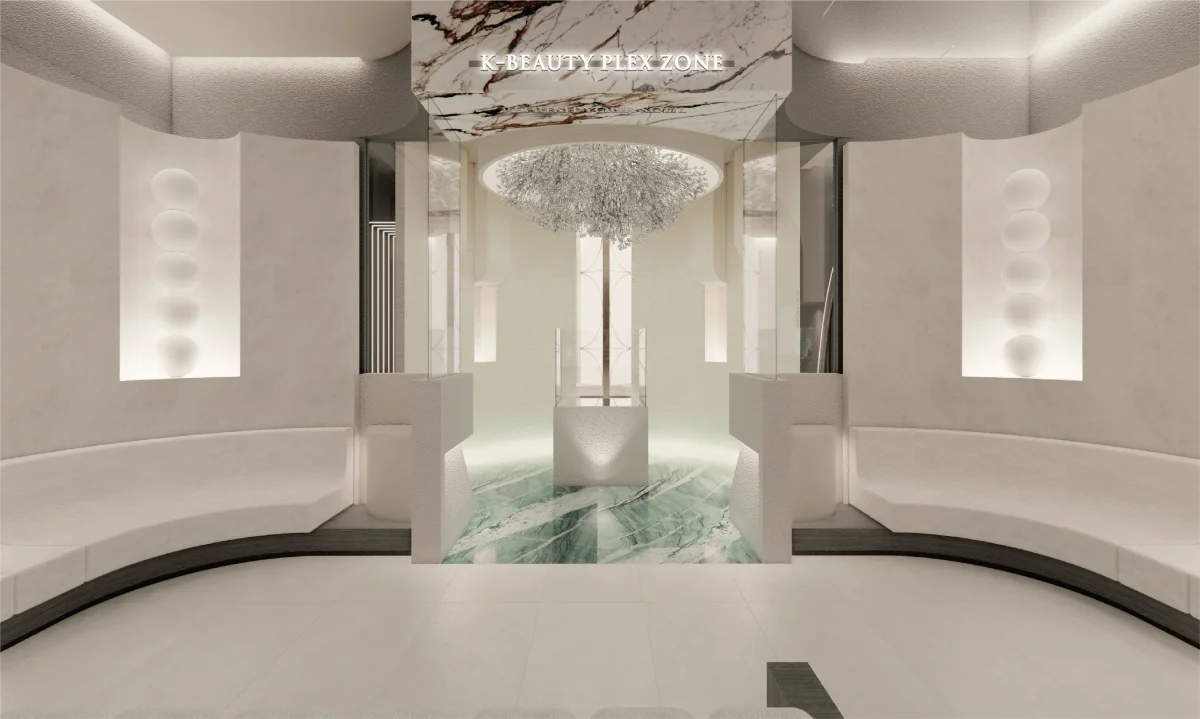
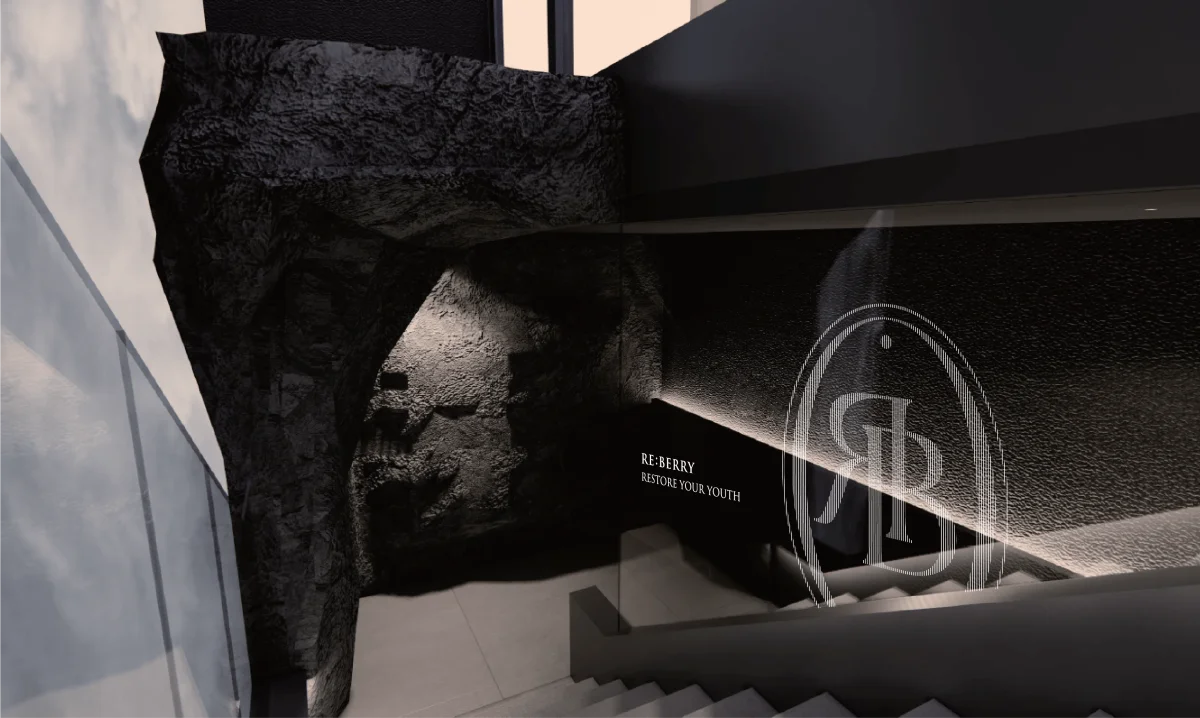
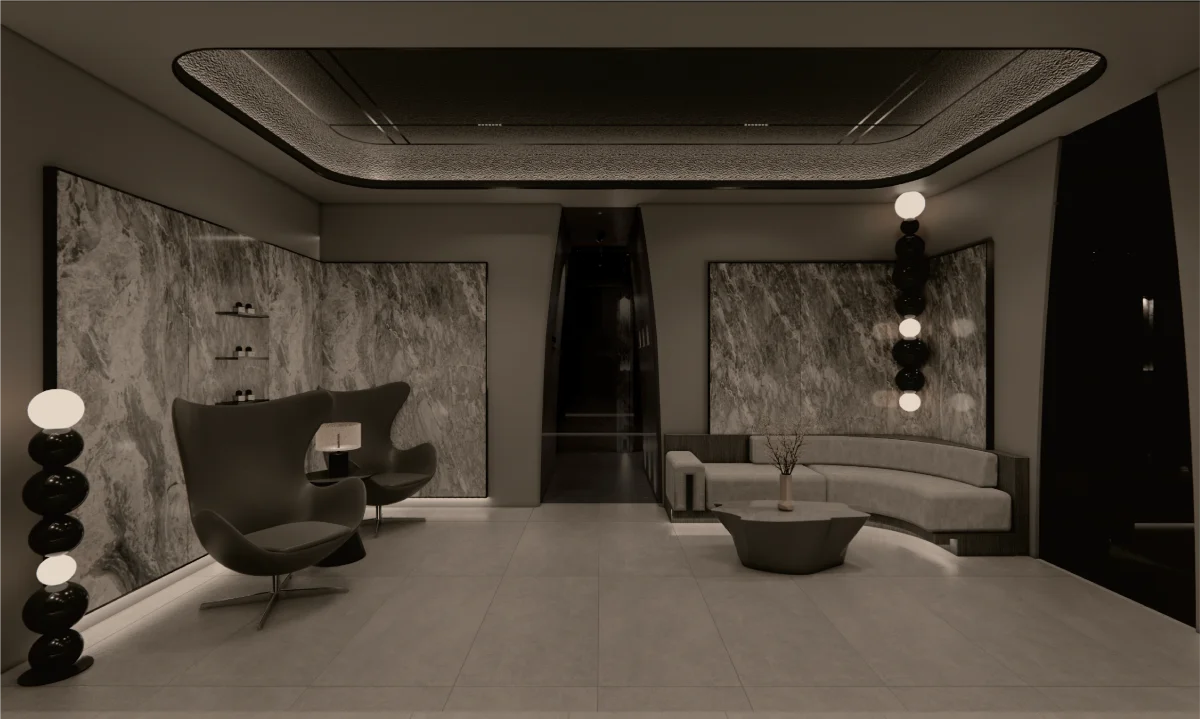
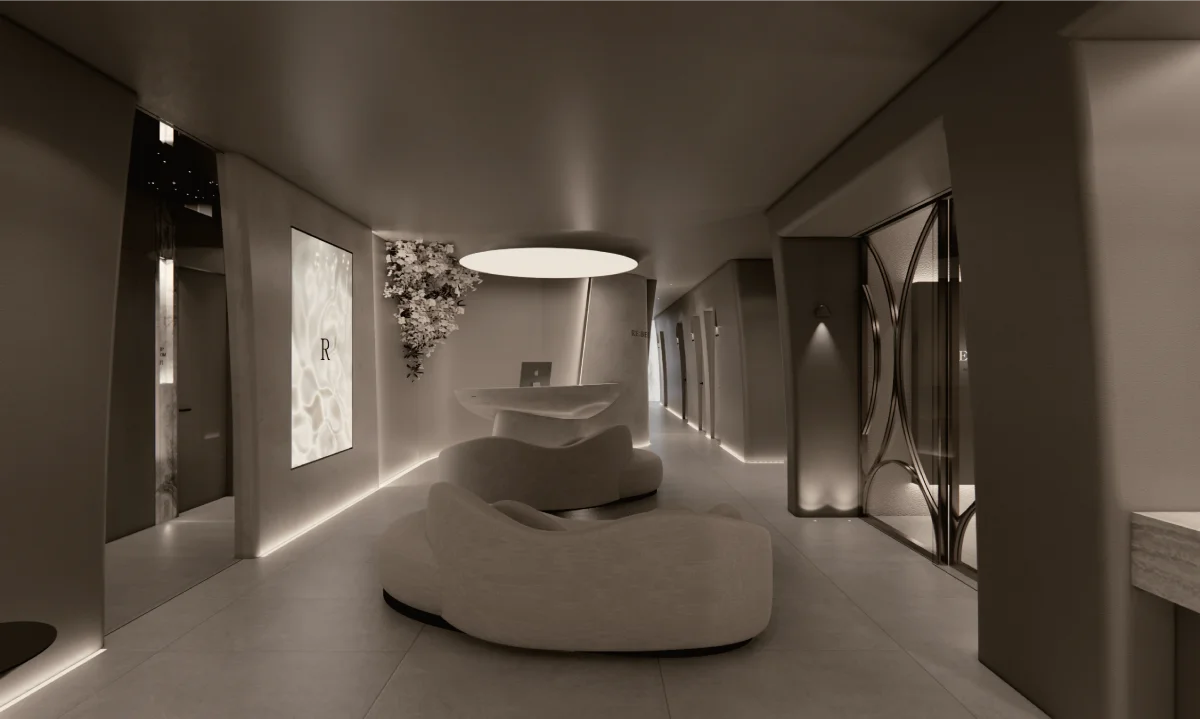
(1,322 m²)
Suites
KI Tower, Gangnam-daero
Station Exit 10
The Skin Science Under a Chemical Peel
A peel works by keratolysis: acid dissolves the corneodesmosome bonds that hold dead cells together in the stratum corneum, so the tired outer layer detaches and a fresher one is uncovered. The acid family decides where that happens. Alpha-hydroxy acids such as mandelic are water-soluble and act across the surface epidermis; the lipo-hydroxy and beta-hydroxy family is lipophilic and penetrates the sebaceous follicle, so it suits oily, congested skin. Reviews of hydroxyacids in dermatology describe exactly this split in solubility and target, along with their downstream effect on epidermal turnover and dermal matrix.
Green BA, Yu RJ, Van Scott EJ. Clinical and cosmeceutical uses of hydroxyacids. Clin Dermatol. 2009;27(5):495-501. doi:10.1016/j.clindermatol.2009.06.023
Depth matters because a controlled wound triggers a controlled repair. Once the barrier is breached at a defined level, keratinocytes and dermal fibroblasts release growth factors and cytokines that drive re-epithelialization and matrix rebuilding — the same wound-healing cascade that underlies both the smoother surface after a superficial peel and the collagen response to a deeper one. That cascade is mapped in detail across the wound-healing literature.
Barrientos S, Stojadinovic O, Golinko MS, Brem H, Tomic-Canic M. Growth factors and cytokines in wound healing. Wound Repair Regen. 2008;16(5):585-601. doi:10.1111/j.1524-475x.2008.00410.x
Werner S, Grose R. Regulation of wound healing by growth factors and cytokines. Physiol Rev. 2003;83(3):835-870. doi:10.1152/physrev.2003.83.3.835
Aging skin is where a peel earns its collagen argument. As skin ages the dermal matrix thins and fibroblasts collapse against a fragmenting collagen scaffold, producing less new collagen; controlled resurfacing that removes damaged surface and stimulates fibroblasts helps reverse part of that mechanical decline. Histomorphologic studies of aging skin document the loss of collagen density and elasticity that makes measured exfoliation worthwhile. For a Seoul clinic treating many higher-Fitzpatrick patients, this is precisely why depth is held shallow: the goal is to prompt repair without provoking the pigment response that darker skin gives to over-aggressive acid, so the physician screens skin type before any solution is brushed on.
Fisher GJ, Varani J, Voorhees JJ. Looking older: fibroblast collapse and therapeutic implications. Arch Dermatol. 2008;144(5):666-672. doi:10.1001/archderm.144.5.666
Bhattacharyya TK, Thomas JR. Histomorphologic changes in aging skin: observations in the CBA mouse model. Arch Facial Plast Surg. 2004;6(1):21-25. doi:10.1001/archfaci.6.1.21
Questions International Guests Ask About Chemical Peels in Gangnam
What acids does RE:BERRY Gangnam use for chemical peels, and how are they different?
Three main tools sit on the map. LHA is a superficial, oil-soluble acid run at pH 1.8-2.2 for barrier-safe exfoliation and congestion. Mandelic is an alpha-hydroxy acid at 30-40% for pore refinement and texture. TCA at 15-25% is dabbed focally on stubborn dark spots. The physician picks among these peel acids after imaging your skin, so the solution on your face is chosen for your spots and tone alone.
How deep does a chemical peel go, and how is that depth decided?
Depth runs from superficial, which stays in the outer epidermis, to focal medium work with TCA that reaches deeper at a single spot. The deciding factor is your Fitzpatrick skin type read under Mark-Vu imaging: lighter types I-II can take TCA at 20-25%, types III-IV drop to 15-18%, and darker types V-VI are held to mandelic 30% only. The endpoint is judged by how the skin frosts or pinks, not by a fixed timer.
Why is a chemical peel still worth doing when lasers exist?
A peel treats the whole surface in one pass and is chromophore-blind, meaning it does not need to target a color the way a toning laser targets melanin. That makes it a strong, gentle-entry choice for diffuse dullness, rough texture, and oily congestion. At RE:BERRY Gangnam many guests run a peel course for overall skin quality and keep a pico laser for defined pigment, since the two solve different problems.
Which peel is best for oily, congested skin with blackheads?
An oil-soluble LHA peel. Because it is lipophilic, it descends into the sebaceous follicle to lift the sebum and keratin that clog it, going past a surface-only exfoliation. It runs at a low, self-limiting pH, so congestion clears without stripping the barrier. Sebum readings taken about four weeks after treatment commonly show oil output measurably lower across a course.
Is a chemical peel safe on darker or Asian skin?
Yes, when the depth is kept conservative. Higher Fitzpatrick types can respond to over-aggressive acid with post-inflammatory hyperpigmentation, so RE:BERRY Gangnam caps type V-VI skin at mandelic 30% and reserves TCA for lighter types. Shallow, staged peels with strict sun protection afterward are how darker skin is peeled without trading one mark for another.
How much downtime does a chemical peel have?
It depends on the peel. A superficial LHA peel has no visible downtime, and mild warmth and pinkness fade within two to twenty-four hours. A medium mandelic peel brings light flaking at day two to four as the loosened surface sheds. Any surface bumps settle within one to three days. There is no wound to bandage in either case.
How many chemical peel sessions will I need?
The initial course is typically 4-6 sessions spaced 3-4 weeks apart, which is enough time for the skin to recover and turn over between passes. After the course, results generally hold three to six months per session, and most guests keep skin quality with maintenance peels every six to twelve months.
What is the difference between AHA, BHA, and LHA peels?
AHAs like mandelic and glycolic are water-soluble and lift dead cells across the surface, so they suit texture, dullness, and general renewal. BHA, chiefly salicylic, is oil-soluble and works inside pores, so it suits oily, acne-prone skin. LHA is a lipo-hydroxy relative of the BHA family that penetrates slowly and self-limits, which makes it gentle enough for sensitive, congested skin.
Can a chemical peel fade my dark spots and pigmentation?
Partly, and it depends on the pigment. Broad superficial and medium peels can even out mild, diffuse discoloration and dullness as fresh skin surfaces. Focal TCA can be dabbed on individual stubborn spots where skin type allows. Denser or deeper pigment such as set melasma is usually better matched to a pico toning course, which the physician can stage on separate visits.
Does a chemical peel hurt?
Most guests describe a brief sting or warmth during the acid pass that eases as soon as the solution is neutralized or timed off. Superficial LHA feels the mildest; deeper mandelic and focal TCA give more of a tingling heat at the treated area. A cooling pack is applied right after, and the physician adjusts the pass to your feedback throughout the 15-30 minute session.
What aftercare does a chemical peel need?
Keep it simple and protective. Pause retinoids and AHA products for seven days, cleanse with a gentle pH 5.5 cleanser, and stay strict on SPF 50+ while the fresh skin settles, since it is briefly more sun-reactive. Skip sauna, alcohol, and intense exercise on the treatment day. If a medium peel flakes at day two to four, let the peeling skin lift on its own and keep your fingers off it.
Can I combine a chemical peel with other treatments in one trip?
Often, with spacing. A peel course can be planned alongside a pico toning course when pigment is a separate concern, with the two set on different visits so the skin is not overworked. The physician builds the sequence and interval at consultation and writes it down before anything is booked, so a short Seoul trip is arranged around what your skin can safely take.
How do I book a chemical peel in Gangnam as a foreign visitor?
Message RE:BERRY on WhatsApp with your skin concerns, travel dates, and any recent retinoid or acid use, and a coordinator replies in English, flags anything that needs pausing before the peel, and reserves a physician slot. The clinic is appointment-first for international guests (walk-ins possible), staff interpreters cover five languages, and the skin scan, consultation, and peel fit into a single visit.
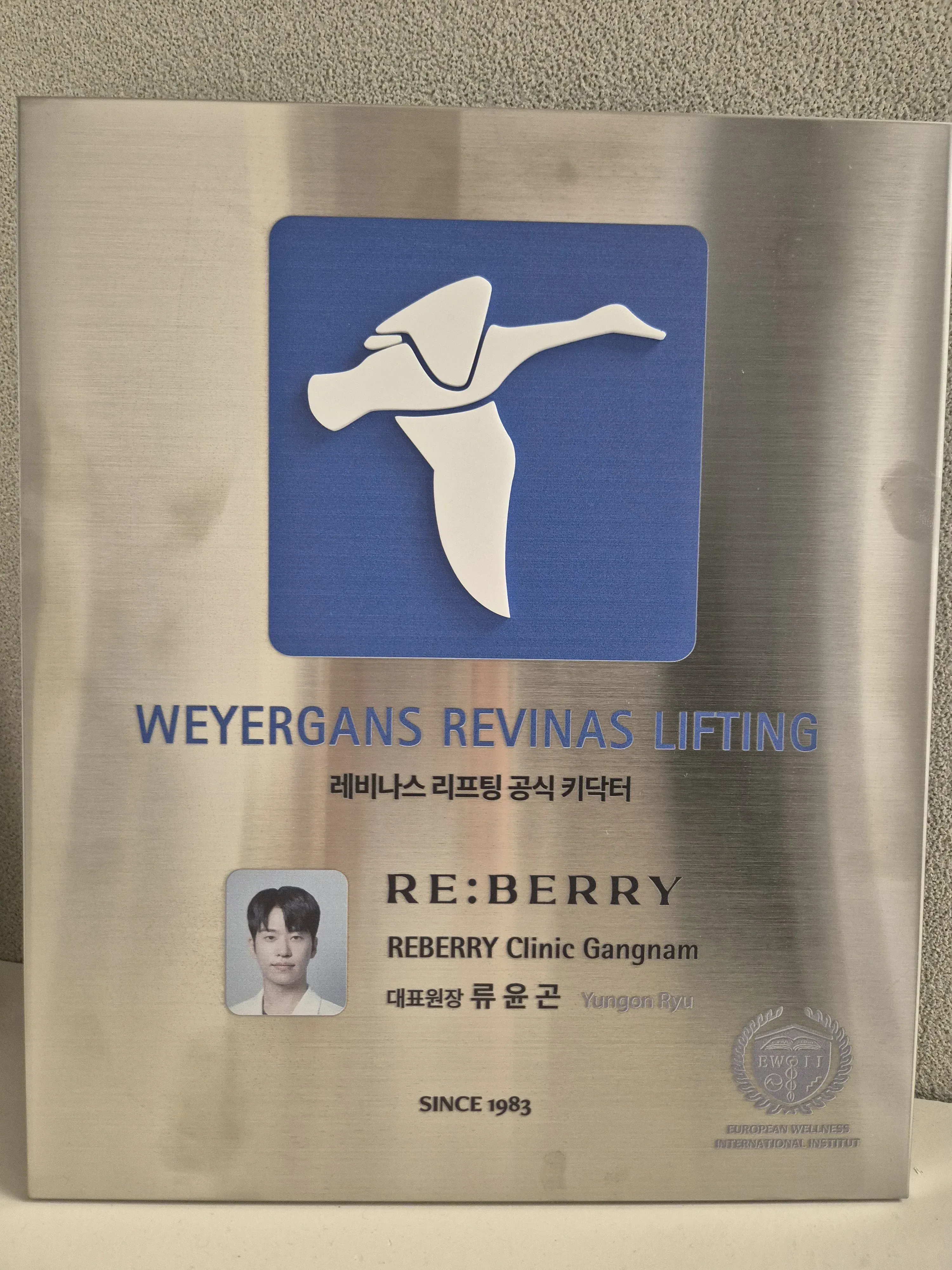
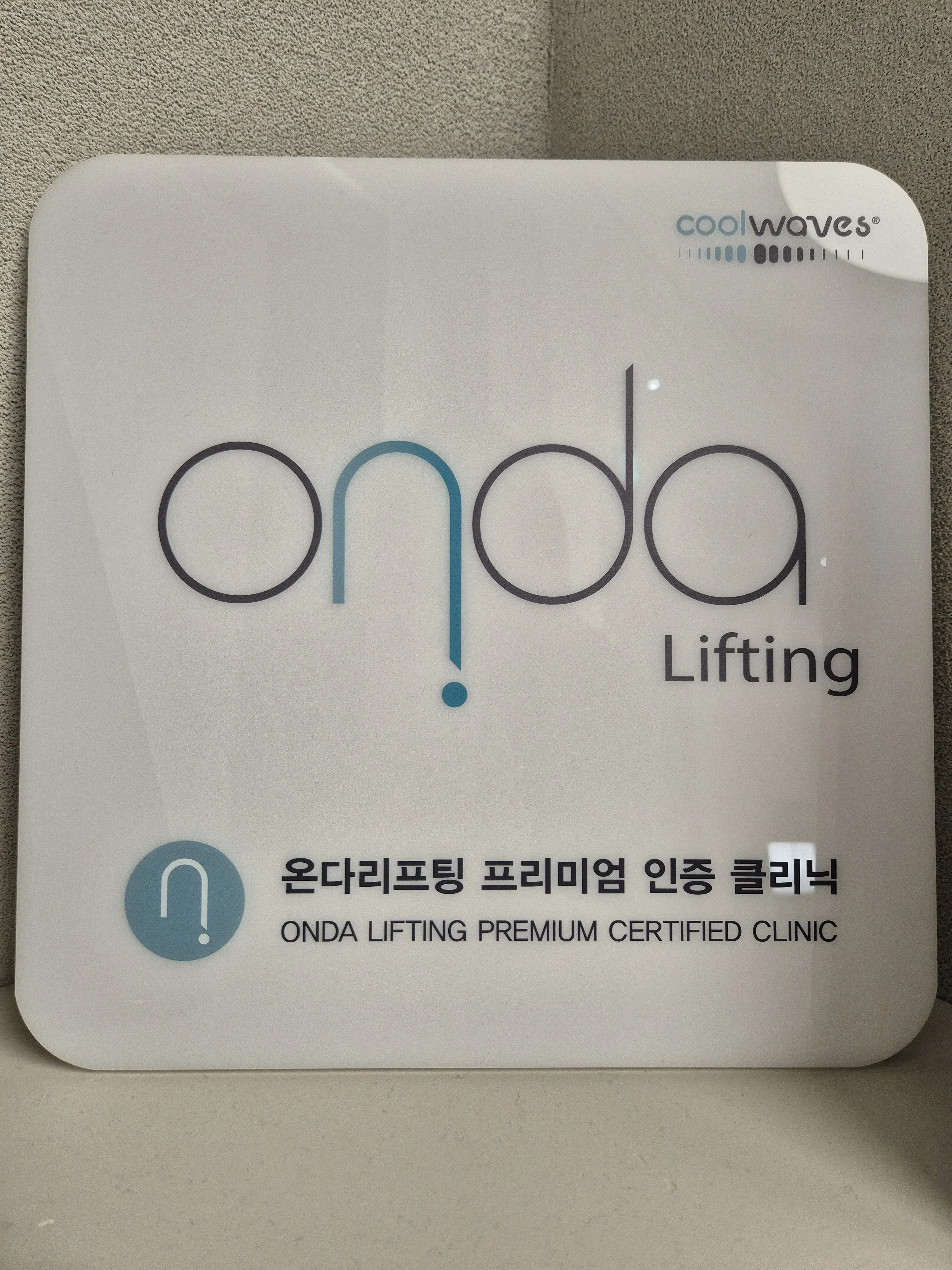
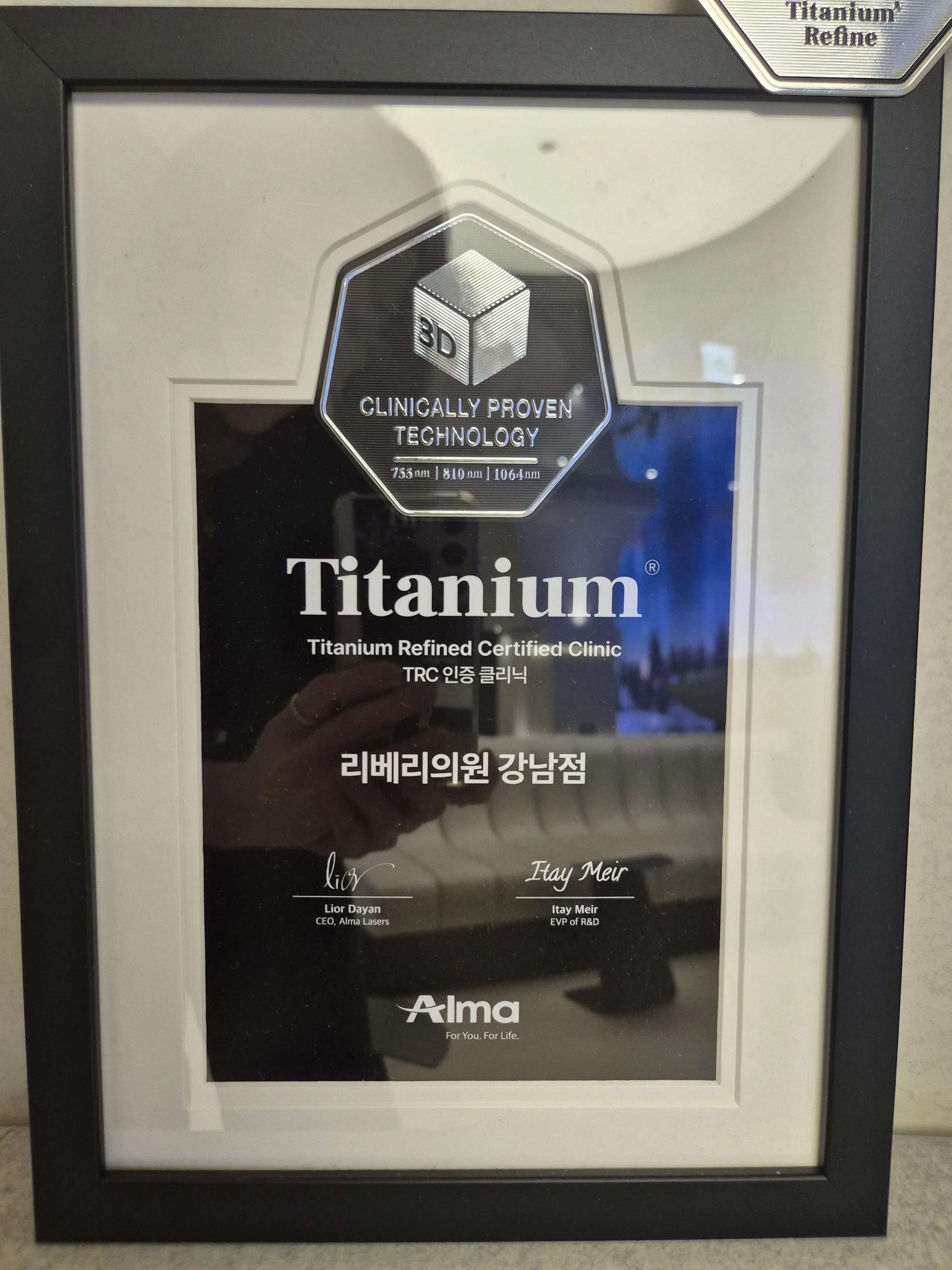
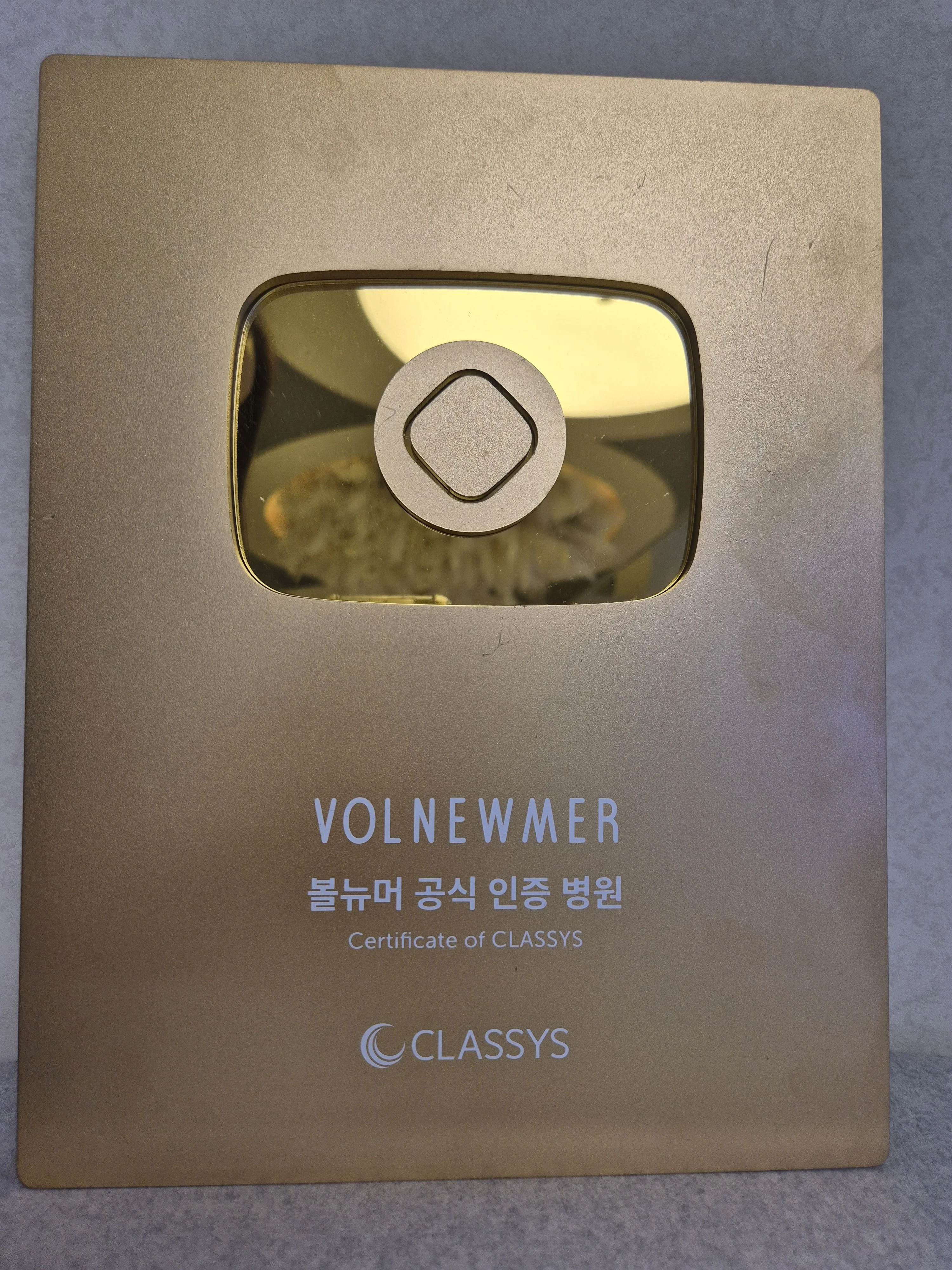
Only Authentic, Brand-Certified Equipment
Every device at RE:BERRY is MFDS-certified and manufacturer-verified. We never use counterfeit or grey-market equipment.
Book Your Chemical Peel Consultation in Gangnam
Send your skin concerns and travel dates to RE:BERRY on WhatsApp, and a coordinator replies as soon as possible, flags any product you should pause before peeling, and reserves a physician slot. The physician who reads your skin type and draws the acid map is the one who runs every pass and reviews your result, and nothing is scheduled until you confirm.
Why Tens of Thousands of Foreign Patients Are Choosing This Gangnam Clinic — Business Wire, 2026-04-13
Numbers That Tell Our Story
Cumulative across RE:BERRY clinics (Gangnam · Myeongdong · Incheon Airport).
Brand-Authenticated Equipment & Training



Our doctors are certified by Korea's top dermatological societies







Latest from Our Instagram
Real treatments, patient reactions, and behind-the-scenes from RE:BERRY.
Tap any video for sound & fullscreen
What our patients say
Real verified reviews from our Google Business Profile
I had a really nice experience at Reberry Clinic Gangnam. I received a Hydrafacial treatment, and the whole process was very comfortable. The staff were kind and explained everything clearly, and the clinic itself felt clean and relaxing. I also loved the interior — the clinic felt very clean, elegant, and luxurious, w...
I had such an amazing experience at this clinic! The clinic itself is absolutely stunning the design is beautiful, elegant, and luxurious, and the service is truly top-notch. Everything was so well organized, and I felt very comfortable from the moment I walked in.
I had a Korean filler treatment to reduce my nasolabia...
i had a good time having the Juvelook treatment!
It was my first time in Korea, all the Doctor & team are bery helpful. Dr. Ian & cheong a lee(jenny) are really helpful.
I understand more about my skin.
The clinic is calm, welcoming.
there are many activities i didn’t expect to find in a beauty clinic; phot...
So happy to found the beauty clinic in Korea that very inclusive and Muslim friendly. They have a prayer space for muslim and they prepare a female doctor for me. The clinic is so comfortable with aesthetic design make me feel relaxed. The doctor and the staff are very professional and helpful so all of the procedure r...
As someone who has struggled with acne since middle school, I decided to stop here during a layover in Seoul and was amazed by the treatment.
Firstly, the environment is elegant and peaceful. Feels very luxurious and the treatment from staff was as such as well. Speaking of staff, they were extremely professional, car...
Book Your Personalized Consultation
Share your details and our multilingual team will contact you as soon as possible through your preferred messenger.
- ✓ Free online skin consultation with a doctor
- ✓ Personalized treatment plan & pricing
- ✓ 5-language support (EN/ZH-CN/ZH-TW/JA/ES)
- ✓ Response as soon as possible via your preferred messenger
Science Chemical peel skin science — peer-reviewed references
The case for a well-placed peel rests on established skin biology. Hydroxyacids act by keratolysis, and reviews in dermatology set out how alpha-hydroxy and lipo-hydroxy acids differ in solubility and target while improving epidermal turnover and the dermal matrix (Green 2009). The renewal that follows a controlled peel is a wound-healing response: growth factors and cytokines released after the barrier is breached drive re-epithelialization and matrix rebuilding (Barrientos 2008; Werner 2003). Aging skin explains why measured resurfacing helps at all — fibroblasts collapse against fragmented collagen and make less of it (Fisher 2008), and histomorphologic study documents the loss of collagen density and elasticity that peeling aims to partly reverse (Bhattacharyya 2004).
- Green BA, Yu RJ, Van Scott EJ. Clinical and cosmeceutical uses of hydroxyacids. Clin Dermatol. 2009;27(5):495-501. doi:10.1016/j.clindermatol.2009.06.023
- Barrientos S, Stojadinovic O, Golinko MS, Brem H, Tomic-Canic M. Growth factors and cytokines in wound healing. Wound Repair Regen. 2008;16(5):585-601. doi:10.1111/j.1524-475x.2008.00410.x
- Werner S, Grose R. Regulation of wound healing by growth factors and cytokines. Physiol Rev. 2003;83(3):835-870. doi:10.1152/physrev.2003.83.3.835
- Fisher GJ, Varani J, Voorhees JJ. Looking older: fibroblast collapse and therapeutic implications. Arch Dermatol. 2008;144(5):666-672. doi:10.1001/archderm.144.5.666
- Bhattacharyya TK, Thomas JR. Histomorphologic changes in aging skin: observations in the CBA mouse model. Arch Facial Plast Surg. 2004;6(1):21-25. doi:10.1001/archfaci.6.1.21
These references shape peeling practice at RE:BERRY's Gangnam aesthetic clinic: Fitzpatrick typing before any acid is brushed on, an acid map matched to skin type and concern instead of one fixed product, conservative depth on higher-Fitzpatrick skin to respect the pigment response, and standardized-light photographic follow-up under the same licensed physician through the recovery window. This information is for educational purposes only and is not medical advice.
How to Find RE:BERRY Gangnam
2 minutes from Gangnam Station Exit 10. B1–B2, KI Tower — the building with the all-black entrance you can't miss.
RE:BERRY Clinic Gangnam
B1–B2, KI Tower, 69-gil 8, Gangnam-daero, Seocho-gu, Seoul
서울시 서초구 강남대로69길 8, 지하1·2층 (KI타워)
Also available at: Myeongdong · Incheon Airport