

Quick Answer
Why can you walk into a skin clinic in Korea without an appointment?


Korea’s aesthetic care runs on private clinics that compete on speed, which is what makes a no-appointment skin visit ordinary; at RE:BERRY Gangnam a foreign guest registers from a passport and is read by a licensed physician, two minutes from Gangnam Station Exit 10 in Seoul.
Because the Korean market is built almost entirely on private, physician-owned clinics that compete for the same passing foot traffic, and speed is one of the things they compete on. There is no gatekeeper referral to clear and no weeks-long queue to join, so a clinic that keeps a doctor and its devices ready through the day can register a stranger, examine them, and treat them in one visit. RE:BERRY Gangnam runs on exactly that model: opening hours cover 10 to 8 across all 365 days, registration for an international guest needs only a passport, and a licensed physician does the reading. The system is what makes the walk-in ordinary; the individual clinic decides how carefully it uses that freedom.
Benefits & Results
How Korea's Clinic Structure Turns Into a Walk-In You Can Use
- A private-clinic market: Korea's aesthetic care sits outside the hospital referral system, so a foreign visitor books nothing upstream and reaches a physician the same day they decide to
- Same-day culture as a habit, not a favour: local guests routinely expect to be seen on arrival, and clinics staff and stock for that rhythm, which is what leaves room for an unplanned visitor
- Passport-only entry for internationals: registration runs from the passport alone, removing the resident number and local phone line that block visitors elsewhere
- Payment built for travellers: Visa, Mastercard, JCB, UnionPay, Alipay, and won in cash are all accepted at RE:BERRY Gangnam, so an out-of-pocket visit settles cleanly
- Language cover across nine tongues, so a walk-in is screened accurately and not through guesswork at the desk
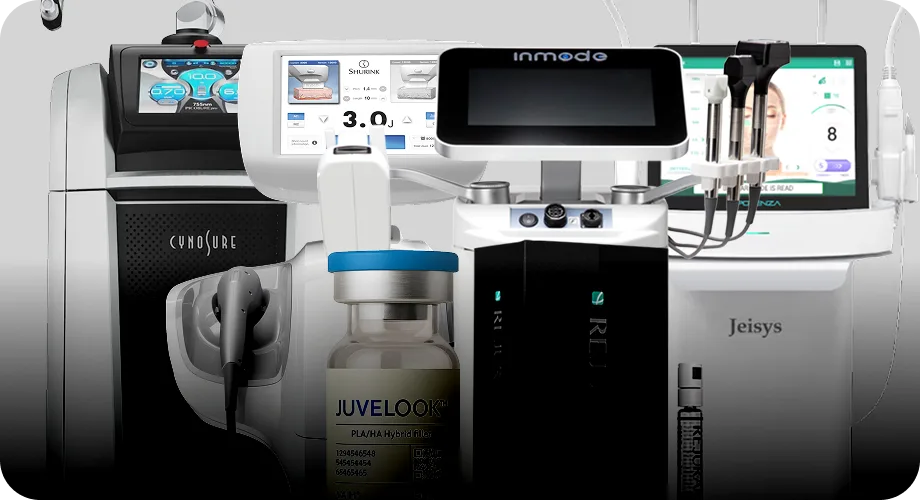
- Devices already in the building: with 30-plus MFDS-cleared machines on the floor, the limiting factor on a busy day is a doctor's minutes, not whether the right equipment is free
Effects & Progress

Open Every Day of the Year
Equipment Ready, Not Rationed
Physician-Led by System Design

One Written Price, No Surcharge
Using Korea's Walk-In System — 4 Things a Visitor Puts Together
The one thing a Korean walk-in actually turns on is your passport. Private clinics here register international guests straight from it, without the resident registration number, Korean phone line, or local address that stop many first-time visitors elsewhere from even trying. Bring the physical passport, not just a phone photo, because the front desk copies the identity page into the medical record it is legally required to open before a physician examines you. That single document is the whole entry requirement, and it is a large part of what makes an unplanned visit realistic in Korea in the first place.
Aesthetic treatment in Korea is a private, out-of-pocket purchase, so payment is settled at the clinic and never through an insurance step. RE:BERRY Gangnam takes Visa, Mastercard, JCB, and UnionPay, plus Alipay and won in cash, which covers most travellers arriving from across Asia and the West. Carrying one working international card and a little cash removes the last piece of friction from a same-day visit. Nothing about the payment method changes the price either, since the figure a physician recommends is confirmed in writing before treatment begins.
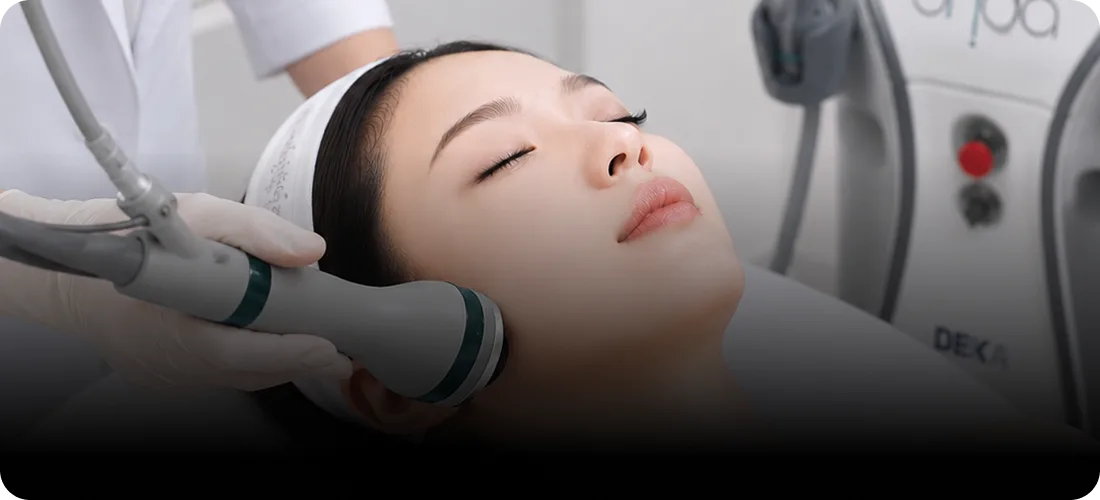
A walk-in only screens well when you can actually describe what brought you in, so the language spoken at the desk matters more than most visitors expect. Staff and clinicians at RE:BERRY work across five languages, which lets you note your concern and any medication history in one you read fluently, well clear of counter guesswork. A short habit helps here: jot down your current medicines and any past reactions before you arrive, since that is the detail people most often blank on at a counter. Accurate words in, accurate screening out — it is the quiet groundwork a good reading depends on.
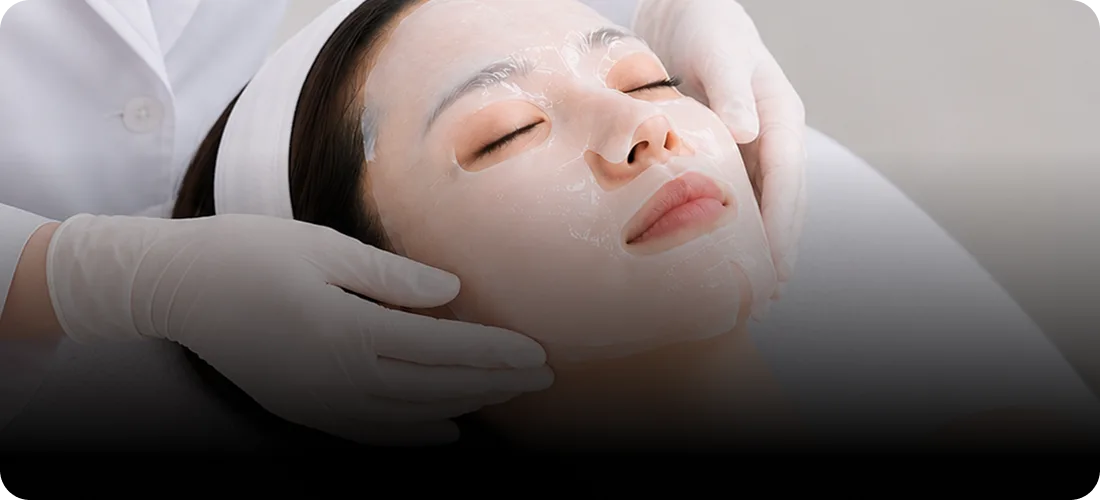
A cooling pack and regeneration cream soothe the skin right after treatment. Embossing and mild bruising may last 2–5 days; avoid sauna, alcohol, and intense exercise on the day. We recommend 3 sessions at 3–4 week intervals, then maintenance every 6–12 months.
Treatment Process
Comparison
Walk In or Book Ahead in Korea — A Decision Table for Visitors
| Your situation | Better as a walk-in | Better booked ahead | The reason it lands there |
|---|---|---|---|
| A free, unplanned afternoon on your trip | ✓ | Not needed | The whole point of Korea's same-day model is that an open hour can become a treated one with no upstream booking |
| You want a quick, low-downtime treatment | ✓ | Not needed | Fast injectable and gentle facial work slots into an afternoon, and the clinic keeps devices ready for it |
| You are travelling in a holiday peak week | Possible, expect a wait | Preferred | Local demand spikes around holidays, so a held slot protects the one afternoon you have |
| You need a numbing-heavy or multi-session plan | Walk in to be read only | Yes for the treatment | Series work and long pre-numbing want spacing across your dates, not one squeezed hour |
| You have a narrow window between other plans | Risky | ✓ | A walk-in cannot promise an exact hour; a booking reserves one so the physician reading is not rushed |
Sources: KHIDI 2025 Medical Tourism Survey; peer-reviewed medical-travel and clinical-communication literature (cited below); RE:BERRY clinic operating records (verified).
Korea's same-day model is built for exactly this; registration is passport-only and a quick treatment fits the hour
A held hour protects your one window and gives a multi-step plan the room it needs across your trip
Why This Matters
Korea's density of private clinics is the quiet engine behind the walk-in. Aesthetic medicine here runs almost entirely through independent, doctor-owned practices, not public hospitals, and they cluster tightly in districts such as Gangnam. Competition on that scale rewards clinics that can see someone the day they arrive, so same-day service ended up treated as ordinary. A visitor benefits from a market habit that was built for locals long before it was described in a travel guide.
Reviews of medical travel consistently flag two variables that decide whether a visit abroad goes well: how the facility is run and how clearly the patient can communicate. Both sit inside your control on a Korean walk-in. Choosing a clinic where a licensed physician examines before treating, and where the desk works in a language you read, is the practical version of that evidence. The structure lets you show up, but the choice of where you show up still matters.
KHIDI's 2025 international patient survey found 41.4% of respondents rank keeping the same doctor throughout as their leading criterion. Walking in does not have to trade that away. At RE:BERRY Gangnam the physician who reads your skin is the one who treats you and reviews your progress afterward, so the convenience of the system and the continuity of one doctor are not a choice between two.
The Boutique
A Fourteen-Thousand-Square-Foot Hush Above Gangnam-daero
Step past the black gallery facade and the bustle of Gangnam-daero falls away. Fourteen thousand square feet of hushed corridors, marble installations, a cascading water feature and fully enclosed consultation suites — arranged so you rarely cross paths with another guest, because our appointment-first diary keeps every hour deliberately underbooked.
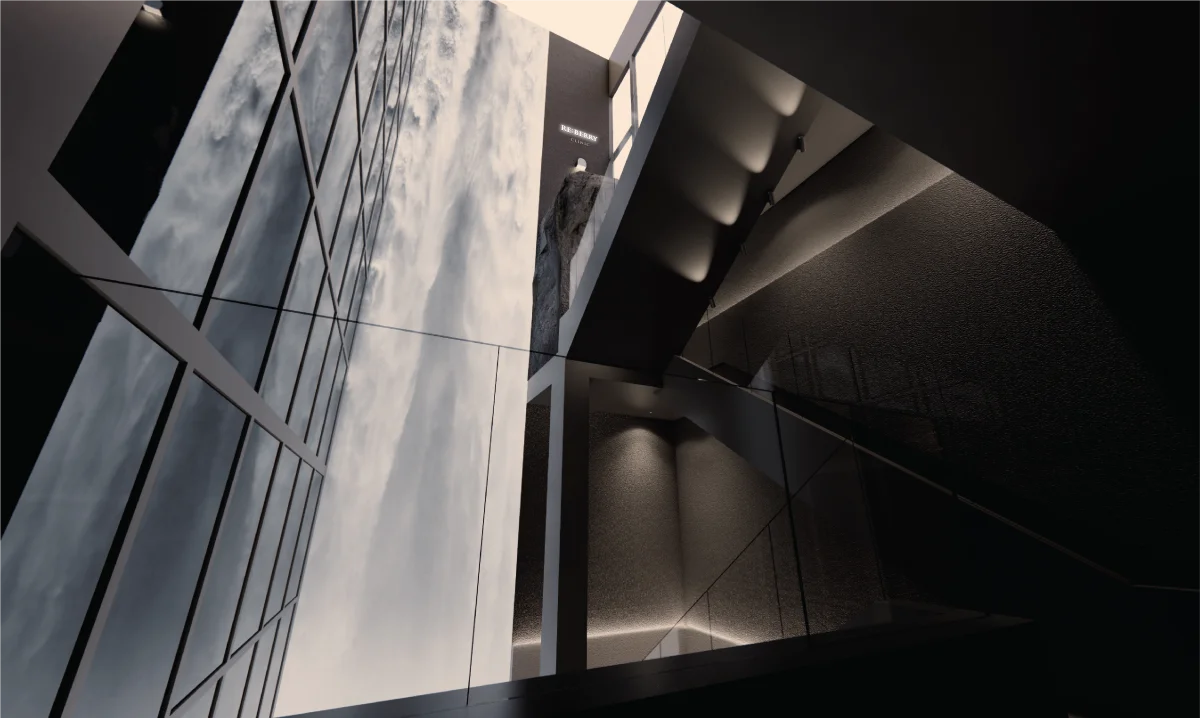
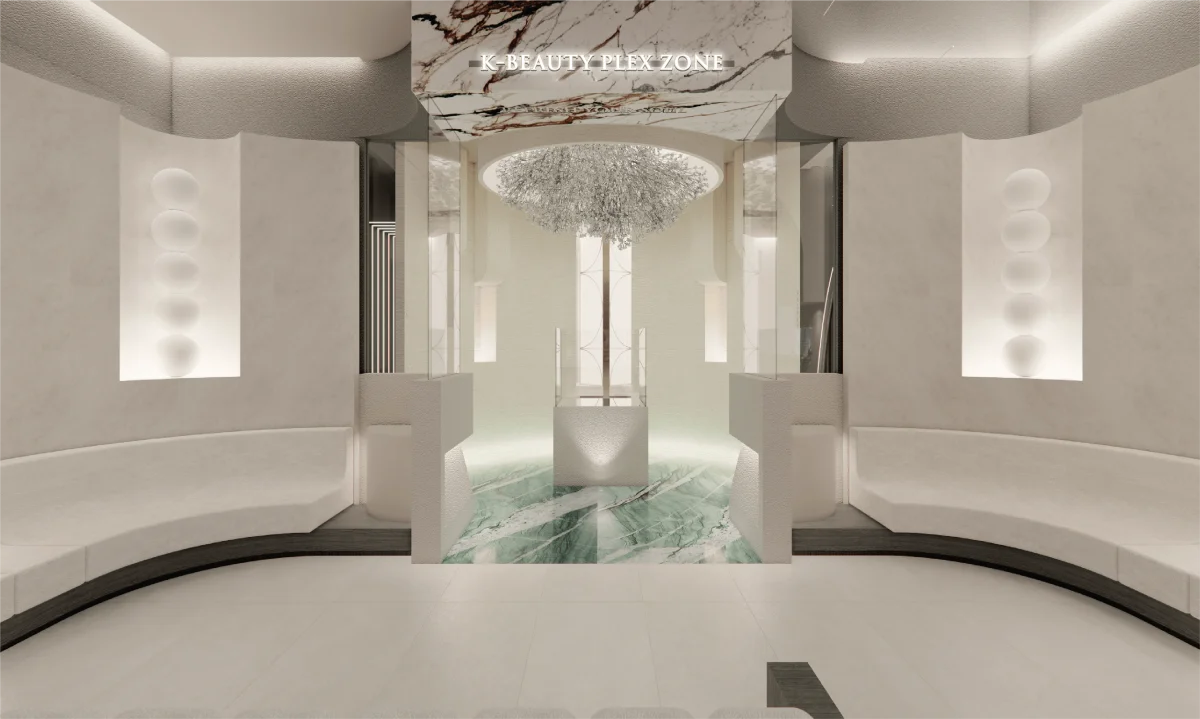
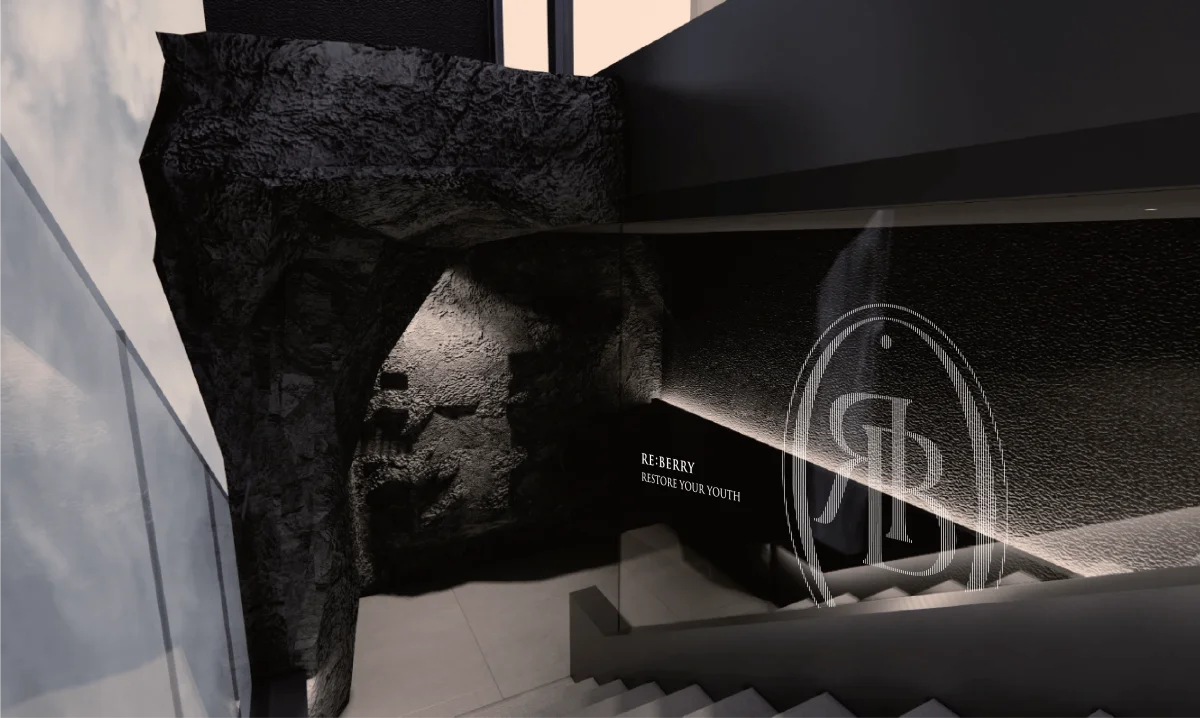
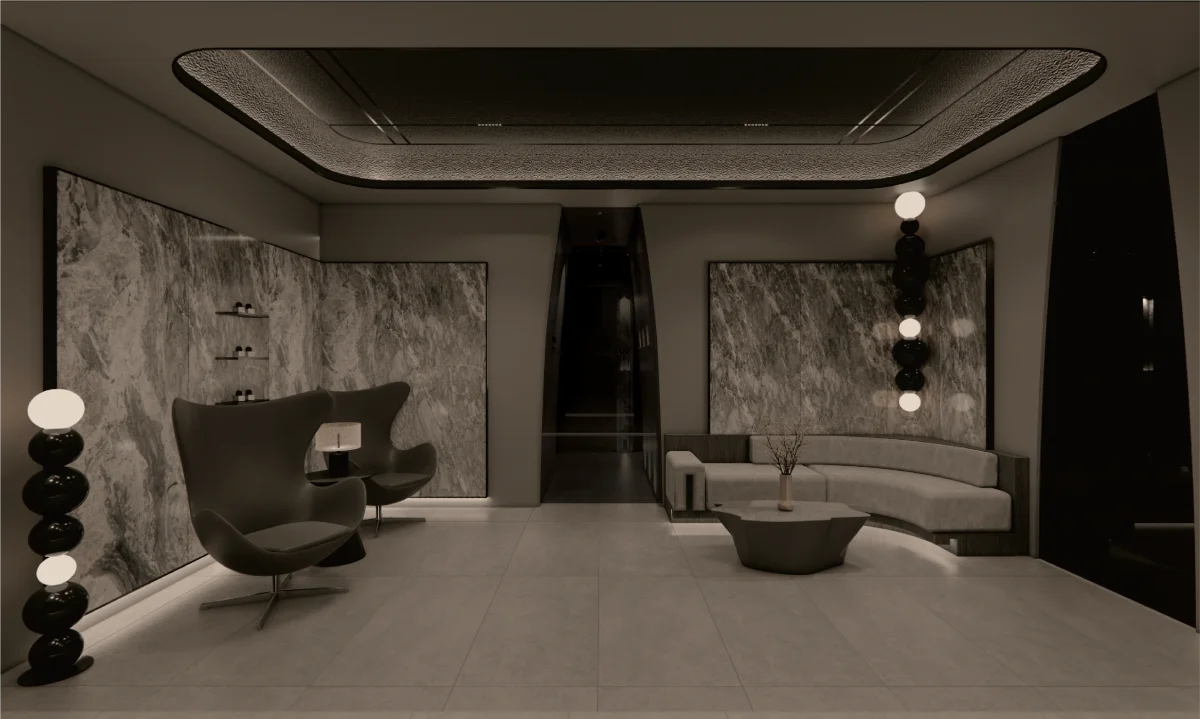
(1,322 m²)
Suites
KI Tower, Gangnam-daero
Station Exit 10
Your Doctors
Your Medical Director
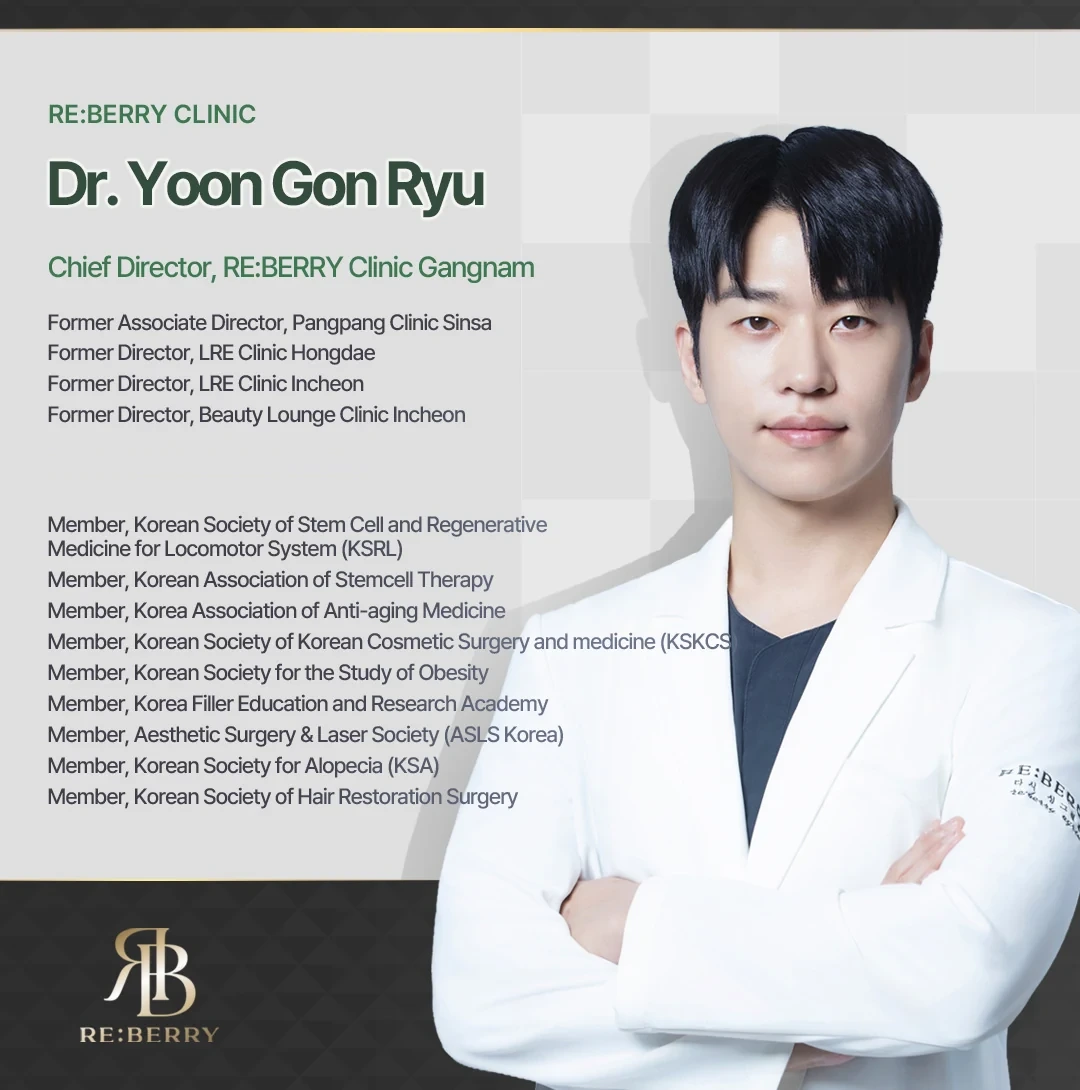
Dr. Yoon-Gon Ryu
Chief Director
"People assume Korea lets you walk in because we cut corners, but it is the opposite — our clinics compete so hard on service that we built the speed into the front desk and left the examination completely intact, so the passport saves you the wait, never the reading." — Dr. Yoon-Gon Ryu
- Medical Director, RE:BERRY Aesthetic Clinic Gangnam — Korean MOHW Medical License No.131644
- Manufacturer-appointed invited to teach injection and energy-device technique to Korean peers
- Regular Member, Korean Academy of Aesthetic Medicine
- Co-manages every case with Dr. Yejin Oh (Korean MOHW Medical License No.144238)
- Featured in Authority Magazine (2026)
Medically reviewed by Dr. Yoon-Gon Ryu, CEO / Medical Director, RE:BERRY
Pricing
How Paying for a Walk-In Works in Korea (No Surcharge for Showing Up)
a consultation-based quote
Consultation-based, quoted at your free consultationGet Your Personalized QuoteLimited Time Offers
October – December 2026 Promotions
Exclusive packages for international patients. Swipe to see all offers.
October – December 2026 PROMOTION
Timeline
What to Expect
- 01
Private, physician-owned clinics competing on the same streets — the structure that turned same-day service into a norm, not a perk
- 02
Passport for registration, one international card plus a little cash, and your concern written in a language you read
- 03
Identity page copied for the required medical record, concern and medication history noted, then the handover to a licensed physician
- 04
Walk in for quick, low-downtime work; book ahead when a series, long numbing, or a careful map wants a reserved day
Timeline · What to Expect
- Right after
The document that opens a walk-in is your passport alone — no resident number, no local phone line, and five languages at the desk to note your concern accurately.
- After 2 weeks
Payment settles at the clinic by card or cash, out of pocket, with the physician's recommended figure confirmed in writing before any treatment begins.
- After 1–3 months
The examination is the step Korea's speed never buys away: a licensed doctor reads your skin on imaging and by hand before same-day work is named or a later day suggested.
- 6–12 months
Follow-up travels home with you on WhatsApp at days seven, thirty, sixty, and ninety, reviewed by the same physician who read and treated you at the visit.
Clinical Science
What the Evidence Says About Care You Did Not Book in Advance
The reasonable question about a walk-in is whether convenience quietly trades away safety. Research on care delivered abroad points the answer somewhere specific: the variables that decide how a visit goes are how the facility is governed and how well the patient can be understood, not whether the appointment was made weeks earlier. A review of the medical-travel evidence set out those governance and communication factors as the recurring determinants of outcomes for people treated outside their home country.
Lunt N, Carrera P. Medical tourism: assessing the evidence on treatment abroad. Maturitas. 2010;66(1):27-32. doi:10.1016/j.maturitas.2010.01.017
Facility governance is measurable in its own right. An internal-audit analysis of outpatient surgical safety found that structured screening, documentation, and physician oversight — the ordinary operating discipline of a well-run clinic — correlated with low adverse-event rates independent of how patients arrived. That is the layer a Korean walk-in still passes through: RE:BERRY opens a required medical record from your passport and puts a licensed physician between you and any device before treatment begins.
Keyes GR, Singer R, Iverson RE, et al. Analysis of outpatient surgery center safety using an internet-based quality improvement and peer review program. Plast Reconstr Surg. 2004;113(6):1760-1770. doi:10.1097/01.prs.0000124743.75839.11
Communication is the second lever, and it weighs heavily for an international guest arriving unannounced. A systematic review of professional interpreters in clinical settings found they improve care and cut errors compared with makeshift translation, and a separate review of patient-physician language concordance reached the same conclusion for quality and outcomes. This is the reason a Korean clinic serving foreign walk-ins invests in language cover at the desk: a guest who describes symptoms and medication history accurately is a guest who can be screened accurately, booking or no booking.
Karliner LS, Jacobs EA, Chen AH, Mutha S. Do professional interpreters improve clinical care for patients with limited English proficiency? A systematic review of the literature. Health Serv Res. 2007;42(2):727-754. doi:10.1111/j.1475-6773.2006.00629.x
Diamond L, Izquierdo K, Canfield D, Matsoukas K, Gany F. A systematic review of the impact of patient-physician non-English language concordance on quality of care and outcomes. J Gen Intern Med. 2019;34(8):1591-1606. doi:10.1007/s11606-019-04847-5
SCIENTIFIC EVIDENCE
Science Walk-in and medical-travel care — governance and communication evidence
The case that an unbooked visit can be a well-run visit rests on where outcomes are actually decided. A review of medical-travel evidence located the determinants in facility governance and patient communication rather than in scheduling (Lunt 2010). Outpatient-facility auditing showed that structured screening, documentation, and physician oversight track with low adverse-event rates (Keyes 2004). Communication carries its own weight for international guests: professional interpreters improve care and reduce error (Karliner 2007), and language concordance itself is associated with better quality and outcomes (Diamond 2019). Read together, they describe a walk-in whose safety comes from how the clinic operates and how clearly the guest is understood — the two things a visitor can still choose even when the appointment is not planned.
These references shape how RE:BERRY Gangnam treats an international walk-in: a passport opens the required medical record, five languages let a guest be screened accurately, and a licensed physician examines before any device is used and reviews progress on WhatsApp at days 7, 30, 60, and 90. This information is for educational purposes only and is not medical advice.
Medical tourism: assessing the evidence on treatment abroad
Lunt N, Carrera P
Maturitas. 2010;66(1):27-32
doi:10.1016/j.maturitas.2010.01.017
Analysis of outpatient surgery center safety using an internet-based quality improvement and peer review program
Keyes GR, Singer R, Iverson RE, et al
Plast Reconstr Surg. 2004;113(6):1760-1770
doi:10.1097/01.prs.0000124743.75839.11
Do professional interpreters improve clinical care for patients with limited English proficiency? A systematic review of the literature
Karliner LS, Jacobs EA, Chen AH, Mutha S
Health Serv Res. 2007;42(2):727-754
doi:10.1111/j.1475-6773.2006.00629.x
A systematic review of the impact of patient-physician non-English language concordance on quality of care and outcomes
Diamond L, Izquierdo K, Canfield D, Matsoukas K, Gany F
J Gen Intern Med. 2019;34(8):1591-1606
doi:10.1007/s11606-019-04847-5
Common Questions
How Korea's Walk-In Skin Clinic System Works for Visitors
Why is walking into a skin clinic so common in Korea?
Aesthetic care in Korea runs almost entirely through private, physician-owned clinics, not public hospitals, and they compete densely for the same foot traffic, especially in districts like Gangnam. Speed is part of how they compete, so being seen on the day you arrive became a market norm. A visitor is essentially borrowing a habit built for local demand.
Is a walk-in an official part of the Korean medical system, or a workaround?
It is official and ordinary. There is no referral gate to clear for private aesthetic treatment, so a clinic is free to register and examine a first-time patient the same day. RE:BERRY Gangnam opens a legally required medical record from your passport before a physician sees you, exactly as it would for a booked patient.
What documents does a foreign visitor need to walk in?
Your passport, and that alone. Korean clinics register international guests from the passport identity page, with no resident registration number, Korean phone line, or local address required. Bring the physical passport rather than a phone photo, since the desk copies it for the medical record it must open before treatment.
How does payment work for a walk-in, since I have no Korean insurance?
Aesthetic treatment is a private, out-of-pocket purchase, settled at the clinic with no insurance step. RE:BERRY Gangnam accepts Visa, Mastercard, JCB, UnionPay, Alipay, and Korean won in cash. One working international card plus a little cash covers a walk-in comfortably, and the price is confirmed in writing first.
Will language be a barrier if I just show up unannounced?
It should not be. Staff and clinicians at RE:BERRY work across five languages — English, Simplified Chinese, Traditional Chinese, Japanese and Spanish. You describe your concern and medication history in one you read fluently, which is where accurate screening starts. Writing down your current medicines before you arrive helps the reading go smoothly.
How do I decide between walking in and booking ahead in Korea?
Match the treatment to the method. Quick, low-downtime work fits a walk-in and suits a spontaneous free afternoon. Anything needing long numbing time, a careful map, or several sessions is better with a reserved day so the physician's reading is not rushed and the plan gets room across your trip. During holiday-peak weeks, a held slot protects your one window.
Does the Korean system charge more for a walk-in than a booking?
No. There is no walk-in surcharge at RE:BERRY Gangnam; the quoted price for a given treatment is the same whether you reserved it or decided on it in the chair. Whatever the physician recommends after examining you is confirmed as one written figure before anything is performed.
Is a walk-in less safe than a scheduled visit?
Evidence on care abroad ties outcomes to how a facility is run and how clearly a patient is understood, not to whether the visit was booked in advance. A well-run clinic screens, documents, and puts a licensed physician between you and any device the same way for both. At RE:BERRY the examination step is identical, walk-in or reserved.
Why does Korea have so many clinics clustered together?
The private-clinic model concentrates practices in commercial districts where demand and foot traffic are highest, so Gangnam alone holds a dense strip of them. That clustering is what keeps competition, opening hours, and same-day availability high. For a visitor it means options are close together and set up to see you promptly.
Can I still message ahead and have it count as a walk-in?
Yes, and it is worth doing. A short WhatsApp note to +82-10-4201-9133 before you leave your hotel lets the desk hold you a physician slot without a formal booking process. You still arrive, register with your passport, and are examined the same way. You simply skip most of the wait on a busy floor.
What are the opening hours, and does that include weekends and holidays?
RE:BERRY Gangnam is open 10 to 8, all 365 days of the year, holidays included. That continuous schedule is part of what makes a Korean walk-in dependable: you are not gambling on a clinic being closed the one afternoon your itinerary frees up. Arriving on a weekday morning still tends to mean the shortest wait.
Does a doctor actually examine a walk-in, or only a coordinator?
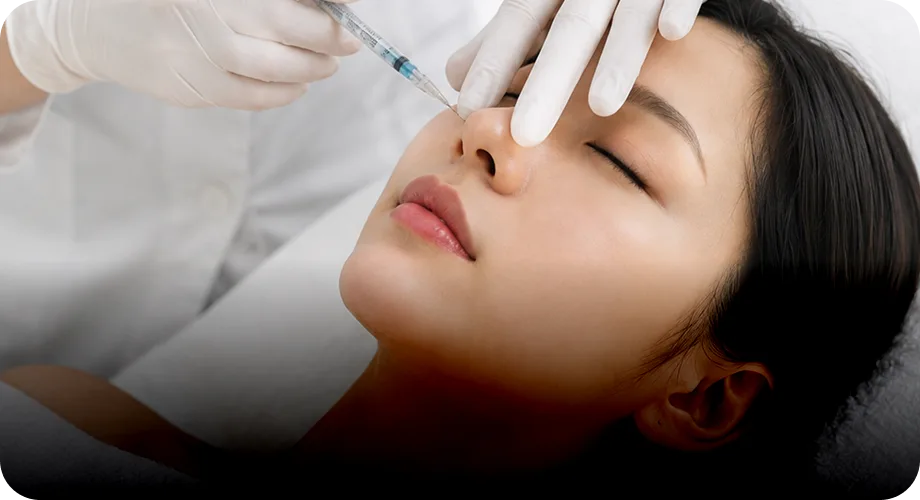
A licensed physician examines you. Every walk-in at RE:BERRY has their skin imaged and assessed, and Dr. Ryu reads pore condition, pigment, hydration, and laxity before any treatment is named. Korea's system lets you skip the booking; it does not let a clinic skip the physician's reading, which is the step that keeps the visit safe.
How far is the clinic from Gangnam Station, and where exactly is it?
RE:BERRY sits inside KI Tower on Gangnam-daero, a two-minute walk from Gangnam Station Exit 10 on Seoul Metro Line 2. From Incheon Airport it is roughly 45 to 60 minutes by AREX plus subway, or by direct taxi. Being steps from the station is what makes an unplanned visit fit between other stops in Gangnam.
What continues after I leave Korea following a walk-in?
Follow-up travels home with you. RE:BERRY checks in on WhatsApp at days 7, 30, 60, and 90 to see how the treatment settled, and you send progress photos as needed. The physician who read and treated you is the one reviewing them, so the same-day convenience does not cost you continuity once your trip ends.