Melasma Treatment in Korea
Melasma is a years-long condition, so RE:BERRY Gangnam plans a Seoul trip as a starting block: Pico laser and Genesis 1064nm toning read on imaging during your visit, then a tranexamic acid and sun-defense plan you run from home, steps from Gangnam Station in Seoul.
Melasma Treatment Korea
Melasma Care
Melasma Treatment in Korea
Melasma is a years-long condition, so RE:BERRY Gangnam plans a Seoul trip as a starting block: Pico laser and Genesis 1064nm toning read on imaging during your visit, then a tranexamic acid and sun-defense plan you run from home, steps from Gangnam Station in Seoul.

Across RE:BERRY Clinics
1,000,000+ Treatments
Direct Consult & Treatment
Medical Director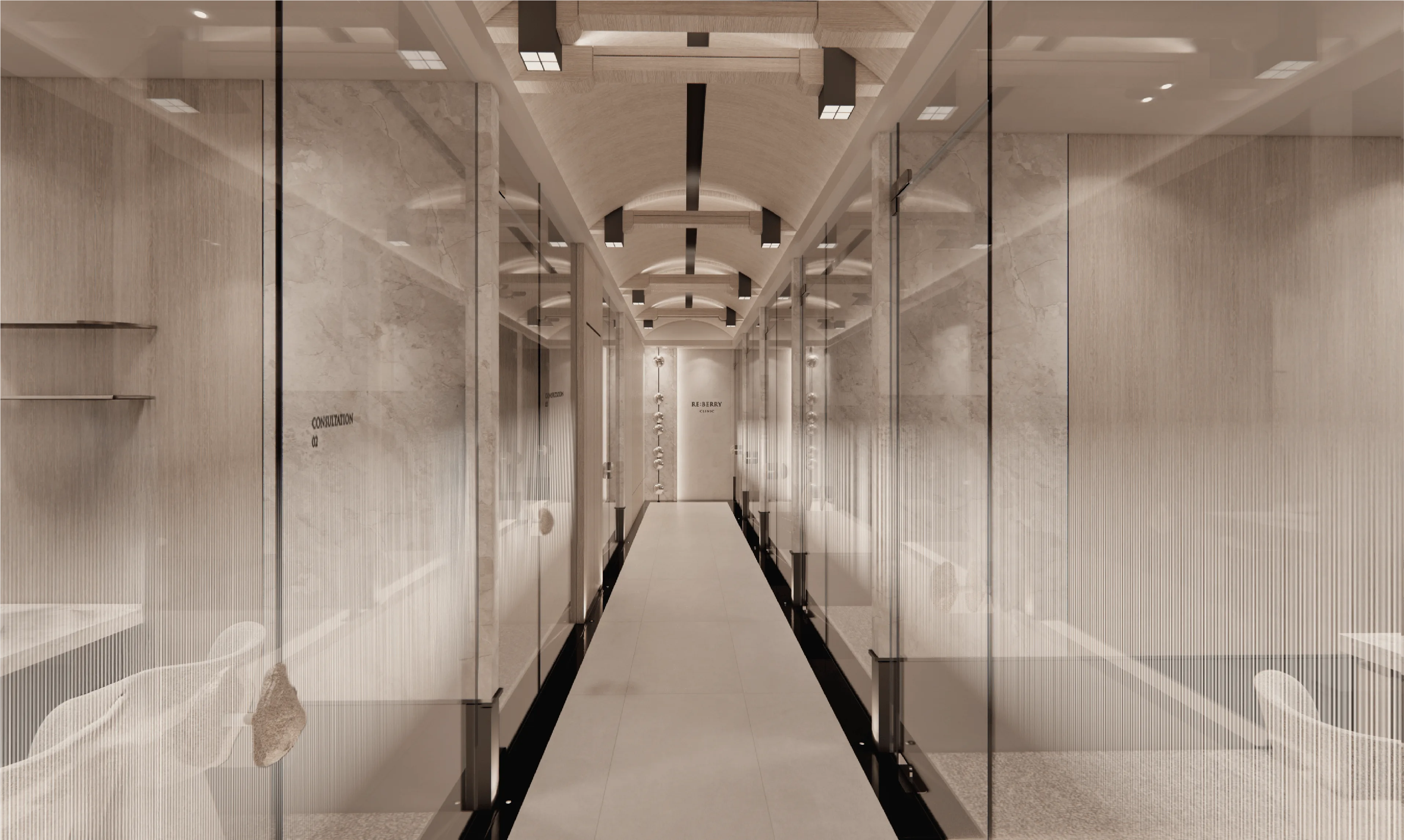
From Gangnam Station Exit 10
2-Min WalkIs it worth flying to Korea to treat melasma, and how does a trip fit a long-term condition?
Melasma does not resolve in one visit, so RE:BERRY Gangnam treats a Seoul trip as the front end of a longer plan. During your stay the physician reads pigment depth on Mark-Vu imaging and runs an intensive block of low-fluence toning with the pico laser and Genesis 1064nm lasers. You then leave with an oral and topical tranexamic acid regimen, a home routine, and strict sun rules that you run from home, with remote photo reviews at three days, four weeks, and twelve weeks. The trip is worth it when you go in expecting a strong start you maintain, not a one-time fix you carry back on the plane.
Effects & Progress
Effects & Progress
Low-fluence pico laser and sub-threshold Genesis passes fracture only the excess melanin, so surplus pigment is broken selectively while the overactive melanocytes are left below the line that would tip them into a rebound.
Mild pinkness after a pass settles in one to two hours and makeup is fine about an hour later. There is no crusting; sun protection starts immediately and same-day sightseeing is realistic.
The three-day remote check confirms the skin settled without a flare while you are still traveling. The tranexamic acid plan and home routine are already running.
The working phase at home across four to twelve weeks — tone evens and scattered spots fade as the tranexamic acid backbone and daily defense compound. Response speed varies by individual.
Maintenance period. Because melasma is chronic, ongoing tranexamic acid and daily SPF hold the result, with lighter touch-up blocks on return trips; RE:BERRY guides the interval that suits your skin.
Treatment Process
Melasma Treatment in Korea — A Trip Planned as a Starting Block
※ Illustrative images are AI-generated to help explain the treatment process.Effects & Progress
Effects & Progress
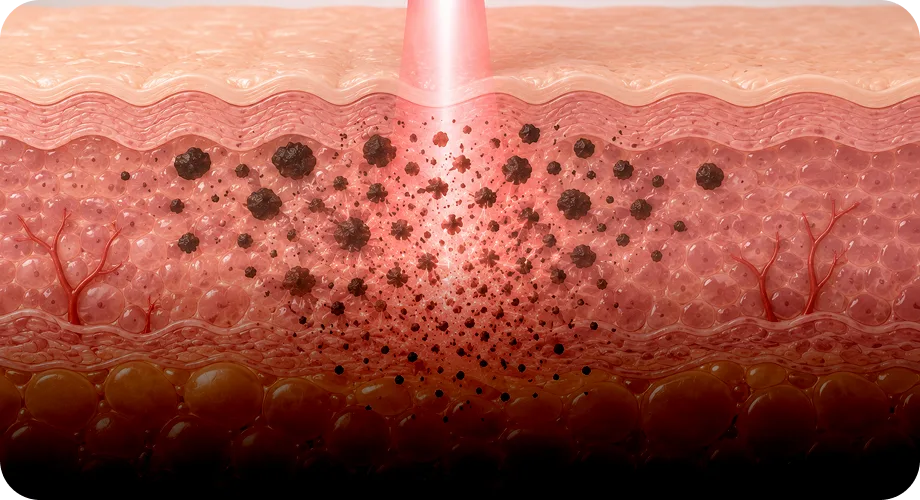
Melasma is pigment made by living cells that already over-fire, so the intensive block aims for selective breakdown, not force. Pico laser is read to the epidermal melanin and sub-threshold Genesis 1064nm to the deeper dermal pigment, both held below the energy that would provoke the melanocytes. That selectivity is the whole reason the toning can be concentrated safely into a trip and then repeated at a lighter maintenance cadence, without risking the darker rebound a single high-energy pass invites.
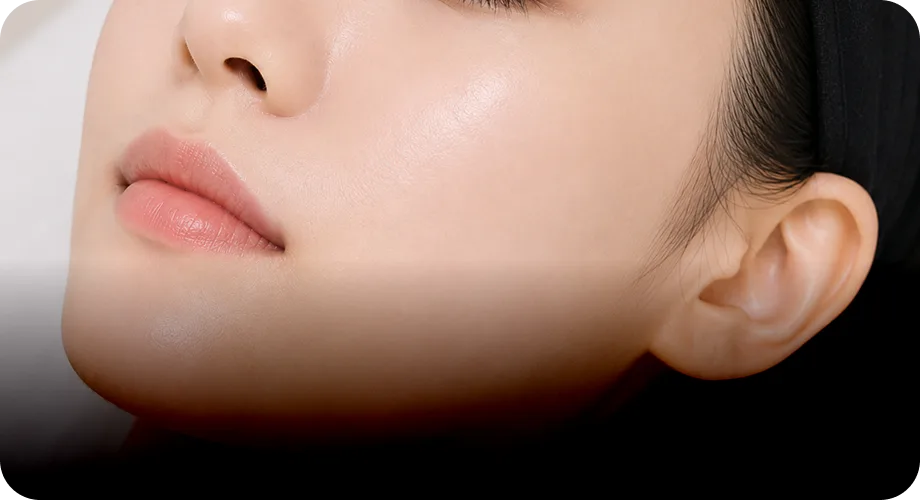
Melasma rarely arrives alone — it usually sits among general dullness and a scatter of smaller marks across the cheeks and forehead. A calibrated dual-wavelength pass works on both at once: the diffuse pigment lifts gradually while the discrete spots within the field also clear, so evenness and individual blemishes improve in step. Because the intensive sessions are grouped into the visit and the tranexamic acid backbone runs afterward, that improvement keeps compounding in the weeks after you fly home rather than resetting between distant appointments.
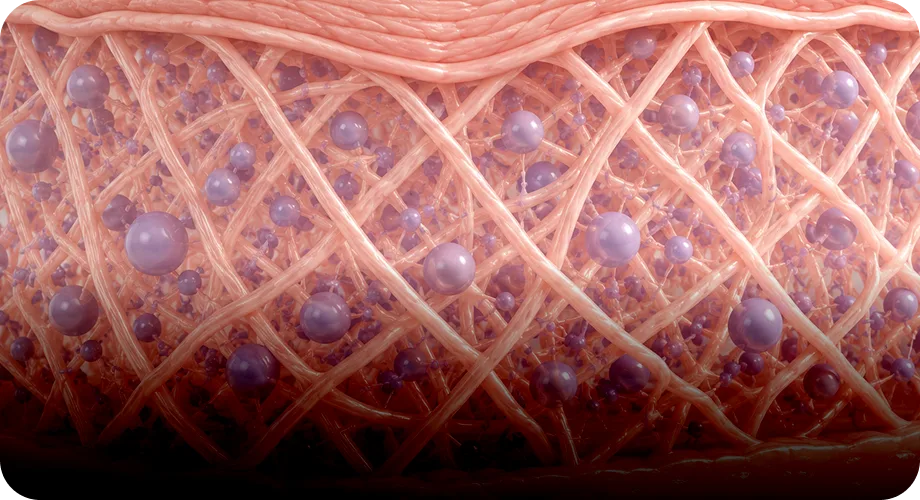
The same picosecond pulses that fracture pigment also deliver a photomechanical stimulus into the dermis, which prompts a measure of collagen remodeling as a bonus effect. Pigment control is the primary goal, but over the weeks after each pass many guests notice the treated zones feel smoother and slightly firmer as well as more even. It is a useful characteristic of the wavelength that carries on quietly while you run the home plan, and it is never billed or promoted as a separate procedure.

Because the energy is held low, downtime is minimal and travel-friendly. The mild pinkness after a toning pass usually settles within one to two hours, makeup is fine about an hour later, and there is no crusting or peeling, so sightseeing the same day is realistic and there are no same-day flight restrictions. The only real asks are diligent sun protection while you travel and skipping sauna, alcohol, and hard exercise on treatment day. The three-day remote check is set precisely so any settling can be reviewed while you are still on the move.
Treatment Process
Melasma Treatment in Korea — A Trip Planned as a Starting Block
※ Illustrative images are AI-generated to help explain the treatment process.
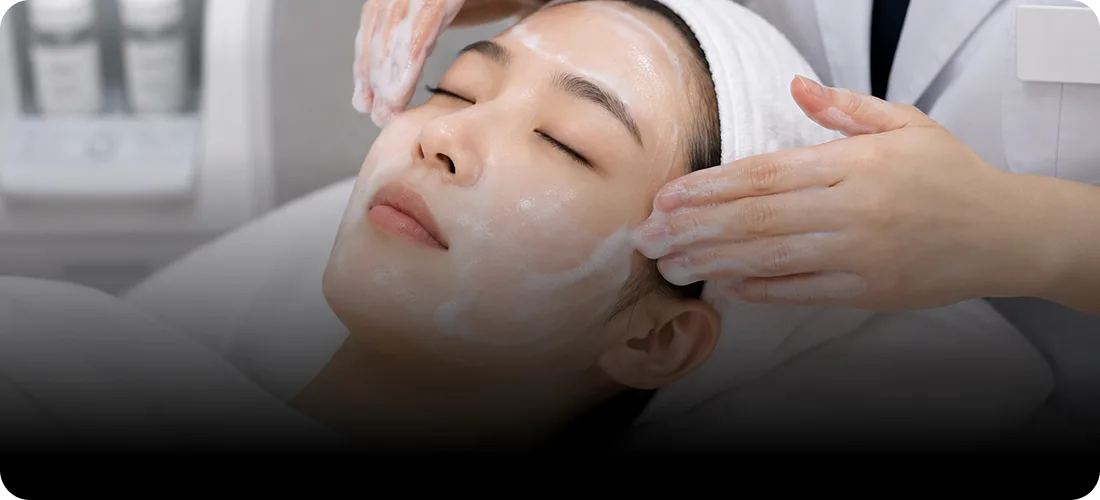
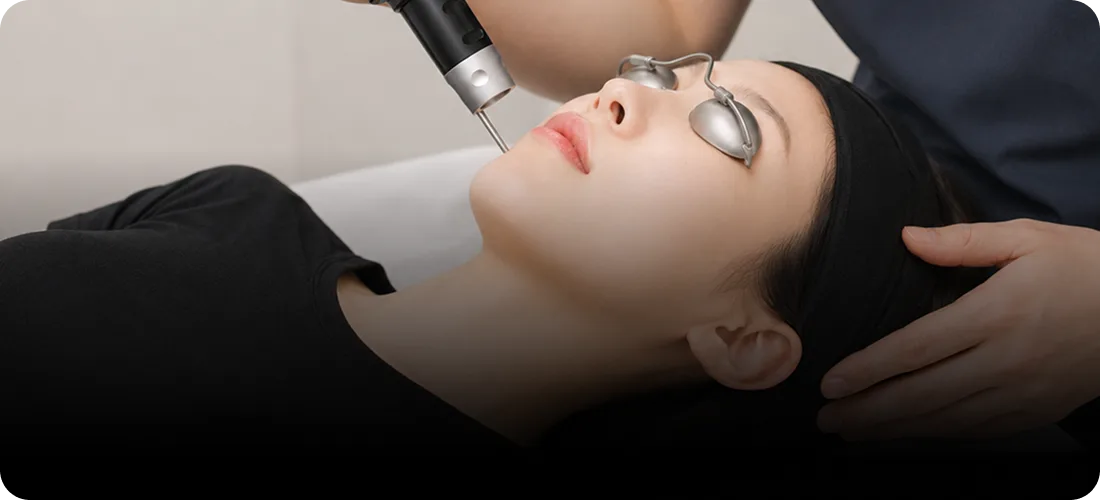
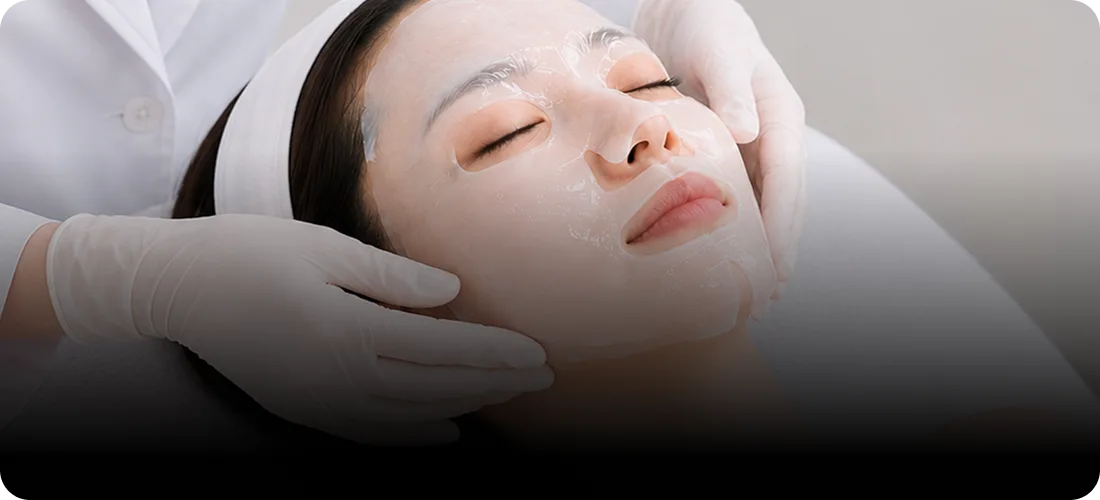
What a Melasma Trip to Korea Actually Buys You — and What Happens After
- A concentrated starting block: the intensive in-clinic passes are grouped into your visit so a course that would take months of scattered appointments back home gets its strongest push in a single trip
- Dual-wavelength reading: Pico laser for epidermal melanin and Genesis 1064nm sub-threshold passes for the dermal component, chosen from what your imaging shows, so a mixed-type case is treated at both depths
- Energy held below the rebound line: passes run at a low, calibrated fluence so pigment is fractured while the reactive melanocytes are left undisturbed, the choice that separates a fade from a flare
- A maintenance plan built to travel: oral and topical tranexamic acid, a home routine, and sun rules are handed over so the pigment work continues in the months after you fly out
- Remote review that follows you home: photo check-ins at three days, four weeks, and twelve weeks, plus a twelve-month follow-up, so the physician tracks the fade across your own seasons and light
- A candid frame on relapse: melasma is chronic, so the plan is written for durable control and seasonal touch-ups, and that relapse risk is talked through before the first toning pass so no one leaves expecting a one-visit finish
| Timeline | What to Expect |
|---|---|
| The intensive block runs; mild pinkness after each toning pass settles in an hour or two, and the tranexamic acid and home plan start before you leave the clinic | |
| A remote photo review confirms the skin settled without a flare, which matters most while you are still traveling and out in unfamiliar sun | |
| The fade builds at home as tranexamic acid and daily defense compound; remote reviews at four and twelve weeks track it and adjust the routine | |
| Many guests hold the result with home care and fly back for a lighter touch-up block; the physician sets the interval that suits how your skin runs |
Treating Melasma at Home vs on a Planned Korea Trip
| Consideration | Scattered local sessions | Planned Korea trip (RE:BERRY Gangnam) |
|---|---|---|
| Course pacing | Spread thin over many months of separate visits | Intensive block concentrated into one stay, then maintained from home |
| Device reading | Often one available laser | Pico laser and Genesis 1064nm chosen by imaging |
| Medical backbone | Variable follow-through between visits | Tranexamic acid plan handed over and reviewed remotely |
| Continuity | May rotate between practitioners | One physician from imaging through the whole block |
| After you leave | Little structured tracking | Photo reviews at 3 days, 4 and 12 weeks, 12-month check |
| Published starting price | Varies by market | ₩300,000 (about $214) |
Why This Matters
A Korea trip earns its place for melasma when the visit is used for the part that benefits from concentration. The intensive toning block, dual-wavelength reading, and a physician-set plan are what RE:BERRY Gangnam packs into your stay. The published starting figure, ₩300,000 (about $214), covers that in-clinic entry point, and the maintenance side is what you run afterward.
The success of a treatment trip lives in the handoff. Oral tranexamic acid at 250mg twice daily, a topical routine, and written sun rules go home with you, and remote reviews at three days, four weeks, and twelve weeks keep the physician in the loop across your own climate. Guests who run the handoff hold their fade; guests who stop at the airport tend to watch it drift back.
KHIDI's 2025 international patient survey found 41.4% of respondents rank keeping the same doctor throughout as their leading criterion. At RE:BERRY the physician who reads your imaging plans the block, runs every pass, and reviews your remote photos, so a plan designed in Seoul stays managed by the same hands after you fly home.
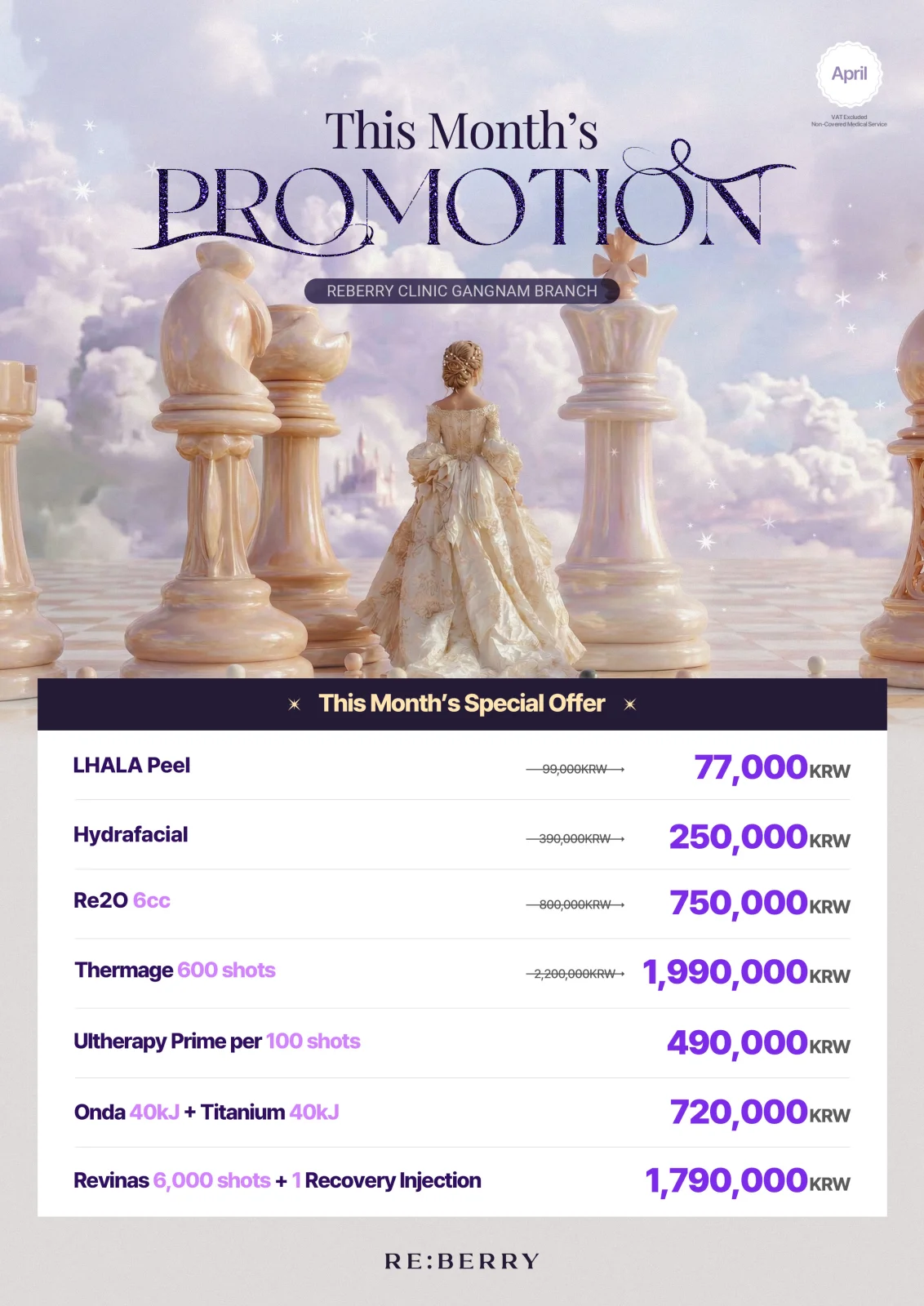
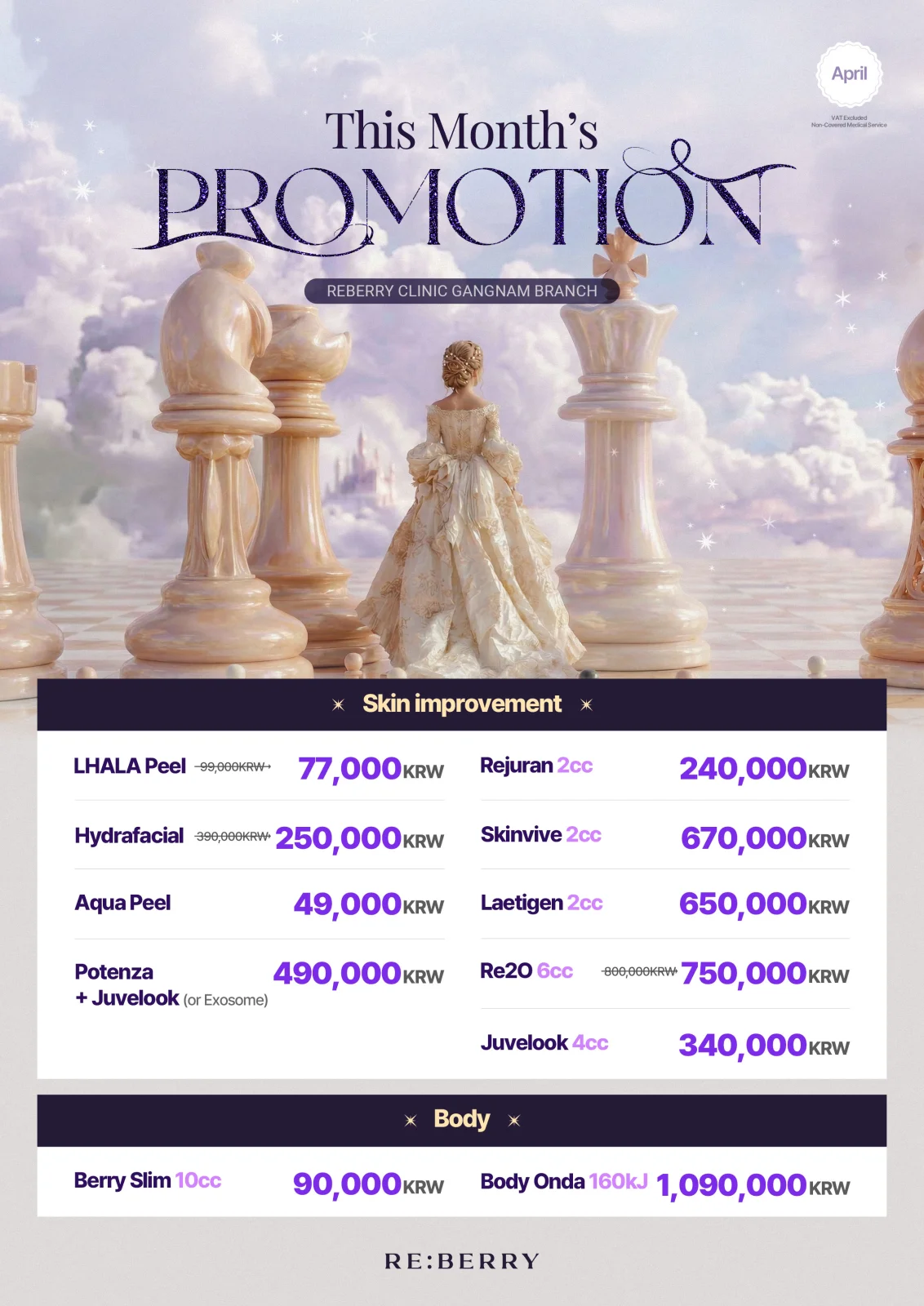
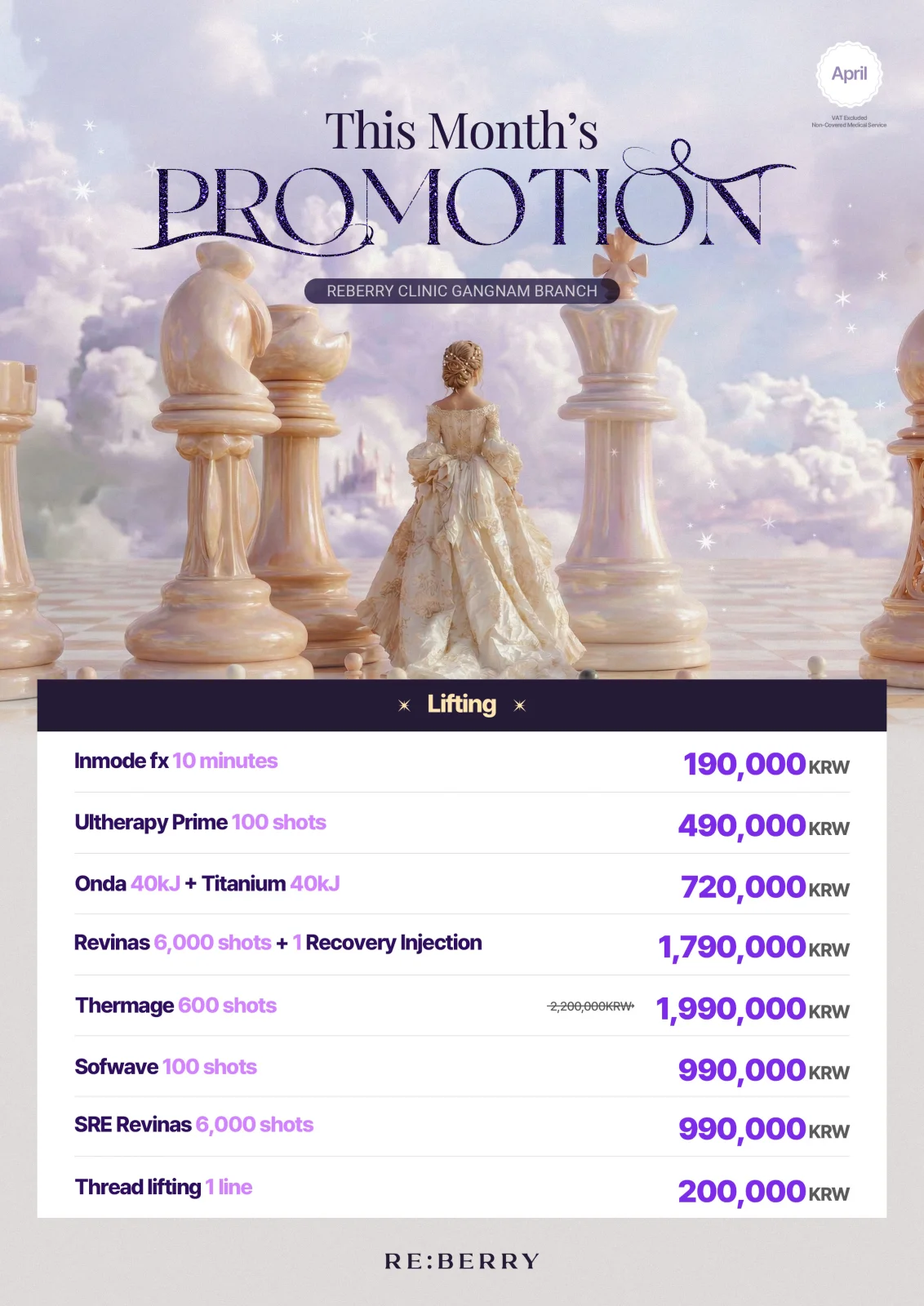
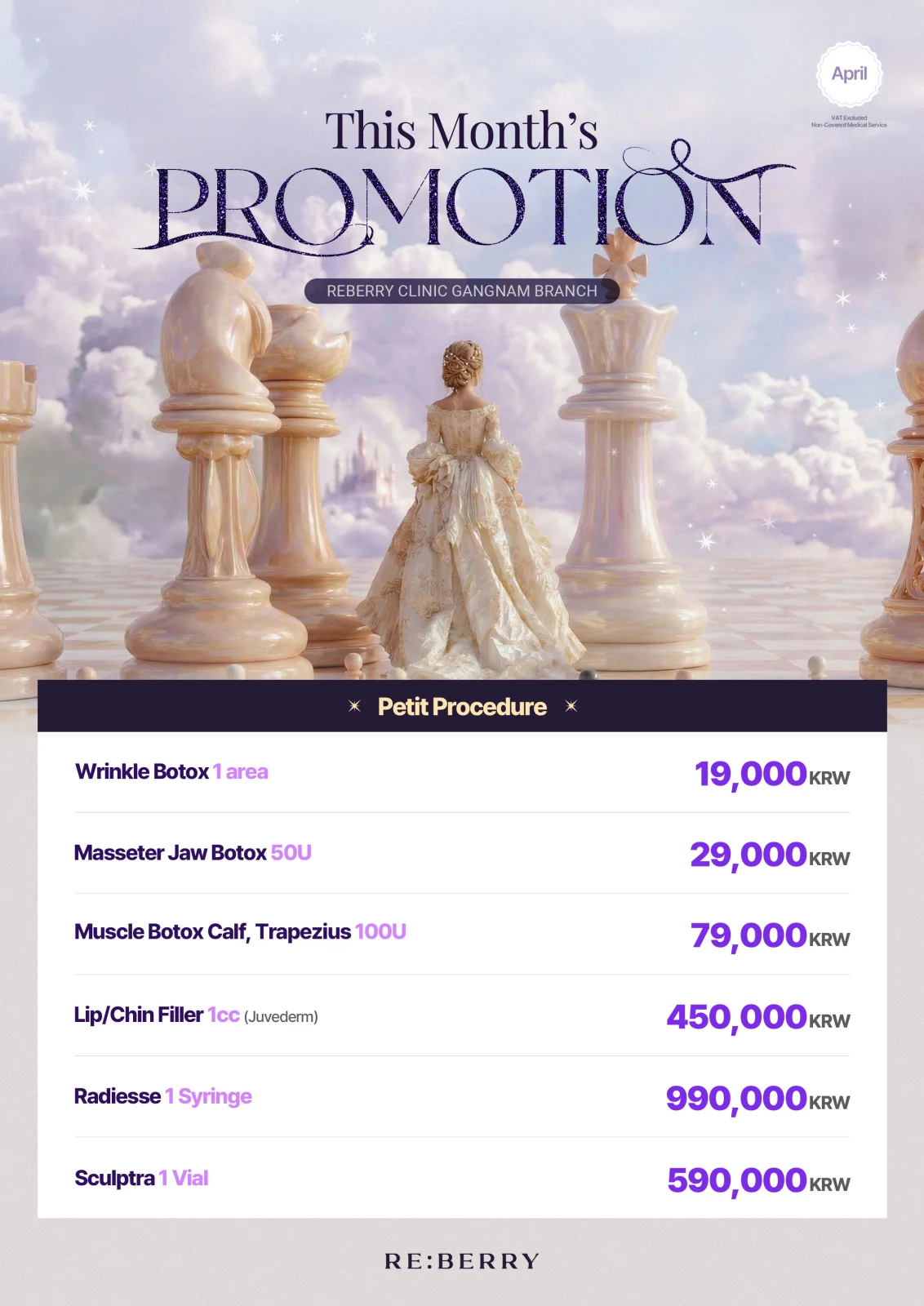
October – December 2026 Promotions
Exclusive packages for international patients. Swipe to see all offers.
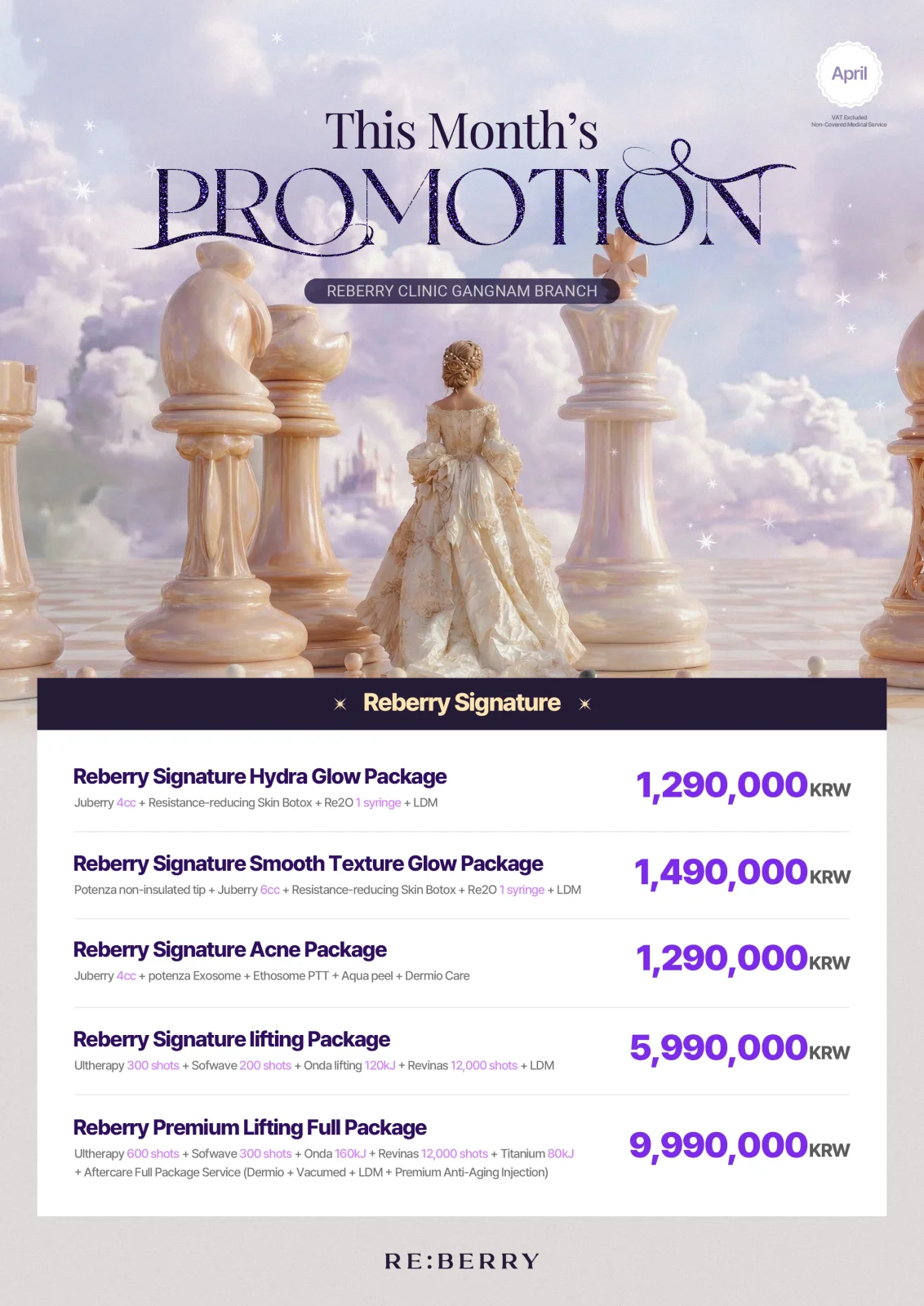
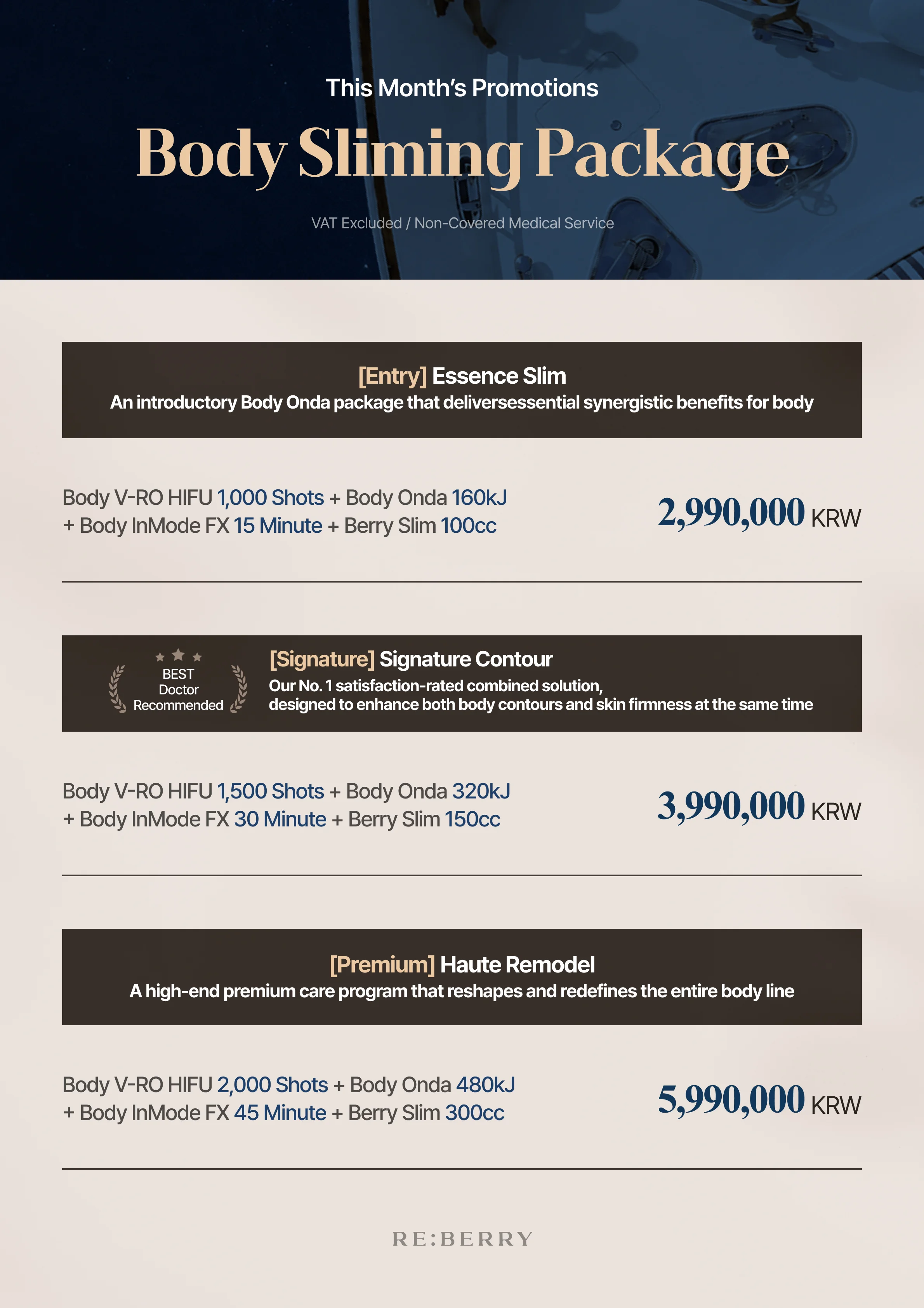
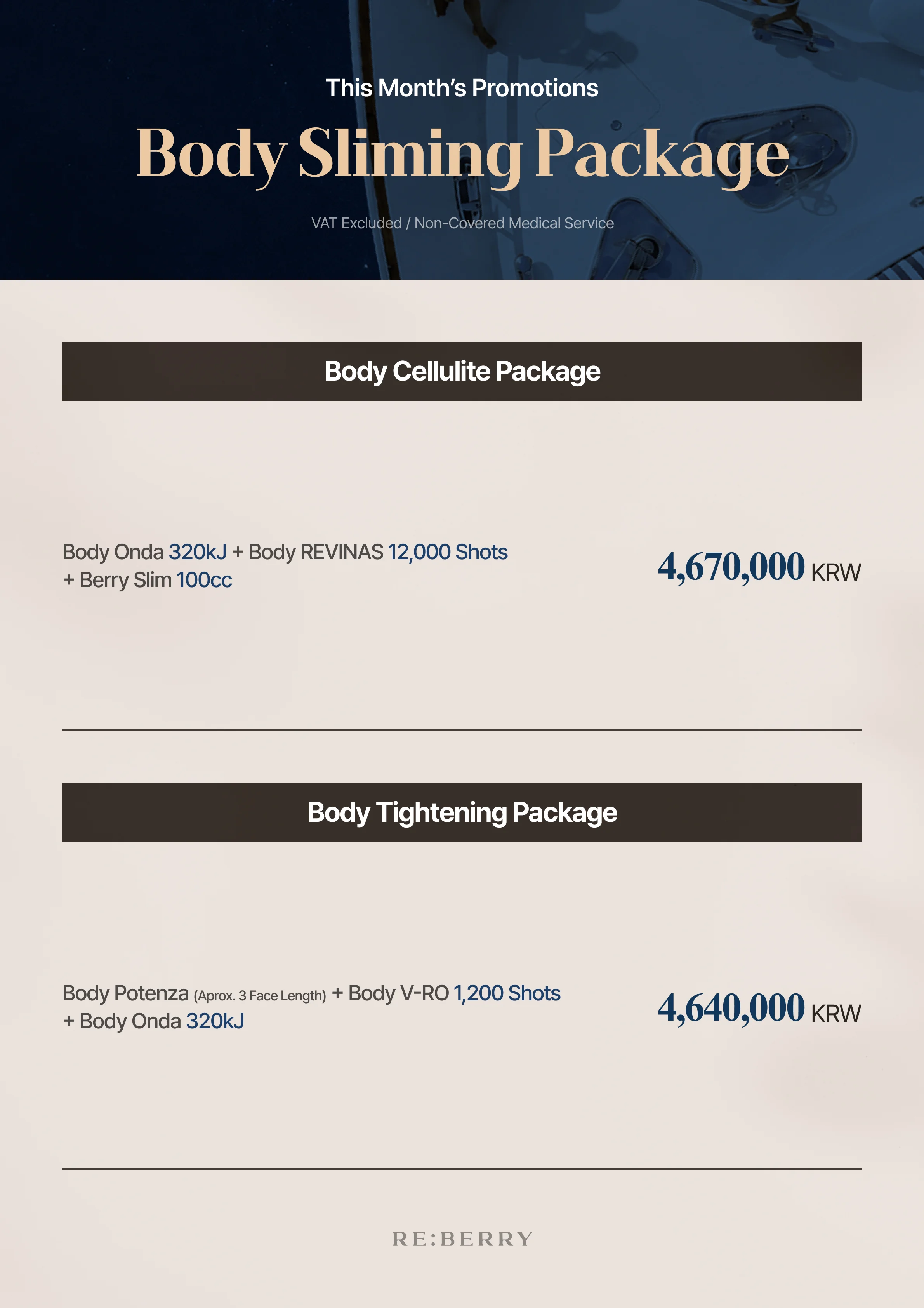
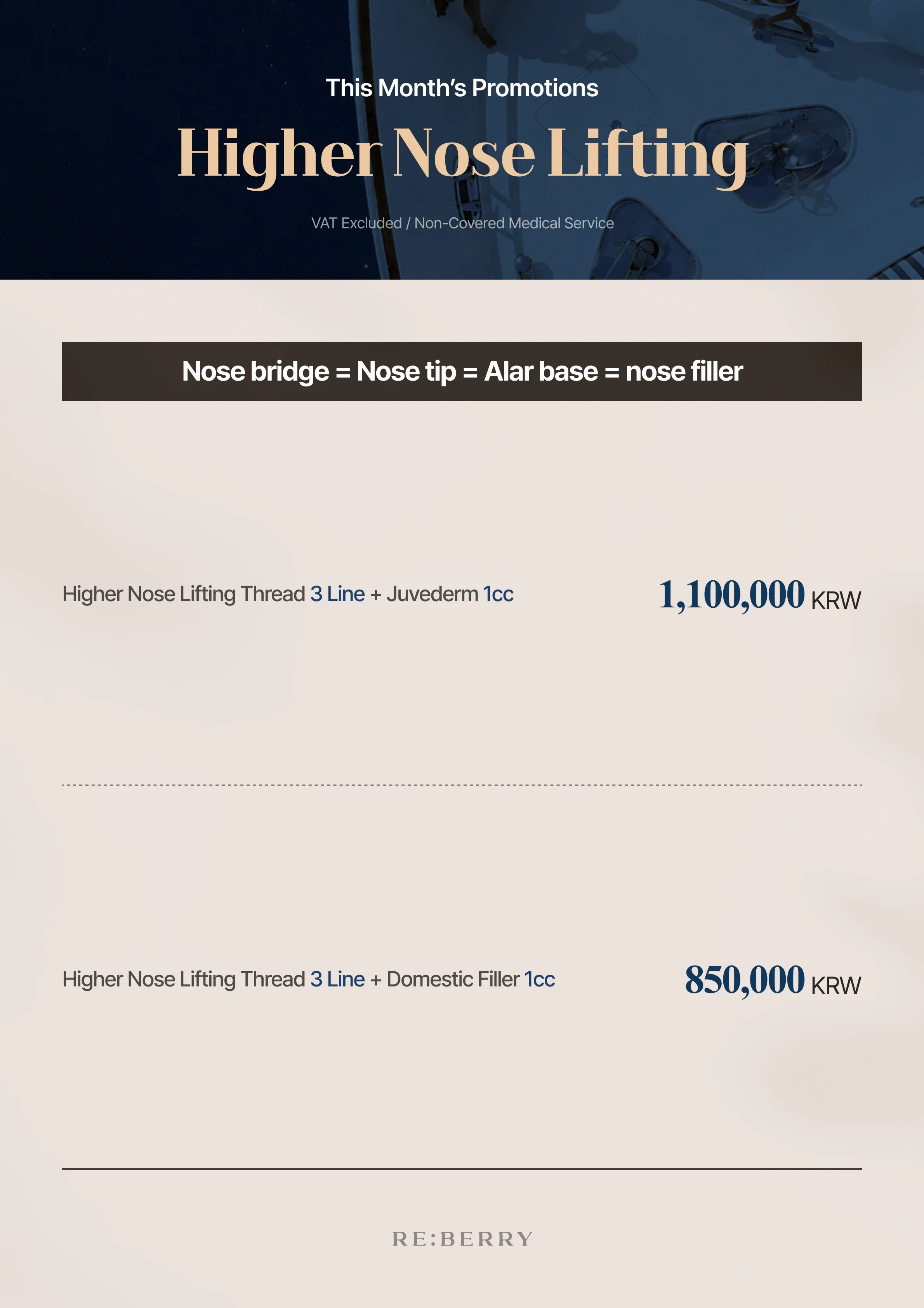
![RE:BERRY Gangnam October–December 2026 Promotion Page 10 — Body Slimming Package: [Entry] Essence Slim, an introductory Body Onda package that delivers essential synergistic benefits for body shaping and contouring: Body V-RO HIFU 1,000 Shots + Body Onda 160kJ + Body InMode FX 15 Minute + Berry Slim 100cc ₩2,990,000 · [BEST · Doctor Recommended] Signature Contour, our No. 1 satisfaction-rated combined solution, designed to enhance both body contours and skin firmness at the same time: Body V-RO HIFU 1,500 Shots + Body Onda 320kJ + Body InMode FX 30 Minute + Berry Slim 150cc ₩3,990,000 · VAT excluded](https://cdn-reberry.pages.dev/gangnam/promotion/en/gangnam-event-en-10.webp)
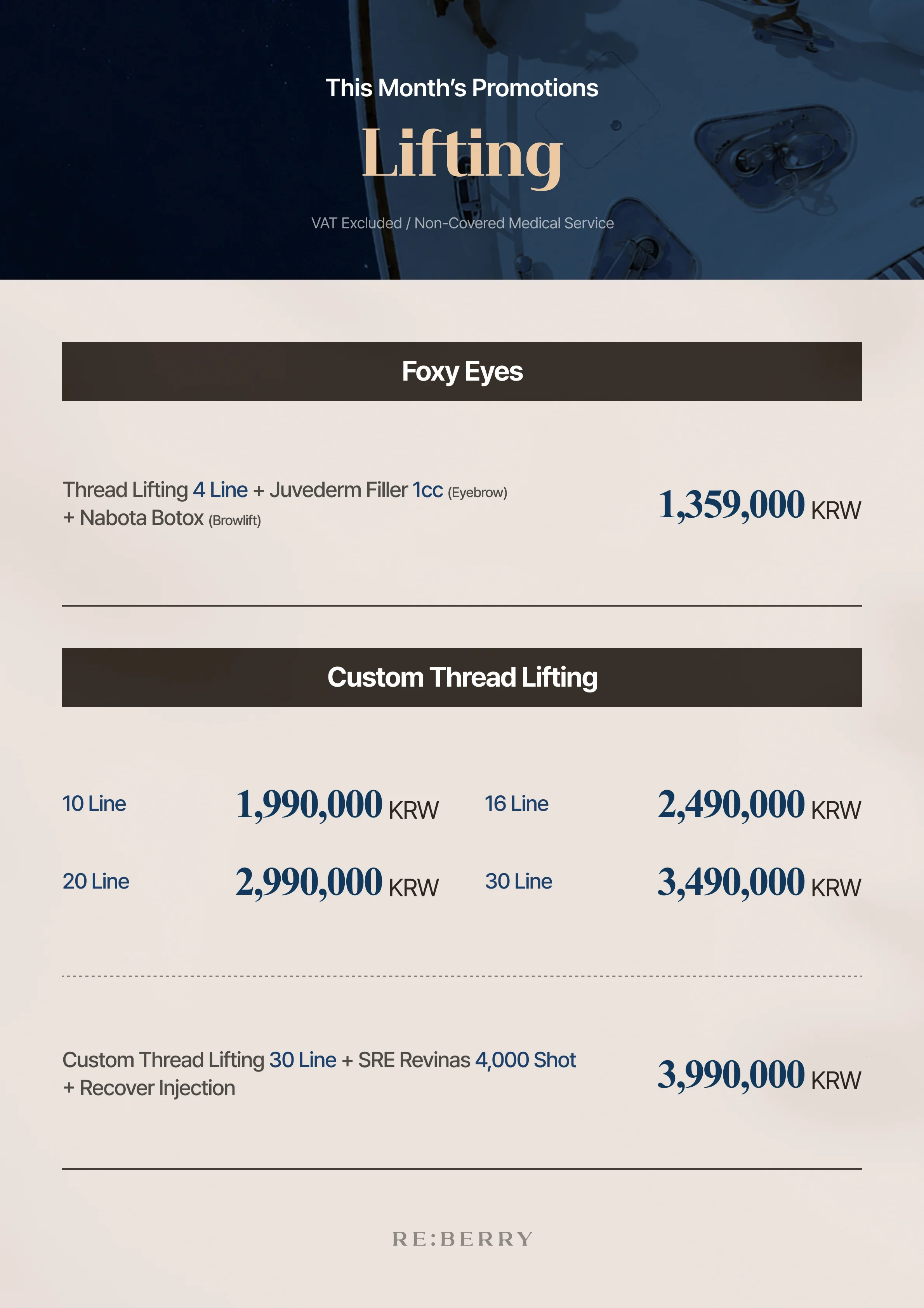
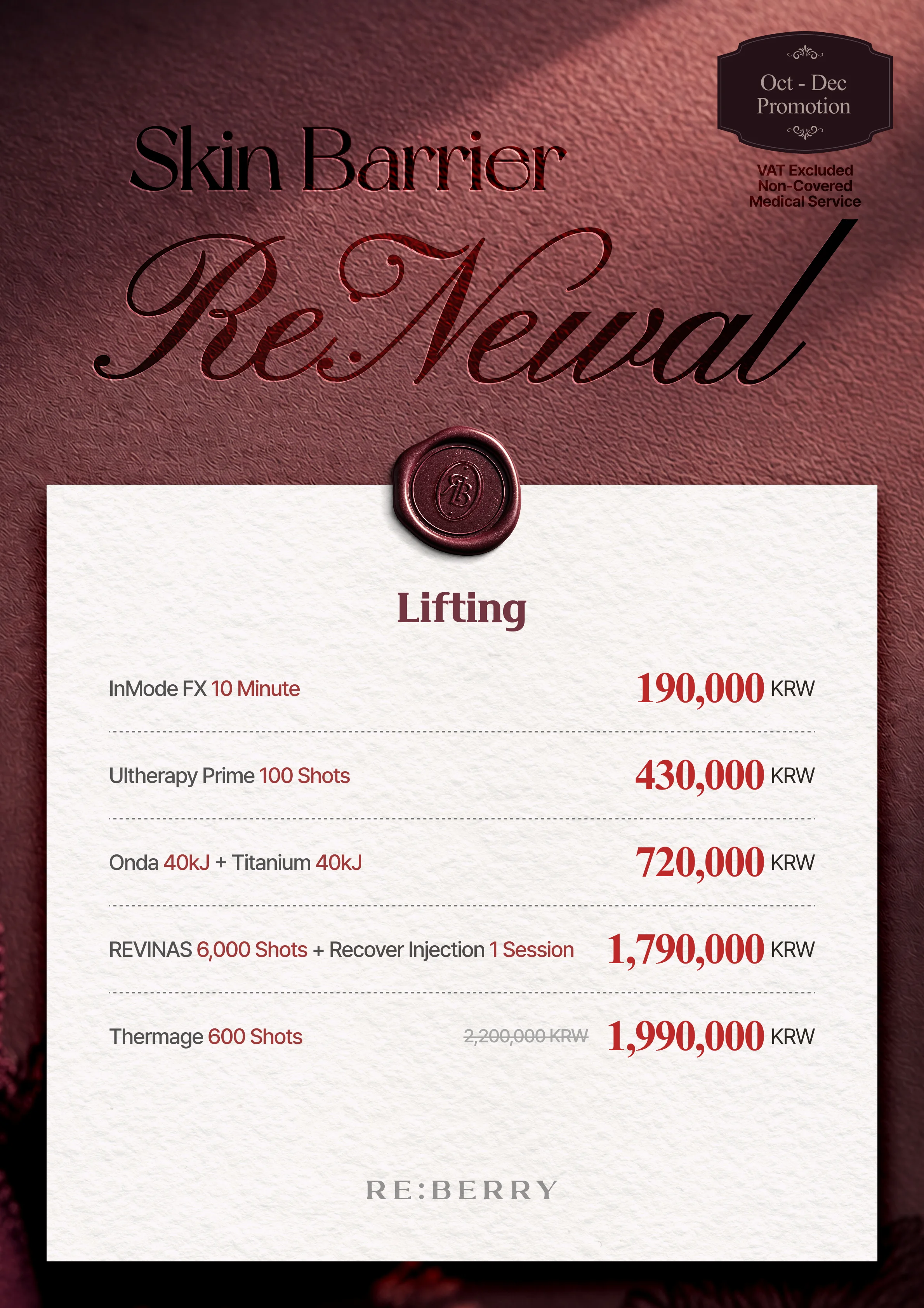
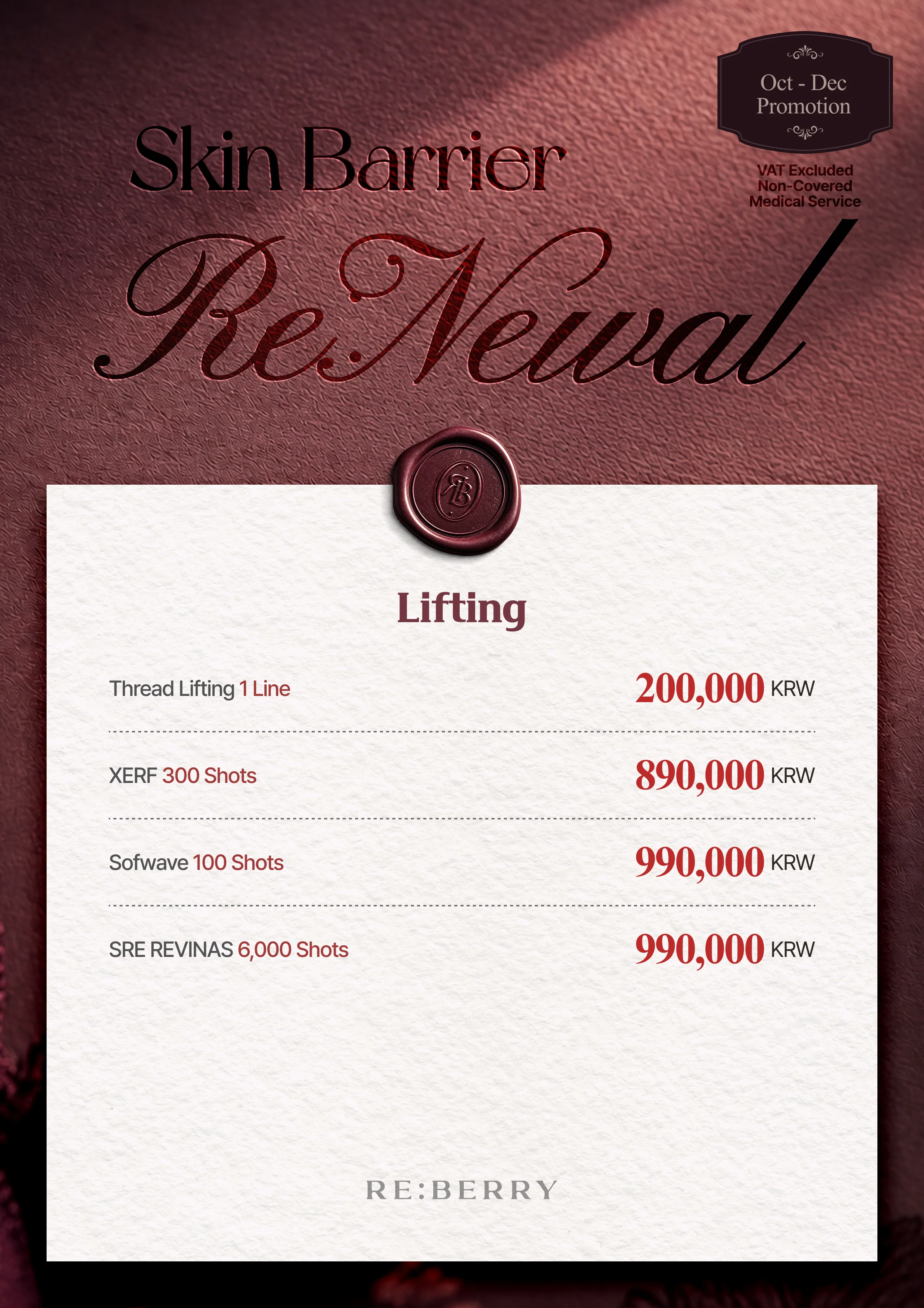
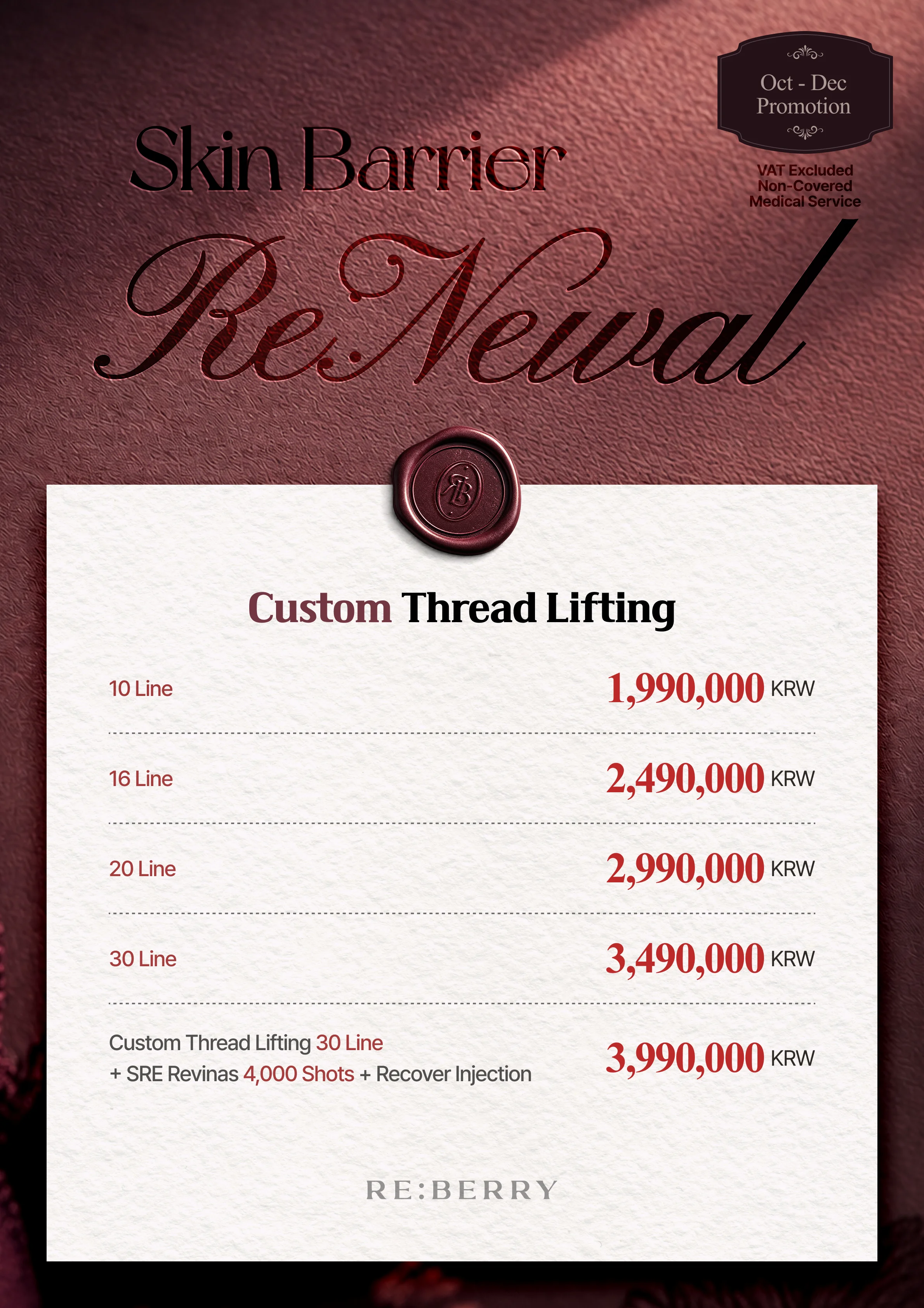
Published Melasma Pricing in Korea (VAT Excluded)
Your Medical Director
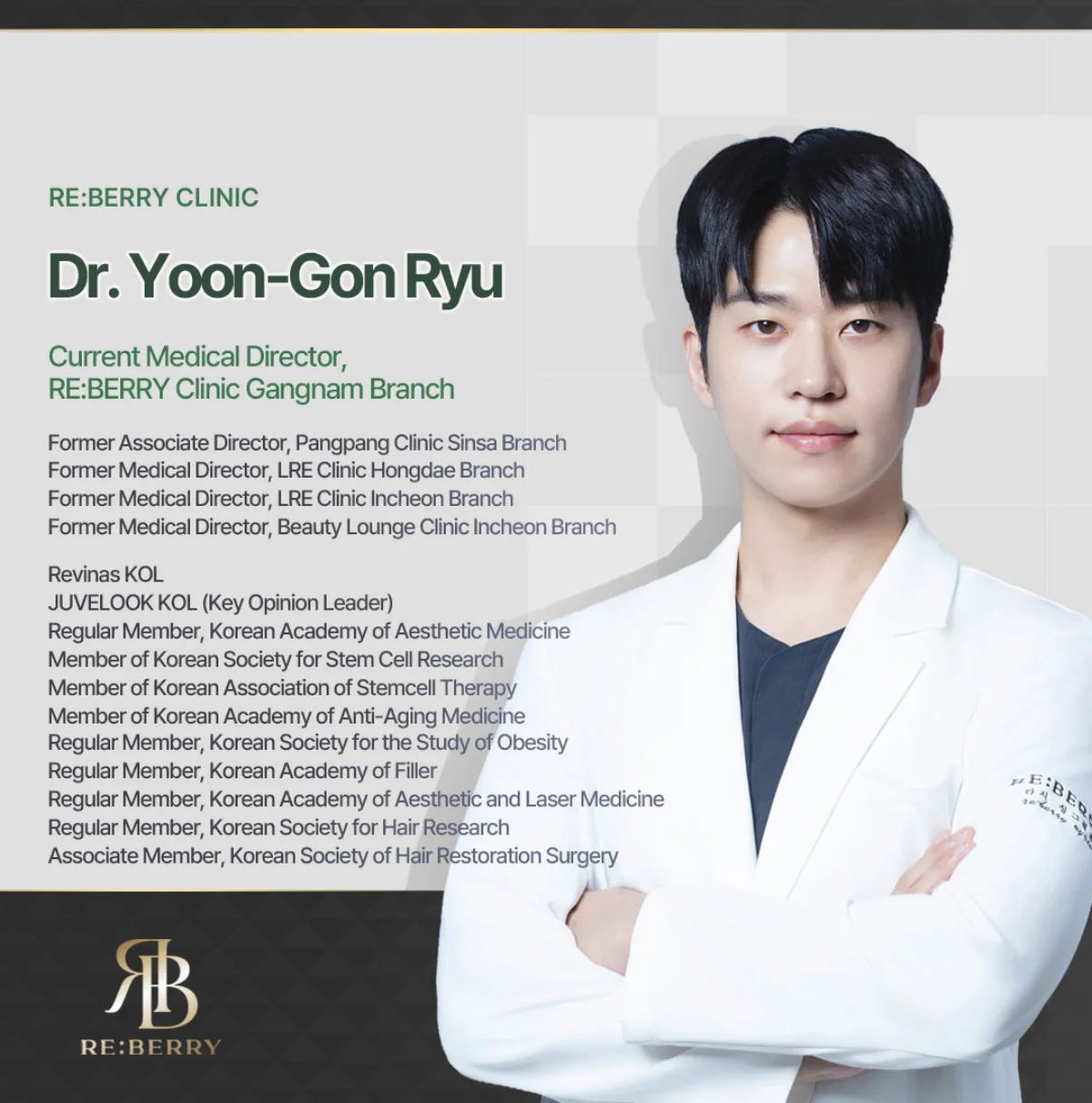
Dr. Yoon-Gon Ryu
- Medical Director, RE:BERRY Aesthetic Clinic Gangnam — Korean MOHW Medical License No.131644
- Manufacturer-appointed KOL invited to teach injection and energy-device technique to Korean peers
- Regular Member, Korean Academy of Aesthetic Medicine
- Co-manages every case with Dr. Yejin Oh (Korean MOHW Medical License No.144238)
- Featured in Authority Magazine (2026)
Medically reviewed by Dr. Yoon-Gon Ryu, CEO / Medical Director, RE:BERRY
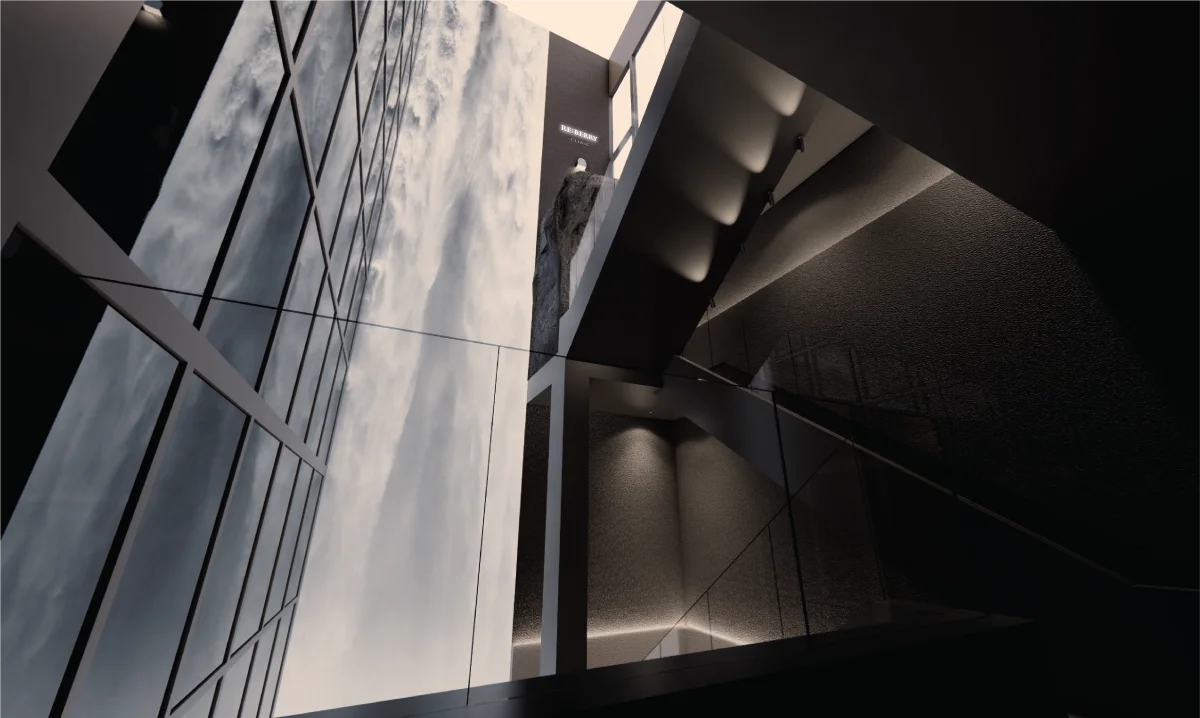
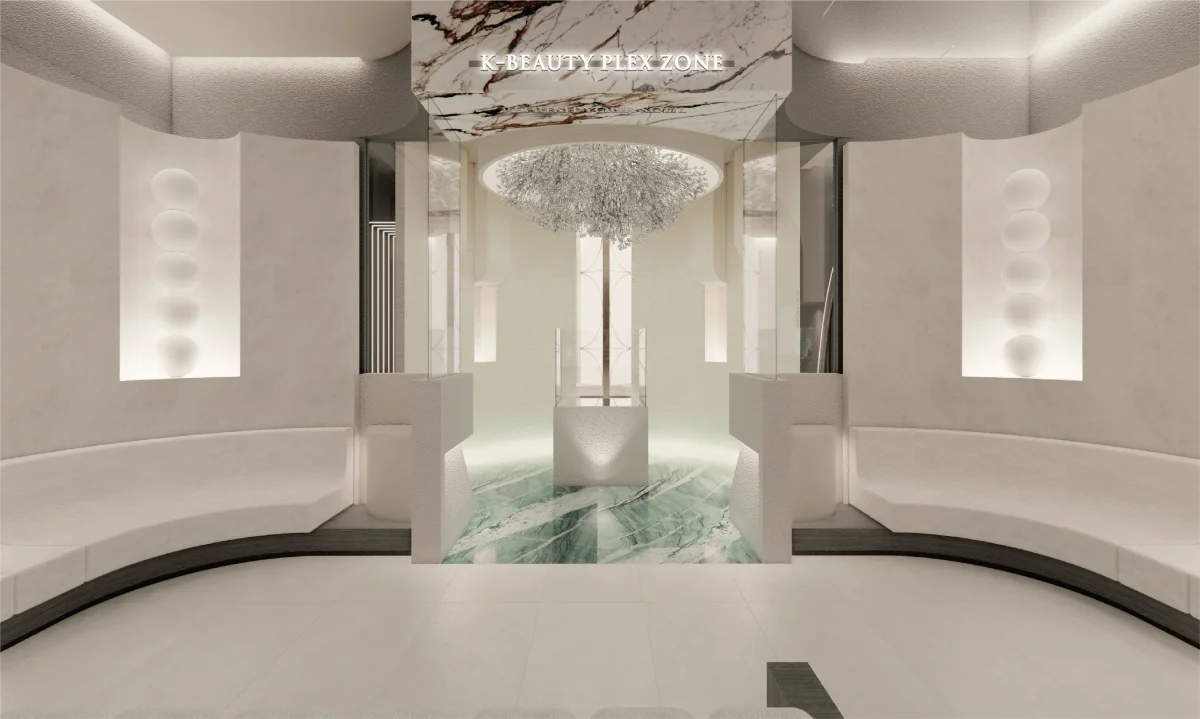
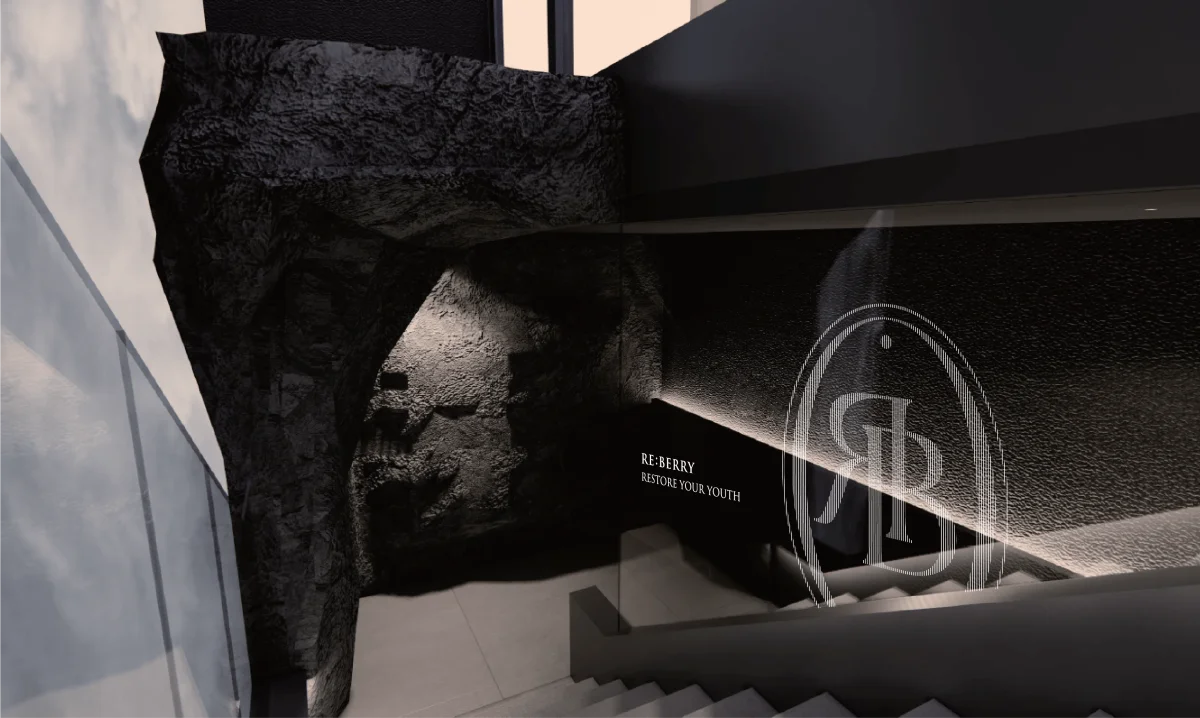
A Fourteen-Thousand-Square-Foot Hush Above Gangnam-daero
Step past the black gallery facade and the bustle of Gangnam-daero falls away. Fourteen thousand square feet of hushed corridors, marble installations, a cascading water feature and fully enclosed consultation suites — arranged so you rarely cross paths with another guest, because our appointment-first diary keeps every hour deliberately underbooked.
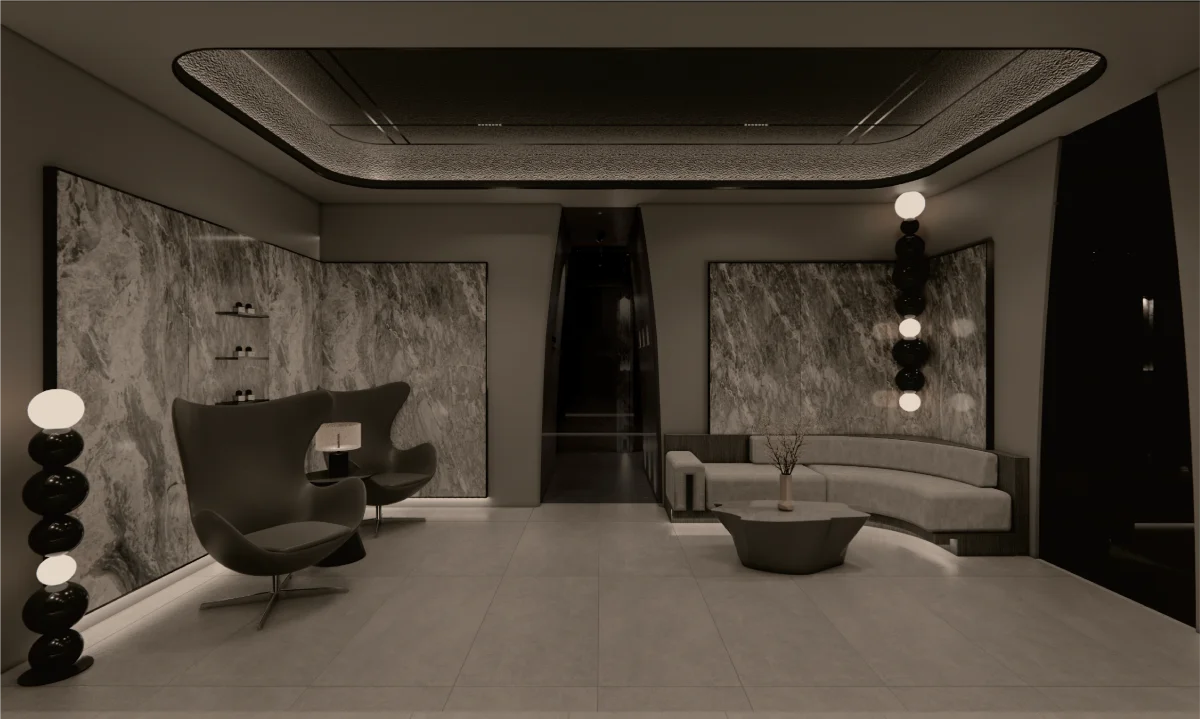
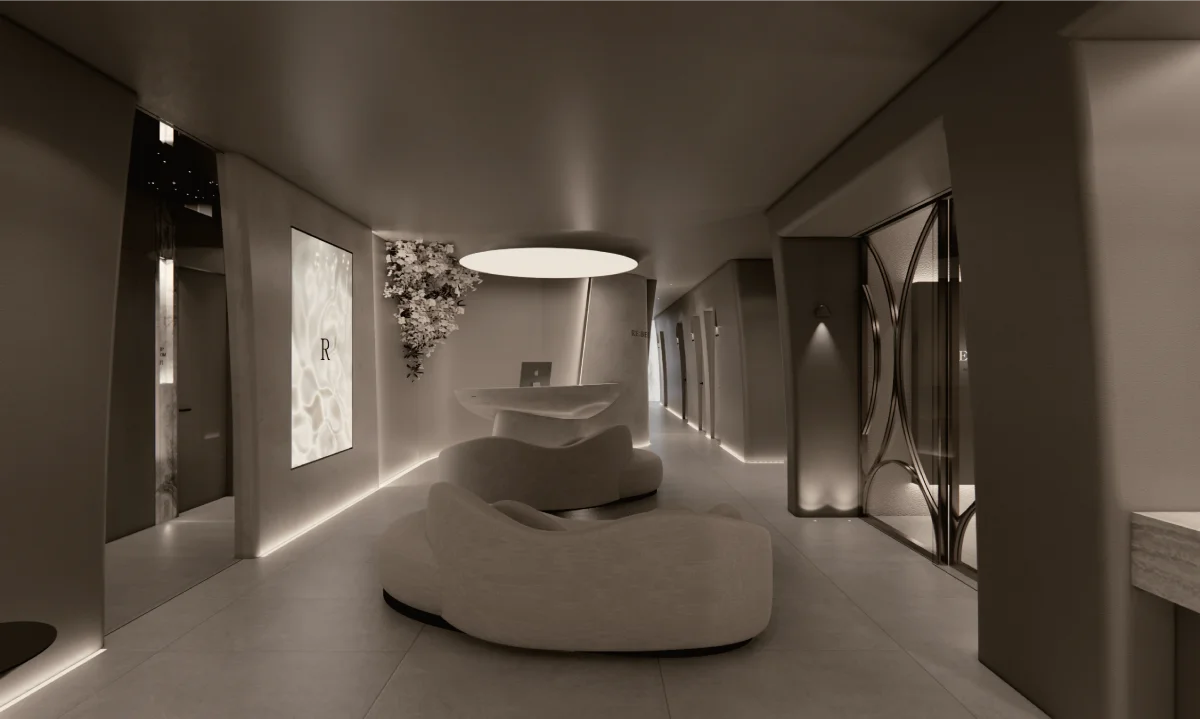
(1,322 m²)
Suites
KI Tower, Gangnam-daero
Station Exit 10
The Evidence Behind Treating Melasma as a Managed, Long-Term Condition
Melasma is a chronic disorder of overactive, easily provoked melanocytes, not a stable deposit of pigment. Reviews of its pathogenesis point to hormonal, vascular, and ultraviolet drivers that keep the process running long after any single session. That biology is why a durable plan matters more than a dramatic clearance, and why the physician reads depth and reactivity before choosing a setting.
Lee AY. An updated review of melasma pathogenesis. Dermatologica Sinica. 2014;32(4):233-239. doi:10.1016/j.dsi.2014.09.006
Laser light can target pigment at all because of selective photothermolysis: a pulse tuned to melanin's absorption deposits energy in the pigment while sparing surrounding tissue, the principle Anderson and Parrish set out in 1983. In melasma that principle has to be applied gently, and the picosecond laser has been studied specifically for the reactive Asian skin RE:BERRY sees most: a study of refractory melasma reported meaningful improvement with a picosecond platform when energy was kept restrained, supporting the low-fluence pico laser approach used in the intensive block.
Anderson RR, Parrish JA. Selective photothermolysis: precise microsurgery by selective absorption of pulsed radiation. Science. 1983;220(4596):524-527. doi:10.1126/science.6836297
Polnikorn N, Tanghetti EA. Treatment of refractory melasma in Asians with the picosecond alexandrite laser. Dermatol Surg. 2020;46(12):1651-1656. doi:10.1097/dss.0000000000002612
For the deeper dermal component, low-fluence 1064nm work has its own evidence base: a prospective split-face study found a low-fluence picosecond 1064nm Nd:YAG laser effective and well tolerated for melasma, consistent with the sub-threshold Genesis passes used where pigment reads deeper. None of the in-clinic work holds without the pillar patients most often drop, though. Cosmeceutical and topical management supports the fade between sessions, and every review of hyperpigmentation returns to ultraviolet control as the factor that keeps melasma from reactivating. RE:BERRY therefore writes daily defense and a tranexamic acid regimen into the plan you carry home.
Lee SY, Kim HR, Park JS, et al. The efficacy and safety of a low-fluence 1064 nm picosecond Nd:YAG laser compared with those of a low-fluence PTP mode 1064 nm Q-switched Nd:YAG laser for treatment of melasma: a prospective split-face study. Dermatol Ther. 2023;2023:5961152. doi:10.1155/2023/5961152
Sarkar R, Arora P, Garg KV. Cosmeceuticals for hyperpigmentation: what is available? J Cutan Aesthet Surg. 2013;6(1):4-11. doi:10.4103/0974-2077.110089
Questions International Guests Ask About Melasma Treatment in Korea
Is it actually worth flying to Korea to treat melasma?
It is worth it when you use the trip for what benefits from concentration. Melasma is a managed course, not a one-off, so RE:BERRY Gangnam packs the intensive in-clinic block into your stay — dual-wavelength toning read on imaging by one physician — then hands you a plan to run from home. If you expect a strong, well-designed start and are ready to maintain it, the trip pays off.
How long a trip do I need for a melasma block?
It depends on how your pigment reads on Mark-Vu imaging and how reactive your skin runs, so the exact number of in-clinic sessions is set at your first visit. Many travelers group the concentrated passes across a week to ten days in Seoul. Message RE:BERRY on WhatsApp with photos beforehand so the coordinator can size the block to your dates before you commit to flights.
Which lasers are used, and why two of them?
The physician reads pigment depth first and matches the wavelength to it. Pico laser handles epidermal melanin, while sub-threshold Genesis 1064nm passes reach the dermal component that sits deeper. Using both, chosen from your imaging, is how a mixed-type case gets treated at both layers, so the deeper pigment is not left behind while only the surface clears.
What exactly do I take home after the visit?
You leave with the maintenance side already running: oral tranexamic acid at 250mg twice daily for the weeks ahead, a topical routine, a printed aftercare protocol, and sun rules written for your skin. Remote photo reviews are scheduled at three days, four weeks, and twelve weeks, with a twelve-month check included. The handoff is the part that decides whether the fade holds.
How do the remote follow-ups work once I fly home?
Your progress is tracked on WhatsApp or LINE in five languages. You send photos at the set intervals, and the physician reviews the fade, confirms the skin has not flared, and adjusts the tranexamic acid or home routine if your climate or sun exposure changes it. This is how a plan designed in Seoul stays managed after you are back in your own light.
Will my melasma come back after I leave Korea?
Melasma is chronic and relapsing, so the aim of a Seoul melasma block is durable control that you keep maintaining after the flight home. The plan is built for that: the intensive block gives the biggest push, and the tranexamic acid, home care, and daily sun defense you run afterward hold the ground. Guests who keep the maintenance side going, and who fly back for a lighter touch-up block, generally hold their result far better than those who stop at the airport.
How is melasma different from ordinary dark spots I could treat anywhere?
A freckle or sunspot sits shallow and can often be cleared in a session or two with firmer settings. Melasma is diffuse, symmetrical, and driven by active cells that darken when treated aggressively. That difference is why the physician confirms which one you have on imaging before choosing any energy — the pass that clears a sunspot is exactly the pass that can worsen melasma.
I had strong laser elsewhere and my melasma got worse. Is a Korea trip a risk?
That darkening after over-treatment is a common pattern, and the low-fluence design is built for it. The physician reads your reactivity on imaging first and holds energy well below the provocation threshold, leaning on the tranexamic acid and sun-defense plan to carry the fade. Power in the room is deliberately kept off the table. The point of the trip is a careful melasma reset that steers clear of whatever darkened the skin last time.
Is there downtime that could ruin my Seoul itinerary?
Downtime is light by design. Mild pinkness after a low-fluence toning pass usually settles in one to two hours, makeup is fine about an hour after a session, and there is no crusting or peeling, so sightseeing the same day is realistic. Because the energy is kept gentle, the sessions slot into a travel week without stranding you in your hotel.
Can I fly home on the same day as a melasma toning session?
Yes. There are no same-day flight restrictions after a low-fluence toning pass, so a session on a departure day is fine. The one thing the physician stresses is sun protection while you travel, since unfamiliar bright light is a common trigger. Your three-day remote check is set precisely so any settling can be reviewed while you are on the move.
What does tranexamic acid do, and why is it prescribed for weeks?
Tranexamic acid lowers the pigment signal at its source, working between and after the laser sessions as well as on the days you are in the chair. At RE:BERRY it is prescribed orally at 250mg twice daily across a defined stretch of weeks and reviewed remotely, so the fade keeps building once you are home. It is the medical backbone that turns an in-clinic block into a lasting course.
Do the staff speak my language, and how do I reach the clinic?
Interpreters and remote support cover five languages, including English, Simplified Chinese, Traditional Chinese, Japanese and Spanish. You can reach RE:BERRY by phone at +82-2-2039-2822 or on WhatsApp at +82-104-201-9133. Sending photos and your pigment history on WhatsApp first lets the coordinator flag your case and reserve enough time for imaging plus your first session.
Where do I go for my melasma sessions in Gangnam, and how do I get there from Incheon?
RE:BERRY sits in KI Tower on Gangnam-daero in Seocho-gu, a 2-minute walk from Gangnam Station Exit 10 on Seoul Metro Line 2. Landing at Incheon, allow roughly 45 to 60 minutes on AREX and the subway, or take a taxi straight to KI Tower before your first imaging slot. The clinic is open 10:00 to 20:00 every day of the year, which makes it easy to slot sessions around a packed travel schedule.
Why choose RE:BERRY for melasma as an overseas visitor?
RE:BERRY treats melasma as a managed condition planned around your trip: imaging first, an intensive dual-wavelength block during your stay with energy held below the rebound line, then a tranexamic acid and sun-defense handoff you run from home with remote reviews at three days, four weeks, and twelve weeks. One physician holds the case throughout, the starting price is published at ₩300,000 (about $214), and interpreters cover five languages on-site.
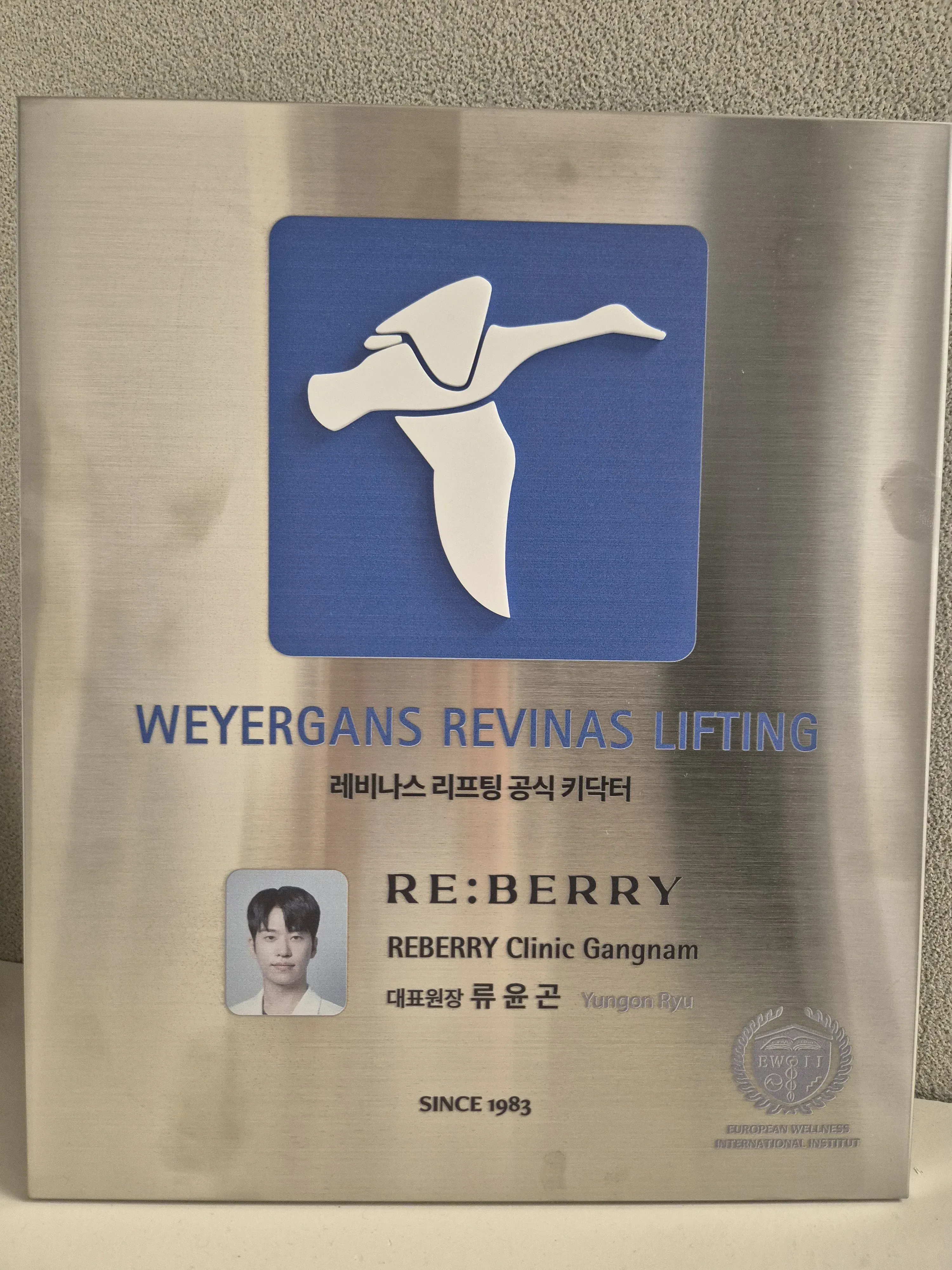
Only Authentic, Brand-Certified Equipment
Every device at RE:BERRY is MFDS-certified and manufacturer-verified. We never use counterfeit or grey-market equipment.
Plan Your Melasma Block in Korea
Send your pigment history and travel dates to RE:BERRY on WhatsApp — a coordinator replies as soon as possible, and the physician who reads your imaging designs the in-clinic block and the plan you carry home. Nothing is scheduled until you confirm, and the melasma starting price is published at ₩300,000 (about $214).
Why Tens of Thousands of Foreign Patients Are Choosing This Gangnam Clinic — Business Wire, 2026-04-13
Numbers That Tell Our Story
Cumulative across RE:BERRY clinics (Gangnam · Myeongdong · Incheon Airport).
Brand-Authenticated Equipment & Training




Our doctors are certified by Korea's top dermatological societies








Latest from Our Instagram
Real treatments, patient reactions, and behind-the-scenes from RE:BERRY.
Tap any video for sound & fullscreen
What our patients say
Real verified reviews from our Google Business Profile
I had a really nice experience at Reberry Clinic Gangnam. I received a Hydrafacial treatment, and the whole process was very comfortable. The staff were kind and explained everything clearly, and the clinic itself felt clean and relaxing. I also loved the interior — the clinic felt very clean, elegant, and luxurious, w...
I had such an amazing experience at this clinic! The clinic itself is absolutely stunning the design is beautiful, elegant, and luxurious, and the service is truly top-notch. Everything was so well organized, and I felt very comfortable from the moment I walked in.
I had a Korean filler treatment to reduce my nasolabia...
i had a good time having the Juvelook treatment!
It was my first time in Korea, all the Doctor & team are bery helpful. Dr. Ian & cheong a lee(jenny) are really helpful.
I understand more about my skin.
The clinic is calm, welcoming.
there are many activities i didn’t expect to find in a beauty clinic; phot...
So happy to found the beauty clinic in Korea that very inclusive and Muslim friendly. They have a prayer space for muslim and they prepare a female doctor for me. The clinic is so comfortable with aesthetic design make me feel relaxed. The doctor and the staff are very professional and helpful so all of the procedure r...
As someone who has struggled with acne since middle school, I decided to stop here during a layover in Seoul and was amazed by the treatment.
Firstly, the environment is elegant and peaceful. Feels very luxurious and the treatment from staff was as such as well. Speaking of staff, they were extremely professional, car...
Book Your Personalized Consultation
Share your details and our multilingual team will contact you as soon as possible through your preferred messenger.
- ✓ Free online skin consultation with a doctor
- ✓ Personalized treatment plan & pricing
- ✓ 5-language support (EN/ZH-CN/ZH-TW/JA/ES)
- ✓ Response as soon as possible via your preferred messenger
Science Melasma as a managed condition — peer-reviewed references
Planning melasma treatment around a trip rests on a small set of durable findings. Reviews of melasma pathogenesis (Lee 2014) frame it as a chronic disorder of reactive melanocytes with hormonal, vascular, and ultraviolet drivers, so a maintenance plan outweighs a single clearance. Selective photothermolysis (Anderson 1983) explains how laser energy can target pigment at all, and why it must be dialed down for melasma's reactive cells. Picosecond alexandrite work in Asian skin (Polnikorn 2020) and a low-fluence picosecond 1064nm split-face study (Lee 2023) support the restrained dual-wavelength toning used during the visit, while hyperpigmentation cosmeceutical management (Sarkar 2013) underpins the home-care and sun-defense pillar carried afterward.
- Lee AY. An updated review of melasma pathogenesis. Dermatologica Sinica. 2014;32(4):233-239. doi:10.1016/j.dsi.2014.09.006
- Anderson RR, Parrish JA. Selective photothermolysis: precise microsurgery by selective absorption of pulsed radiation. Science. 1983;220(4596):524-527. doi:10.1126/science.6836297
- Polnikorn N, Tanghetti EA. Treatment of refractory melasma in Asians with the picosecond alexandrite laser. Dermatol Surg. 2020;46(12):1651-1656. doi:10.1097/dss.0000000000002612
- Lee SY, Kim HR, Park JS, et al. The efficacy and safety of a low-fluence 1064 nm picosecond Nd:YAG laser compared with those of a low-fluence PTP mode 1064 nm Q-switched Nd:YAG laser for treatment of melasma: a prospective split-face study. Dermatol Ther. 2023;2023:5961152. doi:10.1155/2023/5961152
- Sarkar R, Arora P, Garg KV. Cosmeceuticals for hyperpigmentation: what is available? J Cutan Aesthet Surg. 2013;6(1):4-11. doi:10.4103/0974-2077.110089
These references shape how RE:BERRY's Gangnam aesthetic clinic plans melasma for visitors: pigment depth and reactivity read on imaging before any energy is chosen; a restrained dual-wavelength block concentrated into the trip; and a tranexamic acid, home-care, and sun-defense plan run remotely afterward with photo reviews across the months that follow. Standardized-lighting imaging documents the fade, and the same licensed physician manages the plan from the first visit through maintenance. This information is for educational purposes only and is not medical advice.
How to Find RE:BERRY Gangnam
2 minutes from Gangnam Station Exit 10. B1–B2, KI Tower — the building with the all-black entrance you can't miss.
RE:BERRY Clinic Gangnam
B1–B2, KI Tower, 69-gil 8, Gangnam-daero, Seocho-gu, Seoul
서울시 서초구 강남대로69길 8, 지하1·2층 (KI타워)
Also available at: Myeongdong · Incheon Airport