Laser Tattoo Removal in Korea — Built Around a Single Seoul Trip
Laser tattoo removal at RE:BERRY is a course, not a single visit, so one Seoul trip is planned as a graded first pass plus an honest reading of the whole tattoo, with the follow-up mapped out before you fly — steps from Gangnam Station in Seoul.
Tattoo Removal
Tattoo Removal
Laser Tattoo Removal on One Seoul Trip
Laser tattoo removal at RE:BERRY is a course, not a single visit, so one Seoul trip is planned as a graded first pass plus an honest reading of the whole tattoo, with the follow-up mapped out before you fly — steps from Gangnam Station in Seoul.

Across RE:BERRY Clinics
1,000,000+ Treatments
Direct Consult & Treatment
Medical Director
From Gangnam Station Exit 10
2-Min WalkCan I get my tattoo fully removed in one trip to Korea?
Almost never, and any clinic promising otherwise is worth a second look. Tattoo removal works across a course of sessions, typically several, set weeks apart so the immune system can clear the ink a picosecond pass has fractured. What one Seoul visit realistically gives you is two things of real value: a first treatment pass delivered by a licensed physician, and a graded, in-person assessment of your specific tattoo that turns a vague hope into a plan you can act on. At RE:BERRY Clinic Gangnam the first visit scores your tattoo for colour, density, layering, and skin tone, quotes a predicted session range in writing, treats the piece once, and then sets up the follow-up — a return trip if you can, or coordination with a laser near home for the passes in between. The trip starts the removal and draws a realistic map of the passes ahead, though it will not be the finish line. Complete clearance is a goal the physician works toward with you, never a promise.
Effects & Progress
Effects & Progress
Each picosecond pulse lands as a photoacoustic shock that fractures the tattoo ink by mechanical force rather than heat, cracking the pigment into fragments the immune system can carry off over the weeks between visits.
The treated tattoo frosts to a pale white within seconds as gas releases from the shattered pigment, then settles into mild redness and swelling; a dressing goes on and you keep the area clean, covered, and out of the sun, carrying the healing onto a flight the next day if you need to.
Over the following weeks the immune system carries off the fine fragments the picosecond pulse created, so the tattoo looks gradually lighter — the whole reason a traveler's next pass waits six to eight weeks rather than being squeezed into the same trip.
Colour decides the pace: black and dark blue usually lighten first, reds and warm tones follow, and greens, light blues, and some yellows lag and need more passes. The physician sets these expectations per colour at grading, so further trips are planned around real timing. Response varies by individual.
Across the course the physician re-reads the ink and the skin's response at each return and through remote review between passes, adjusting the plan as colours clear; how far any tattoo fades depends on its ink, depth, and your skin, and complete clearance is never promised.
Treatment Process
Tattoo Removal — 4 Steps from Trip Planning to Remote Follow-Up
※ Illustrative images are AI-generated to help explain the treatment process.Effects & Progress
Effects & Progress
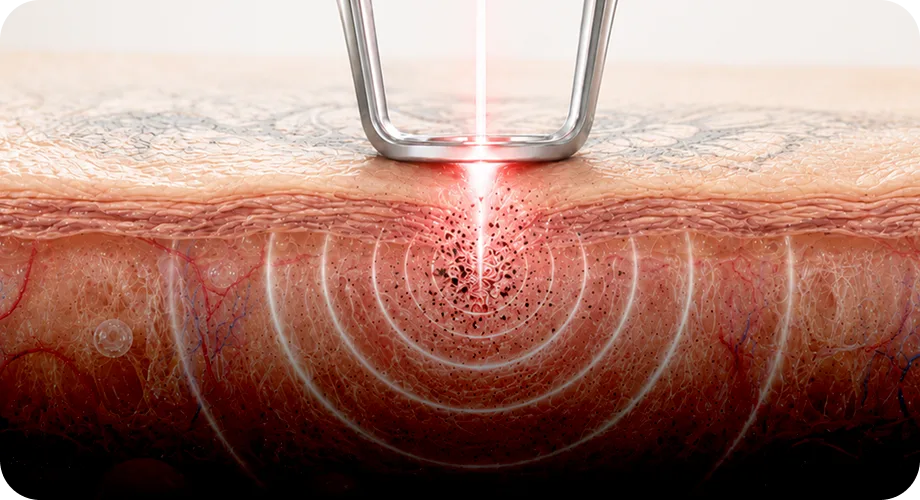
A tattoo persists because its ink particles are too large for the body to clear on its own, and that fact sets the rhythm of a traveler's whole plan. A picosecond pulse is brief enough to act on the pigment before it can shed heat, so the energy strikes as a rapid photoacoustic shock and cracks each particle apart mechanically, leaving fragments far finer than older nanosecond lasers managed. Those smaller pieces are within reach of the immune system, which carries them off over the weeks after a pass. This clearing runs on the body's clock, which is exactly why removal is a course spaced across months and why one Seoul visit is planned as a first pass and a map, not a finish line.
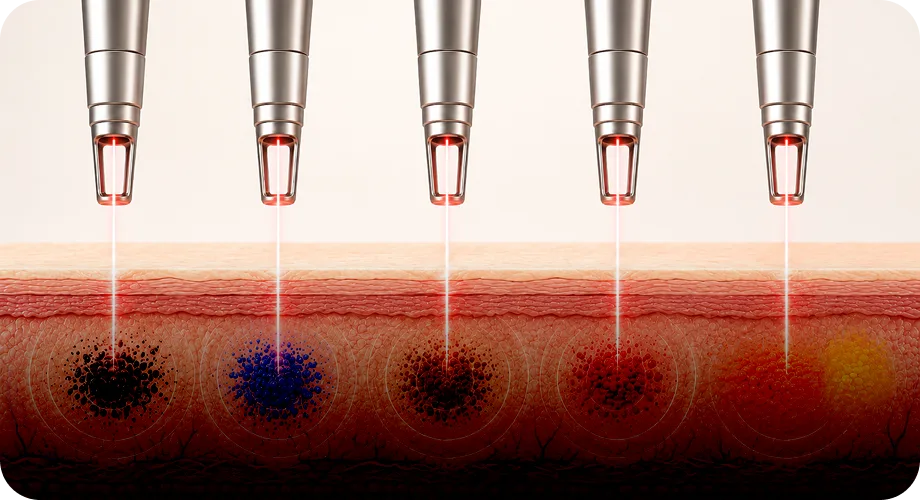
Ink colours absorb light unevenly, so no single wavelength treats every tattoo well, and reading that at the grading visit is what lets a traveler plan realistically. The picosecond platform offers more than one wavelength, and the physician maps which zone of the design gets which pass before any energy is delivered. Black and dark blue absorb the deeper 1064-nm beam and usually retreat first; reds, oranges, and warm tones answer to the shorter 532-nm beam; greens, light blues, and some yellows respond to only a narrow band of light and remain the classic hold-outs. Knowing which shades in your piece will linger, set out in writing before the first pass, is what turns a vague hope into a session plan you can book travel around.
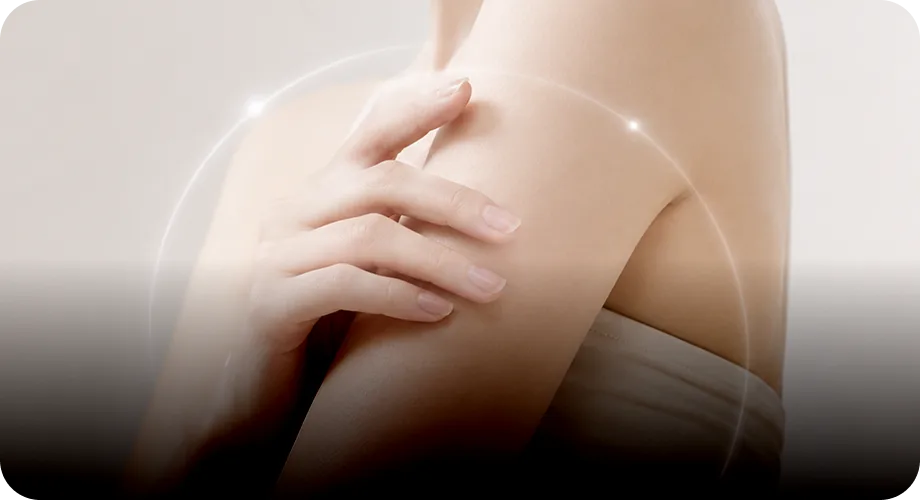
Where an older nanosecond laser leaned on heat and spread warmth beyond the ink, the picosecond pulse concentrates its work on the pigment itself and leaves the neighbouring tissue comparatively undisturbed. Less collateral heat means less of what drives redness, swelling, and the risk of textural change around the tattoo, and it is part of why removal travels so well — the skin closes over on its own with plain aftercare. That protection is not automatic, though. Post-inflammatory pigment change stays a recognised risk, weighing most on richer skin tones, so the physician screens skin type first, keeps energy conservative, may run a test spot, and plans that caution in from the first pass, since a rushed trip should never push the settings too hard.

The safety of tattoo removal sits in it being run as a medical procedure across the whole course, which is where continuity matters most for a traveler. A licensed physician grades the tattoo, reads ink and skin type, selects the wavelength and energy, and operates the device rather than delegating the settings. The genuine, officially imported laser and its parameters are shown and confirmed with you before the pass, since poorly maintained equipment delivers inconsistent pulses that raise the risk of skin damage. For eyebrow and eyeliner cosmetic tattoos the physician places rigid eye shields first. When the in-between passes happen at a clinic near home, RE:BERRY hands over the grading notes and standardised photos and reviews your progress remotely, so the person interpreting your fading is the one who set the baseline.
Treatment Process
Tattoo Removal — 4 Steps from Trip Planning to Remote Follow-Up
※ Illustrative images are AI-generated to help explain the treatment process.
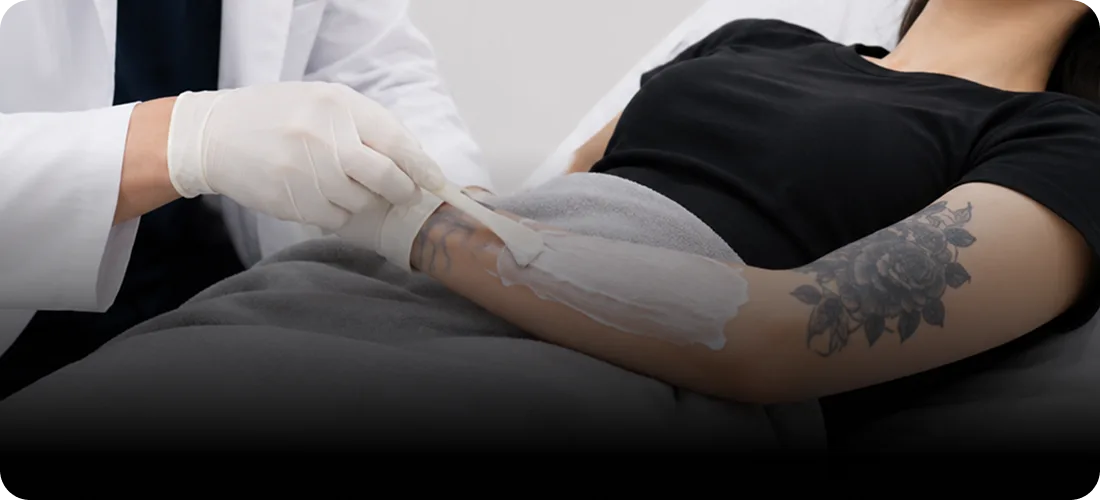
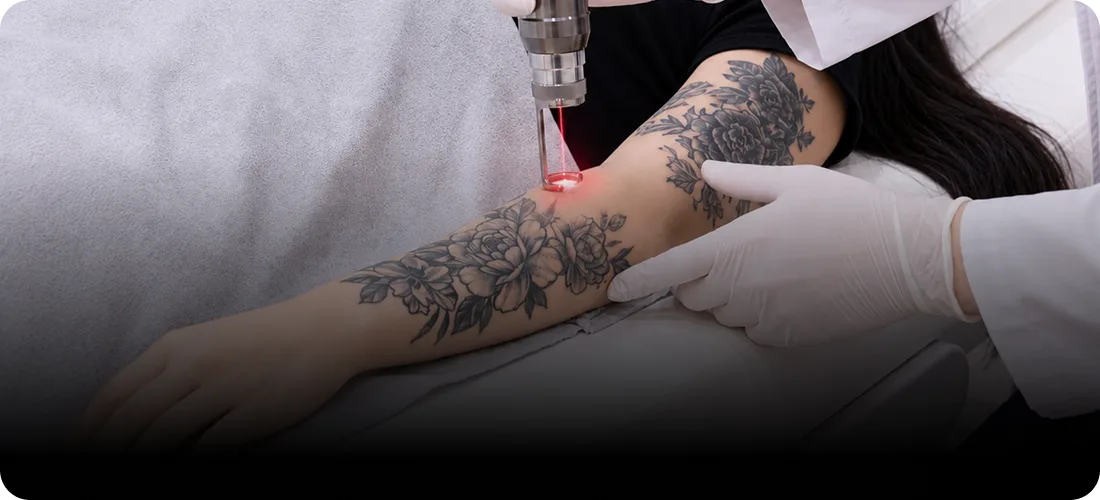
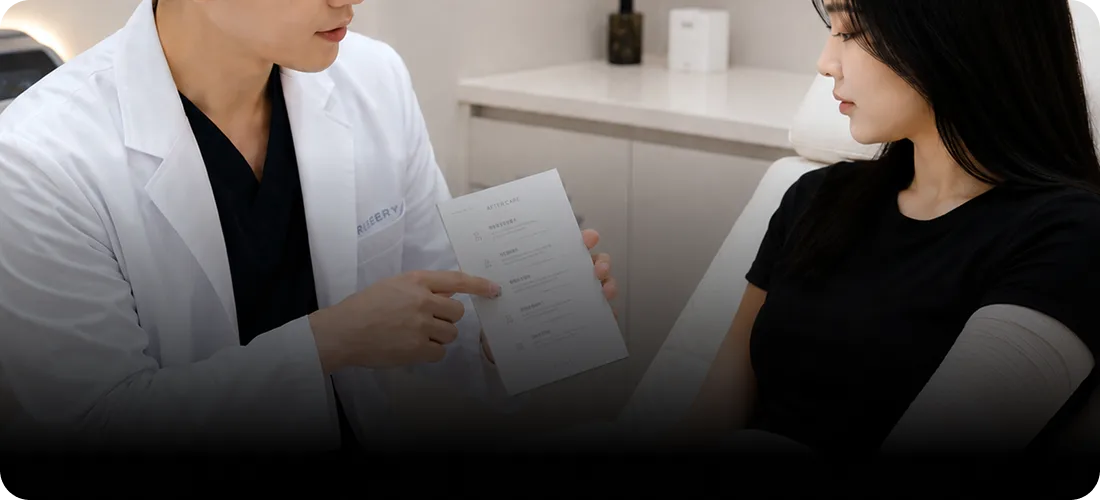
What One Seoul Visit Buys, and How the Tattoo Behaves Afterward
- An honest, graded assessment you can plan a life around: the physician scores your tattoo for colour, density, layering, and skin tone and puts a predicted session range in writing, so you know before booking more travel roughly how far the whole plan reaches
- A first pass that genuinely counts: the single Seoul session is a full, physician-delivered picosecond treatment on your course, not a taster, with wavelengths matched to the colours in your ink
- Aftercare designed for a traveler: a dressing, a kit, and written instructions in your language mean you can heal on a plane and back home without a second in-person visit for the recovery itself
- A follow-up plan that survives the flight home: the physician sets the interval before your next pass and coordinates a return trip or a hand-over to a laser near home, with your grading notes and photos to pass along
- Remote continuity with the person who read your tattoo: check-ins on WhatsApp keep the same physician's eyes on the healing and the fading for the months a course runs, so you are not starting over with each new clinic
- Cosmetic-tattoo and skin-tone safeguards from the first minute: rigid eye shields for eyeliner and eyebrow work, and conservative settings on richer skin, planned in before any pass so a rushed trip never pushes the energy too hard
| Timeline | What to Expect |
|---|---|
| The tattoo is graded and treated once; frosting clears in about twenty to thirty minutes, and mild redness and swelling settle over a day or two while you carry on with the rest of your Seoul trip | |
| A thin scab or the occasional small blister can form over the treated ink; kept clean, covered, and out of the sun, it heals on its own, and that easy recovery is what lets removal travel so well as a treatment | |
| This is the part no single trip can shortcut: the immune system carries off the fragmented ink over six to eight weeks, and the tattoo looks gradually lighter as it does, which is exactly why the next pass waits | |
| Fading accumulates session by session, whether the passes happen on return trips or near home; dark inks usually retreat first, greens and dense work lag, and how far a tattoo clears varies by individual, ink, and skin |
Three Ways to Run a Multi-Session Removal from Abroad
| Consideration | Return trips to Seoul | Seoul start, then a laser near home | Wait and do it all locally |
|---|---|---|---|
| First-visit value | Full graded assessment plus a first pass by the treating physician | Same graded assessment and first pass, used as the reference plan | No expert grading; the whole course is scoped wherever you end up |
| Who holds the plan | The same RE:BERRY physician across every pass | RE:BERRY grading notes handed to a local clinic, with remote review | Whichever local clinic you choose, from the start |
| Fits a short stay | Yes — each trip is one pass, spaced weeks apart | Yes — one Seoul visit, the rest arranged at home | Not relevant to travel |
| Consistency of device | Same picosecond platform and settings every time | Depends on the home clinic's equipment and skill | Depends entirely on the local clinic |
| Cost pattern | Session cost plus travel repeated per pass | One Seoul session cost, then local pricing for the rest | Local pricing throughout, no travel |
| Best suited to | Frequent visitors to Korea, or a small-to-moderate tattoo | A single planned trip with reliable laser access at home | No pull toward Seoul and good local options already |
Why This Matters
No route removes a tattoo in one go, and the reason lies in biology. Selective photothermolysis, the principle Anderson and Parrish set out in 1983, means a laser fractures ink into fragments, and the immune system then clears those fragments over weeks. Each pass can only shatter what the previous clearing window has exposed, so a course is measured in sessions across months regardless of which clinic runs them. A trip abroad changes how the course is scheduled; the ink-clearing biology stays the same.
Planning a multi-session treatment around travel is a known feature of medical tourism, not a quirk of tattoo removal. Reviews of treatment abroad flag continuity of care and follow-up as the parts that most need arranging in advance, since the procedure itself is often the simplest piece. For removal that means deciding early whether the passes happen on return trips or through a coordinated hand-over, so the plan does not fall apart the moment the first flight home departs.
Keeping one clinician across a course has measurable weight. Research on continuity of care links an ongoing relationship with the same doctor to better outcomes, and a graded tattoo is a case where that continuity is concrete: the physician who scored the ink and read the first frost knows what a normal response looks like for your skin. RE:BERRY keeps that thread alive with remote review even when the in-between passes happen elsewhere, so the person interpreting your progress is the one who set the baseline.
October – December 2026 Promotions
Exclusive packages for international patients. Swipe to see all offers.
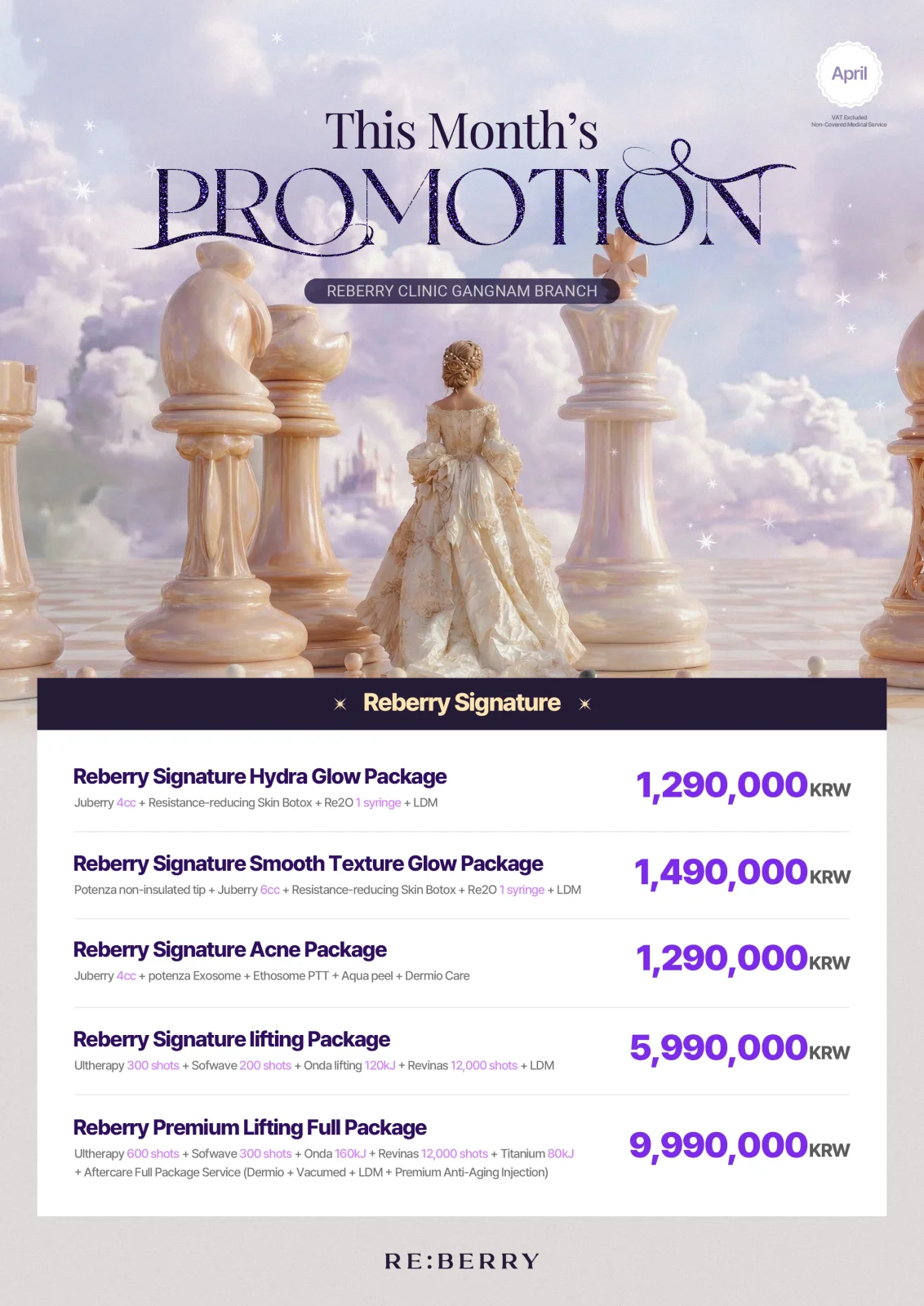
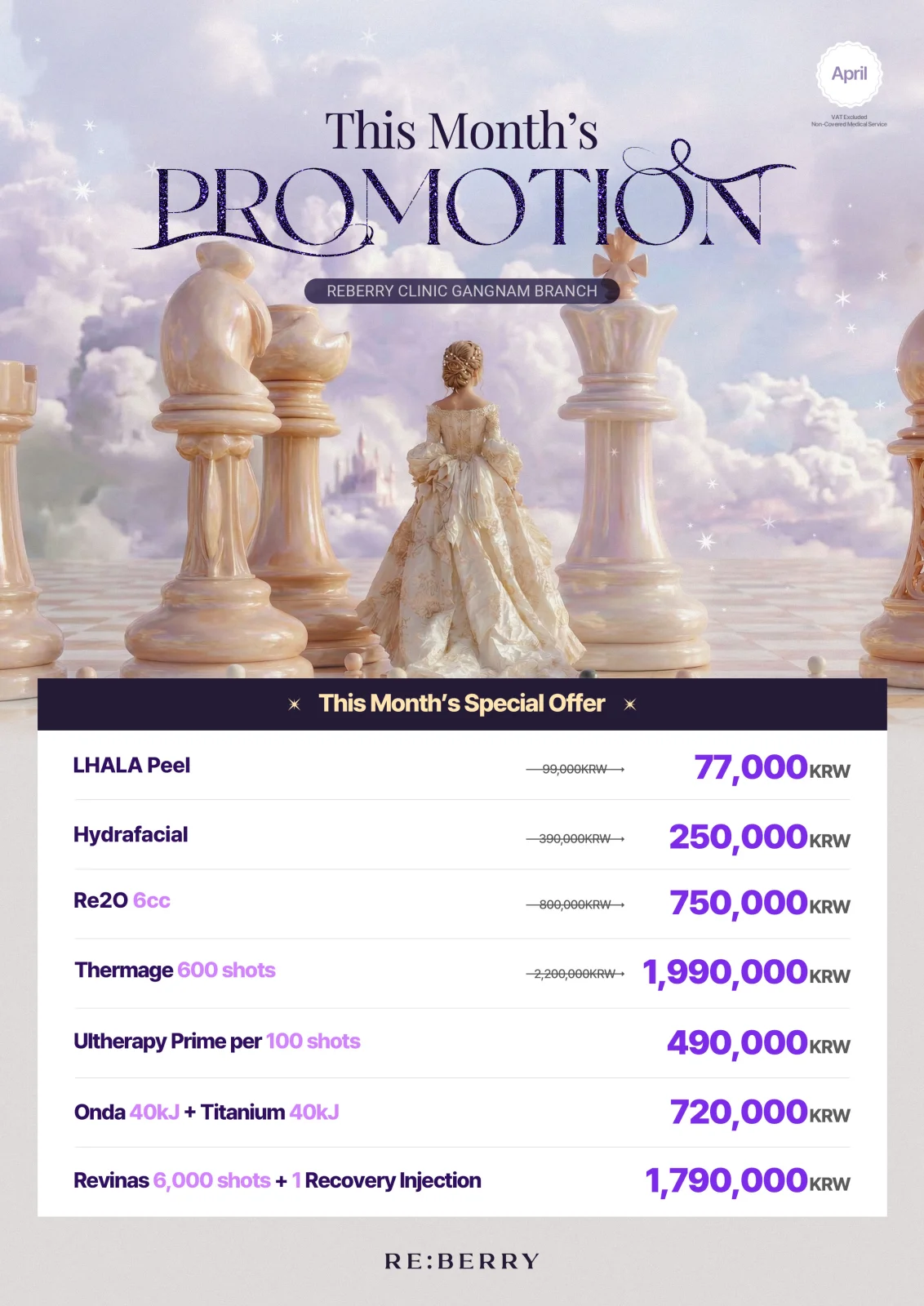
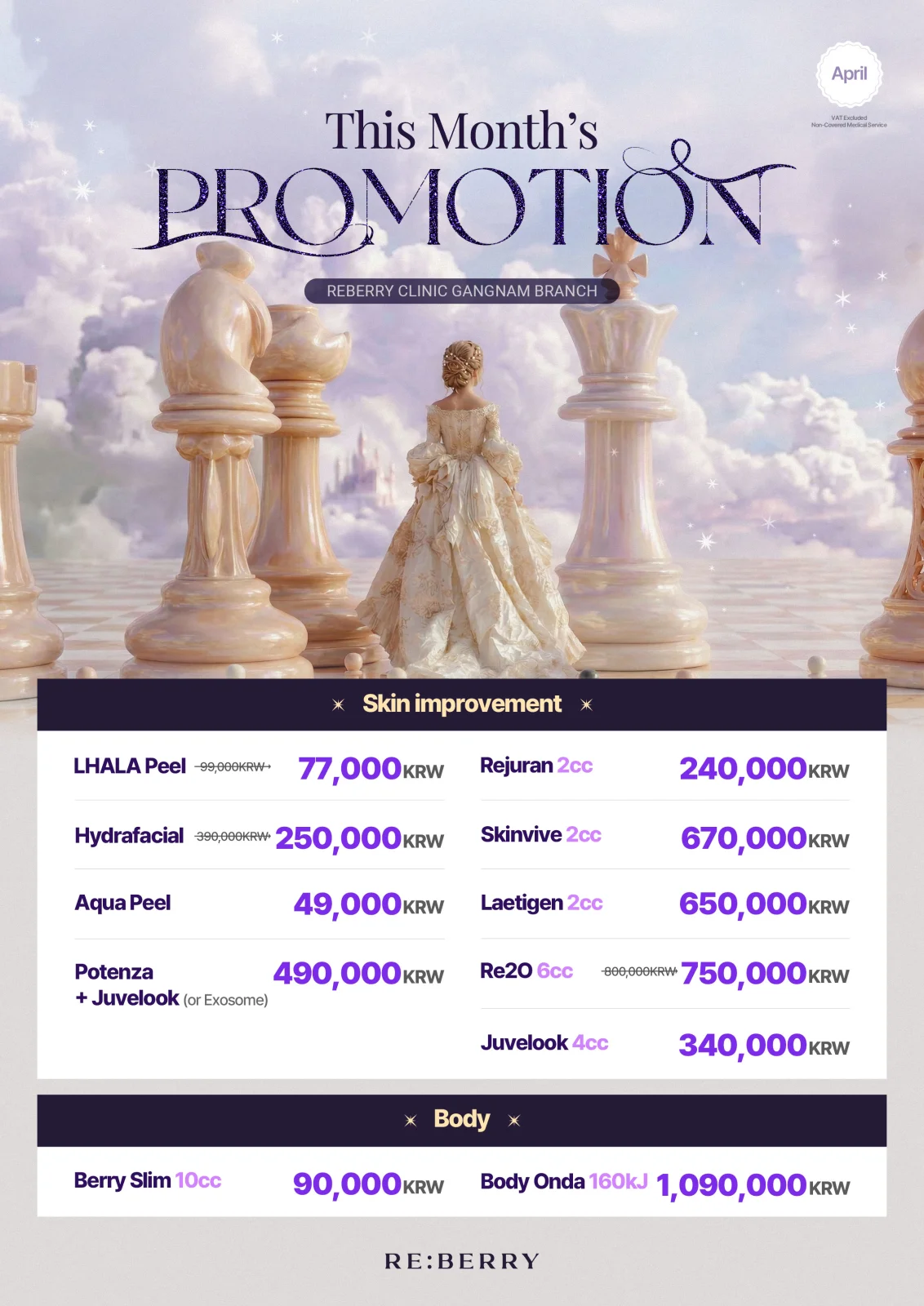
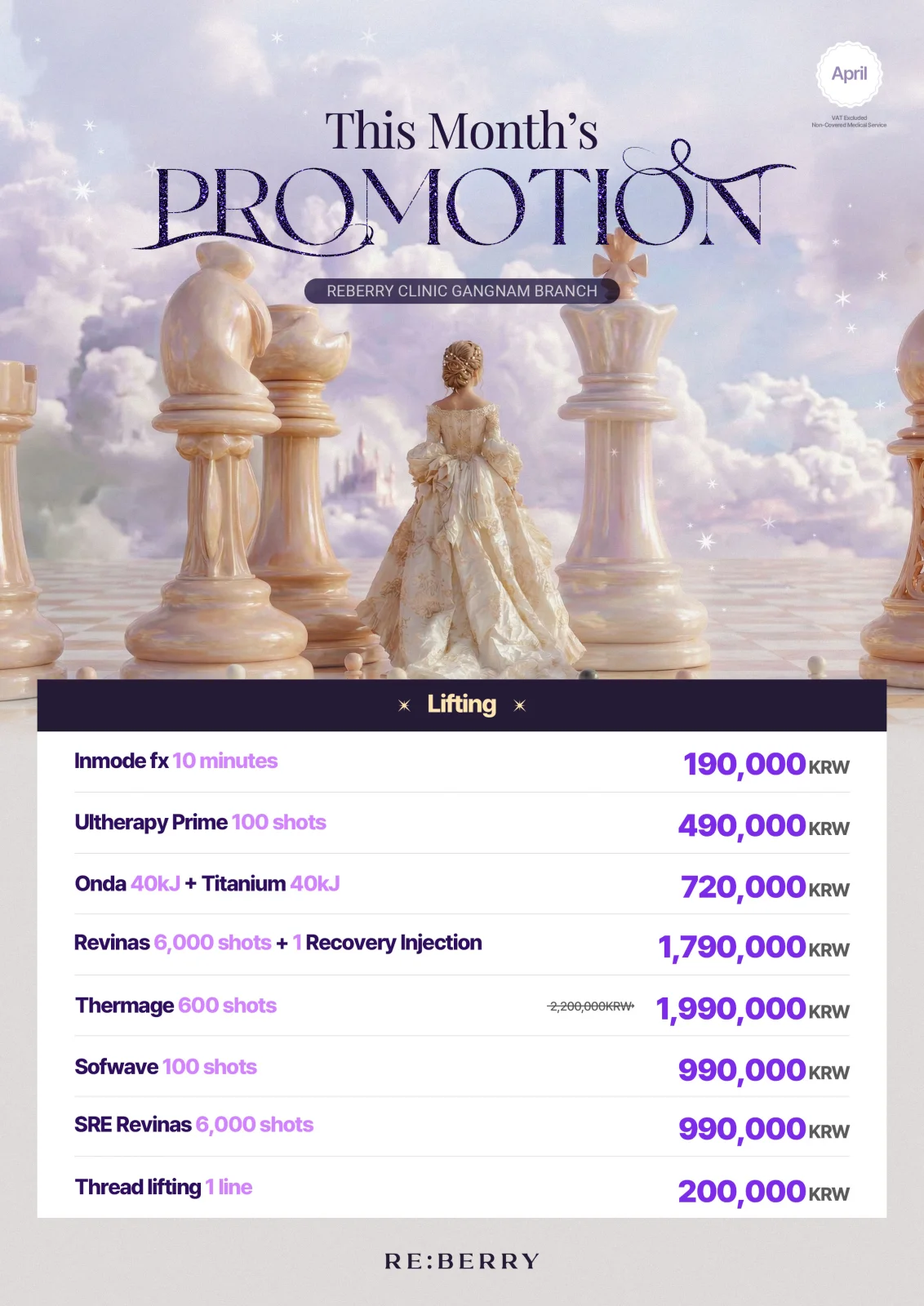
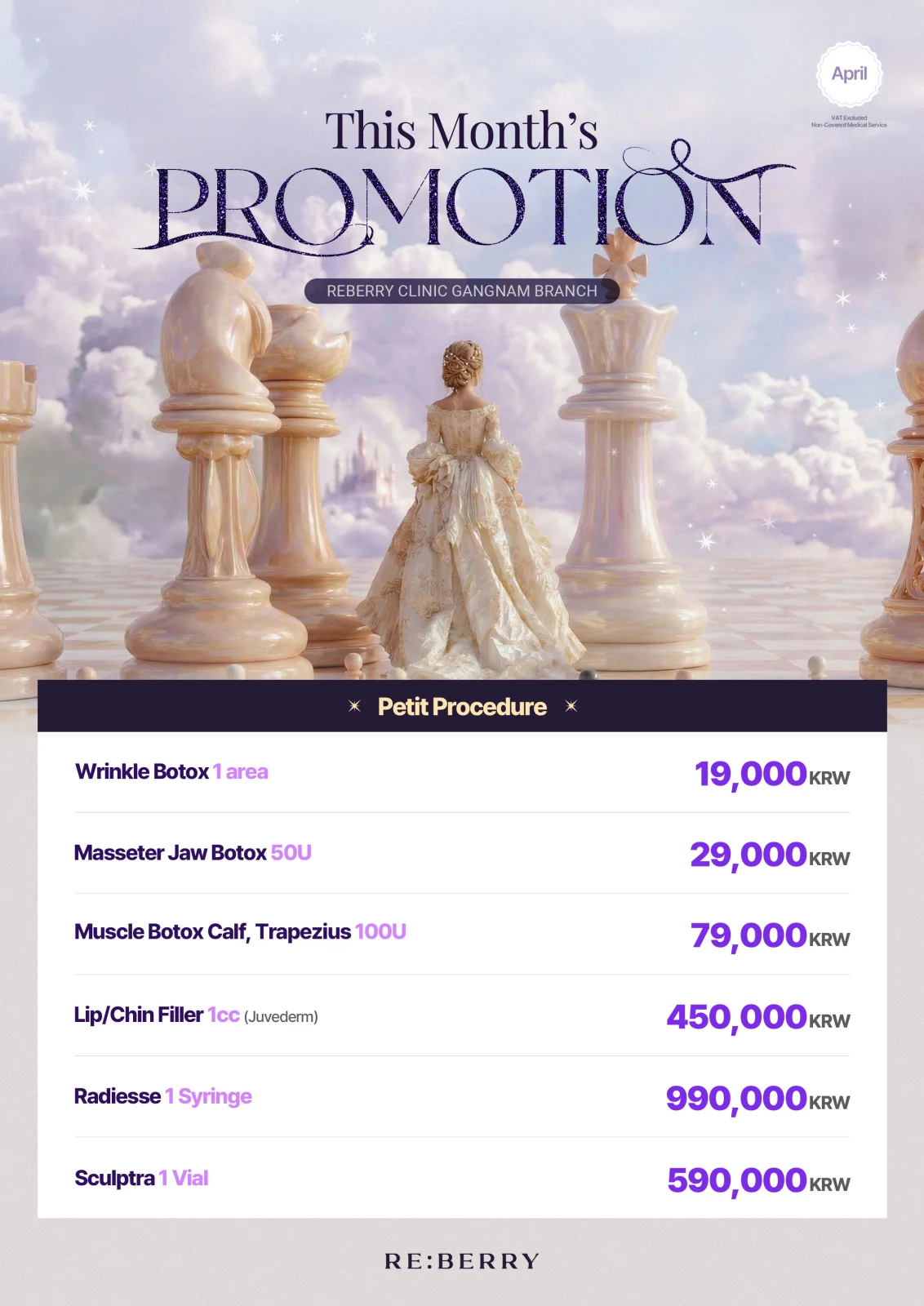
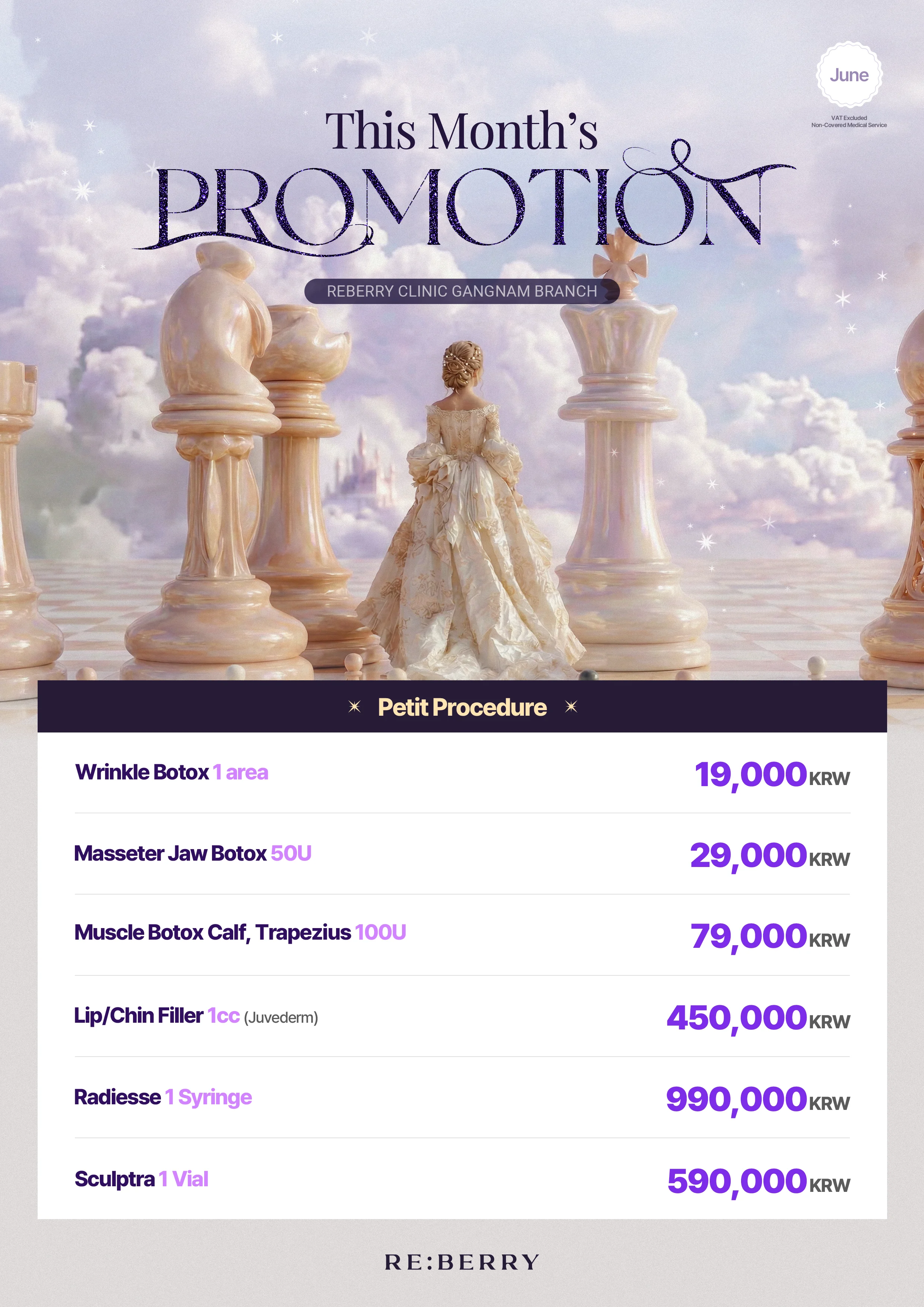
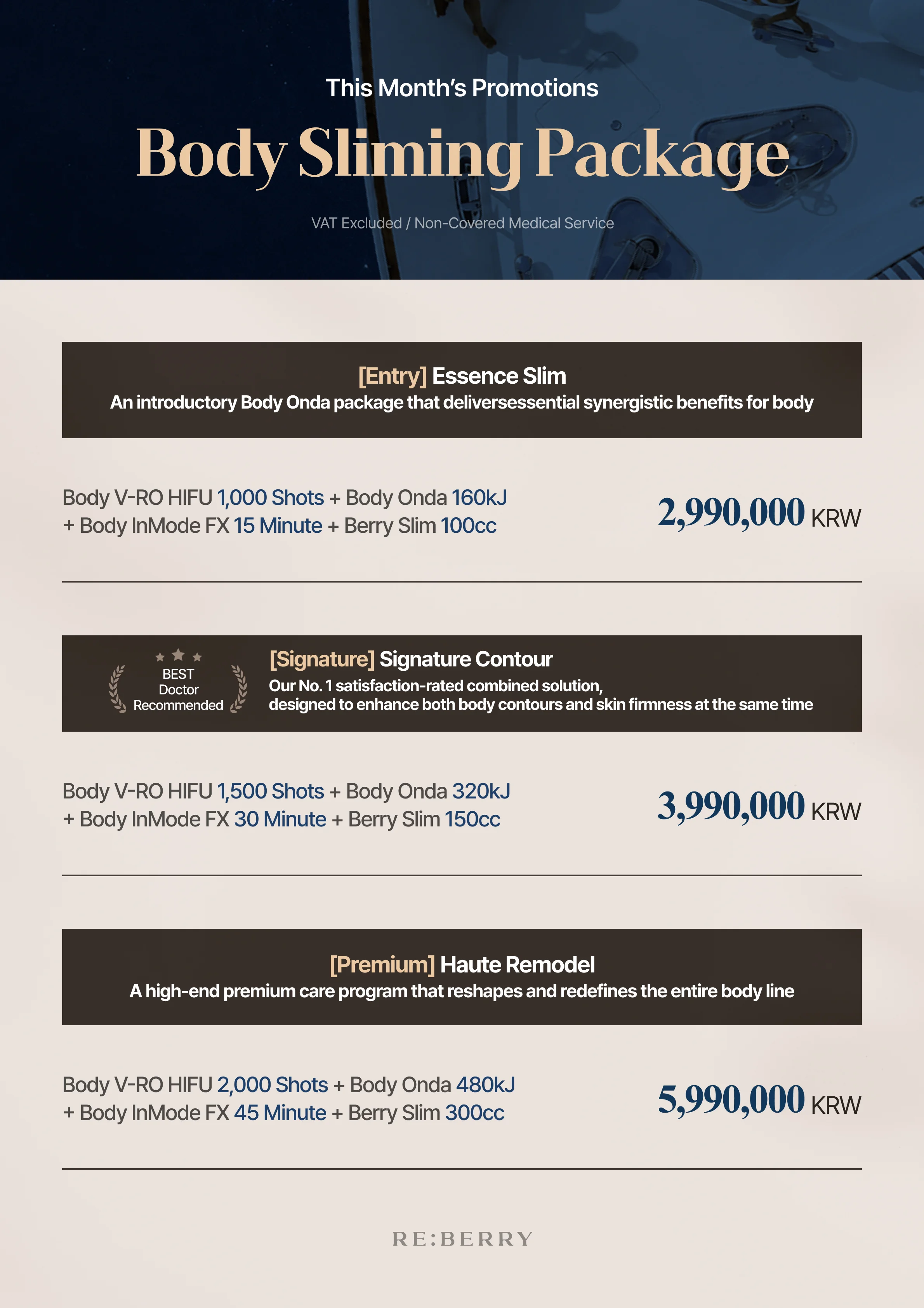
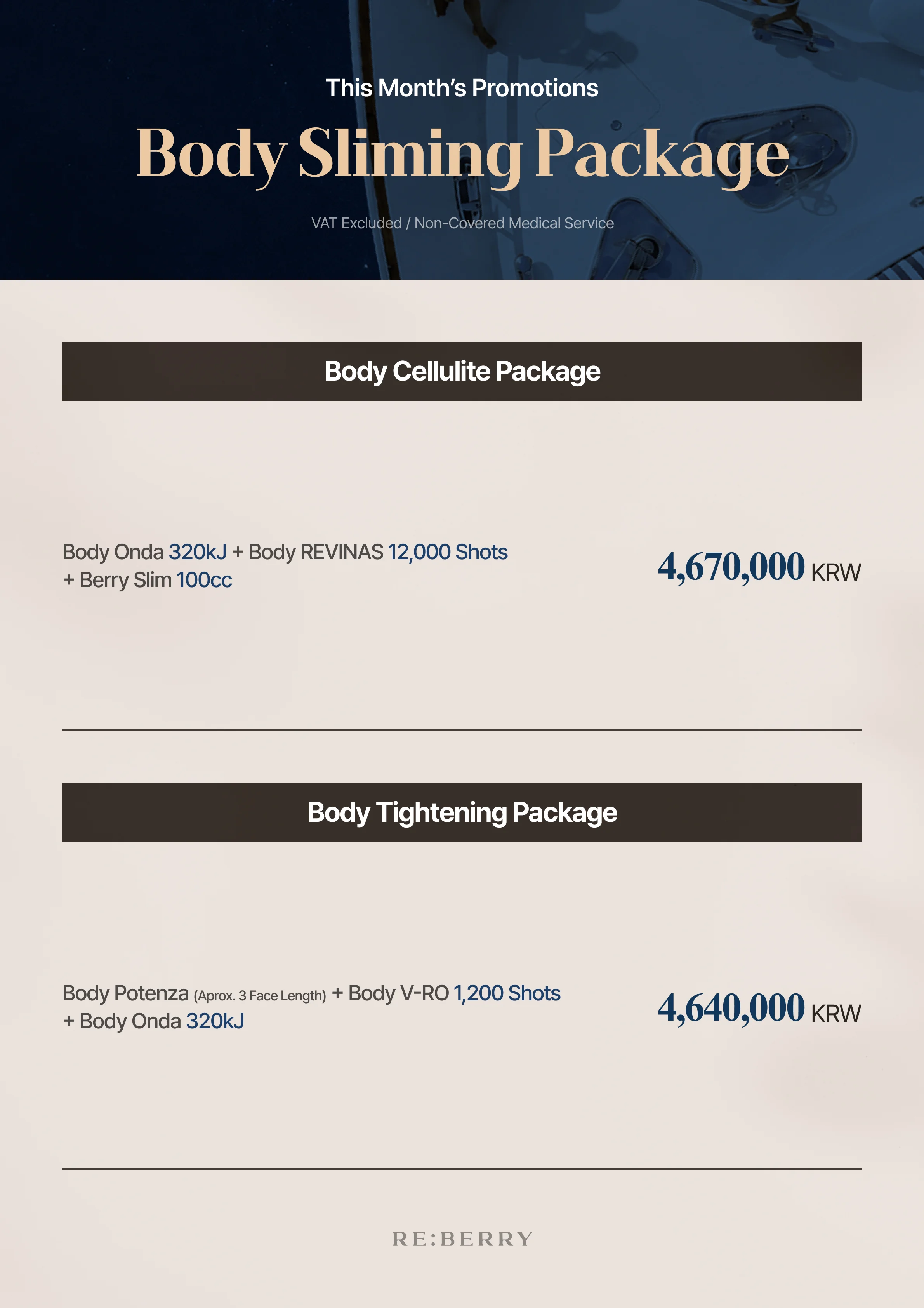
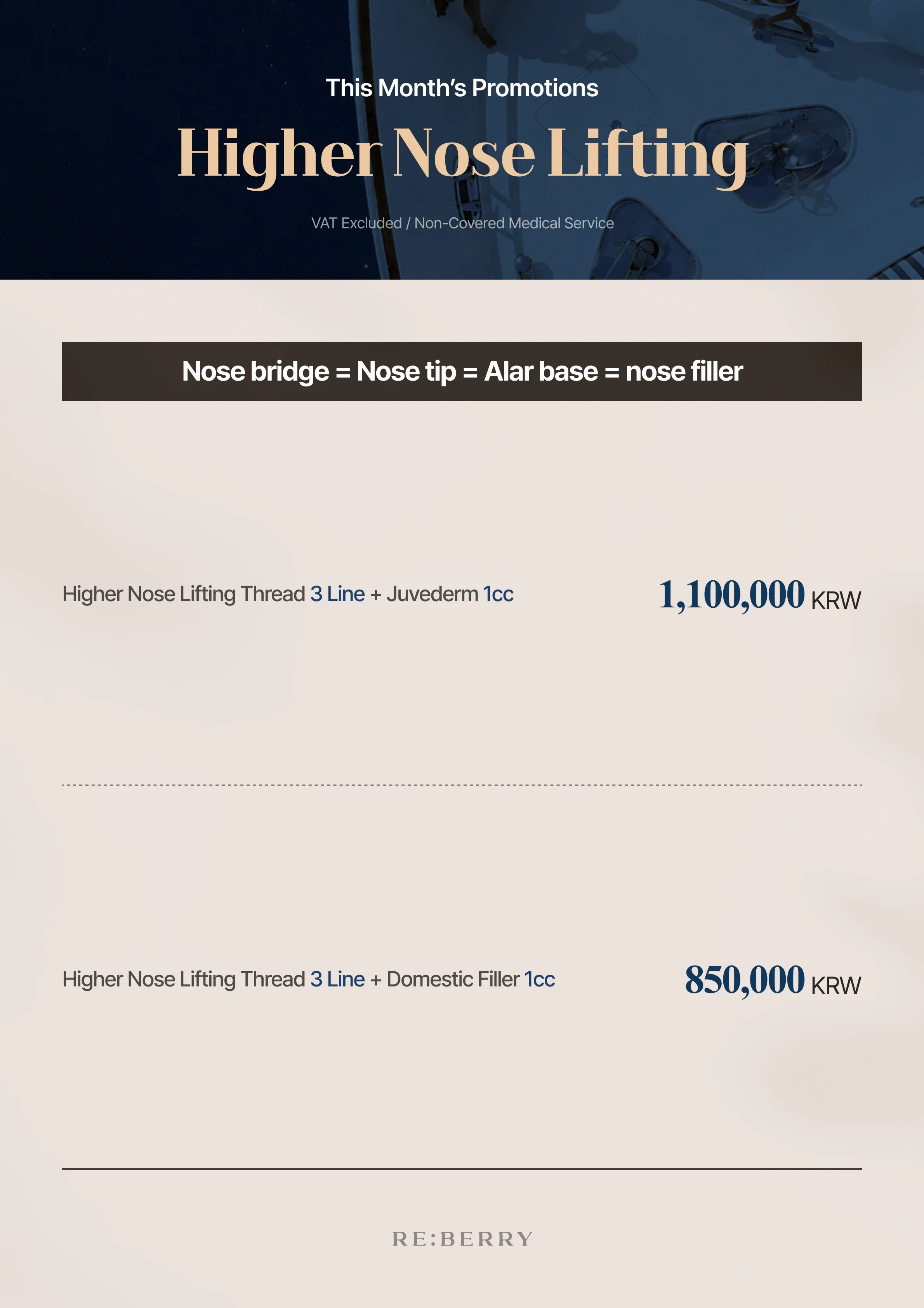
![RE:BERRY Gangnam October–December 2026 Promotion Page 10 — Body Slimming Package: [Entry] Essence Slim, an introductory Body Onda package that delivers essential synergistic benefits for body shaping and contouring: Body V-RO HIFU 1,000 Shots + Body Onda 160kJ + Body InMode FX 15 Minute + Berry Slim 100cc ₩2,990,000 · [BEST · Doctor Recommended] Signature Contour, our No. 1 satisfaction-rated combined solution, designed to enhance both body contours and skin firmness at the same time: Body V-RO HIFU 1,500 Shots + Body Onda 320kJ + Body InMode FX 30 Minute + Berry Slim 150cc ₩3,990,000 · VAT excluded](https://cdn-reberry.pages.dev/gangnam/promotion/en/gangnam-event-en-10.webp)
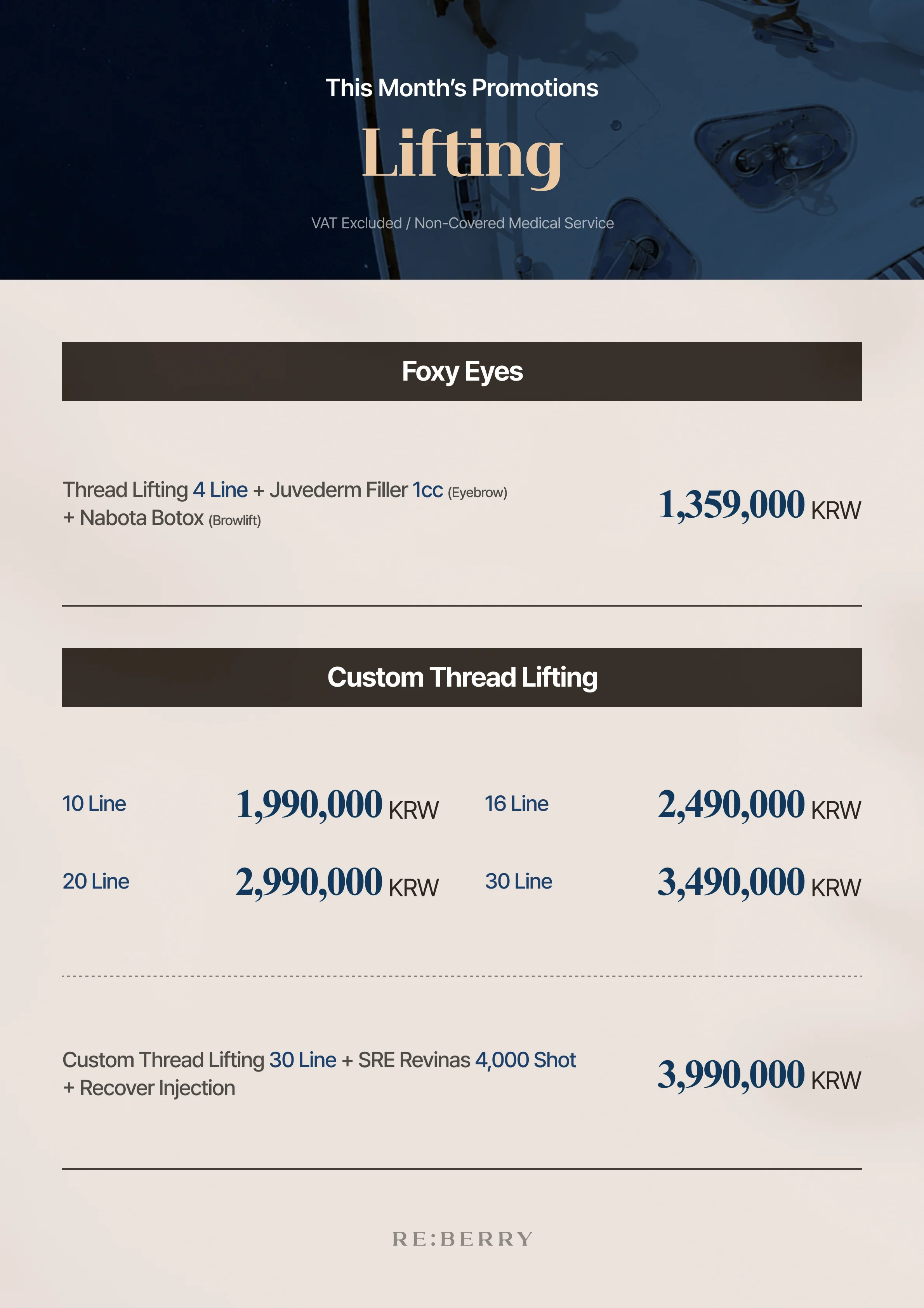
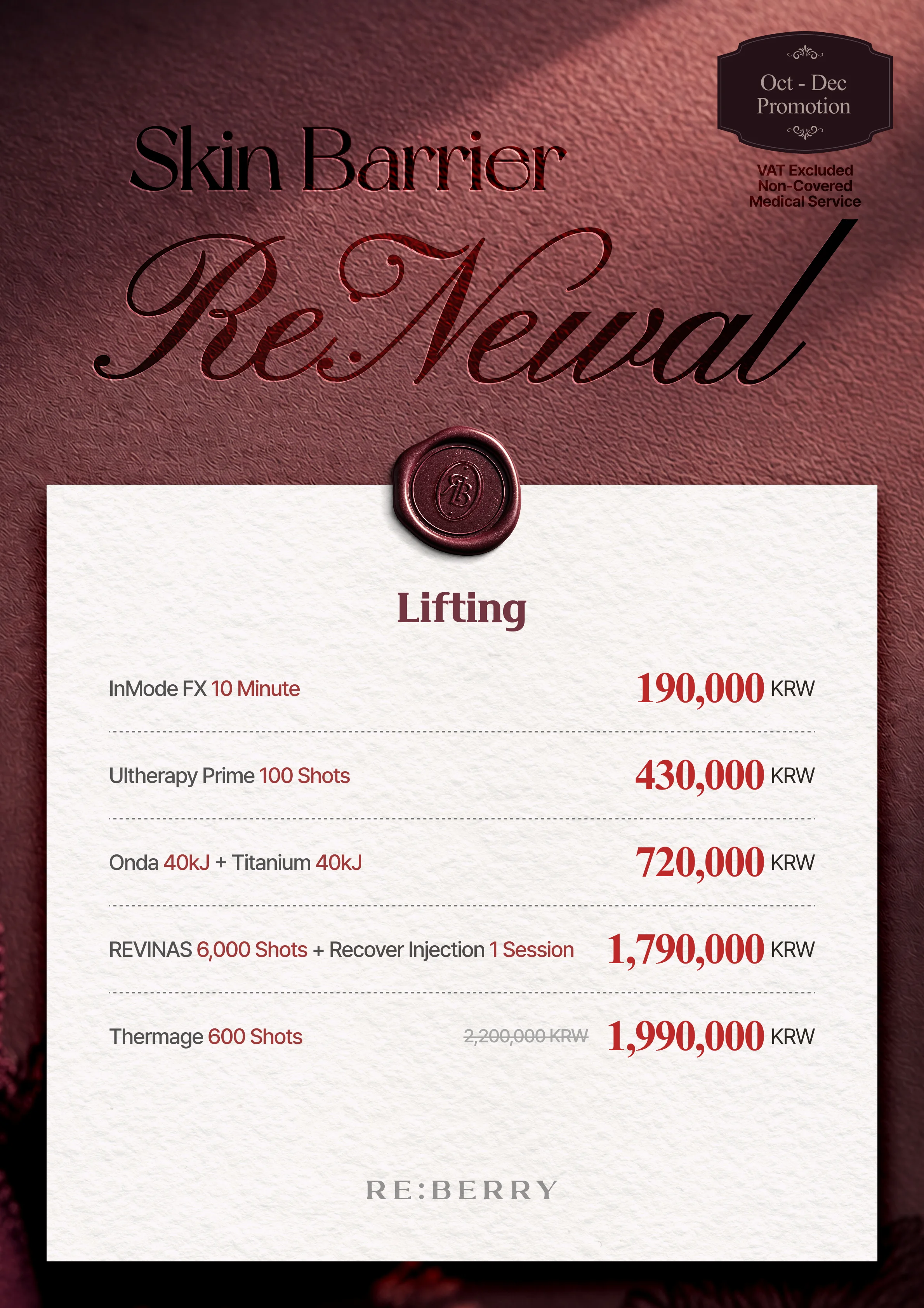
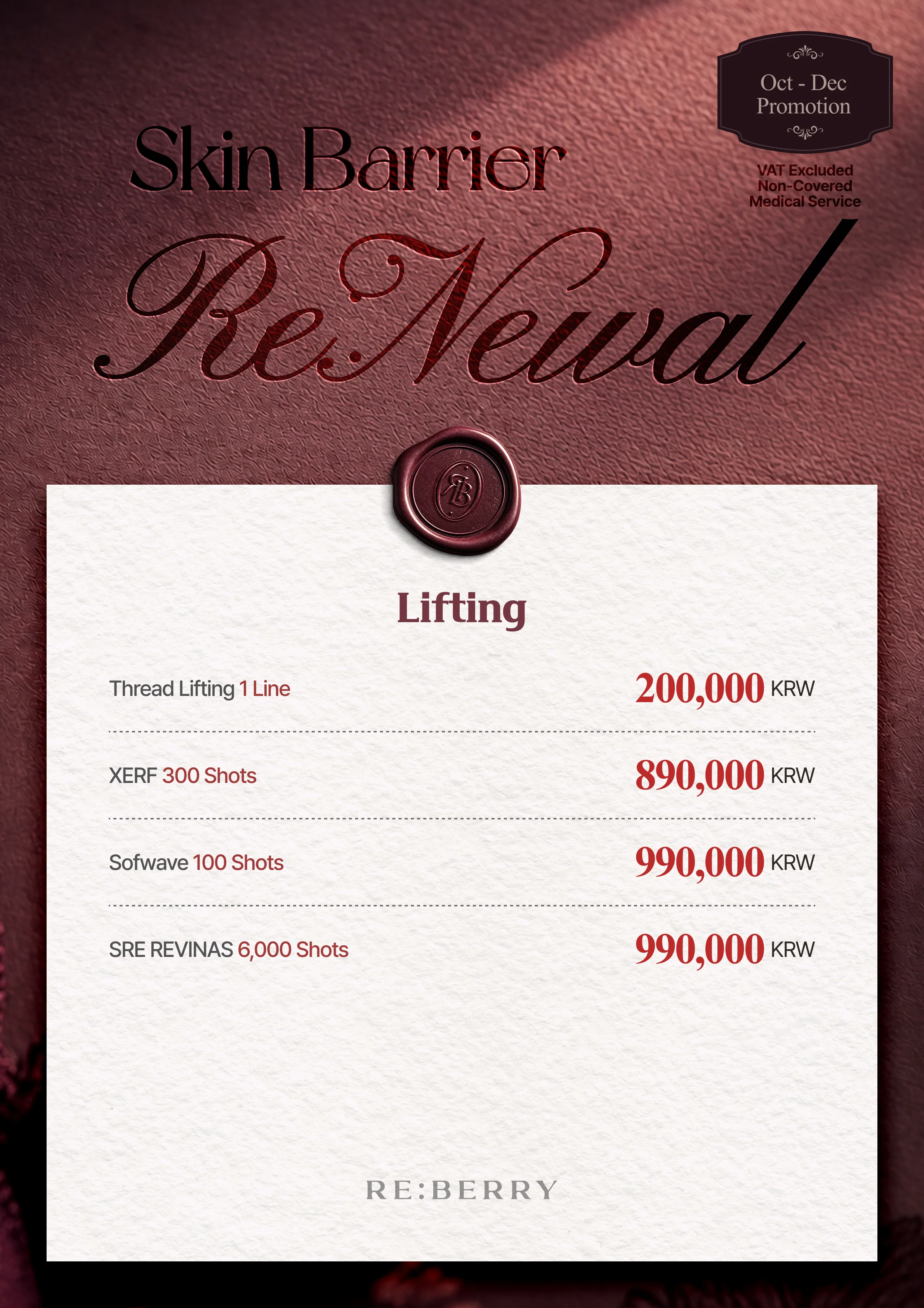
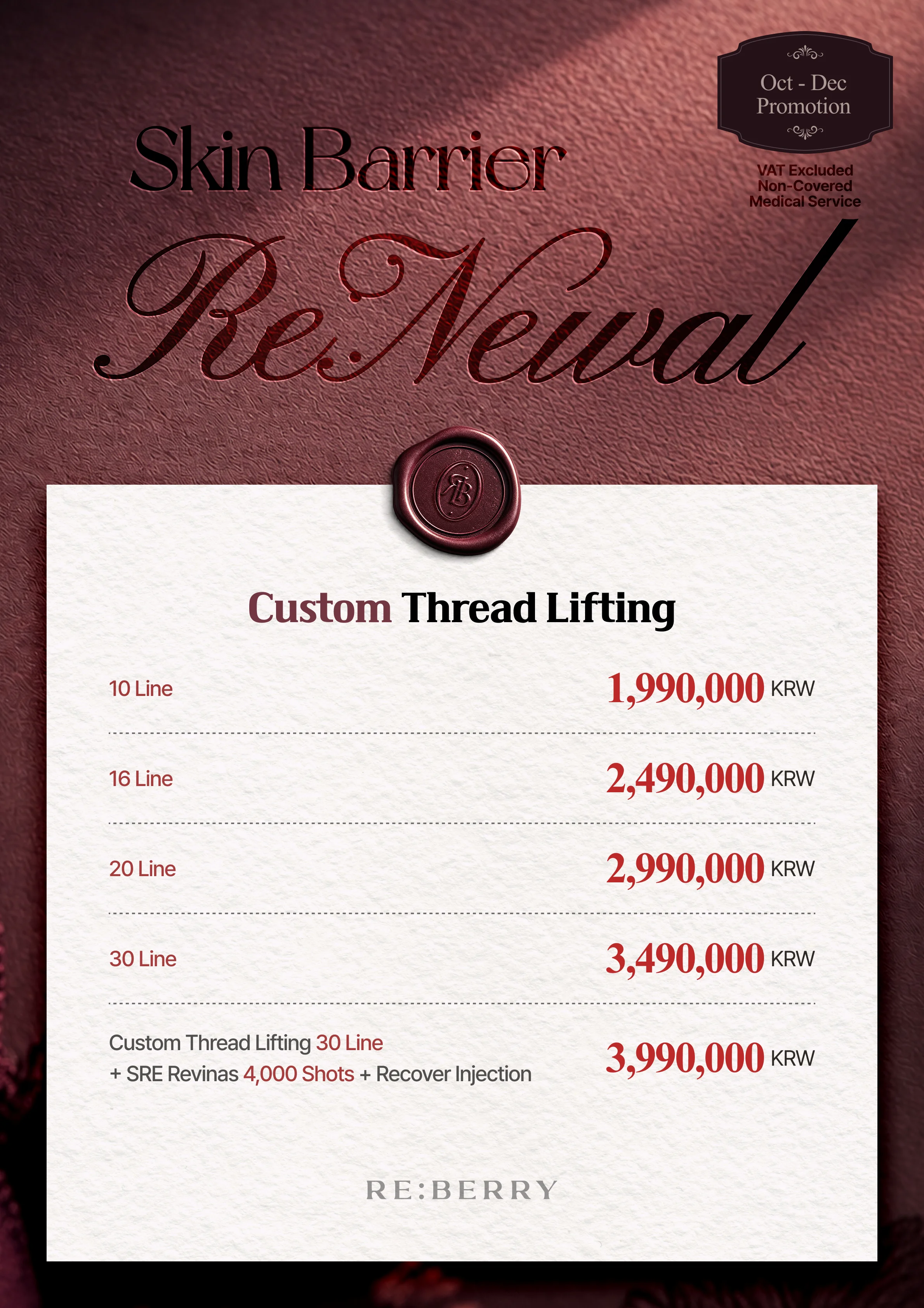

How the First Visit Is Priced at RE:BERRY Gangnam (Regular Rates, VAT Excluded)
Your Medical Director
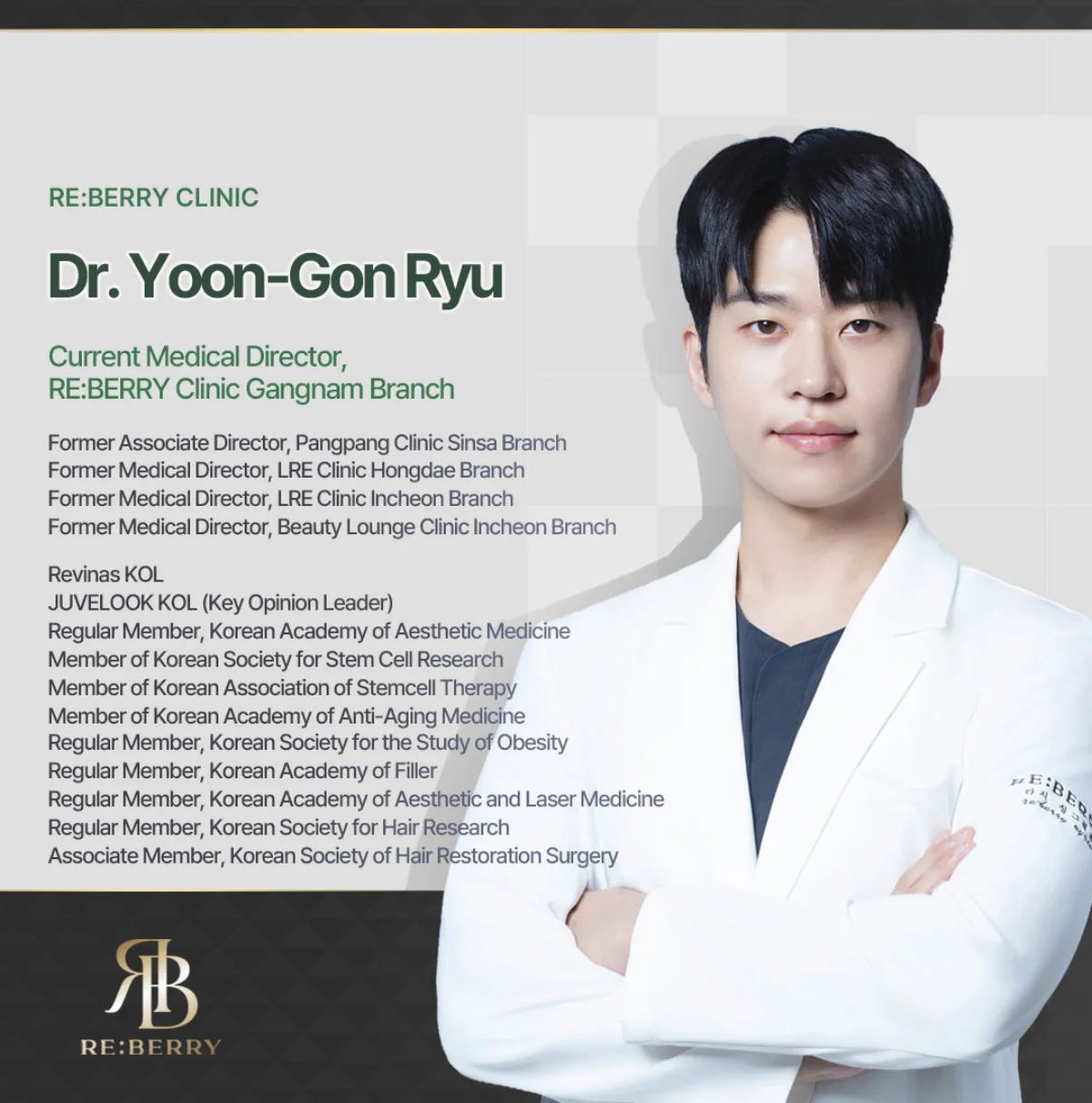
Dr. Yoon-Gon Ryu
- Medical Director, RE:BERRY Aesthetic Clinic Gangnam — Korean MOHW Medical License No.131644
- Manufacturer-appointed KOL invited to teach injection and energy-device technique to Korean peers
- Regular Member, Korean Academy of Aesthetic Medicine
- Co-manages every case with Dr. Yejin Oh (Korean MOHW Medical License No.144238)
- Featured in Authority Magazine (2026)
Medically reviewed by Dr. Yoon-Gon Ryu, CEO / Medical Director, RE:BERRY
A Fourteen-Thousand-Square-Foot Hush Above Gangnam-daero
Step past the black gallery facade and the bustle of Gangnam-daero falls away. Fourteen thousand square feet of hushed corridors, marble installations, a cascading water feature and fully enclosed consultation suites — arranged so you rarely cross paths with another guest, because our appointment-first diary keeps every hour deliberately underbooked.
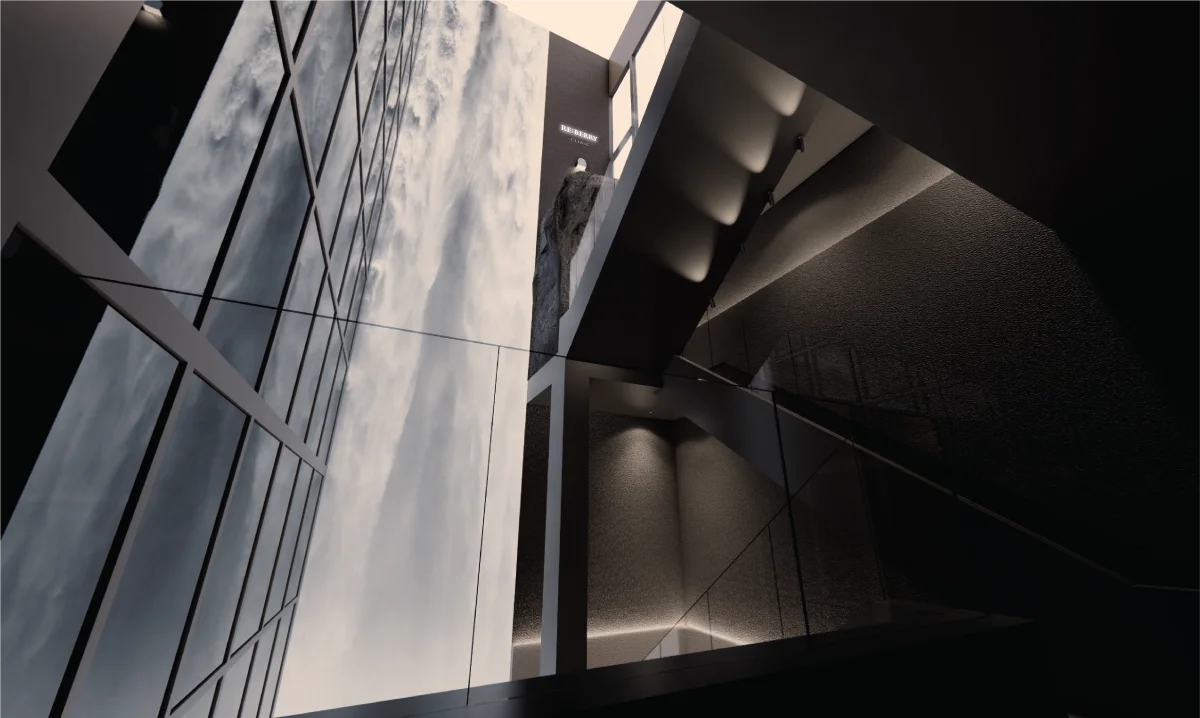
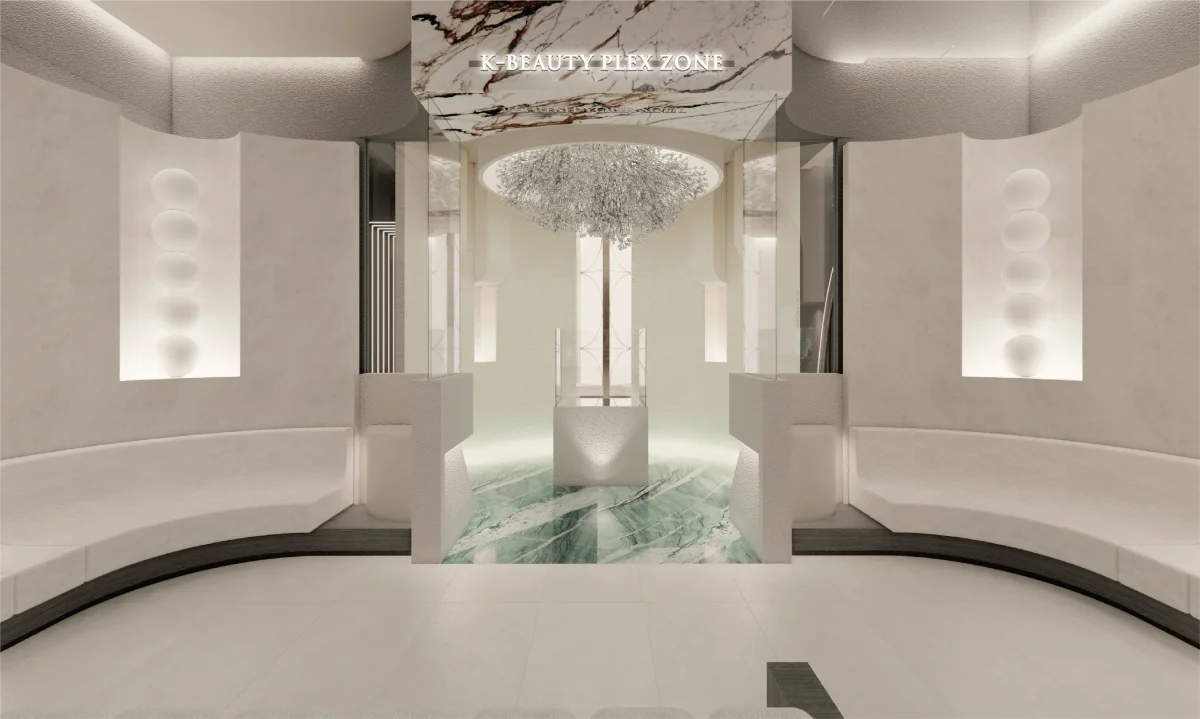
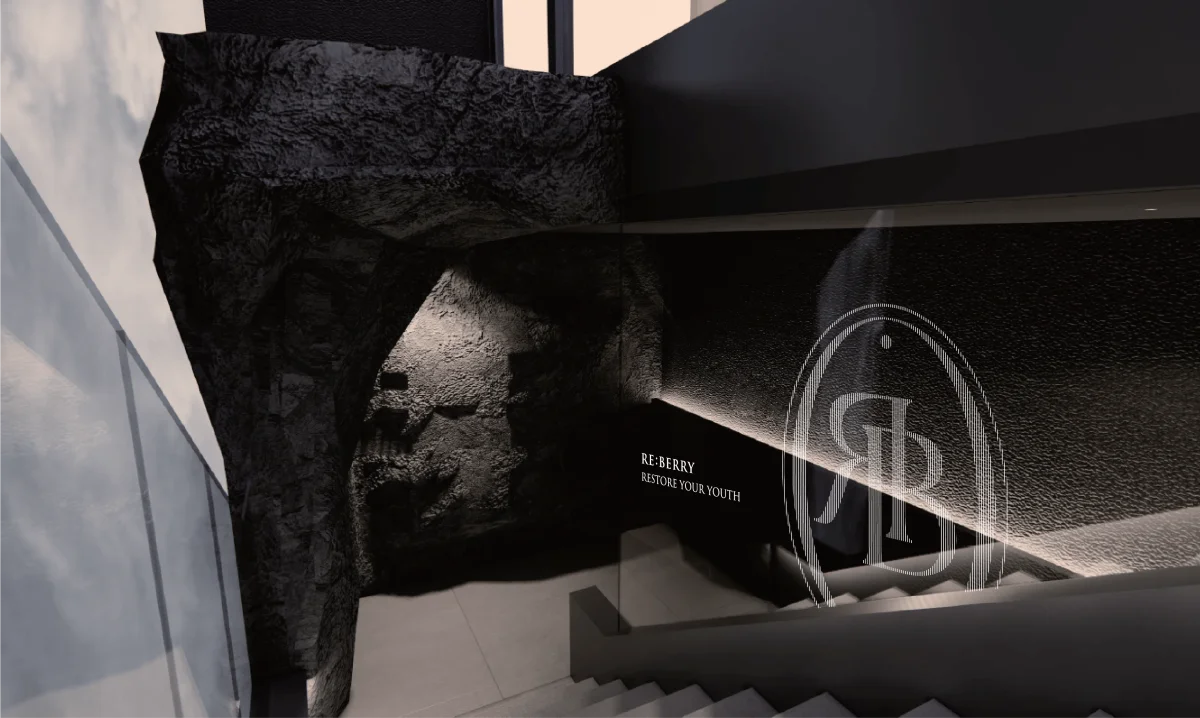
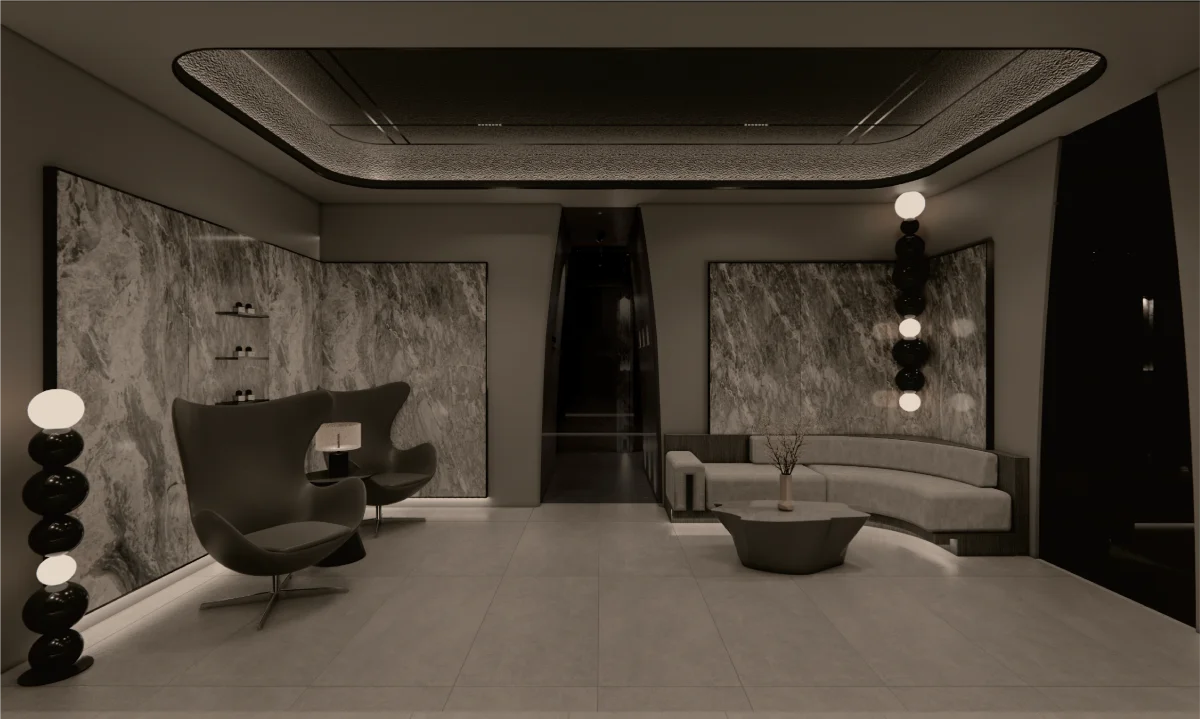

(1,322 m²)
Suites
KI Tower, Gangnam-daero
Station Exit 10
Why a Course, Not a Single Session, and What That Means for Travelers
The multi-session nature of removal is built into how the laser works. Selective photothermolysis, the principle Anderson and Parrish described in 1983, holds that a pulse tuned to a target and delivered faster than the target can shed heat confines its energy to that target. For a tattoo, the picosecond pulse fractures the ink into fragments; the immune system then carries those fragments off over the weeks that follow. Each pass can only act on what the previous clearing window exposed, so removal is inherently a course spaced across months. No trip abroad changes that biology, so a well-run Seoul visit for tattoo removal works with it and plans the course accordingly.
Anderson RR, Parrish JA. Selective photothermolysis: precise microsurgery by selective absorption of pulsed radiation. Science. 1983;220(4596):524-527. doi:10.1126/science.6836297
The device matters for how efficient each of those passes is, and here the evidence favours the shorter pulse in the skin types a Seoul clinic sees most. A prospective study in Asian patients compared a 532/1064-nm picosecond laser against a nanosecond laser on professional tattoos and reported better clearance from the picosecond device with a favourable safety profile. Better clearance per pass is exactly what a traveler wants, because it means the trips or the coordinated sessions add up faster. It does not compress the course into one visit, but it makes each visit count for more.
Kono T, Chan HH, Groff WF, Imagawa K, Hanai U, Akamatsu T. Prospective comparison study of 532/1064 nm picosecond laser vs 532/1064 nm nanosecond laser in the treatment of professional tattoos in Asians. Laser Ther. 2020;29(1):47-52. doi:10.5978/islsm.20-or-07
Because the course runs across months and clinics, two things beyond the laser decide how well it goes for someone treating from abroad: managing pigment risk and keeping the plan continuous. Post-inflammatory pigment change is the complication that weighs most on richer skin tones, and careful hyperpigmentation management informs the conservative settings a responsible clinic uses on the first pass and every one after. Reviews of medical tourism and of continuity of care both point to the same lesson — that follow-up and an ongoing clinical relationship are what carry a multi-visit treatment to a good result. That is the reasoning behind the grading, the written session range, and the remote review RE:BERRY Gangnam builds into a traveler's plan.
Sarkar R, Arora P, Garg VK, Sonthalia S, Gokhale N. Cosmeceuticals for hyperpigmentation: what is available? J Cutan Aesthet Surg. 2013;6(1):4-11. doi:10.4103/0974-2077.110089
Lunt N, Carrera P. Medical tourism: assessing the evidence on treatment abroad. Maturitas. 2010;66(1):27-32. doi:10.1016/j.maturitas.2010.01.017
Gray DJP, Sidaway-Lee K, White E, Thorne A, Evans PH. Continuity of care with doctors — a matter of life and death? A systematic review of continuity of care and mortality. BMJ Open. 2018;8(6):e021161. doi:10.1136/bmjopen-2017-021161
Laser Tattoo Removal in Korea: the Questions Travelers Ask
Can a single trip to Korea remove my tattoo completely?
Realistically, no. Removal works over a course of sessions spaced weeks apart, because the body needs that time to clear the ink each pass fractures. A single trip gives you a first physician-delivered pass and a graded, written assessment of how your tattoo is likely to behave — a genuinely useful start and a clear map, but not a blank slate on the flight home. RE:BERRY Gangnam maps the whole removal course with you on that first visit and never pretends one appointment can finish it.
How many sessions will my tattoo actually take?
It depends on the ink, and that is precisely what the first-visit grading is for. Most tattoos fall in a range of several sessions; dense professional pieces with greens and blues run longer than a small single-colour design. The physician images the depth, checks the tattoo under a Wood's lamp, and scores colour, density, layering, and skin tone into a predicted range, then shares that number in writing before any figure is agreed, so you can plan travel or local sessions around a real estimate.
If I can only visit once, is the trip still worth it?
Many guests decide it is, for two concrete reasons. The in-person grading gives you an expert reading of your specific tattoo that photos alone cannot, and the first pass is a full session on your course, not a demonstration. You leave with a written session range, progress photos, and a plan for the passes to come. Whether those happen on return trips or with a laser near home, the trip has given the course its baseline and its direction.
Why do sessions have to be six to eight weeks apart?
That six-to-eight-week gap is set by your immune system; the clinic's diary has nothing to do with it. After each picosecond pass the body carries the shattered ink away over the following weeks, and the skin needs that window to recover before the next pass. Crowding sessions closer only loads stress onto healing skin without fading the tattoo any faster. That spacing is why a course spans months and why removal is planned around your travel rhythm rather than squeezed into a few days.
How do I keep the plan going after I fly home?
The physician sets this up before you leave. If you return to Korea, passes are simply timed to your trips. If you cannot, RE:BERRY provides your grading notes and standardized photos so a reputable laser clinic near home can continue the course, with remote check-ins keeping the treating physician looped in on your progress. The aim is one coherent plan across the months, not a set of disconnected appointments in different countries.
Can you coordinate with a clinic in my own country?
Yes, and for one-trip guests it is often the practical route. The physician grades the tattoo, delivers the first pass, and hands you the written scoring and photos to give a local clinic, along with the wavelength approach your ink calls for. You then send progress photos back for remote review between passes. It works best when you already have a trustworthy laser clinic at home, which the coordinator will discuss with you when planning the trip.
Is it safe to fly right after a laser session?
Flying the day after a pass is generally fine, which is part of why removal travels well. The treated skin frosts briefly during the session and clears within about twenty to thirty minutes, then settles into mild redness and swelling over a day or two. You leave with a dressing and written aftercare, and there is no wound that needs an in-person recheck before you travel — the healing runs on its own with the instructions provided.
What aftercare do I need to manage while traveling?
It is light and portable. Keep the treated area clean and covered, apply the ointment as directed, leave any scab or small blister strictly alone, skip saunas and swimming while it heals, and stay firm on daily sun protection over the skin. You receive a travel kit and written instructions in your language, so whether you are still sightseeing in Seoul or already home, the recovery follows the same simple routine.
Which ink colours clear quickly and which lag behind?
Black and dark blue are the easiest and usually retreat first, since they absorb the deeper wavelength readily. Reds and warm tones respond once treated on the shorter wavelength. Greens, light blues, and some yellows are the classic hold-outs, taking more passes regardless of the device. The physician tells you frankly at the grading visit how each colour is expected to respond, so a traveler knows before booking further sessions which shades in their tattoo are likely to linger.
Does my skin tone affect how the trip is planned?
It does, and it is read carefully on the first visit. Melanin in the skin competes with the tattoo ink for the laser's light, so on richer skin tones the physician runs conservative energy, often over a small test spot first, to lower the risk of post-treatment pigment change. Picosecond lasers carry a lower risk here than older devices, though not a zero one. Planning that caution in from the start matters more for a traveler, since a rushed visit should never push the settings too hard.
How is a cosmetic eyebrow or eyeliner tattoo handled for a visitor?
With extra care and specific safeguards. For eyebrow and eyeliner cosmetic tattoos the physician places rigid metal eye shields beneath the lids before any pulse travels near the eye, and chooses the wavelength and energy cautiously, because flesh-tone cosmetic inks can behave unpredictably. Uncertain colours may be tested on a small area first. These are treatments where the setup and the safeguards matter more than raw power, and they are handled deliberately regardless of how tight your schedule is.
Will my tattoo definitely be gone by the end of the course?
No responsible physician promises a certain blank slate. A picosecond laser with the right wavelengths clears many tattoos dramatically, but how far any single tattoo fades depends on its ink chemistry, how deep the pigment sits, its age, and your skin. A dense multi-colour piece with greens can lighten a great deal without vanishing entirely. At grading the physician weighs all of these factors and gives a plain estimate of where your particular tattoo is likely to land, so the goal you plan around is a realistic one.
Why choose a Seoul clinic if I'll do most sessions at home anyway?
The value is in the start and the oversight. An expert grading of your tattoo, a first pass on a genuine picosecond platform, and a written plan give the whole course a reliable baseline that a local clinic can build on. The treating physician then stays involved through remote review, so the person interpreting your progress is the one who set that baseline. For a coloured or difficult piece especially, an accurate first reading shapes everything that follows.
What should I send before flying to Seoul for laser tattoo removal?
Message RE:BERRY on WhatsApp with clear, well-lit photos of your tattoo, its colours, and its rough age, along with your travel dates. A coordinator replies in English, and the physician grades your tattoo and maps the course before anything is scheduled, priced with VAT excluded and no on-the-day add-ons. International guests are seen by reservation, with interpreters in five languages; tattoo grading happens in KI Tower, two minutes on foot from Exit 10 of Gangnam Station, and the doors are open 10:00 to 20:00, 365 days a year.
Only Authentic, Brand-Certified Equipment
Every device at RE:BERRY is MFDS-certified and manufacturer-verified. We never use counterfeit or grey-market equipment.
Have Your Tattoo Graded and a Real Plan Made Before You Fly
Send clear, well-lit photos of your tattoo, its colours, and its rough age to RE:BERRY Clinic Gangnam on WhatsApp, with your travel dates. A coordinator replies in English, and the physician grades the piece, quotes a session range in writing, and maps the follow-up — return trips or a coordinated hand-over — before anything is scheduled. VAT excluded, no add-ons. Your first removal session gives the course a clear starting map, and the same physician stays with the plan across the months. You will find the laser room in KI Tower near Exit 10 of Gangnam Station (two minutes away), open from 10:00 to 20:00 on all 365 days of the year.
Why Tens of Thousands of Foreign Patients Are Choosing This Gangnam Clinic — Business Wire, 2026-04-13
Numbers That Tell Our Story
Cumulative across RE:BERRY clinics (Gangnam · Myeongdong · Incheon Airport).
Brand-Authenticated Equipment & Training




Our doctors are certified by Korea's top dermatological societies








Latest from Our Instagram
Real treatments, patient reactions, and behind-the-scenes from RE:BERRY.
Tap any video for sound & fullscreen
What our patients say
Real verified reviews from our Google Business Profile
I had a really nice experience at Reberry Clinic Gangnam. I received a Hydrafacial treatment, and the whole process was very comfortable. The staff were kind and explained everything clearly, and the clinic itself felt clean and relaxing. I also loved the interior — the clinic felt very clean, elegant, and luxurious, w...
I had such an amazing experience at this clinic! The clinic itself is absolutely stunning the design is beautiful, elegant, and luxurious, and the service is truly top-notch. Everything was so well organized, and I felt very comfortable from the moment I walked in.
I had a Korean filler treatment to reduce my nasolabia...
i had a good time having the Juvelook treatment!
It was my first time in Korea, all the Doctor & team are bery helpful. Dr. Ian & cheong a lee(jenny) are really helpful.
I understand more about my skin.
The clinic is calm, welcoming.
there are many activities i didn’t expect to find in a beauty clinic; phot...
So happy to found the beauty clinic in Korea that very inclusive and Muslim friendly. They have a prayer space for muslim and they prepare a female doctor for me. The clinic is so comfortable with aesthetic design make me feel relaxed. The doctor and the staff are very professional and helpful so all of the procedure r...
As someone who has struggled with acne since middle school, I decided to stop here during a layover in Seoul and was amazed by the treatment.
Firstly, the environment is elegant and peaceful. Feels very luxurious and the treatment from staff was as such as well. Speaking of staff, they were extremely professional, car...
Book Your Personalized Consultation
Share your details and our multilingual team will contact you as soon as possible through your preferred messenger.
- ✓ Free online skin consultation with a doctor
- ✓ Personalized treatment plan & pricing
- ✓ 5-language support (EN/ZH-CN/ZH-TW/JA/ES)
- ✓ Response as soon as possible via your preferred messenger
Science Multi-session tattoo removal, planned around travel, traced to the evidence
Treating a tattoo from abroad rests on two bodies of evidence: how the laser clears ink, and how a multi-visit treatment is best carried across clinics. The mechanism begins with selective photothermolysis, the principle Anderson and Parrish set out in 1983, under which a picosecond pulse fractures ink into fragments the immune system then clears over the following weeks — the reason removal is inherently a course rather than a single session. Device evidence favours the shorter pulse in relevant skin: a prospective study in Asian patients (Kono 2020) found a picosecond laser cleared professional tattoos better than a nanosecond one, so each pass counts for more. Two non-laser factors then shape a traveler's outcome. Post-inflammatory pigment change weighs most on richer skin tones, so careful hyperpigmentation management (Sarkar 2013) guides conservative settings from the first pass. And the multi-visit structure makes continuity central: reviews of medical tourism (Lunt 2010) flag follow-up as the part most needing arrangement, while continuity-of-care research (Gray 2018) links an ongoing clinical relationship to better outcomes. Together they frame removal for a visitor as a graded first pass plus a plan that survives the flight home.
- Anderson RR, Parrish JA. Selective photothermolysis: precise microsurgery by selective absorption of pulsed radiation. Science. 1983;220(4596):524-527. doi:10.1126/science.6836297
- Kono T, Chan HH, Groff WF, Imagawa K, Hanai U, Akamatsu T. Prospective comparison study of 532/1064 nm picosecond laser vs 532/1064 nm nanosecond laser in the treatment of professional tattoos in Asians. Laser Ther. 2020;29(1):47-52. doi:10.5978/islsm.20-or-07
- Sarkar R, Arora P, Garg VK, Sonthalia S, Gokhale N. Cosmeceuticals for hyperpigmentation: what is available? J Cutan Aesthet Surg. 2013;6(1):4-11. doi:10.4103/0974-2077.110089
- Lunt N, Carrera P. Medical tourism: assessing the evidence on treatment abroad. Maturitas. 2010;66(1):27-32. doi:10.1016/j.maturitas.2010.01.017
- Gray DJP, Sidaway-Lee K, White E, Thorne A, Evans PH. Continuity of care with doctors — a matter of life and death? A systematic review of continuity of care and mortality. BMJ Open. 2018;8(6):e021161. doi:10.1136/bmjopen-2017-021161
These findings shape how a traveler's course is run at RE:BERRY Clinic Gangnam. The physician grades the tattoo and quotes a session range in writing on the first visit, delivers a full picosecond pass with wavelengths matched to the ink, keeps energy conservative on richer skin, and then holds the plan together across return trips or a coordinated hand-over, with remote review between passes. This information is for educational purposes only and is not medical advice.
How to Find RE:BERRY Gangnam
2 minutes from Gangnam Station Exit 10. B1–B2, KI Tower — the building with the all-black entrance you can't miss.
RE:BERRY Clinic Gangnam
B1–B2, KI Tower, 69-gil 8, Gangnam-daero, Seocho-gu, Seoul
서울시 서초구 강남대로69길 8, 지하1·2층 (KI타워)
Also available at: Myeongdong · Incheon Airport