Seoul Skin Clinic Safety Guide: Red Flags to Watch For
Seoul Skin Clinic Safety Guide: Red Flags to Watch For

Why You Need This Guide
Seoul has over 3,000 aesthetic clinics. Gangnam alone has roughly 1,500. The vast majority are legitimate, well-run medical facilities. But the rapid growth of medical tourism has also attracted a small number of operators who cut corners, and international visitors are particularly vulnerable because they may not know what to look for.
As a physician who has practiced in Gangnam for over a decade, I want to give you a straightforward guide to identifying safe, reputable clinics and avoiding the small percentage that could put your health at risk.
Red Flag #1: No Doctor Present During Your Treatment
This is the single most important safety issue, and it is more common than you might think.
Under Korean medical law, injectable treatments (Botox, fillers), energy-based device treatments (lasers, Ultherapy, Thermage), and any procedure that breaks the skin must be performed by or under the direct supervision of a licensed physician. “Direct supervision” means the doctor is physically present in the treatment room, not down the hall or in another building.
In practice, some high-volume clinics delegate treatments to nurses or aestheticians without proper physician oversight. While Korean nurses are highly skilled, certain procedures legally and medically require physician involvement.
What to look for:
- Ask who will perform your treatment. A legitimate clinic will clearly state whether the doctor or a nurse will perform each step.
- Request a doctor consultation before any procedure. If the clinic tries to skip this step, walk out.
- Verify the doctor is present during injectable treatments. Botox and filler injections should always be performed by a physician, not a nurse.
Red Flag #2: Unusually Low Prices (Yes, Even for Korea)
Korea is genuinely affordable for aesthetic treatments. Botox at ₩19,000 per area is a real, sustainable price at a legitimate clinic. But when you see prices that are dramatically below the market, something is wrong.
Warning signs:
- Botox at rock-bottom prices per area: This likely means the clinic is using unregulated or counterfeit botulinum toxin. Korea has several MFDS-approved botulinum toxin brands (Botulax, Nabota, Meditoxin, Xeomin, Botox). Clinics that offer rock-bottom prices may be using unapproved products from unverified sources.
- Filler under ₩100,000 per cc: Legitimate hyaluronic acid fillers (Juvederm, Restylane, Belotero) cost clinics a minimum amount per syringe. If the patient price is impossibly low, the product may be counterfeit, diluted, or not HA-based at all.
- “Free” treatments included with others: If a consultation results in an unexpected upsell where several “bonus” treatments are thrown in for free, the quality of those treatments is suspect.
Red Flag #3: Aggressive Upselling During Consultation
A good doctor tells you what you need and explains your options. A bad clinic tells you everything you need and pushes you to commit immediately.
Normal consultation behavior:
- Doctor examines your skin and discusses your goals
- Recommends 1-3 treatments with clear explanations of why each is suggested
- Provides pricing upfront
- Gives you time to decide, even if that means coming back tomorrow
Red flag behavior:
- “This price is only available today” pressure tactics
- Recommending 5+ treatments on your first visit without a thorough examination
- Refusing to provide a written quote or treatment plan
- Having a “consultant” (non-medical staff) push additional treatments after the doctor leaves
- Charging a consultation fee that is “applied to treatment” only if you proceed the same day
Red Flag #4: No Published Doctor Credentials
In Korea, every licensed physician has a medical license number issued by the Ministry of Health and Welfare. Reputable clinics display their doctors’ credentials prominently, including:
- Medical license number
- Medical school and specialization training
- Board certifications or specialty qualifications
- Professional affiliations (Korean medical societies)
If a clinic’s website does not identify its doctors by name and credentials, or if the staff cannot tell you the doctor’s qualifications when asked, that is a serious red flag.
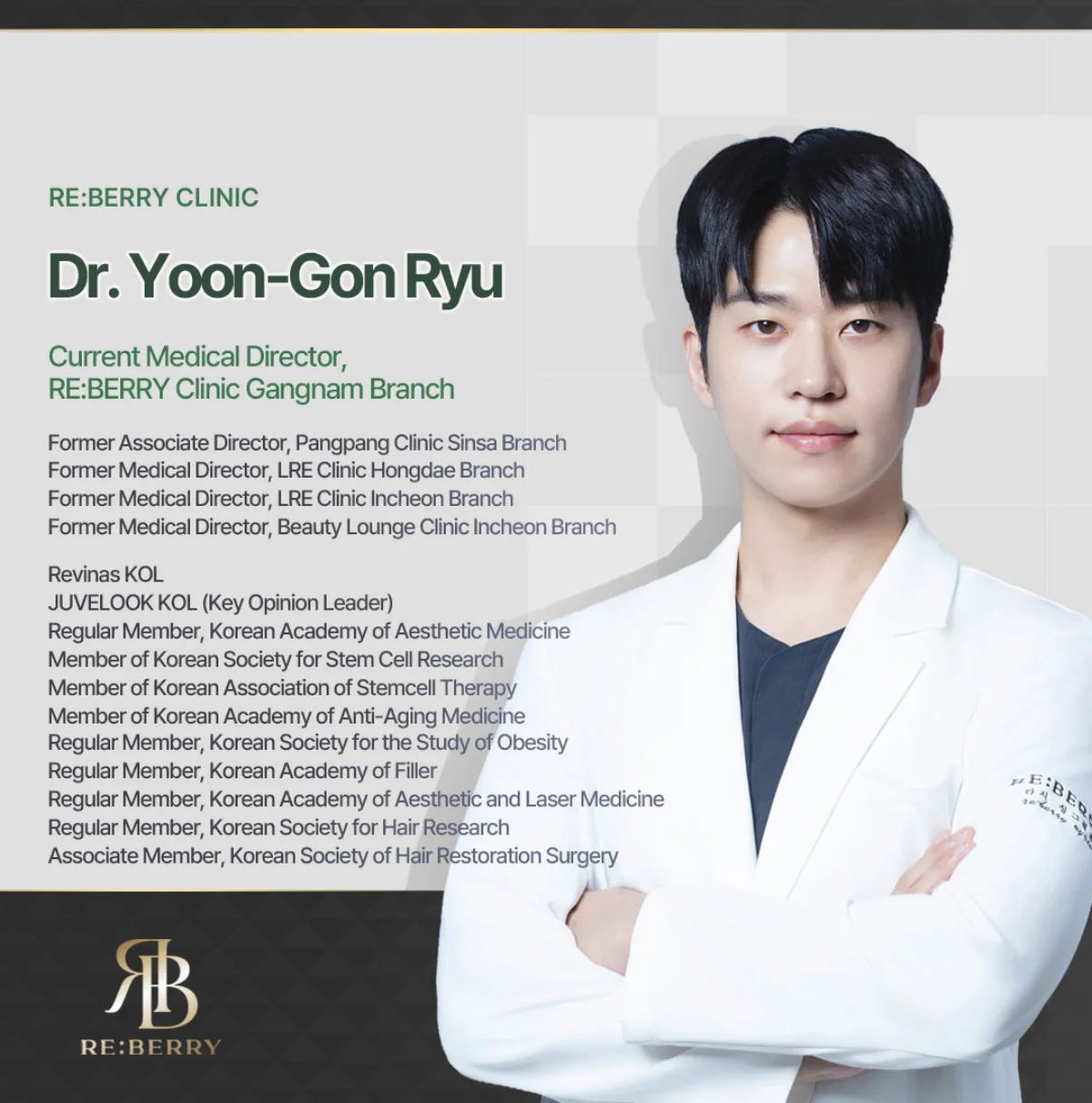
At RE:BERRY Gangnam, Dr. Yoon-Gon Ryu (Medical Director) holds license number publicly displayed at the clinic, trained in aesthetic medicine with extensive experience in energy-based devices and injectable treatments.
Red Flag #5: Language Barriers Without Support
Communication is a safety issue, not just a convenience one. You need to understand:
- Exactly what treatment you are receiving
- The risks and potential side effects
- Pre-treatment and post-treatment instructions
- What to do if something goes wrong after you leave
A clinic that accepts international patients without providing adequate translation support is putting you at risk. This does not mean every staff member needs to speak English, but there must be a clear communication pathway.
Minimum acceptable language support:
- English-speaking coordinator present during consultation
- Written treatment consent forms in your language
- Post-treatment care instructions in your language
- A way to contact the clinic after treatment (WhatsApp, email) with English response capability
Red Flag #6: No Consent Forms or Medical History Review
Before any procedure, a legitimate clinic will:
- Ask about your medical history (allergies, medications, previous treatments, medical conditions)
- Provide a consent form explaining the procedure, risks, and expected outcomes
- Have you sign the consent form before treatment begins
- Answer any questions you have about the consent
If a clinic starts a treatment without going through these steps, stop the procedure and leave. This is not optional. It is a basic medical safety requirement.
Red Flag #7: Unverifiable Online Reviews
The Korean medical tourism industry has a well-known problem with fabricated reviews. Some clinics pay for fake positive reviews on platforms like Google, Naver, and medical tourism websites.
How to spot unreliable reviews:
- All 5-star reviews with similar language: Real patients express varied opinions
- Reviews posted in clusters: 20 reviews in one week, then silence for months
- No negative or 3-star reviews: Every business gets occasional mediocre reviews
- Reviewers with no other review history: Accounts created solely to review one clinic
More reliable sources of information:
- Reddit communities: r/PlasticSurgery, r/KoreanBeauty, r/MedicalTourism often have unfiltered patient experiences
- Before/after photos with dates: Clinics that show genuine, dated photos (not stock images) are more transparent
- Medical tourism forums: PurseForum, RealSelf have long discussion threads about specific Korean clinics
- Word of mouth: Ask your hotel concierge, other tourists, or local expat communities
Red Flag #8: No Emergency Protocols Visible
Serious adverse events during aesthetic treatments are rare but possible. Filler-related vascular occlusion, severe allergic reactions, and equipment malfunctions do occur. A safe clinic has:
- Emergency medications readily available (epinephrine, hyaluronidase for filler emergencies)
- Staff trained in basic life support
- Clear protocols for managing adverse events
- Arrangements with nearby hospitals for emergencies requiring hospitalization
You probably will not see emergency medications displayed prominently (they should be stored properly), but you can ask: “What happens if I have an allergic reaction during treatment?” A well-prepared clinic will give you a clear, confident answer.
Green Flags: Signs of a Reputable Clinic
Now that we have covered what to avoid, here is what a trustworthy clinic looks like:
Facility
- Clean, well-organized treatment rooms
- Visible sterilization protocols (sealed instrument packages, fresh linens)
- Private consultation and treatment areas
- Licensed medical devices with visible certification marks
- Proper medical waste disposal (sharps containers, biohazard bins)
Staff
- Doctor performs initial consultation and key procedures
- Staff wear clean uniforms and practice hand hygiene
- Coordinator explains procedures without high-pressure tactics
- Willingness to answer all questions, even uncomfortable ones
Process
- Thorough medical history intake
- Written consent forms in your language
- Clear, upfront pricing with no hidden fees
- Realistic expectations set during consultation (no promises of “certain” results)
- Post-treatment care instructions and follow-up support
What to Do If Something Goes Wrong
Despite all precautions, complications can occur even at the best clinics. Here is what to do:
During your stay in Seoul:
- Contact the clinic immediately. Reputable clinics will see you promptly for follow-up care at no additional cost.
- Document everything. Take photos of any adverse reactions, note the date and time, and save all communication.
- Visit a hospital emergency room if needed. Seoul’s major hospitals (Samsung Medical Center, Asan Medical Center, Severance Hospital) all have international patient departments with English-speaking staff.
After returning home:
- Contact the clinic via email or WhatsApp. Provide photos and a description of your concern.
- See a local physician. Explain what treatment you received and provide any documentation from the Korean clinic.
- File a complaint if necessary. The Korean Medical Dispute Mediation and Arbitration Agency (KMDMAA) handles complaints from international patients. The Korea Tourism Organization (KTO) medical tourism hotline (1330) can also assist.
A Quick Checklist Before Your Appointment
Print or save this checklist and review it before your first clinic visit in Seoul:
- ☐ Clinic website shows named doctors with credentials
- ☐ Prices are published or provided before your visit
- ☐ English-speaking coordinator confirmed
- ☐ Google/Naver reviews appear genuine (mixed ratings, varied language)
- ☐ Clinic can explain what happens in case of complications
- ☐ Consent forms provided before treatment
- ☐ Doctor performs consultation before any procedures
- ☐ No pressure to commit to treatment immediately
- ☐ Post-treatment care instructions provided in writing
- ☐ Follow-up contact method established (WhatsApp, email)
The Bottom Line on Seoul Clinic Safety
Seoul is one of the safest places in the world for aesthetic treatments. The regulatory framework is strong, physician training is rigorous, and the competitive market drives quality up. But like any major medical tourism destination, you need to be an informed consumer.
Do your research, trust your instincts, and do not let excitement or pressure override basic safety checks. A good clinic will never make you feel rushed, and a good doctor will always prioritize your safety over their schedule.
For more information about choosing a reputable clinic in Seoul, or to learn about RE:BERRY’s approach to patient safety, visit our complete guide to avoiding clinic scams or contact our patient coordination team.
Seoul Skin Clinic Safety: Booking FAQ
Want a Safety-First Consultation in Seoul?
Ask the RE:BERRY Gangnam team your safety questions in a free consultation before you book.
Book Consultation